
Nov 21, 2025
10 Tips for Winter Hiking in the Smokies – Safety, Trails
Written by: Emily Huffstetler
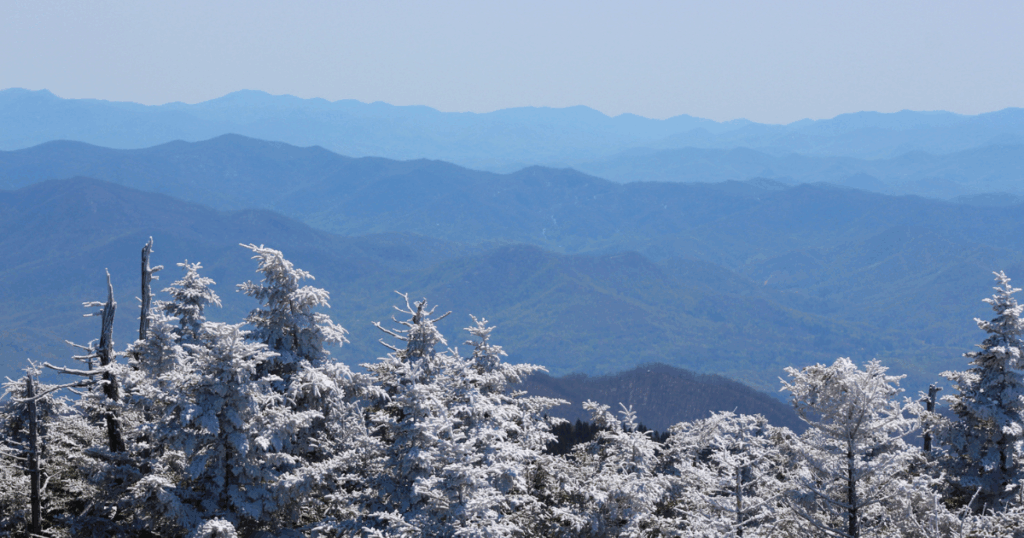
While fall gets all the fame, winter is a magical time to hike the Smokies. With the leaves down, the mountains open up, revealing views you’d never see otherwise. Here are our top tips for making the most of it, while staying safe.
- If you’re a beginner, start with a low-elevation trail.
The higher you climb, the colder and more unpredictable the weather becomes. Atop Mount LeConte (6,593 ft), for example, temperatures can run 15-20 °F colder or more than at the valley below.
If you’re new to hiking, the safest bet is to start with lower elevation trails. Here are a few options near the Townsend entrance:
- Avent Cabin (Elkmont) – 2.0 miles roundtrip, ~500 ft gain
- Abrams Falls (Cades Cove/Townsend) – 5.2 miles roundtrip, ~675 ft gain
- Schoolhouse Gap (Townsend) – 3.8 miles roundtrip, ~513 ft gain
- Spruce Flats Falls (Tremont) – 1.4 miles roundtrip, ~460 ft gain
- Middle Prong Trail (Tremont)* – choose your distance; ~200–300 ft gain for the first 1–2 miles
- Little River Trail (Elkmont) – 4.9 miles roundtrip, ~412 ft gain
- Little Brier Gap / Walker Sisters Place (Metcalf Bottoms) – 2.6 miles roundtrip, ~285 ft gain
- Meigs Mountain Trail (Elkmont) – 4.6 miles roundtrip (out-and-back section), ~661 ft gain
- Check the road and trail status before you go.
Before heading out, check the Great Smoky Mountains National Park’s official alerts page for closures and updates.
You can also use the park’s live webcams at Kuwohi (formerly Clingmans Dome) and Look Rock to preview weather conditions from home. They even track air quality, which can affect both breathing and visibility on the trail.
- Tell someone your plan.
Even if you’re going with a buddy, let someone back home know your route, expected start and finish times, and where you’re parking. Cell service is spotty throughout the Smokies, so having a backup person is important if anything unexpected happens.
- Bring plenty of water.
Colder temperatures can suppress thirst, but hydration is important no matter the weather. Bring more water than you think you’ll need.
- Prepare for rapidly changing mountain weather.
A sunny start can turn into snow, fog or icy wind on the ridges, so pack as if it will be colder and wetter than the forecast suggests. Opt for moisture-wicking base layers, an insulating mid-layer and a waterproof outer shell. That way, you can easily adjust as conditions change.
- Keep your hands warm and dry.
Gloves get wet fast in the Smokies’ damp winter air, especially on popular trails with icy railings and slick rocks. Pack a waterproof pair, bring a backup and toss in hand warmers so you can keep your fingers moving comfortably all day.
- Start early in the day.
Winter days are short, and the sun dips behind the ridges faster than you might expect. Hitting the trail early gives you plenty of daylight to work with, as well as a buffer if things go slower than you planned.
The American Hiking Society suggests setting a firm turnaround time before you leave home. Naismith’s Rule can help you calculate this: one hour for every three miles, plus an extra hour for every 2,000 feet of ascent.
- Watch your footing.
When daylight is short, even a minor twist or stumble can derail your plans. Fallen leaves and snow can hide holes, roots, stumps and rocks. Move carefully, and consider using trekking poles for extra stability.
- Bring a First Aid kit.
It’s important to bring a First Aid kit year-round, but there are a few items that become especially important in the wintertime:
- Emergency blanket
- Hand and foot warmers
- Headlamp/flashlight with extra batteries
- Extra gloves and socks
- Small tarp
- Lightweight fire-starting kit
- Thermal hat
- Respect wildlife.
Wildlife activity slows in winter, but animals still need plenty of space. Black bears, for example, don’t truly hibernate. They enter a lighter sleep state called torpor, where they rest for long stretches but can still wake up, especially on warmer days.
Born and raised in Maryville, Tennessee, with roots tracing back to Cades Cove, Emily Huffstetler is a proud Maryville College graduate and passionate storyteller of the Greater Smokies region.