
Jan 9, 2026
Rolling Stores in Blount County: The Original Grocery Delivery
Written by: Emily Huffstetler
Long before DoorDash and Instacart, rolling stores delivered essentials to Blount County residents who couldn’t make a quick run to town. Trucks or retrofitted buses followed regular routes, stocked like a compact general store.
America had traveling merchants long before the term “rolling store” existed. But the model changed once motor vehicles became more common. A driver could carry more goods than a peddler on foot or a wagon could manage and cover longer distances. By the early to mid-1900s, rolling stores were a part of everyday life in many rural communities.
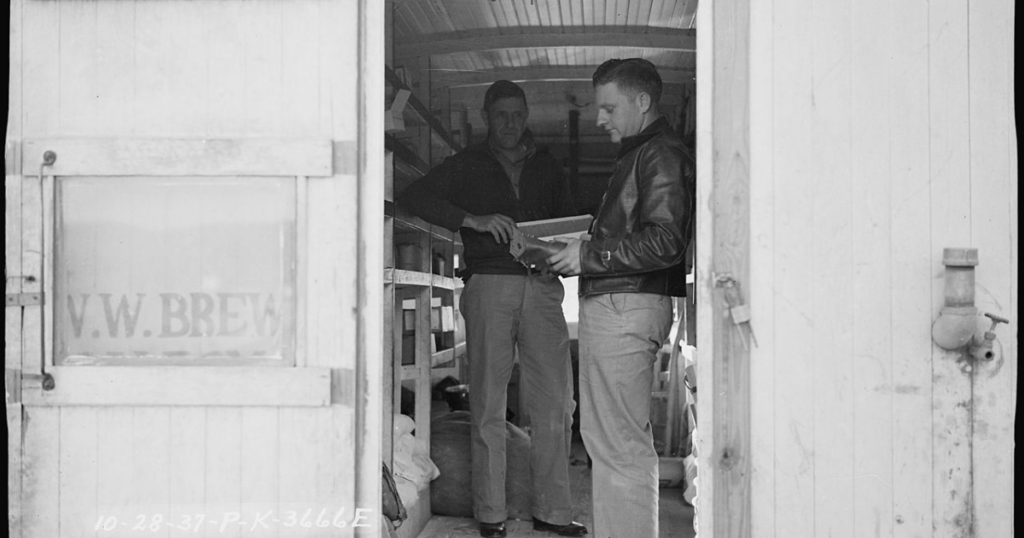
Families generally knew when to expect the truck and what it was likely to have. Payment was flexible, too. Paul Bales (1935-2019), long-time chairman of the Empty Pantry Fund in Blount County, recalled that his grandmother would barter chickens and eggs for apples, oranges and nuts at Christmastime.
By the 1940s and into the early 1950s, rolling stores were still part of the landscape here, especially in rural areas. In Snapshots of Blount County History, Volume II, Dean Stone (1924-2016) writes that Charles K. Walker, Henry Ernest Simms and A. W. Walker were among the last to operate rolling stores locally, with as many as five stores operating at a time.
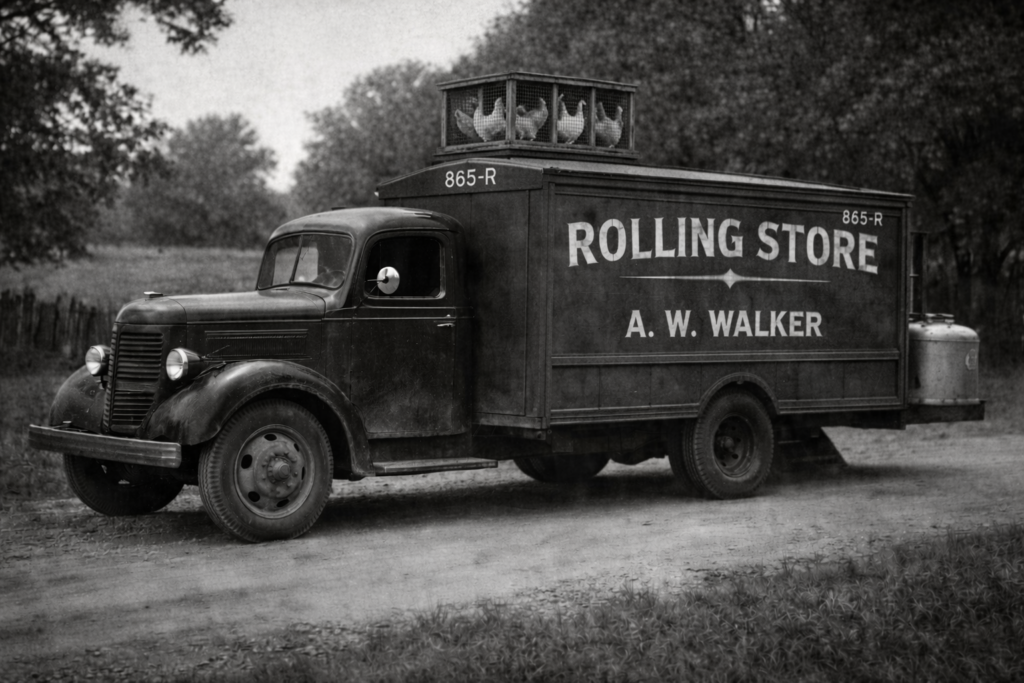
One rolling store Stone describes was built on a 2 ½-ton Dodge truck chassis, with steps at the back for customers to climb in. A wooden coop for live chickens rode above the cab, and a kerosene tank often sat on the “back porch” area to supply lamps and stoves, back when kerosene was commonly called coal oil. During World War II, rolling stores were especially useful, since gasoline and tires were rationed.
Although mobile, rolling stores had a home base. According to Stone, many were headquartered at Walker’s Cash Store on Montvale Road, just south of Magnolia Cemetery. Walker’s trucks had the store’s phone number painted on the side, 865-R.
As roads improved and more families had reliable transportation, the rolling store became less necessary. But the tradition of independent grocery stores still has a place in Blount County.
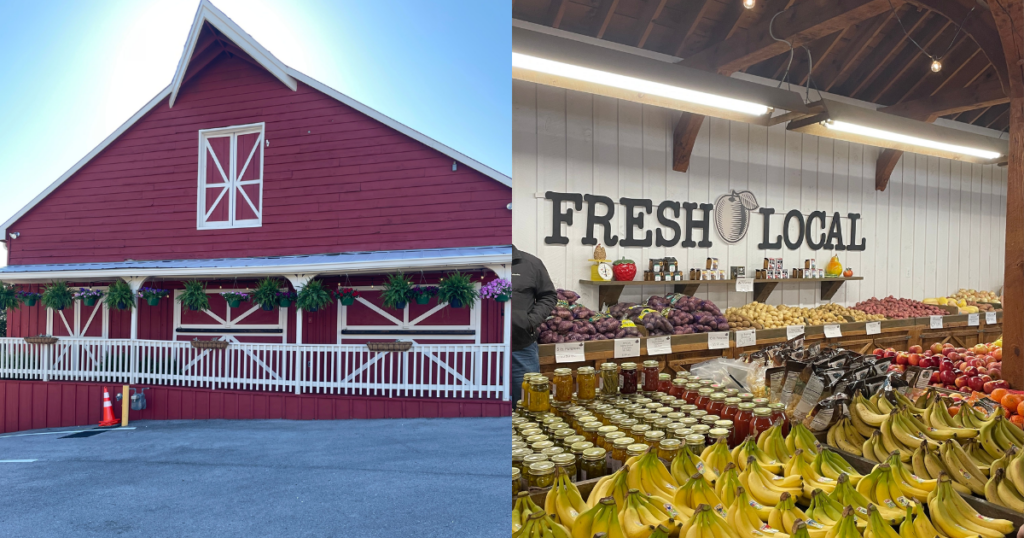
In Maryville, Amburn’s Market is one example. The market traces its roots to 1952, when Virgil Amburn began selling fruit from the trunk of his car. Today, it’s known for market-style shopping with a focus on seasonal produce and regional goods, including fresh produce, dairy and eggs, plus locally sourced meats.
A few minutes away, Horn of Plenty Marketplace offers another independent option with a farm-market feel. The shop has local products and specialty items. Along with produce, you’ll find a mix that leans giftable and pantry-friendly, as well as a small nursery on site.
Born and raised in Maryville, Tennessee, with roots tracing back to Cades Cove, Emily Huffstetler is a proud Maryville College graduate and storyteller of the Greater Smokies region.