
Mar 20, 2025
How Walland, TN Got Its Name: History of Miller’s Cove
Written by: Emily Huffstetler
Walland is a small, unincorporated community tucked into Miller’s Cove, a peaceful valley in the northwestern foothills of the Smokies. Today, around 463 people call this quiet corner of Blount County home. But its story stretches back long before modern roads and homes appeared.
In 1567, Spanish explorer Juan Pardo and his expedition crossed the Little River at present-day Walland, searching for a route to a silver-mining town in Mexico. At that time, Spaniards believed that the Appalachian Mountains connected all the way to central Mexico.
For generations, the Overhill Cherokee used the cove as hunting grounds. By the time European settlers arrived in the 1780s, Cherokee presence and influence in the area were well established. As settlers moved in, they built small forts in response to Cherokee resistance, gradually driving them from the land.
As European settlement increased, land claims began to formalize. The earliest recorded land grant in the area was given to John Rhea for 940 acres in 1794. It referred to the region as Murphy’s Cove. Before long, the name changed to Miller’s Cove, likely in honor of brothers Alexander and Andrew Miller, who built several cabins during the early 1800s.
Around the same time, Swiss immigrant John Hess built a grist mill on the cove’s western end, while the Martin family established another mill to the east.
As more pioneers settled in the area, Miller’s Cove Baptist Church was established in 1810. It became Blount County’s first Baptist church and remains one of its oldest congregations today. A Methodist church followed in 1830.
With a growing community came industry. In 1845, George Amerine established an iron forge along Hess Creek. By the mid-1850s, it was producing as much as 15 tons of bar iron each year, making it the largest forge in the county. However, with the outbreak of the Civil War, production came to a halt, and the forge was abandoned.
While Tennessee sided with the Confederacy, Blount County remained largely pro-Union. In Walland, an estimated 1,500 people gathered for a Union rally, where they made an American flag and raised it on a tall flagpole.
As the story goes, when a Confederate cavalry passed through, some soldiers raised their rifles. But their lieutenant stopped them, reminding the troops that it was the flag under which they had been born. In a surprising moment of respect, the troops peacefully circled the flag, saluted it and rode on.
After the war, industry resumed in Miller’s Cove. John Waters built the first grist and sawmill and opened a post office, which operated from 1884 to 1912.
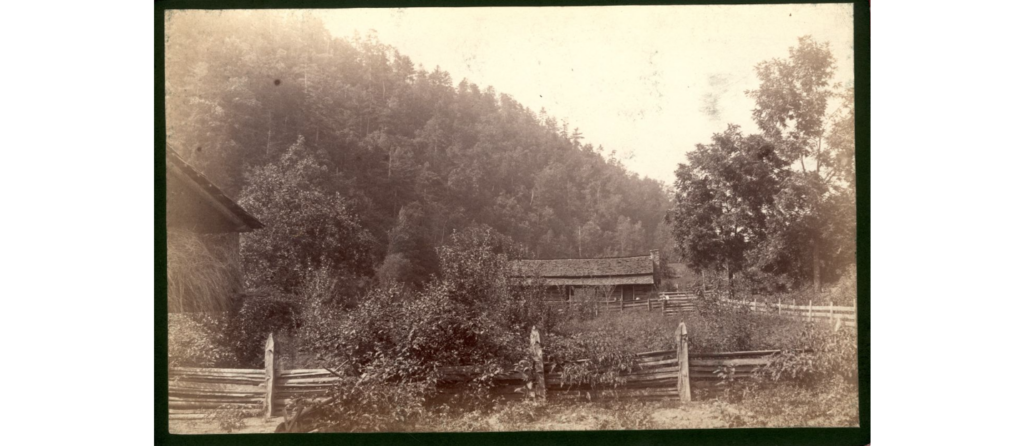
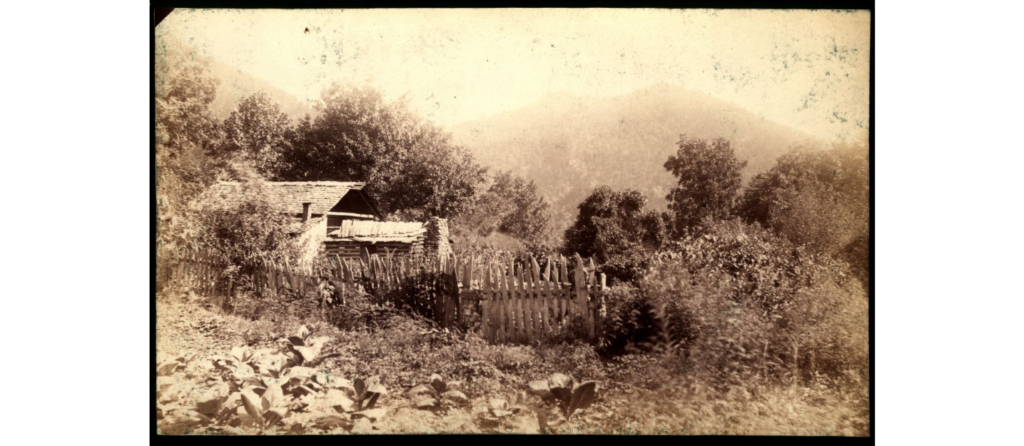
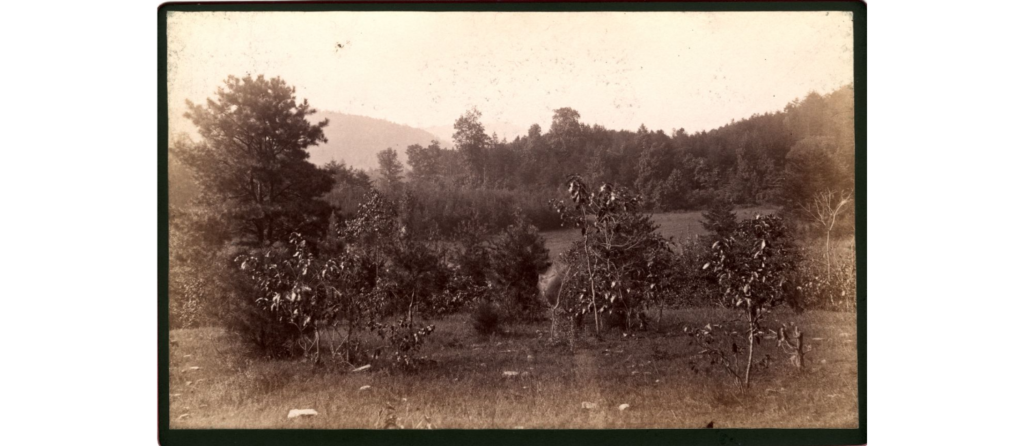
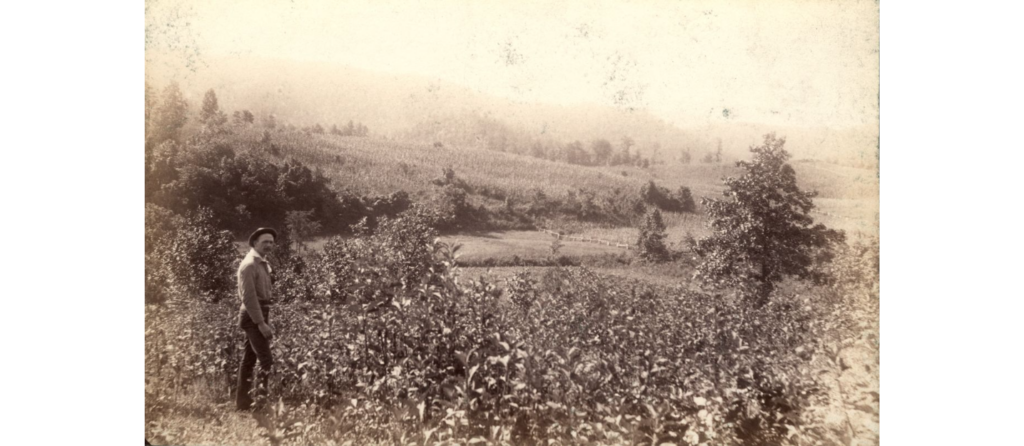
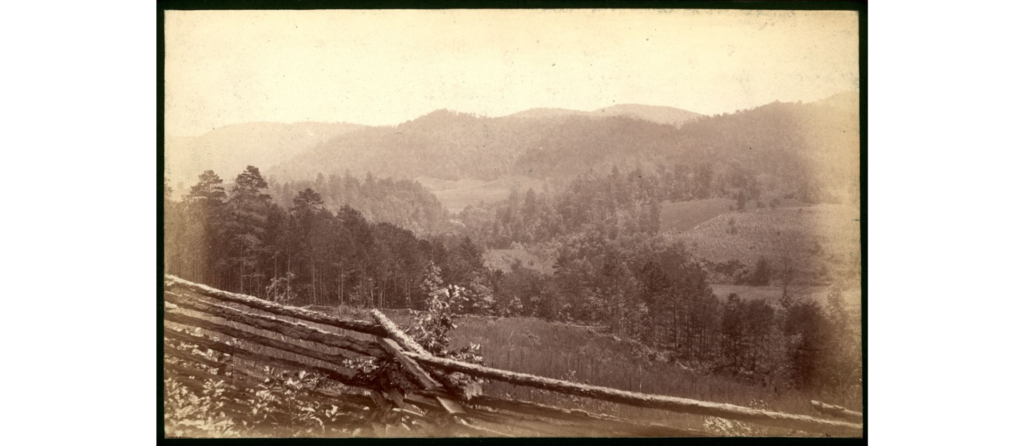
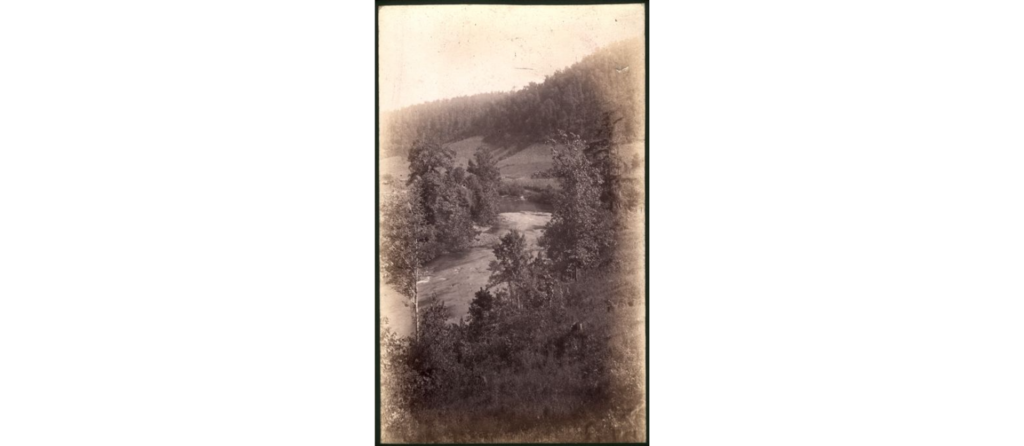
In August 1886, photographer William Cox Cochran captured dozens of photographs of people and landmarks in East Tennessee, including Walland. His images depict the timeless Little River, along with serene clearings and humble cabins.
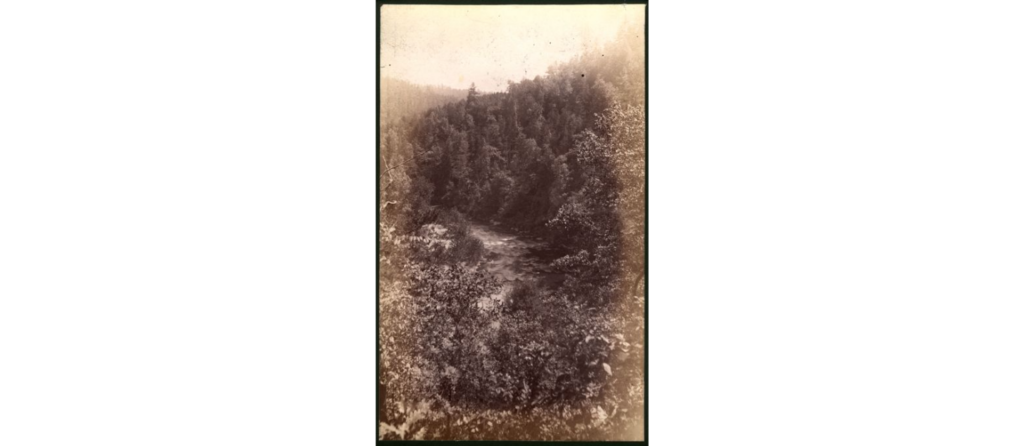
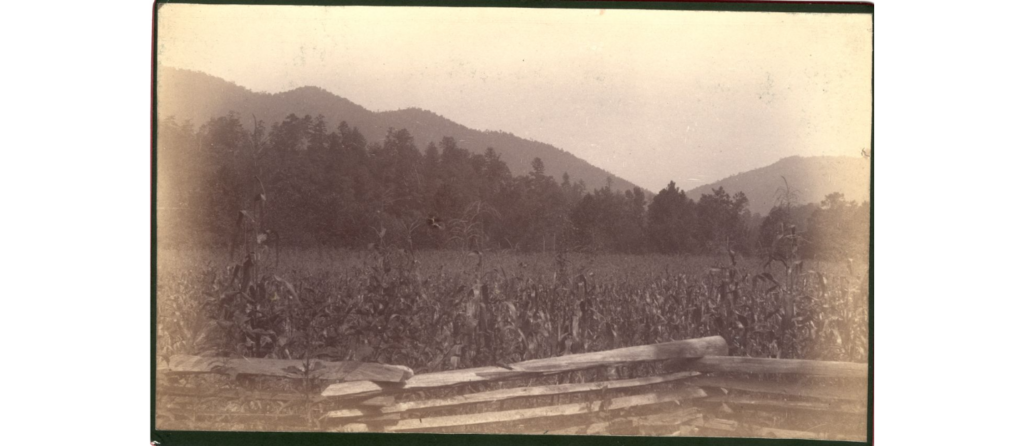
Little River Gap from road near Vance Walker’s house, Miller’s Cove. William Cox Cochran Great Smoky Mountains Photographic Collection
In 1901, the first railroad reached Walland, connecting the community to Maryville. Around the same time, the Schlosser Leather Company was chartered, with its tannery opening in 1902. The name Walland combines Walton and England, two key figures in the leather company’s formation.
At its peak, the plant processed an average of 300 to 400 hides each day, consuming roughly 250 carloads of tanbark annually. By 1909, the company had its own power plant. However, this plant burned down in 1931 and was never rebuilt. Following the fire, Chilhowee Inn, built and operated by the company, passed to private ownership. Today, it continues to welcome visitors as a bed and breakfast.
Walland’s first high school opened in 1922 and became a four-year school in 1926. While other schools in the county were open just six months of the year, the Schlosser Leather Company funded salaries for an extra three months of instruction. The high school closed in the mid-70s.
Walland is perhaps best known today for Blackberry Farm, which Kreis and Sandy Beall opened to the public in 1976 as a six-room country inn. Over the years, it has grown into one of the world’s most celebrated small luxury resorts. Set on 2,400 acres, Blackberry Farm offers 68 guest accommodations, world-class dining and a range of curated experiences that draw visitors from around the globe.
Learn more:
Blount County | Tennessee Encyclopedia
Walland, TN – Profile data – Census Reporter
History of Blount County, Tennessee, From War Trail to Landing Strip, 1795-1955
Overhill Cherokees | Tennessee Encyclopedia
Pardo Expedition | Tennessee Encyclopedia
William Cox Cochran Photographic Collection | Digital Collections
__________________________________________________________________________________________________________________________________
Born and raised in Maryville, Tennessee, with roots tracing back to Cades Cove, Emily Huffstetler is a proud Maryville College graduate and passionate storyteller of the Greater Smokies region.