
Tag: Smoky Mountain Tourism

Visit Cades Cove

Cades Cove Loop Tour in Jeep

Cades Cove is one of the most popular destinations in the Great Smoky Mountains National Park. Visitors can explore a variety of historical sites, enjoy the majestic mountain beauty, and find the thrill of spotting life in the wild. Whether you want to visit the grist mill or hope to run across a family of bears, a visit to Cades Cove will keep the whole family engaged.
Cades Cove Loop Tour in Jeep

New Cades Cove App

The Cades Cove Guide puts the history, nature, wildlife, and trails of the Cove in the palm of your hands. It provides a convenient, safe way to keep track of your locations in the Great Smoky Mountain National Park. Whether you are connected to Wi-Fi or exploring the scenic route, your personal park tour guide brings adventure up close.
Features

  • View points of interest as a list or on a map, both online and offline.
  • Click on the point of interest for photos, quick facts, unique descriptions, hidden treasures, and related content.
  • Share your experience in the “stories” section for others to enjoy.
  • Filter points of interest by The Loop, Trails, Visitor Info, and List View.
  • View the full app navigation, including the loop, stories, nature, wildlife, history, and visitor information.

Cades Cove Guide for Phones

Cades Cove History

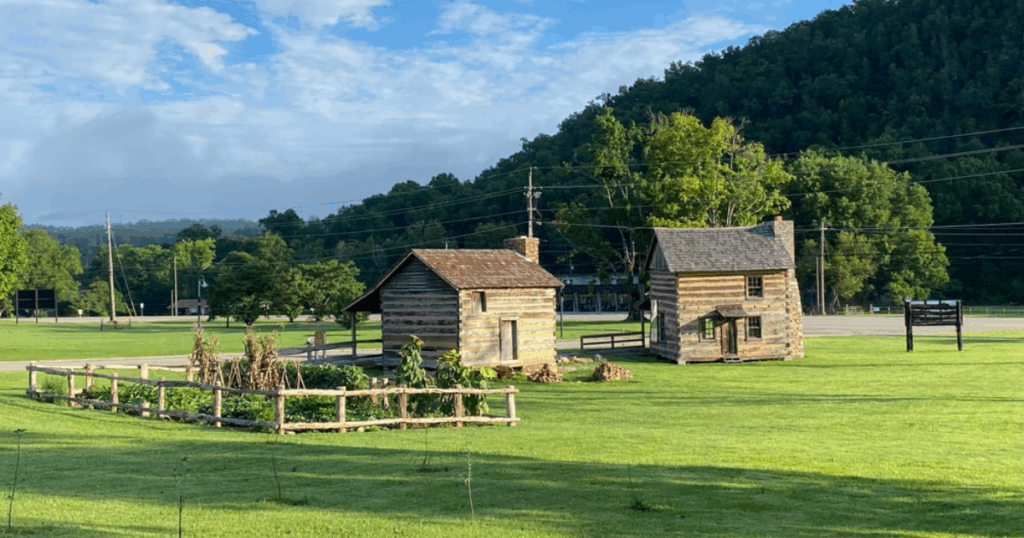
The first European settlers arrived in the Cove during the early 1820s, quickly clearing the abundant lands for farming. Community buildings were erected, such as log homes, barns, and smokehouses. But even before the Europeans arrived, Cherokee Indians traveled through the valley hunting for deer, bear, elk, and bison. 
By 1850 the population had grown to 685, and it was not uncommon for households to have ten to twelve children. As the population grew, the community’s needs grew. Soon Baptist and Methodist churches were built, followed by schoolhouses for the kids. Neighbors often worked together, creating social events from tasks like corn husking and molasses making, allowing young couples to court, eventually leading to marriages. Deaths also brought the community together. Men would make coffins and dig graves, while the women would prepare the body for burial. Then everyone chipped in to help the grieving families by cooking meals and helping bring in crops. 
In 1927 the state began purchasing the land for the creation of the national park. Some families welcomed the state’s effort and willingly sold their property and moved out, but many families resisted the attempts. Several residents signed life-leases that allowed them to stay on the land for the rest of their lives, as long as they abided restrictions on hunting, trapping, and timber cutting. The last school in Cades Cove closed in 1944, and the post office soon followed in 1947. Today the National Park Service designated the Cove as a “historical area” and restored and maintains the buildings as they looked in the early days of the settlers.
Cades Cove Historical Sites      Cades Cove Backpacker

Explore the Cove

Each Wednesday, through September 30th, the park offers vehicle-free access along the Cades Cove Loop. The loop is an 11-mile, one-way road circling the Cove, which gives motorists access to sites and the opportunity to sightsee at their own pace. Allow for two to four hours to tour Cades Cove, longer if you stop to explore any of the area trails. Traffic is heavy during the summer, fall, and weekends throughout the year.
Many trails begin in the Cove, including accessible hikes like Abram Falls or more time-consuming hikes like Thunderhead Mountain. Also, make sure to check out the many historical landmarks located within Cades Cove. Sites like the John Oliver Cabin, the Becky Cable House, and the Elija Oliver Place give you a peek into the settler’s home lives in the 19th century. You can also check out the Primitive Baptist Church, the Missionary Baptist Church, and the Methodist Church to learn more about where to community came together to worship. And don’t forget to check out local wildlife like black bears, elk, white-tailed deer, turkey, or woodchucks. But make sure to follow these safety tips and do not feed or approach any animals.  
There is so much to do, so download and use the Cades Cove App to plan your next visit.
Cades Cove App in Use on Phone
 
For more information on the Great Smoky Mountain National Park, check out these posts:

5 Tips for Planning the Perfect Smoky Mountains Vacation

Planning a Family Trip to Great Smoky Mountains National Park

Top 5 Things To Do in the Great Smoky Mountains National Park in the Spring

Visit These 3 Picnics Spots in the Smoky Mountains This Spring

There is nothing better than taking your family out for a picnic in the Great Smoky Mountains on a warm spring or summer day. The scenery is never short of breathtaking, and there are so many places you can go to. Heck, some folks here pack their basket, grab a blanket, and then pull over when they find a spot they like. While this might sound like a good idea, there are advantages to visiting one of the many designated picnic spots. These typically include having picnic tables and no traffic passing right beside you. Some of the picnic areas in the park have grills and restrooms. Others are more primitive and offer only tables and trash receptacles.
Here are three of the best picnic spots in the Smoky Mountains to take the family, your loved one or even just yourself.

The Chimney Tops Picnic Area

Chimney Tops Picnic Area opens in early March and closes at the end of November.  Here you will find 68 picnic spots including several with tables that look out over the river. The picnic area sits at the trailhead for the Chimney Tops Trail. Eat first to charge your batteries before making the hike or hike first and work up, and appetite, either way, the trail will give you a good workout and offers some incredible views along the way. This is one of the most popular picnic areas in the park.

Cades Cove Picnic Area

You can take your family for a picnic here all year round (nothing like a picnic in the snow). This area offers 81 picnic spots and tends to be very busy when the weather is nice. The Cades Cove Loop covers 11 miles and is one of the most popular places for tourists in the park. Many of the picnic tables set along Laurel Creek and all tables have barbecue grills for your use. (barbecuing in the snow sounds like fun). There are several historic buildings along the loop for you to explore, and the Cades Cove campground is just down the road where you can buy everything you need for your picnic if you don’t feel like packing your own lunch.

Metcalf Bottoms Picnic Area

Like the Cades Cove picnic area, Metcalf Bottoms is open year-round and offers 122 picnic sites, making it the second largest picnic area in the park. Each site has been leveled and has a charcoal grill for your convenience. There is also a large pavilion on-site with space for up to 70 people, restrooms, a place to fill your water bottles, and you have direct access to the Metcalf Bottoms trailhead. Once you’ve finished your meal, why not take the 1.2-mile hike to the log cabin at the other end of the trail. Built-in 1882 this cabin saw life as a school and church for over 50 years and still contains the desks and chalkboard used by Little Greenbriar School students decades ago.

Visiting on a Tuesday? Join Us Tuesdays at 2 and Learn More About Our Amazing Appalachian Heritage

Looking for something fun and educational to do when visiting Townsend, TN on a Tuesday? Don’t be fooled into thinking there can’t be anything going on just because it’s the second day of the week. Instead, take a trip to the Great Smoky Mountains Heritage Center and enjoy their “Tuesdays @ 2 informal “coffee talk” with an incredible array of guest speakers.  
Stories that Need to Be Told
The Great Smoky Mountains Heritage Center is dedicated to protecting and preserving the rich culture and incredible history of both the Native Americans who once lived here and those who came after.
Every Tuesday the center hosts a fun and informative event in the auditorium. Each event covers a different topic ranging from folk music to history and folklore to nature. These events are free to museum members and open to guests with paid admission.
Upcoming Tuesdays@2 Events
March 19 – Ben Jarrett- The American Chestnut Foundation
The American Chestnut Foundation is dedicated to restoring the chestnut to its proper place in the Appalachian hardwood ecosystem. Ben will be here to talk about the efforts being made to bring this important hardwood tree back to the Smokies.
March 26 – Dr. Aaron Astor – Isaac Anderson
Dr. Astor has two books and numerous articles published in the New York Times “Disunion” series. He will be here to talk about the history of Isaac Anderson the founder and first president of Maryville College.
April 2 – Mark Davidson Trails and Turnpikes
Mark will talk about the area and what there is to see as you hike the many miles of trails or drive the turnpikes that take you through the peaceful side of the Smokies.  
April 9 – Missy Kane – Smoky Mountain Hiking
Missy offers a presentation covering the many trails in the Smoky Mountains to hike, the conditions to expect, what you might see, how to prepare for hiking and more.
April 16 – Jeff Hunter – Wildlife and Roadways
Jeff will be here to talk about the growing amount of wildlife crossing the roads and highways, and what is being done to help reduce the number of accidents, death, and injuries to both humans and animals. He will talk about the concept of building animal crossing bridges over I-40 where most of the accidents occur.
April 23 – Mary Beth Lima – Proper Canning Techniques
Mary Beth will be here to discuss and demonstrate a variety of canning methods, explain the proper techniques, cover safety, and offer a wealth of tips and information on the subject. The perfect Tuesday afternoon for anyone wanting to learn how to can and those who already do to spend time learning from an expert.
April 30 – Libby Weitnauer – Appalachian Music with a Jam Session Afterward
Libby is both a classical violinist and a fiddle player. She has played with numerous local orchestras including the Knoxville Symphony Orchestra and the Maryville College Community Orchestra. Today she finds herself more at home playing the fiddle and the more traditional sounds of Appalachia. Once the meeting is over, there is to be a jam session, if you play bring your instrument with you for fun!
 

Visiting the Smokies with Your Sweetheart? Snuggle Up for a Carriage Ride through Cades Cove

The leaves are turning all through the Great Smoky Mountains, there is a nip in the air, and the snow has yet to arrive. What could be better than snuggling up with that someone special in your life in a horse-drawn carriage under a warm blanket while you are taken on a guided carriage ride that takes you on a tour of Cades Cove? If you love the great outdoors, there is simply no better way to see the breathtaking scenery. It is the perfect way to see it all as a couple, or you can bring the kids with you.

A Guided Tour of Cades Cove

The best way to see all that Cades Cove has to offer is seated comfortably in a carriage, hauled through the park by one or more horses. The horses all know the way, but more importantly, so do the drivers! They know more about the Cades Cove area than just about anyone, including the Park Rangers.
Kick back and relax while the carriage conveys you along some of the most scenic trails in the park in peace and quiet. The only sounds you will hear are the clip-clop of the horse’s hooves and that of the wheels on the trail. While you are comfortably sitting back and enjoying the scenery, your guide will tell you about history of the area. And, more than just a detailed history of the area, they will regale you with tales of the old days in this most beautiful part of the state.
Your guide will tell you about what things were like here in the old days, how people lived, their lifestyles, how they fed themselves, about the log cabins, and so much more. Along the way, as you cruise gently through the park, your guide will tell you about the local flora and of course the many animals and birds who call this part of the Smokies home. If you are fortunate, you will have the opportunity to see many of the local residents, both four-legged and winged.

A Carriage Ride for Two—or More

Depending on the carriage you choose, there is room for more than just two. Most have room for up to six people, depending on the size of those who will be occupying the carriage. This way, you can bring the kids along and let them see all of the beauty of the Smokies and, of course, of Cades Cove. Most of the carriage rides last less than an hour, but along the way, there are mountain streams, towering peaks, and majestic trees to see, along with bears, deer, and wild turkeys. The carriage rides are safe for everyone and make an outstanding way to spend a little romantic time together as a couple or as a family.
Do keep in mind that these rides are extremely popular, and the proprietors do not take reservations; all rides are on a first come, first serve basis. You may have to wait for an available carriage, but you will find the wait to be worth it. Be sure you take a carriage ride through Cades Cove this fall; you can’t afford to miss out on the ride of a lifetime!

Visitors to Great Smoky Mountains National Park spent $2.2 billion in local communities in 2023

A couple taking a selfie in front of Great Smokey Mountains National Park sign

A new National Park Service report shows that 13,297,647 visitors to Great Smoky Mountains National Park in 2023 spent $2.2 billion in communities near the park. That spending supported 33,748 jobs in the local area and had a cumulative benefit to the local economy of $3.4 billion.

“I’m so proud that our parks and the stories we tell make a lasting impact on more than 300 million visitors a year,” said National Park Service Director Chuck Sams. “And I’m just as proud to see those visitors making positive impacts of their own, by supporting local economies and jobs in every state in the country.” 

“People come to Great Smoky Mountains National Park to enjoy the scenic beauty and end up supporting local economies along the way,” said Superintendent Cassius Cash. “We’re proud to care for a national park that provides incredible opportunities for recreation but also creates jobs and positively contributes to local economies.”

The National Park Service report, 2023 National Park Visitor Spending Effects, finds that 325.5 million visitors spent $26.4 billion in communities near national parks. This spending supported 415,400 jobs, provided $19.4 billion in labor income and $55.6 in economic output to the U.S. economy. The lodging sector had the highest direct contributions with $9.9 billion in economic output and 89,200 jobs. The restaurants received the next greatest direct contributions with $5.2 billion in economic output and 68,600 jobs.

An interactive tool is available to explore visitor spending, jobs, labor income, and total economic contribution by sector for national, state and local economies. Users can also view year-by-year trend data.

Learn more about national parks in Tennessee and North Carolina and how the National Park Service works with local communities in these states to help preserve local history, conserve the environment, and provide outdoor recreation.

Volunteer Opportunities on the Peaceful Side

Written by: Emily Huffstetler

The Great Smoky Mountains continues to be the most-visited national park, welcoming over 13 million visitors in 2023. This immense popularity can strain the environment and wildlife. Fortunately, you can reduce your footprint by supporting these local nonprofits.

Appalachian Bear Rescue

Photo courtesy of appalachianbearrescue.org.

In the past decade, an average of 339 negative human-bear encounters have been reported annually. Bears that have become comfortable around humans often have to be euthanized, leaving their cubs and yearlings orphaned.

Appalachian Bear Rescue cares for these orphaned cubs and yearlings, as well as injured bears, until they are ready to return to the wild. Their methods are research-based, and they share their findings with the scientific community. Since 1996, ABR has cared for nearly 300 bears, providing updates about each of them to their 200k+ followers on Facebook.

To reduce the number of orphaned bears, ABR increases public awareness about coexisting with black bears. Their Visitor and Education Center offers classes on every aspect of black bear life.

To volunteer, request an application from the Volunteer Coordinator. You can also support ABR by making a donation on their website or purchasing gifts from their Amazon wish list.

Friends of the Smokies

Photo by Bruce McCamish.

Friends of Great Smoky Mountains National Park assists the National Park Service in preserving and protecting the park by raising funds, increasing public awareness and providing volunteers for essential projects.

The organization hosts several special events throughout the year, including the Cades Cove Loop Lope, the only organized footrace held inside Great Smoky Mountains National Park. This year’s 8th annual race will take place on Sunday, November 10, featuring a 10-mile course and a 5K. Last year’s race sold out with 750 participants from 27 states, so register soon to secure your spot.

Another eagerly anticipated event is Plein Air in the Smokies, which brings 20 nationally acclaimed artists to paint “en plein air” (outdoors) throughout the national park. These one-of-a-kind paintings will be available for sale at a Collectors Soirée on Sept. 27th in Downtown Knoxville at Regas Square Events. You can purchase soiree tickets or view the schedule of events on their website.

If you’d like to volunteer for Friends of the Smokies, you can also fill out an application detailing your skills and interests. The organization will contact you as opportunities arise.

Great Smoky Mountains Institute at Tremont

Photo by Hank Dye.

The Great Smoky Mountains Institute at Tremont partners with the Great Smoky Mountains National Park to deliver experiential learning for youth, educators and adults. Their programs promote self-discovery, critical thinking, and effective teaching and leadership, connecting people with nature for over 50 years.

They post volunteer opportunities, ranging from data entry to adopting and monitoring a salamander stream, on their website. If you don’t see a fitting opportunity listed, you can sign up for their volunteer newsletter to be notified as new positions open.

Volunteer opportunities at the Tremont Institute range from data entry to adopting and monitoring a salamander stream. If you don’t find a suitable opportunity listed, you can sign up for their volunteer newsletter to be notified as new positions open.

To support the Tremont Institute financially, you can make a donation on their website, link your Kroger Plus Card to the organization, order a book from their wish list for their library, or purchase something from their gift store.

There are also several ways to financially support the Tremont Institute. You can take a traditional approach and make a donation on their website. Other options include linking your Kroger Plus Card to the organization, ordering a book from their wish list for their library or purchasing something from their gift store.

Keep Blount Beautiful

Photo courtesy of Keep Blount Beautiful.

Based in the foothills of the Smokies, Keep Blount Beautiful is an award-winning nonprofit that works in litter prevention, waste reduction, beautification and environmental education. To support their mission, you can participate in a community cleanup or recycling collection event, or donate on their website.

Whether you’re just passing through or a local resident, supporting environmental nonprofits can help preserve the beauty and biodiversity of the Peaceful Side.

__________________________________________________________________________________________________________________________________

Born and raised in Maryville, Tennessee, with roots tracing back to Cades Cove, Emily Huffstetler is a proud Maryville College graduate and passionate storyteller of the Greater Smokies region.

Walls for Women in Maryville: Meet Nicole Salgar's Mural, Senderos

Senderos Full View by Nicole Salgar

Murals have become a growing trend in East Tennessee, and for good reason. Public art brings communities together by creating vibrant neighborhoods people take pride in and work to keep beautiful. It draws people into conversation, creating opportunities to share ideas and experiences. Earlier this year, DMA-events, Inc. chose Maryville to be one of seven cities to participate in Walls for Women as a celebration of the 19th Amendment centennial and Tennessee’s place in that history.
Senderos by Nicole Salgar
BEFORE: Bike ‘N Tri in Downtown Maryville prior to the mural
Senderos Full View by Nicole Salgar
AFTER: Bike ‘N Tri in Downtown Maryville now

Walls for Women Inspiration

DMA seeks to educate through art and capture the creative spirit of a community via artistic vision. By promoting public art and the artists who create these installations, the nonprofit aims to bring beauty and new voices into the world. Tennessee’s part in ratifying the 19th Amendment and 100 years of women’s suffrage inspired the Walls for Women project. DMA co-founder Kristin Luna states: “Like nearly every profession, a gender gap exists in the art world. Women muralists are not afforded the same opportunities as their male counterparts. Tennessee’s street art scene is predominantly male, despite there being hundreds of female muralists every bit as talented. To commemorate 100 years of women having federally- recognized voting rights, we want to give female artists the chance to create and leave a piece of history behind.”
Walls for Women in Maryville

The Artist

The Walls for Women artist chosen for Maryville is Nicole Salgar, a visual artist of Latina descent. She traveled from Miami with her partner Chuck Berrett, with whom she has been working for more than a decade. Nicole’s passion for learning about different cultures has led her to travel around the world; she has worked with local communities in Cuba, Europe, the Middle East, and South America. Her travels have allowed her to develop her instinctual self-expression through her art.
Senderos Artist Nicole Salgar
When asked about her craft, she says, “art and design are both something I see as a powerful, transformative force which can elevate the practitioners, the people, and their communities.”
NS/CB Partners Nicole Salgar and Chuck Berrett
Her company, NS/CB, began in NYC in the street realm, but they quickly evolved through their travel and experience. They soon expanded their skillset into high-end interior design, fine art, traditional illustration, fabrication, and installation through various mediums. They have residential clients and commercial clientele, from Fortune 500 companies, small business owners, and non-profit organizations. Their mission is to create an irreplaceable piece unique to living spaces, work environments, and public locations.
Senderos by Nicole Salgar

“Senderos,” the Mural

Nicole calls her mural “Senderos,” meaning trails or paths; it stretches 35 feet high and 100 feet wide and took over 100 hours to complete. It is located on the Bike ‘N Tri building on Broadway Avenue and is one of the largest walls Nicole has painted to date.
Nicole Salgar mural in Maryville
When asked to describe Senderos, Nicole explained:

“The woman in this mural is meant to portray a gatekeeper to other dimensions or realities. Her existence is one that flows through time without boundaries. The lock and key connect to gateways or portals into the unknown. They can also be interpreted as a way to unlock the hidden self. An archway showcasing an upward stairway sits at the center of her chest, while a hand enters the frame holding the key. I intentionally set the woman in a range of misty mountains to reflect Maryville’s location in the foothills of the beautiful Smoky Mountains. I wanted to capture the environment as if it was twilight when everything seems to be covered in a soft illuminating glow. Ultimately, this mural is a culmination of the maternal and feminine spirit of all things, being tied together through reality, dreams, space, and time. Boundless energy which makes up the entire universe.”

Nicole Salgar mural in Maryville

For more places to visit in Blount County, start here:

Want to Warm Up from the Inside Out? These Distilleries Will Do Just That

The state of Tennessee is known for many good things. The Grand Ole Opry and country music, Bluegrass music, barbecue and “hot chicken,” good old Davy Crockett (born in East Tennessee), Goo Goo Cluster candy, moon pies, and the stunning rolling hills and Smoky Mountains are part of Tennessee, as well. Mention the words whiskey, bourbon and moonshine, and most people know these belong to Tennessee, also.
That means that anyone who is paying a visit has to take a sip or two, or three, of some of the region’s finest spirits. And if you are headed to Blount County, we suggest a visit to any of the following distilleries to warm you up from the inside! Most do taste-testing and some even have food pairings or full-blown restaurants attached, so go ahead and enjoy a few samples, eat a nice meal and take a few bottles home for holiday gifts or to get you through until your next visit to Tennessee.
Old Forge Distillery is located at 170 Old Mill Ave in Pigeon Forge and is famous for its small batch spirits that include moonshine, bourbon and vodka. It takes its name from the town’s historic iron forges and is even located next to an old forge and mill. This brand is made with grains ground by the producer and it has won many awards for its signature 1830 Original Moonshine.
The Sugarlands Distilling Co is located along 805 Pkwy in Gatlinburg and is known for its whiskey, moonshine and other spirits. Opened only in 2014, it promises to offer “a story in every jar” and includes a surprising number of award-winning concoctions. From a peppermint moonshine to seasonal specialties, it offers tastings of the latest offerings.
Ole Smoky Holler rates as the most frequently visited distillery in the nation, and is home to the Ole Smoky brand with locations like the Ole Smoky Moonshine Barn at The Island in Pigeon Forge and the Barrelhouse in Gatlinburg. A $5 sample fee lets you enjoy a few varieties and there is usually music to entertain.
Don’t forget to try the other famous stops, like Doc Collier Moonshine, too. Each stop has something unique and you’ll learn a lot about the history of Tennessee when you visit any one of these establishments to warm up and savor unique beverages.

Waterfalls in The Great Smoky Mountains

cascading waterfall in the peaceful side of the smokies

There is no better outing during the summer than a trip to one of the many Waterfalls in the Great Smoky Mountains. Luckily, there are over 2,000 miles of rivers and streams in the national park, resulting in a series of over 100 cascades and falls. We have picked out a handful of beautiful hikes in the Peaceful Side of the park for every level of experience.

Hiking in the Great Smoky Mountains

Meigs Falls

Meigs Falls is one of the most accessible waterfalls to visit. In fact, you can drive your car up to within 500 feet of the falls. The drop is only 28 feet, but it is nestled into a breathtaking spot of the Smokies.

 
Directions

Only located 12.9 miles west of the Sugarlands Visitor Center, near the Townsend “Wye”.

Waterfalls in the Great Smoky Mountains

Ramsey Cascades

If you are looking for a more strenuous adventure, check out the Ramsey Cascades. The hike is 8 miles roundtrip, and as the tallest waterfall, it follows over 100 feet of tumbling cascades throughout the park. The trail to the waterfall gains over 2,000′ in elevation, passing through old-growth cove hardwood forest.


Direction

Take Highway 321 east of Gatlinburg to the Greenbrier entrance to the park. Follow the signs to the Ramsay Cascades trailhead.

group hiking to a waterfall in the smokies

Spruce Flat Falls

The hike to Spruce Flat Falls is only two miles roundtrip, but it can get significantly steep, making it a more challenging hike. Located in the Tremont section of the park, a still relatively unknown area, there is a chance for a more private experience. At the bottom of the 30-foot fall, dropping in four stages, you will find a pool of water perfect for a refreshing summer swim.

Directions

You will find this trail located on Tremont Road near Smokey Mountain Institute at Tremont, near Cades Cove.

man hiking through a river in the Smokies

Abrams Falls

Abrams Falls is one of the “Waterfall Quartet”, a group of four waterfalls, including Abrams, Laurel, Grotto, and Rainbow Falls. Although the waterfall is only 20 feet high, it has the highest volume of water, making it the most voluminous falls in the park. It empties into a large, picturesque pool, but swimming is off-limits because of the strong currents and dangerous undertow.


Directions

From Townsend or Gatlinburg, follow signs to Cades Cove. The turnoff for Abrams Falls Trail is located past stop #10 (signed) along Cades Cove Loop Road.

Woman hiking in the Smoky Mountains

Indian Creek Falls

The Indian Flats Falls is beyond Toms Branch Falls another half-mile, turning right onto Indian Creek Trail. The trail begins as a wide path as it traces Deep Creek upstream. After walking just one-tenth of a mile, there will be a short spur trail on your left that leads down to the 45-foot waterfall. If you were to climb back to the main trail and walk a short distance up, the Indian Flats Falls looks more like a water slide than an actual waterfall.


Directions

Located on Tremont Road near Smokey Mountain Institute at Tremont, near Cades Cove. Hike on Middle Prong Trail to Panther Creek Trail.

Waterfall in the Great Smoky Mountains

These are just a handful of the waterfall opportunities in the Great Smoky Mountain National Parks. Take the time to do a little more research and find yourself in a world of awe-inspiring waterscapes and hiking opportunities for the whole family.

For more summer adventures in the Peaceful Side, check out the blog links below.

Hidden Treasures in the Peaceful Side

Kid-Friendly Activities on the Peaceful Side

We Have Smoky Mountain Activities Even a Dog Will Love

Keeping busy in the Smokies region isn’t difficult – there are tons of things to do, all year ‘round – but finding activities the whole family, including canine members, can enjoy is a little more challenging. Here are 5 of our favorites.
Maryville-Alcoa Greenway and the PetSafe Pistol Creek Dog Park
There’s nothing like a day out in the park with your dog, is there? Especially when the parks are this nice. The Maryville-Alcoa Greenway is a 9-mile-long paved trail that connects the two cities, passing through a number of scenic areas and public parks, including the Bicentennial Park area, which also includes the PetSafe Pistol Creek Dog Park. Imagine hopping on your bike, riding down the trails with your dog running alongside, only to lounge in the dog park while your best friend burns off the rest of their four-legged energy. Pretty perfect, right?
Smoky Mountain River Rat Tubing
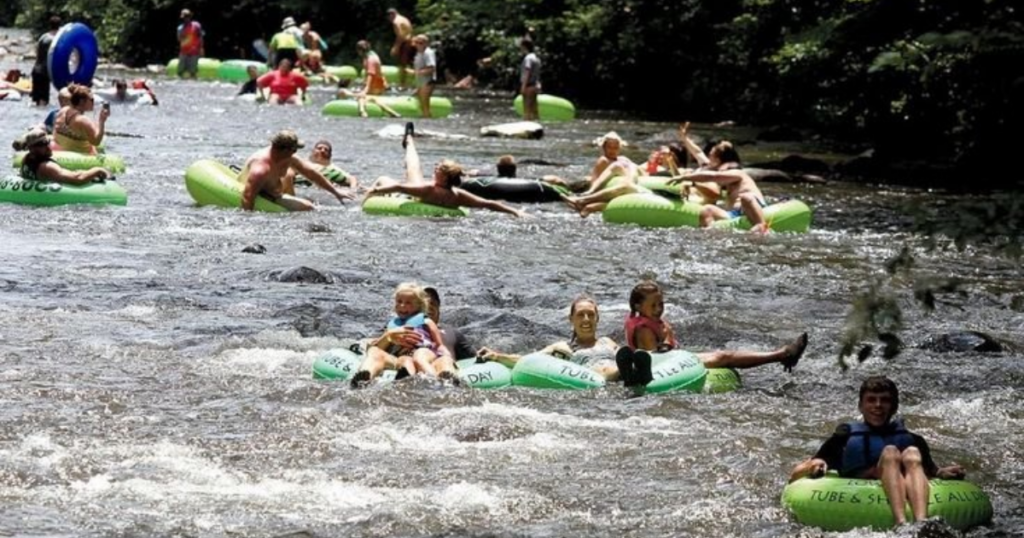
Whether you’re squeezing in a trip downriver before summer disappears or planning one for the next time warmer months roll around, you won’t want to miss an opportunity to go tubing with your dog. They tube for free, so strap on their doggy life jacket, rent a $2 tether, hook up your own tube, and prepare for one of the most entertaining trips down the Little River you can imagine. It’s not every day that you get to go sailing with such a cute first mate, is it?
Fishing the Local Waterways
Bank fisherman have long known the virtues of recreation alongside a (relatively) silent best friend, but did they know that dogs can also be quite seaworthy? Whether you’ve rented, borrowed, or bought a boat and taken it out on Chilhowee Lake or any of Tennessee’s famous tailwaters, the right dog can keep you great company when your free time takes you offshore.
Brewster’s Bark & Bed
You may know that there are great spas in the Smokies region that cater to humans, but did you know that there’s one that’s fully gone to the dogs? Brewster’s Bark & Bed offers everything: coconut and aloe deep-conditioning wraps, skin-soothing mud treatments, “pawdicures” with paw massages, and, should the worst happen, a “smell-u-later” de-skunking treatment.
They also are planning to offer training classes in their private indoor training area, which is a great way to further bond with your pet and give everyone some refreshers when it comes to the basics.
Parkway Drive-In Theater
Interested in catching a movie? Unlike most movie theaters, the Parkway Drive-In in Maryville doesn’t have to follow the rules about not allowing dogs indoors, because, well, they’re not! Well-behaved dogs on a leash are welcome to join their human movie fans and catch a flick out under the stars, even if those canine family members might be more interested in the smells coming from the concession stand, where hamburgers and patty melts (as well as popcorn and the basics) are on offer.

What to Do in Blount County on a Rainy Day

Written by: Emily Huffstetler

On the Peaceful Side of the Smokies, rainy days don’t have to put a damper on your plans. Here’s a guide to some of our favorite spots in Maryville and Townsend where you can stay dry and still have an adventure. 

Maryville 

The Capitol Theatre, dating back to 1934, was once the largest of three movie houses in Downtown Maryville. After a renovation in 2008, this art-deco gem now houses a unique coffee shop and ice cream parlor. 

The parlor is filled with movie memorabilia from floor to ceiling, and the menu features a variety of themed sundaes, floats, candies and bottled drinks to choose from. Indulge in treats like the Pirate’s Treasure, a salted caramel sundae, or get energized with espresso drinks like the Flux Capacitor. If you’re feeling adventurous, you can even take on the eight-scoop King Kong Sundae

If you’d prefer something more casual, head down the road to Vienna Coffee House, with signature drinks like Muddy Pond Mocha (espresso, steamed milk, Muddy Pond sorghum, Ghirardelli chocolate and vanilla) and the Thunderhead Latte (Thunderhead Espresso, steamed milk, local honey, nutmeg and cinnamon). They serve breakfast and lunch until 3 p.m. Monday through Saturday. 

Photo courtesy of Southern Grace Coffee Co.

Southern Grace Coffee Co. is another local favorite, offering fair-trade organic coffee, tea and gluten free baked goods. Right next door, Southern Grace Manor serves breakfast and lunch. With dreamy porches and expansive windows, these renovated historic houses are the perfect place to cozy up on a rainy day. 

Photo courtesy of Pinkie Mistry.

While you’re downtown, immerse yourself in the local arts scene at Pinkie Mistry Art, a fine art and gallery studio, or stop by the Clayton Center for the Arts on the Maryville College campus. This dynamic performing arts venue features concerts, plays, dance performances and art exhibitions throughout the year. 

If you’d like to stay active despite the weather, the Family Life Center at First Baptist Church of Maryville offers plenty of options during the week. Take advantage of group fitness classes, an indoor track, weight machines and cardio equipment, or join a game of basketball, volleyball, pickleball or racquetball. On the weekend, shake up your routine at the Roll Arena Party Zone roller skating rink. 

Townsend 

Tuckaleechee Caverns has been drawing visitors underground for over a century, showcasing towering stalagmites, flowing underground streams and the impressive Big Room—large enough to fit a football field. Rainy days are the perfect excuse to explore this subterranean wonder, where the temperature remains a cool 58 degrees year-round. 

If you prefer to stay above ground, Townsend is home to several museums that offer a glimpse into the region’s rich heritage. 

Photos courtesy of Appalachian Bear Rescue.

At Appalachian Bear Rescue’s Visitor and Education Center, learn about the rehabilitation of orphaned and injured black bear cubs before they are released back into the wild. While the bears themselves aren’t on display, interactive exhibits and educational presentations provide an up-close look at their journey. 

Photo courtesy of the Great Smoky Mountains Heritage Center.

Step back in time at the Great Smoky Mountains Heritage Center, where historic cabins, preserved artifacts and rotating exhibits tell the story of the region’s early settlers and Indigenous peoples. Wander through the museum or take a guided tour to learn about Appalachian traditions, crafts and daily life from centuries past. 

Photo courtesy of the Little River Railroad and Lumber Company Museum.

The Little River Railroad and Lumber Company Museum offers another fascinating look at Townsend’s history. This small but engaging museum highlights the impact of the logging industry on the Smokies, featuring historic locomotives, railroad artifacts and exhibits on the early days of tourism in the region. 

Photo courtesy of Kathleen A. Janke.

Find inspiration at the Townsend Art Center, home to the Townsend Artisan Guild. This creative hub showcases the work of local painters, potters, woodworkers and fiber artists. Or check out Gracehill Fine Art & Basketry, featuring alcohol inks, photography and basketry by Kathy Janke. 

If you’re wanting to grab a bite to eat, but also want to stretch your legs, Apple Valley Mountain Village is just the place. They have a cafe, coffee shop and general store with plenty of goodies to take home. 

What’s your favorite rainy day activity on the Peaceful Side? Tag us on social media (@PeacefulSmokies) to share your thoughts. 

__________________________________________________________________________________________________________________________________

Born and raised in Maryville, Tennessee, with roots tracing back to Cades Cove, Emily Huffstetler is a proud Maryville College graduate and passionate storyteller of the Greater Smokies region.

What to Know About Snakes in the Smokies

Corn Snake in the Smoky Mountains

We have put together info and images to help you understand what you need to know about snakes in the Smokies. But the biggest takeaway from this post is that there’s no need to let your fear of snakes keep you from enjoying your time in the Smokies.

eastern garter snakes in the great smoky mountains
Eastern Garter
Photo by Randy Ratliff

What Species of Snakes are in the Great Smoky Mountains

Most of the snakes you will encounter on your trip to the Peaceful Side of the Smokies are just that, peaceful and reclusive reptiles. There are 23 varieties of snakes in the Smokies, but only two of them are poisonous. To find a complete chart, including photos of every breed of snake you may encounter during your visit to the Smoky Mountains, click here to visit thesmokies.com/snakes/ website. 

northern copperhead in the great smoky mountain national park
Northern Copperhead
Photo by Randy Ratliff

Venomous vs. Non-venomous Snakes in the Smokies

The two venomous snakes to keep an eye out for are the Timber Rattlesnake and the Northern Copperhead. The Timber Rattler has the most toxic venom of the two species. Still, they will also give off warning signals before striking, that infamous loud rattle that lets you know you are too close. The Northern Copperhead, on the other hand, gives no warning. Although their bite is generally not venomous enough to kill, it will cause significant pain.

There are a few ways to identify venomous snakes in this region. As a general rule, all venomous snakes have triangular-shaped heads with verticle slit eyes. In contrast, non-venomous snakes tend to have rounder heads and pupils. Another easy giveaway is the snake’s habitat. Rattlesnakes tend to prefer rocky outcrops, ledges, and southern-facing hillsides while enjoying sunning on rocks. Copperheads, on the other hand, tend to hide in the crevices of rocks along stream banks. Also, be aware that both hide in manufactured structures like stone buildings and fences. The last thing to look for is the coloring of the snake. Copperheads, as their name suggests, have an identifying copper hue. At the same time, Timber Rattlers are usually brown but can vary from oranges to black depending on where they are during their molting season.

timber rattler in the great smoky mountains
Timber Rattlesnake
Photo by Randy Ratliff

Be Mindful While Exploring the Smoky Mountains

  1. Be aware of your environment. Be mindful where you step and pay attention to the warning rattle of an upset rattlesnake. If you are climbing on rocks, watch where you put your hands. Rocky outcrops are favored places for snakes to warm in the sun.
  2. Wear appropriate shoes. It may seem obvious, but sturdy hiking boots are more likely to protect your feet than a pair of flip-flops.
  3. Keep children close and explain what they need to look for before you start your exploration.
  4. Keep a hands-off approach with the snakes. Feeding, touching, teasing, and handling wildlife is prohibited in the national park. Continue to move along and do not interact.
  5. Do NOT kill a snake if you run across one on your path. It is illegal to kill snakes in the state of Tennessee.

What to Do If a Snake Bites You

First of all, there has never been a recorded fatality to do a venomous snake bite in the park. But if a snake bites you, the most important thing to do is stay calm and call 911 even if you believe the snake was not venomous. Make a note of the snake’s appearance, or even better, get a photo of the snake to show to healthcare professionals. Keep a black sharpie available in your emergency kit, so you can circle precisely where the bite is because, in time, the wound may swell and bruise. If possible, position yourself so that the bite stays at or above heart level. The CDC no longer recommends trying to remove the venom yourself but instead spend that time seeking immediate medical attention.

rough green snake spotted in the great smoky mountains
Rough Green Snake
Photo by Randy Ratliff

Snakes are part of the Smokies, but nothing to fear. Make yourself knowledgeable, pay attention to where you step, and be respectful to these mostly peaceful inhabitants. Stay aware of your environment and have a great time enjoying this gorgeous part of the country.

For more posts related to Smoky Mountain wildlife, check out these links below:

Wildlife Viewing and Safety Tips

Smoky Mountain Fly Fishing