
Mar 13, 2026
The Davis Family Series Brings 1830s Blount County to Life
Written by: Emily Huffstetler
Forget the famous names in history. At the Great Smoky Mountains Heritage Center, one series turns its attention to the daily life of an ordinary settler family in 1830s Blount County.
The center’s “A Year in the Life of an Early-American Family: The Davis Family of Seymour, Tennessee, c. 1835” uses the Davis family’s historic log house and farmstead to explore how families lived, worked and survived in 1830s Blount County.
Rather than offering a single snapshot of the past, the series follows the farming year from fall harvest through spring. It began last September and continues through May, with programs covering everything from gardening and herbal medicine to spinning, weaving, cooking and music.
“I thought it would be great for our guests to get a sense of the typical, everyday life in the early 19th century for European settler families,” said Trevor Lanier, curator at the Great Smoky Mountains Heritage Center. “Many of our guests see snapshots of various moments in lives from the past, but this program gives them a much more in-depth view of the farming year and other facets.”
The Davis family is a natural fit for that kind of storytelling. Their cabin sits at the heart of the Heritage Center’s 1830s farmstead, alongside the heirloom garden and other historic features. Lanier said the site offered the strongest opportunity to build a full series around both the agricultural calendar and cultural year.
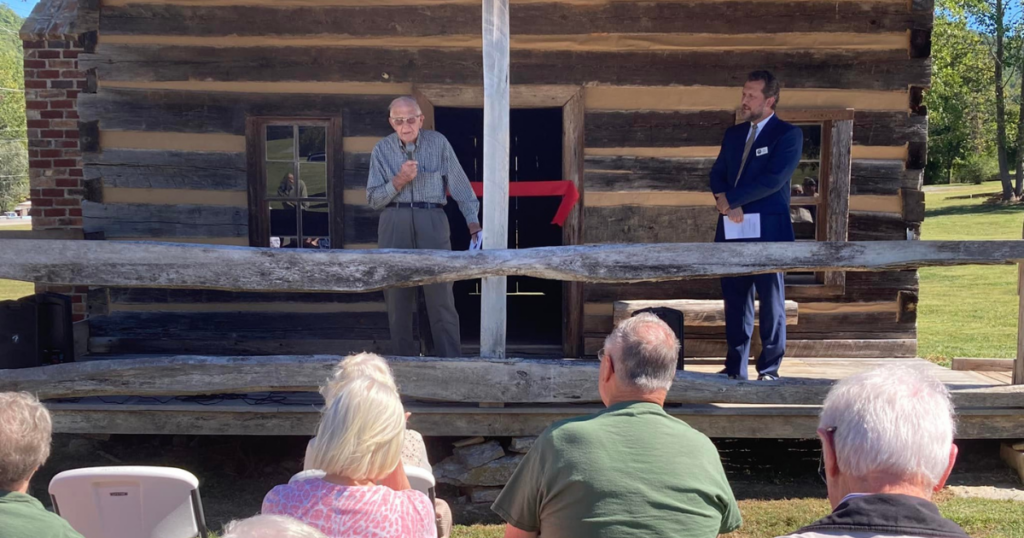
The series was made possible through funding from the Tennessee Arts Commission, which helped the Heritage Center bring in knowledgeable artists such as instructors, musicians, living history interpreters, spinners, weavers and gardeners.
While the focus is on the Davises, the series more broadly reflects what life looked like for a family living in this region at that time. That means the research goes well beyond the house itself. It also considers the political and cultural realities of the period, including the complex web of treaties with the Cherokee during the era.
Guests can attend a single event or follow the full series across the seasons. Each event was designed to stand on its own, but together, they create a fuller picture of what a year in the life of a family like the Davises might have looked like.
And according to Lanier, that life was anything but quaint.
“More chores than we can possibly imagine,” he said with a laugh.
He described days that started before dawn with caring for animals and continued with “tons of manual labor,” from cooking and cleaning to plowing, planting and animal husbandry.
One of the clearest windows into that workload is the Davis family’s original loom, still in the house today. Lanier said women in the family would have spent much of the year spinning wool into yarn, then weaving that yarn into cloth, blankets and rugs during the warmer months before sewing the final products.
“We’re so used to fast fashion and going to the store to get what we need. Realizing someone spent the majority of their time just spinning is a shock to modern people,” Lanier said.
Just one pair of pants, for example, took about nine miles of yarn.
“I think something I see most often is our guests tend to look at our log homes as cozy and quaint and romanticize what it would’ve been like living there,” he said. “It’s just so much more difficult when you really imagine actual life back then.”
“Life was hard. They didn’t know what we do now about medicine, food access, convenience and leisure time. Most of us wouldn’t even make it a day back then!”
The series doesn’t just celebrate old-time skills. It uses them to create context.
“There’s an intangible magic that happens when guests get to immerse themselves in a story,” Lanier said. “It brings it to life in a way that reading can’t. In a small sense, they get to live it, even if for a moment, and by that they hopefully get to understand their world a little better.”
That immersion takes many forms throughout the series, from open-hearth cooking and daily life interpretation with Donna Stinnett to herbal medicine with Debbie Dickey. Gardening programs come with help from the Tuckaleechee Garden Club, while local artists, musicians, spinners and weavers feature the sounds and skills of the era.
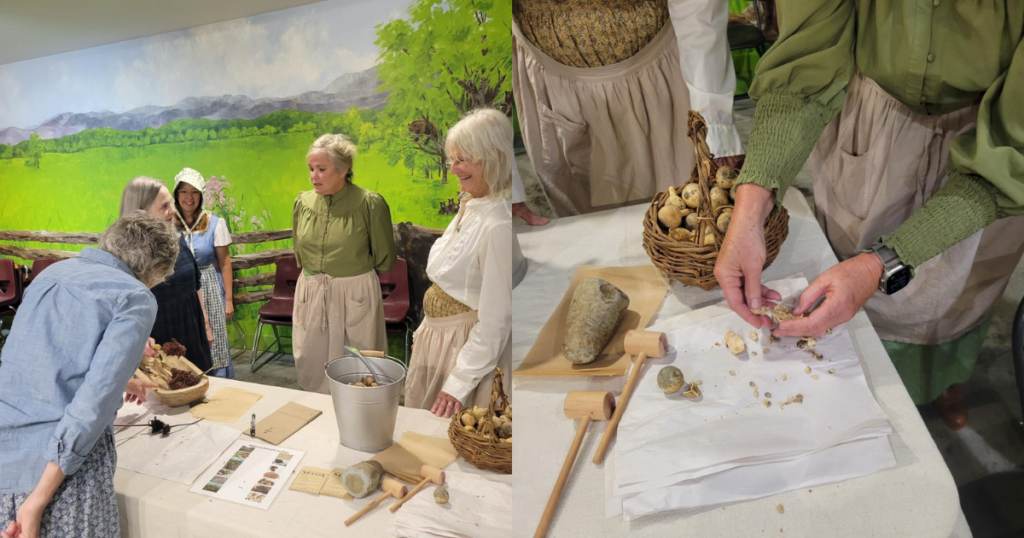
For Lanier, the Davis family works so well because their story was not unusual.
“The main reason we chose the Davis family is that their story is so reflective,” he said. “It is the story of early European settlers in the area.”
“It’s so important to experience the stories of everyday people, not just the George Washingtons or Andrew Johnsons,” Lanier said.
In the end, that is what this series does best. It connects the daily labor of one family to the bigger story of how communities were built, how land was settled and how the past still shapes life in the Smokies today.
“My biggest goal is for people to understand that history is not just about facts and dates,” Lanier said. “It’s about understanding the threads that connect us across time that helps us understand our world a little better.”
“A Year in the Life of an Early-American Family: The Davis Family of Seymour, Tennessee c. 1835” is free and open to the public, with upcoming events primarily promoted on the Great Smoky Mountains Heritage Center’s Facebook page. All ages are welcome.
Born and raised in Maryville, Tennessee, with roots tracing back to Cades Cove, Emily Huffstetler is a proud Maryville College graduate and storyteller of the Greater Smokies region.