
Oct 24, 2024
The Early 20th Century on “The Peaceful Side of the Smokies”, Through Postcards
Written by: Emily Huffstetler
The early 20th century marked a period of transformation for the Peaceful Side of the Smokies. Following the forced removal of the Cherokee people in the late 1830s, European settlers brought new developments to the region. The advent of commercial logging at the turn of the century drastically altered the natural landscape and sparked conversations about conservation. Browse through these vintage postcards and experience the Peaceful Side as it was over 100 years ago.
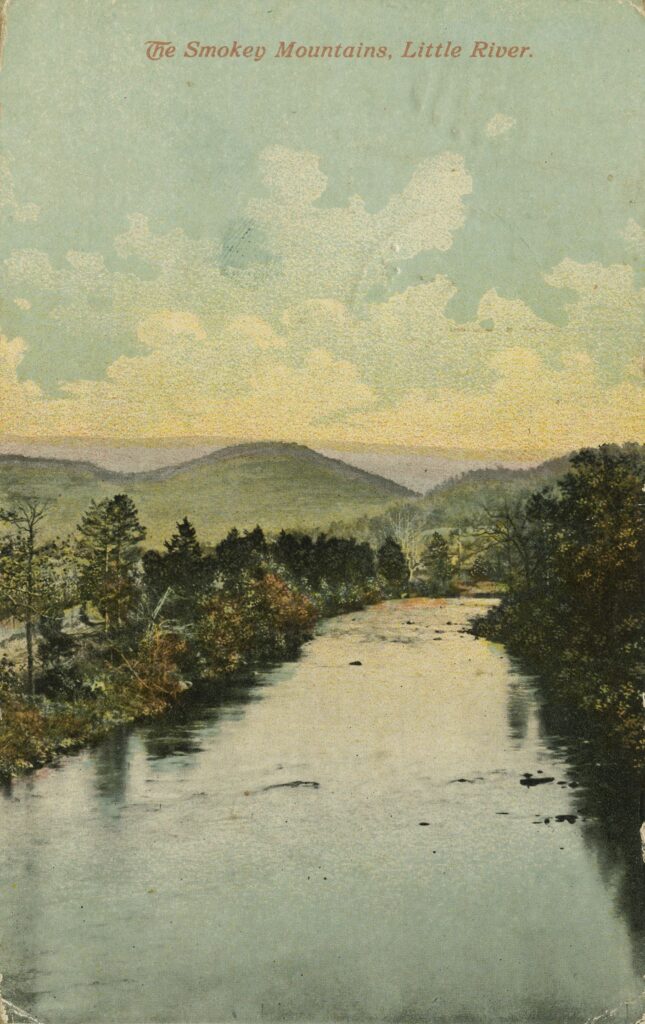
“The Smoky Mountains, Little River“
This postcard, postmarked in Maryville on Sept. 24, 1912, captures a tranquil view of the Little River. The Little River begins at Clingmans Dome, the highest peak in the Great Smoky Mountains National Park, and gains strength as it reaches the foothills.
In 2022, a resolution was passed to restore Clingmans Dome’s original Cherokee name, Kuwahi, which means “mulberry place.” The headwaters of the Little River, considered sacred by the Cherokee, remain a significant cultural landmark today.
Image Source: Great Smoky Mountains Post Cards
“Loading Logs near Elkmont, Little River Lumber Co.“
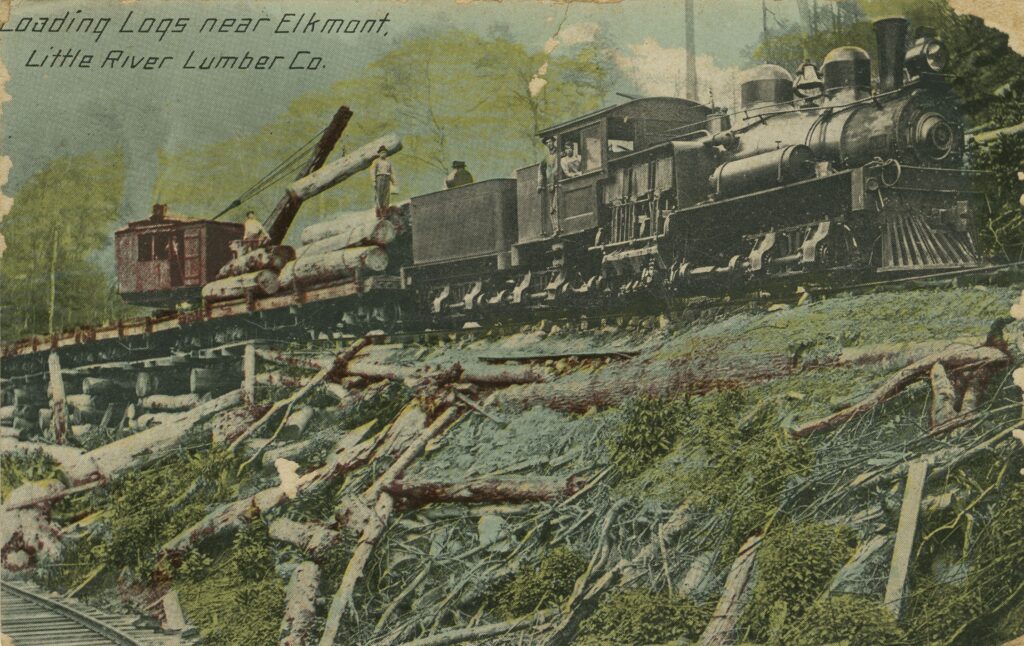
The Little River Railroad and Lumber Company, established in 1901, built 150 miles of railroads and sawed 560 million board feet of timber along the Little River and its tributaries. The last logs came out of the mountains in 1939, 15 years after the establishment of the Great Smoky Mountains National Park (GSMNP).
“In the heart of the Smokies. Elkmont, Tenn. Altitude 2,428 ft.”
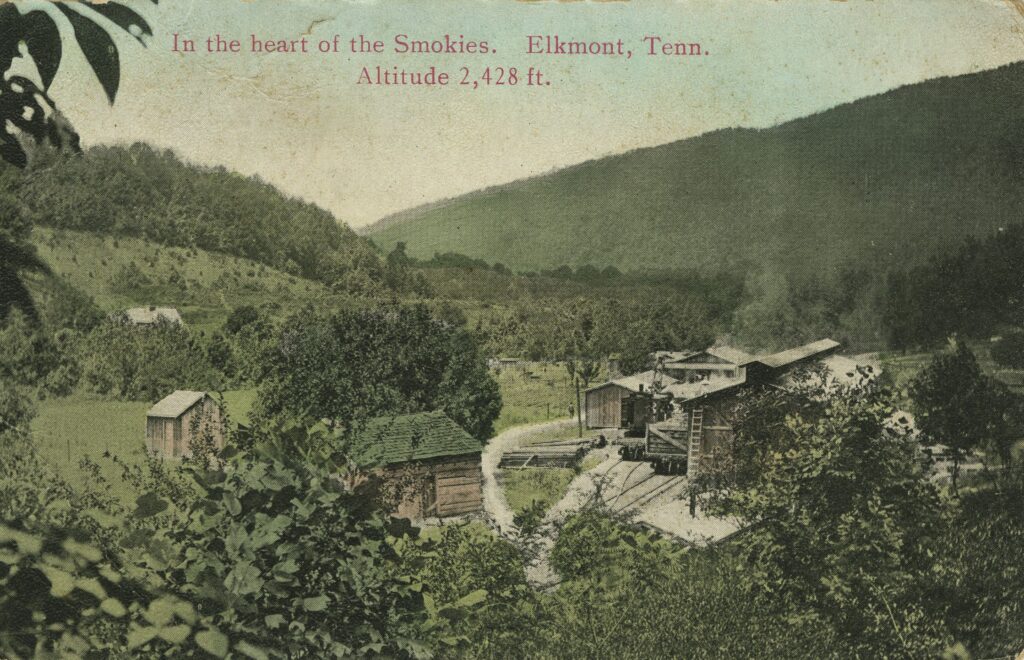
Elkmont began as a hunting camp, but in the early 1900s, the Little River Railroad and Lumber Company turned it into a logging town. Once the company started offering train service for passengers, Elkmont became a popular getaway for wealthy locals, especially in the summertime.
“Falls, Appalachian Club, Elkmont, Tenn.”
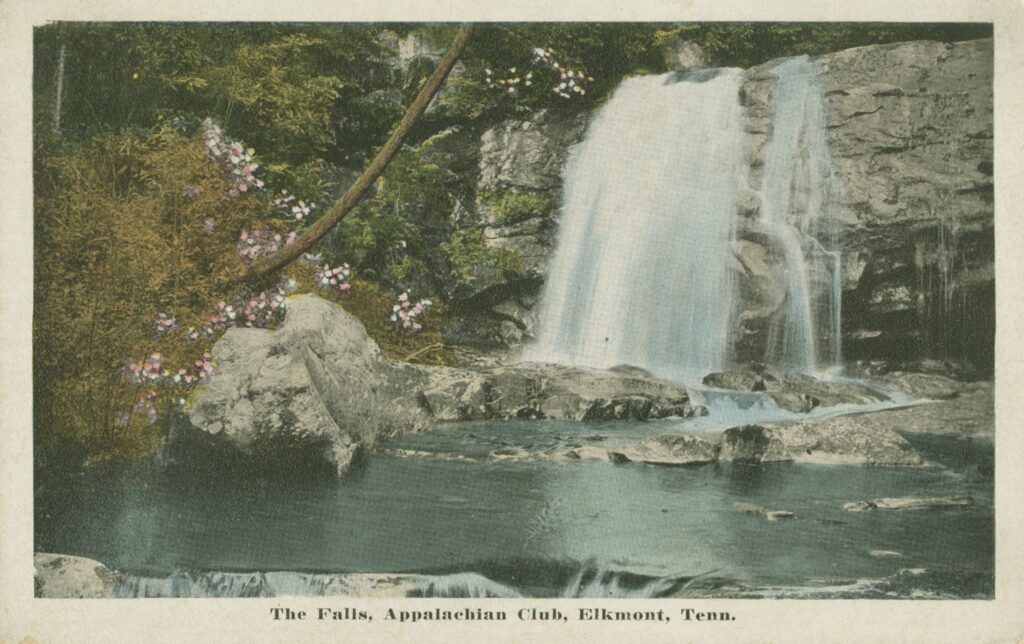
In 1910, the Little River Railroad and Lumber Company subdivided Elkmont, selling 50 acres to the Appalachian Club, a group of wealthy Knoxville businessmen. A few years later, three brothers from Knoxville purchased 65 acres and opened the Wonderland Hotel. Both clubs closed in the early 1990s, after their rental agreements with the Tennessee state government ended. Today, Elkmont hosts the most popular campground in the GSMNP.
“In the Smoky Mountains Near Maryville, Tennessee“
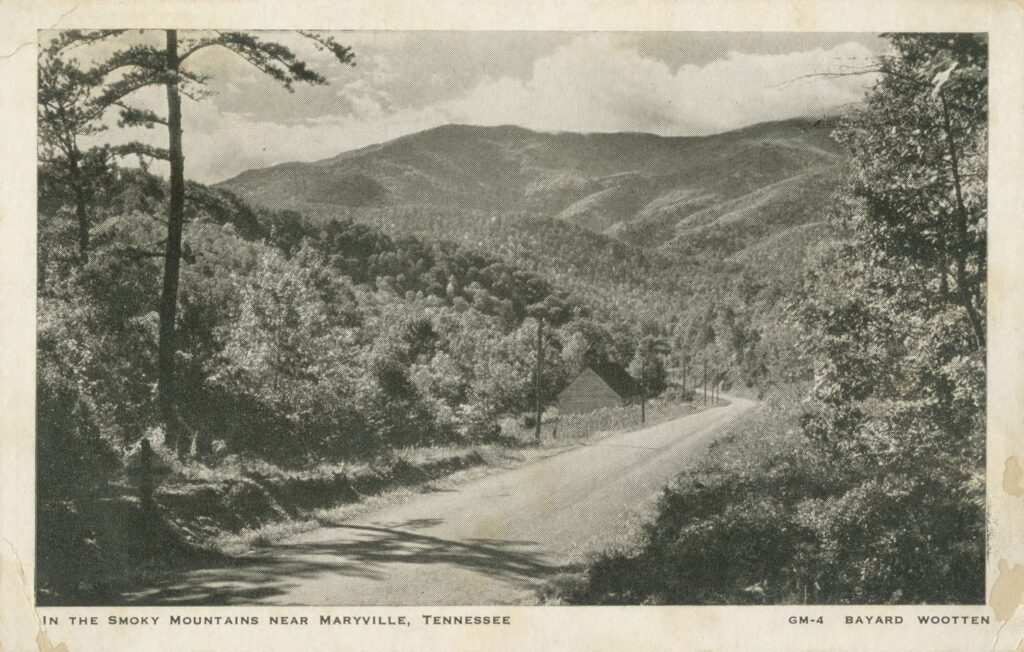
This snapshot of the Peaceful Side of the Smokies, near Maryville, was taken by Bayard Wootten (1875-1959). Wootten was a pioneering female photographer from North Carolina who became the first woman to serve in the North Carolina National Guard as “Chief of Publicity.” In this role, she used her photography to raise public awareness and support for the Guard. Wootten was also among the first women in the U.S. to take aerial photographs. Throughout her career, she produced over a million images.
“In the Appalachian Range”
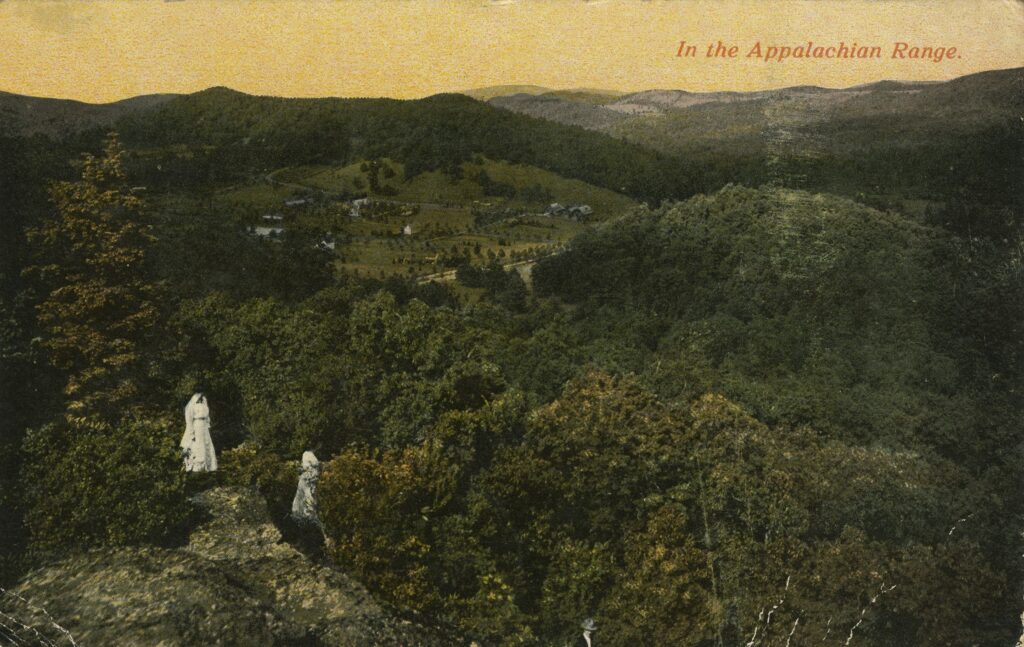
Mailed from Maryville to Knoxville on July 3, 1912, this postcard provides a glimpse into early 20th-century tourism in the Great Smoky Mountains. In the foreground, two women wear white cotton dresses, serving as a reminder of how much outdoor fashion has evolved over the past century.
Interested in learning more about the history of the Peaceful Side of the Smokies? We’re home to a variety of free and low-cost museums.
__________________________________________________________________________________________________________________________________
Born and raised in Maryville, Tennessee, with roots tracing back to Cades Cove, Emily Huffstetler is a proud Maryville College graduate and passionate storyteller of the Greater Smokies region.