Tag: Cades Cove

9 Things to Do After Sunset on the Peaceful Side 

Written by: Emily Huffstetler 

On the Peaceful Side, there’s still plenty to do after sunset. These nine outings range from synchronous fireflies in Elkmont to live music in Townsend, sunset hayrides in Cades Cove and movies at the drive-in in Maryville. 

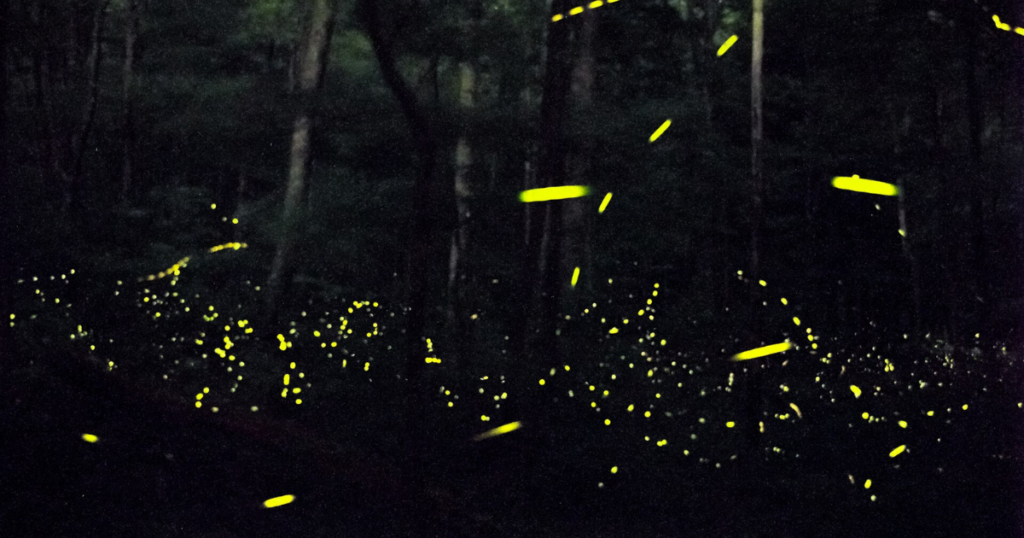
See Synchronous Fireflies 

Photo: Niemand für Polyphemus

Synchronous fireflies are one of the Smokies’ most unusual natural events. For a brief window each year, thousands flash in near-unison. Scientists believe the coordinated pattern is tied to mating behavior. 

The official viewing takes place in Elkmont, where access is managed through a lottery that usually opens in late April. During the eight-night viewing period, nighttime access is limited to reservation holders and registered campers. 

If you miss the lottery, guided outings offer another way to see them. Smoky Mountain Guides and Just Get Outdoors both run seasonal after-dark trips focused on synchronous fireflies and other nocturnal wildlife. 

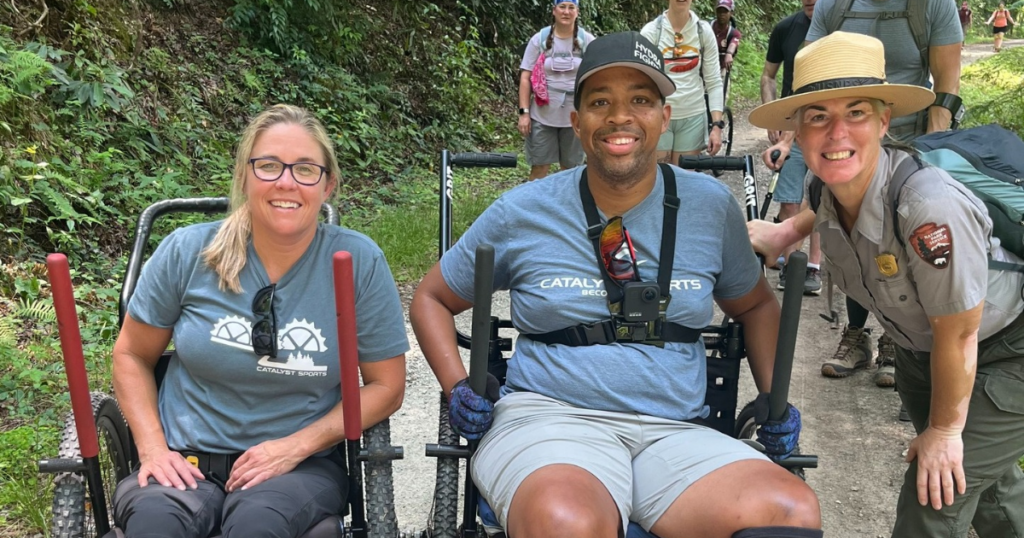
Join an Adaptive Night Hike

Photo: Great Smoky Mountains National Park

Great Smoky Mountains National Park’s adaptive night hike takes place June 5, 2026, on Little River Trail. The route is an easy half-mile roundtrip. 

Adaptive equipment is welcome, and a limited number of GRIT Freedom Chairs are available to borrow. Volunteers will help with navigation. 

The night hike is part of the park’s 2026 adaptive program series with Catalyst Sports. Registration is required. 

Go to an Astronomy Night 

Astronomy Nights offer an all-ages introduction to telescopes and stargazing in Maryville. The Blount County Public Library hosts the program with the Smoky Mountain Astronomical Society year-round. 

Upcoming dates are April 23, May 26, June 22, July 22 and Aug. 20. Each session starts in the Sharon Lawson Room at 6 p.m. and continues outside until 8 p.m. 

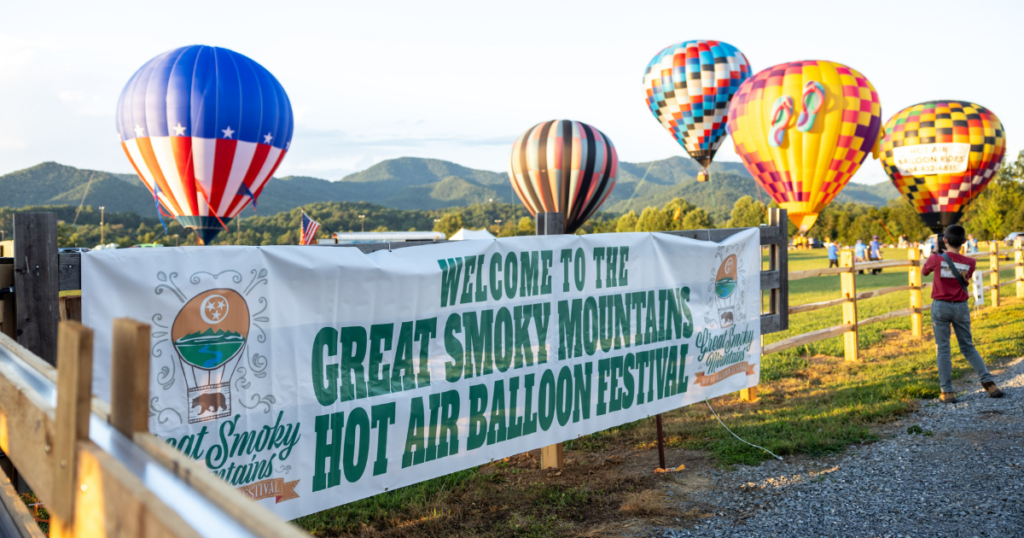
See the Hot Air Balloon Festival Glow 

The Great Smoky Mountains Hot Air Balloon Festival returns to Townsend on Aug. 15, 2026, from 3 to 9 p.m. A highlight of the event is the evening balloon glow, when the balloons inflate and light up against the Smokies. 

Weather permitting, tethered balloon ride ticket holders can meet the balloon captain, learn how the balloon works and rise above the festival grounds. The festival also includes family activities, crafters, food trucks and a beer tent. 

Tickets are on sale now at www.eventeny.com. Some proceeds benefit the Townsend Volunteer Fire Department and Townsend Elementary School.  

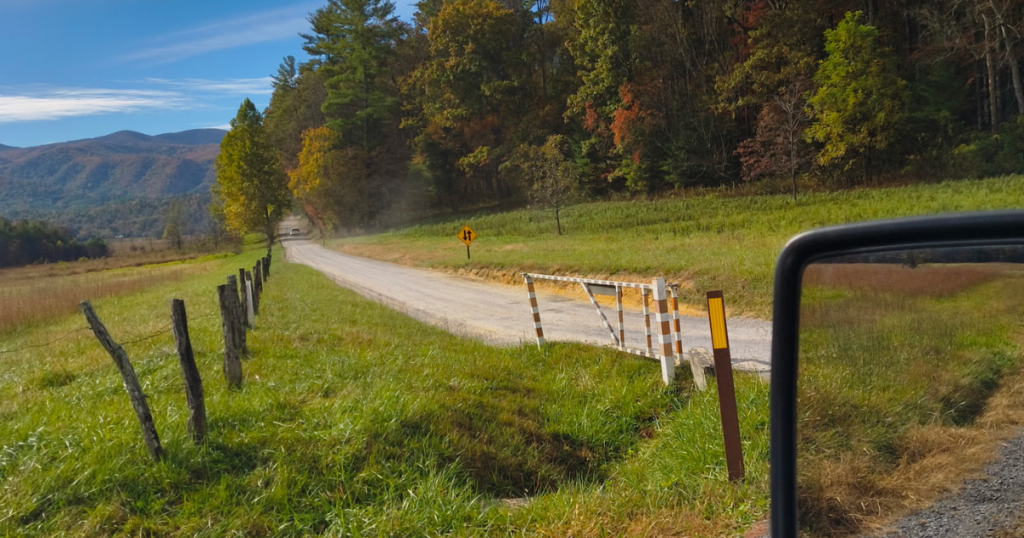
Take a Sunset Hayride in Cades Cove 

Photo: Cades Cove Riding Stables

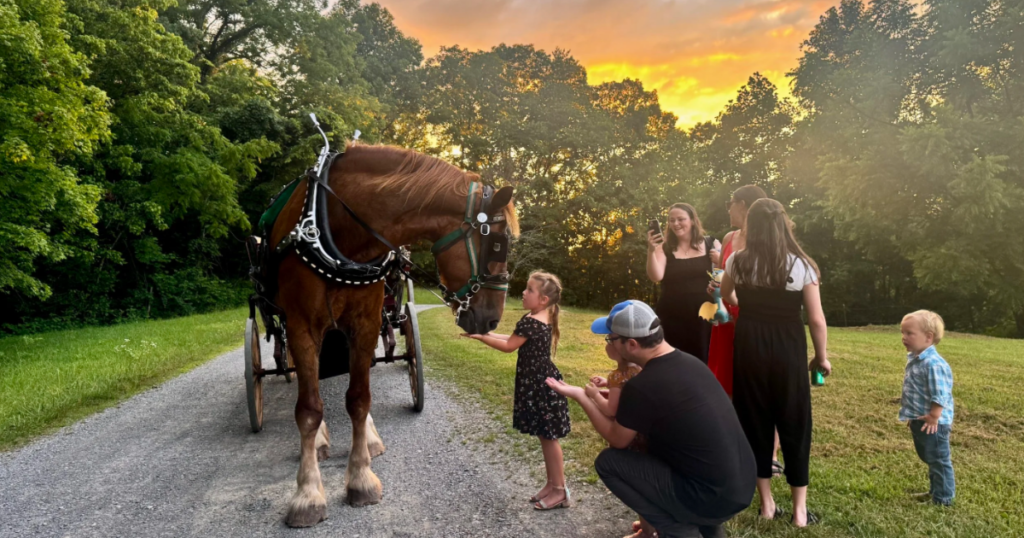
Cades Cove Riding Stables gives hayrides along the Cades Cove Loop Road, with a 6 p.m. departure from June 1 through Aug. 15. The ride lasts about 1.5 to three hours, depending on traffic, and gives passengers an open-air view of the cove in the evening. 

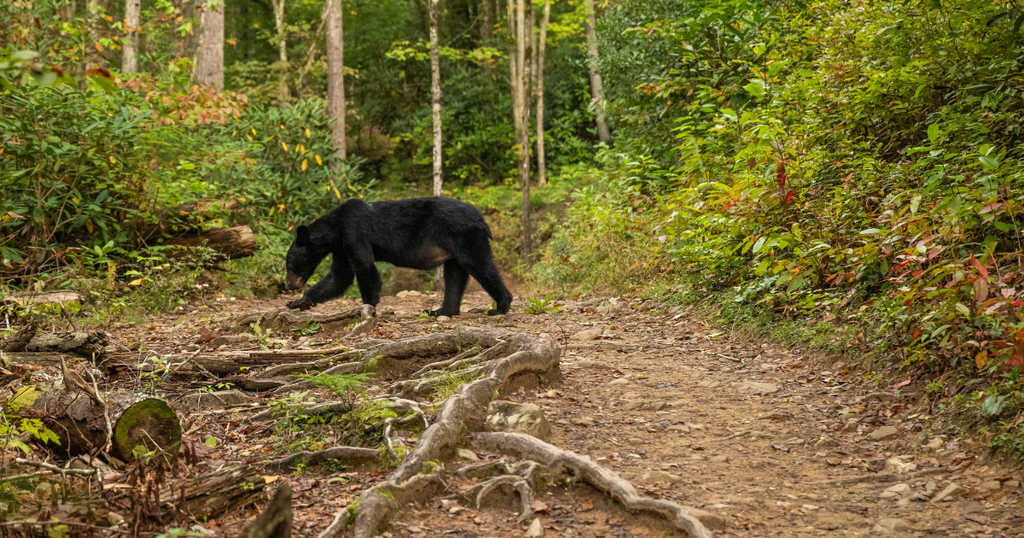
As the light fades, wildlife activity picks up in Cades Cove. White-tailed deer and turkey sightings are common, while coyotes, woodchucks and black bears are also possible. 

Group reservations are accepted for parties of 15 or more at www.CadesCoveStables.com

Spend an Evening on the Farm 

Photo: The Stables at Country Manor Acres

Country Manor Acres in Townsend offers a cozy evening on the farm for individuals, couples and groups. The experience begins with s’mores by the fire pit, followed by a horse-drawn wagon tour of the farm, wedding venue and stables.  

After the wagon ride, guests watch the horses’ nightly stampede back to the barn for dinner. There is also a chance to feed the horses and learn more about their care. 

Appointments are available at www.CountryManorAcres.com. 

Catch a Levitt AMP Concert in Maryville 

Photo: Levitt AMP Maryville Music Series

The Levitt AMP Maryville Music Series brings free outdoor concerts to downtown Maryville this summer. The series takes place every Thursday from June 4 through July 30 from 7:30 to 9:30 p.m. at the Maryville Greenbelt Amphitheater in Jack Greene Park. 

Concerts are free and open to the public. Preview upcoming performances at www.maryvillemusic.com

Listen to Live Music Around Townsend

Photo: Dancing Bear Lodge & Appalachian Bistro

On weekends, live music is easy to find in Townsend. Peaceful Side Social hosts sets on Thursdays and Fridays from 4:30 to 7:30 p.m., while The Abbey regularly schedules live music on Friday and Saturday nights. 

For a bigger night out, the Great Smoky Mountains Heritage Center has evening concerts on the calendar, including Chicken Wire Empire on May 15, Sugaree String Society on May 22 and The Barefoot Movement on June 5. Dancing Bear Lodge also has a Live on the Lawn concert with Sam Bush scheduled for April 23. 

Drive the Foothills Parkway at Sunset 

Photo: Emily Huffstetler

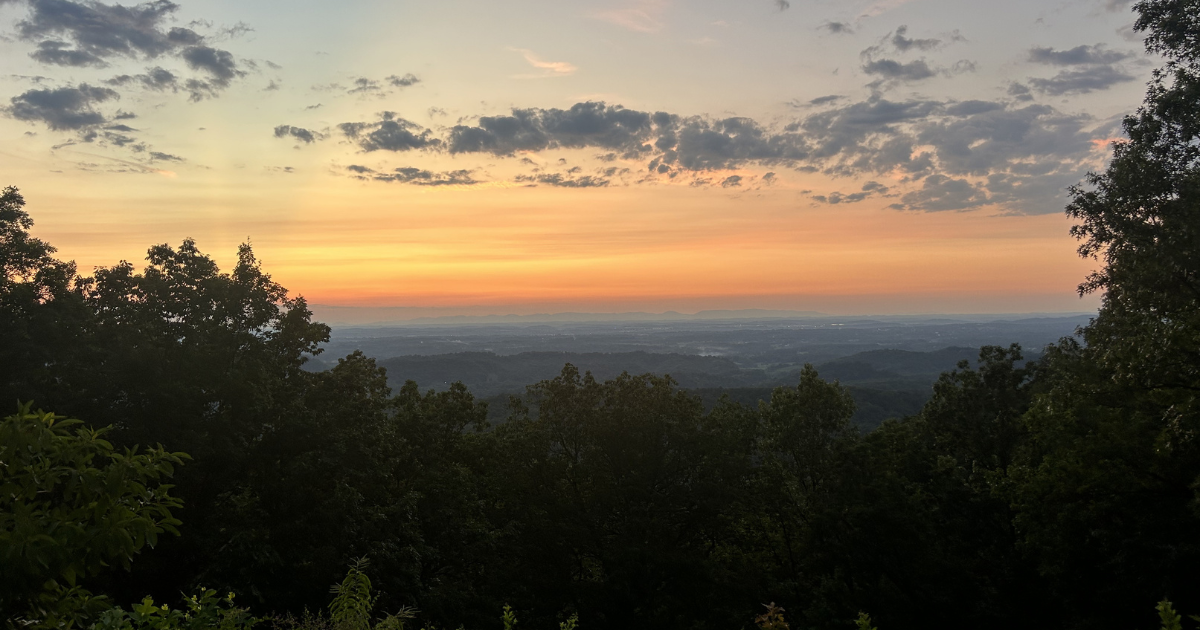
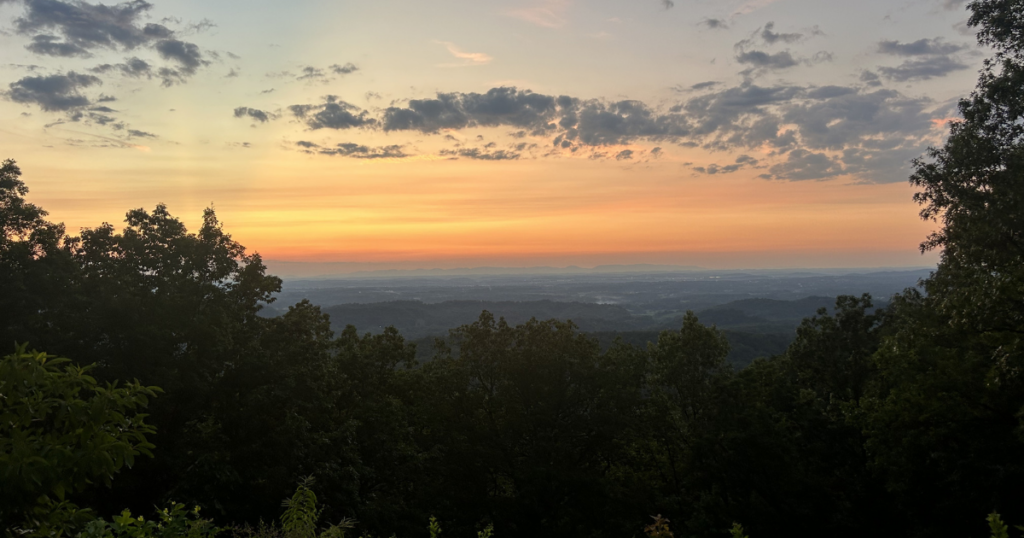
The Walland-to-Wears Valley section of the Foothills Parkway runs 14.75 miles and includes 10 waysides and overlooks. Near milepost 25, Townsend Overlook looks out over town and the Peaceful Side of the Smokies. 

For another short evening stop, Look Rock Tower on Foothills Parkway West has a paved 0.8-mile roundtrip trail and panoramic views of the surrounding mountains and Blount County. 

Catch a Movie at the Drive-In 

Photo: Parkway Drive-In

Parkway Drive-In in Maryville shows movies on Friday and Saturday nights during the season. Gates open at 7 p.m., and films start at dusk, or about 40 minutes after sunset. Concessions include the classics, ranging from burgers, grilled cheese and hot dogs to candy, ice cream and popcorn.

Check what’s playing before you go at www.parkwaydrivein.com

Born and raised in Maryville, Tennessee, with roots tracing back to Cades Cove, Emily Huffstetler is a proud Maryville College graduate and storyteller of the Greater Smokies region. 

BikeTN Names Three Official Cycling Routes on the Peaceful Side 

Written by: Emily Huffstetler 

Three routes on the Peaceful Side of the Smokies are now part of BikeTN, a statewide program from the Tennessee Department of Tourist Development that highlights road and gravel rides across Tennessee. The local additions include a shorter paved ride in Townsend, a gravel climb into Cades Cove and a longer Foothills Parkway challenge. 

Townsend Out-and-Back 

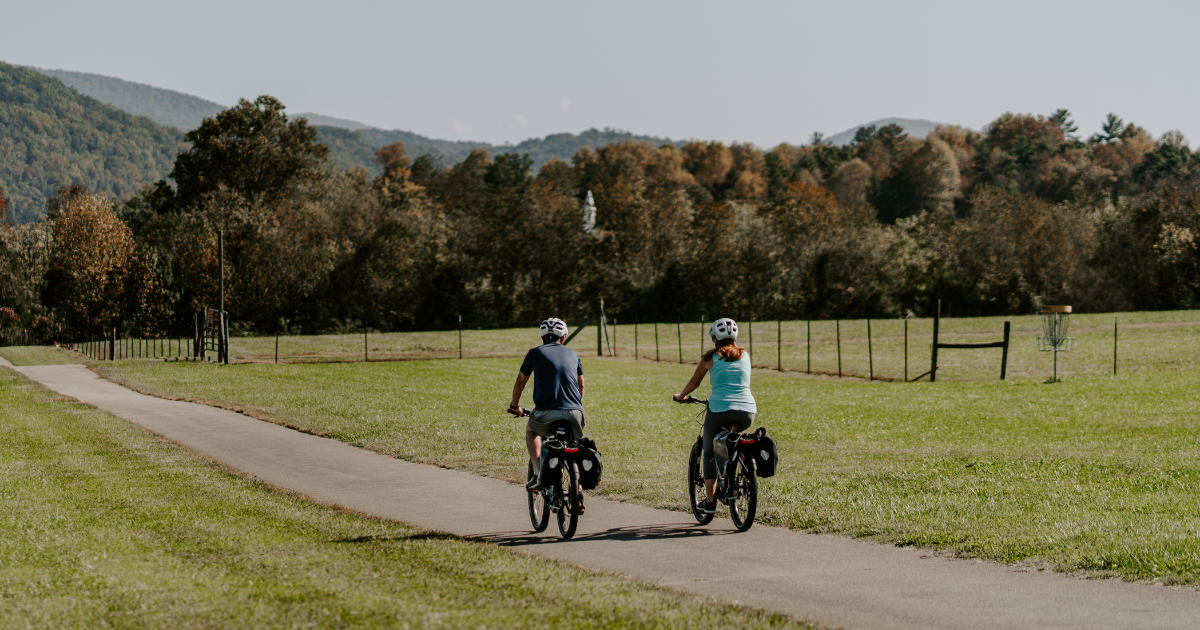
At 19 comfortable miles, the Townsend Out-and-Back is the easiest of the three. While riders can start in several places, the route guide points to Apple Valley Mountain Village & Cafe in Townsend, with easy access to parking, restrooms and food. 

From there, the route heads west on the bike path, drops through the tunnel beneath Highway 321 and continues toward the Townsend Sunshine Covered Bridge. After crossing the bridge, riders turn onto Old Walland Highway, a former main road that now carries mostly local traffic. 

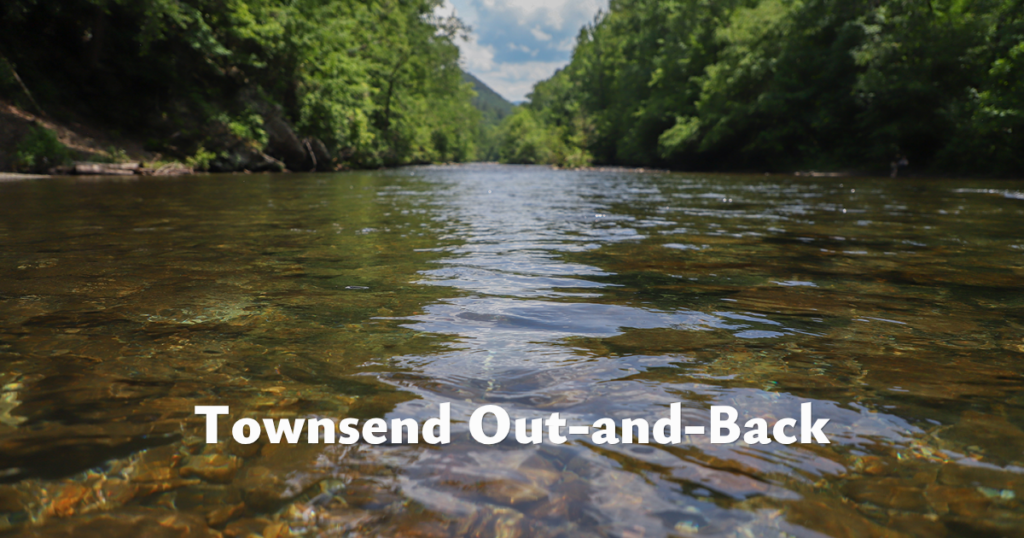
The first several miles follow the Little River. The road rolls but trends downhill early. Around mile five, the route passes under Foothills Parkway, then pitches up into a short climb before dropping into Walland. After another stretch along the river, the road opens into farmland and ends at Ellejoy Road, where most riders turn around. 

Townsend/Cades Cove Gravel Loop

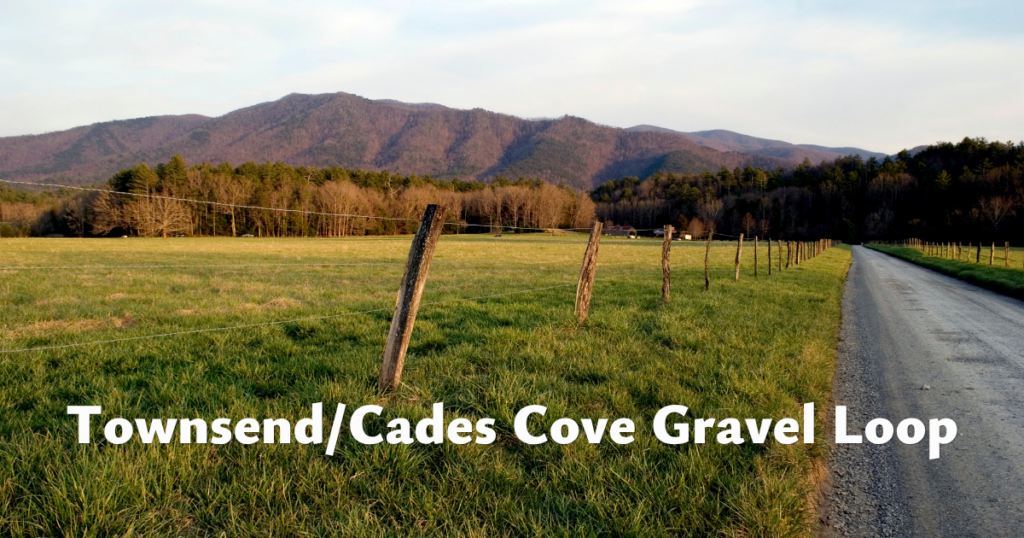
The Townsend/Cades Cove Gravel Loop is the most distinctive of the three, totaling 31 miles. Like the Out-and-Back, it starts at Apple Valley Mountain Village & Cafe. 

From Townsend, the route climbs Rich Mountain on gravel. Grades stay steady, generally between 4 and 6 percent, and the surface stays smooth and compact. Much of the climb stays shaded beneath dense forest, with occasional overlooks through the trees. 

A series of switchbacks drops the route into Cades Cove, calling for a controlled pace. In the cove, the route opens into meadows, historic cabins and one of the best-known landscapes in the national park. Wildlife sightings are common. 

Foothills Parkway Challenge

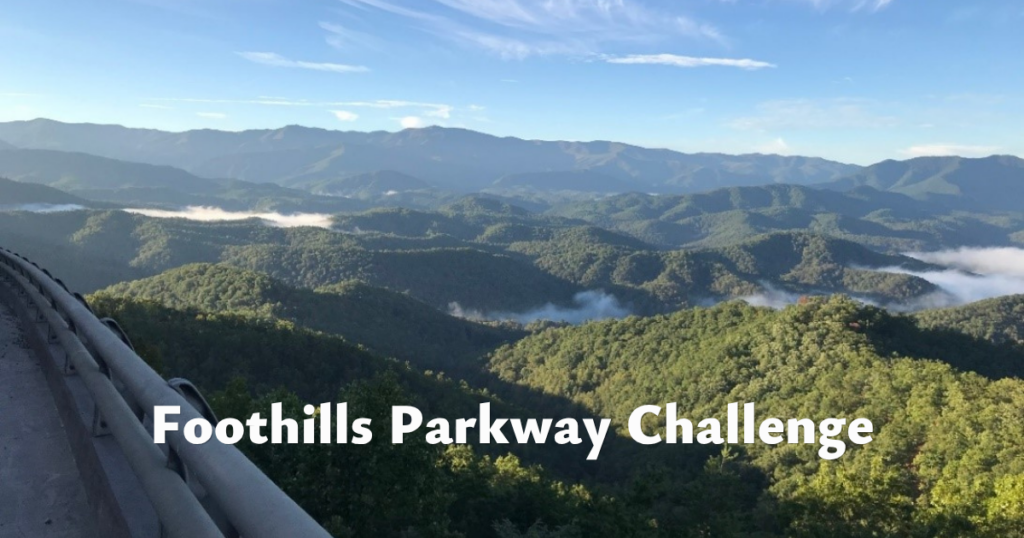
The Foothills Parkway Challenge is the hardest of the three. It’s 63 miles long with about 8,100 feet of elevation gain. 

The route starts in Walland at the pull-off where the two completed sections of Foothills Parkway come together. The route returns there halfway through, so riders can restock or stop early. 

The ride breaks into two out-and-backs. Riders head west first on the older section of the parkway. That side opens with a steady climb, then another, with overlooks and views of the Smokies and surrounding valleys along the way. 

Near the top, riders can detour to Look Rock for the overlook and observation tower. After that comes a long descent toward Highway 129, then the full climb back up.  

The second half follows the newer section. The grades bite sooner, and the views open wider as the road climbs. Riders can stop at a higher overlook for a shorter ride or keep going to Wears Valley before turning back. 

Bike Safety in Tennessee 

In Tennessee, bicycles count as vehicles. Cyclists must ride in the same direction as traffic, obey traffic signs and signals, and use hand signals when turning or stopping. 

Cyclists under 16 must wear a helmet. Anyone riding at night must use a white front light and a red rear reflector or red rear light visible from 500 feet. Tennessee law also requires drivers to leave at least three feet when passing a bicycle. 

Riders should stay far right on descents and blind curves, especially on roads with frequent switchbacks. They should also carry enough water and nutrition, especially on longer routes with limited services. 

Learn more about traffic laws relating to bicycles on the Tennessee Department of Transportation website. 

Upcoming Local Bike Events 

Two cycling events are on the calendar this year. Tour de Blount returns to Maryville on May 23 with 25-, 50- and 75-mile options. Tour de Rocky Top follows in Townsend on July 11, with options ranging from shorter local rides to longer mountain routes. 

Cycology Bicycles in Maryville also hosts free, social-paced group rides on Tuesdays and Thursdays. 

Born and raised in Maryville, Tennessee, with roots tracing back to Cades Cove, Emily Huffstetler is a proud Maryville College graduate and storyteller of the Greater Smokies region. 

Cades Cove Vehicle-Free Wednesdays 2026 

Written by: Emily Huffstetler 

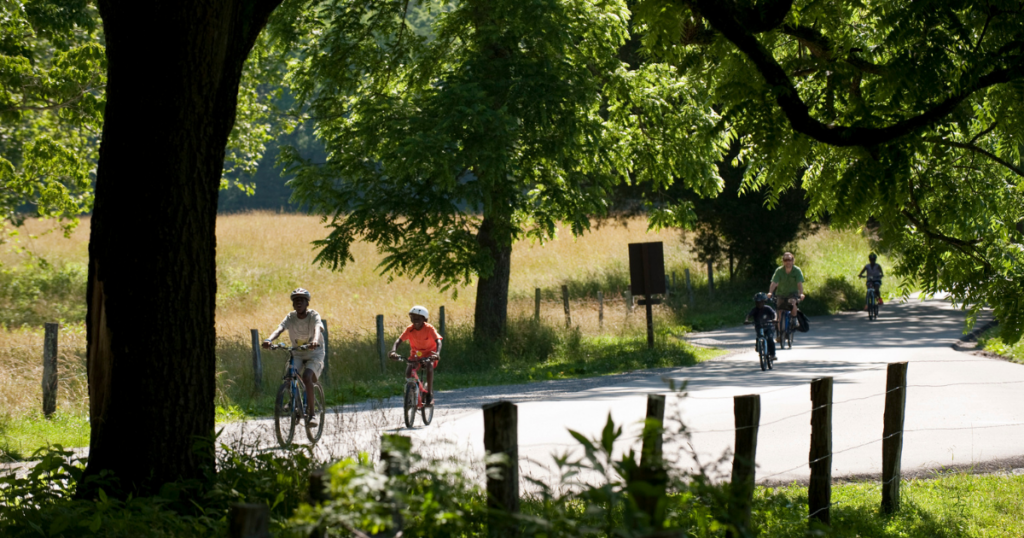
On Wednesdays from May 6 through Sept. 30, Great Smoky Mountains National Park will close Cades Cove Loop Road to motor vehicles. The closure gives cyclists, walkers and runners access to the 11-mile loop without regular car traffic. Here’s what to know before you go. 

Don’t Count on Early-Morning Parking 

Vehicle-Free Wednesdays are popular, and parking is limited. The park recommends arriving later in the day instead of joining the early-morning rush. Once designated parking spaces fill, vehicles will be turned away and asked to return later. 

Visitors parking anywhere inside the national park for more than 15 minutes need a valid parking tag. Tags are available online, at the Great Smokies Welcome Center in Townsend and at fee kiosks at the Townsend Wye and Cades Cove. 

Use designated parking only. Roadside parking creates safety issues for cyclists and pedestrians and can damage roadside ecosystems. The park may ticket or tow illegally parked vehicles. 

Know the Bike Rules 

Bicycles are allowed on Vehicle-Free Wednesdays, including Class 1 and Class 2 e-bikes. Scooters, skateboards and other non-bike devices are not allowed on the loop during vehicle-free days. 

All bikes must follow the posted 20 mph speed limit. Helmets are strongly recommended for all riders, and Tennessee law requires children under 16 to wear one. 

Bike rentals are available near the Cades Cove Campground Store. Rentals are first-come, first-served, and waits are common on vehicle-free days. Cades Cove Trading Company currently lists bikes for ages 16 and up at $15 per hour and bikes for ages 15 and under at $10 per hour. Helmets are included. 

Pack for the Full Loop 

Cades Cove Loop Road is paved, but it isn’t flat. The route includes hills, open stretches with limited shade and enough distance to take longer than expected, especially with stops. 

Bring water, food, sunscreen, a hat, basic rain gear and a small first aid kit. Cell service is limited, so don’t rely on calling someone to bring what you forgot. 

Cyclists should also carry a basic repair kit with spare inner tubes, tire levers, a pump and a multi-tool. Closed-toe shoes are a better choice than flip-flops, especially if you’re renting a bike or planning to stop at historic structures along the way. 

If Parking Is Full 

If you arrive and there’s no parking, leave Cades Cove and try again later. Don’t circle the lot or use unofficial roadside spaces. There’s plenty to do nearby in Townsend. 

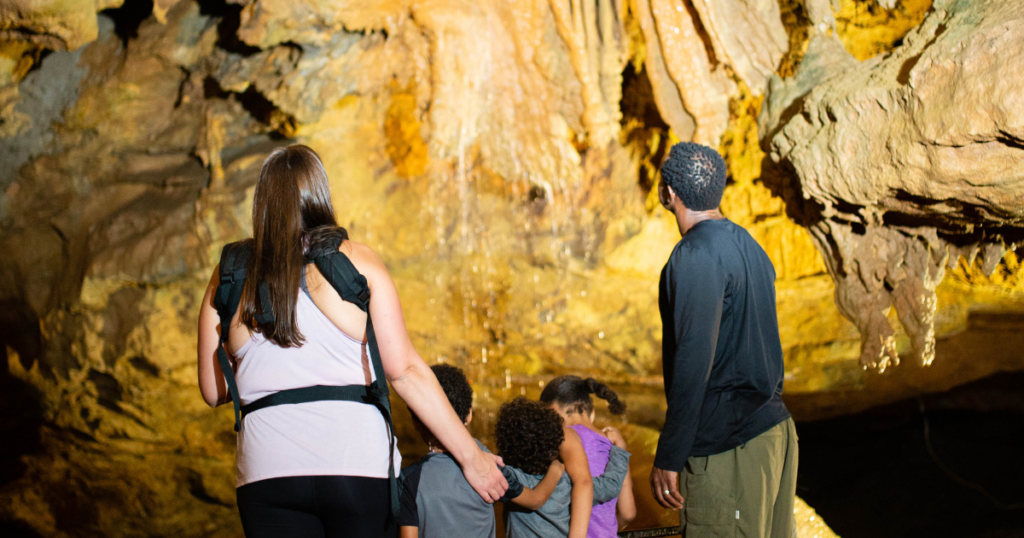
The Great Smoky Mountains Heritage Center is open Monday through Saturday from 10 a.m. to 5 p.m., including Wednesdays during the vehicle-free season. The Little River Railroad and Lumber Company Museum is open daily from May through October, with weekday and Saturday hours from 10 a.m. to 5 p.m. and Sunday hours from 1 to 5 p.m. And Tuckaleechee Caverns is open seven days a week from 10 a.m. to 6 p.m. from April 1 through Oct. 31. 

Born and raised in Maryville, Tennessee, with roots tracing back to Cades Cove, Emily Huffstetler is a proud Maryville College graduate and storyteller of the Greater Smokies region. 

Courtship in Cades Cove: Corn Husking, “Sparking” and Weaner Cabins 

Written by: Emily Huffstetler 

Still looking for a Valentine? In Cades Cove, you might have started with a corn husking. 

Cades Cove’s first permanent Euro-American settlers arrived in 1818, and the community grew steadily through the mid-1800s. By 1850, the Cove’s population was in the high six hundreds.   

In a working valley, neighbors relied on each other. Seasonal labor brought people off isolated farms and into the same place at the same time. 

Corn husking, molasses making and gathering chestnuts were some of the community events where young people could mingle under adult supervision. 

One local account describes a tradition that turned the search into a game. If a young man found a red ear of corn in the husking pile, the discovery earned him the right to “kiss the lady of his choice.” 

Weekly church services brought people together, too. Baptist life split into two congregations in 1839, when a group left over mission work and other practices. Methodists also had an established church presence in the Cove by the 1820s.

For courting couples, Sunday was another chance to see each other. 

Large households shaped the logistics of dating. Families of 10 to 12 children weren’t unusual, and privacy was limited in one- and two-room cabins. That pushed conversations outside, on porches and in yards. 

One interpretive guide for the Cove published by the Great Smoky Mountains Institute at Tremont points visitors to a porch bench near Cable Mill used for “sparking,” an older term for courting. 

The word also shows up in a recorded Cades Cove interview from the 1930s, where a speaker recalls older boys teasing children about “sparking,” and an adult stepping in to explain what it meant. 

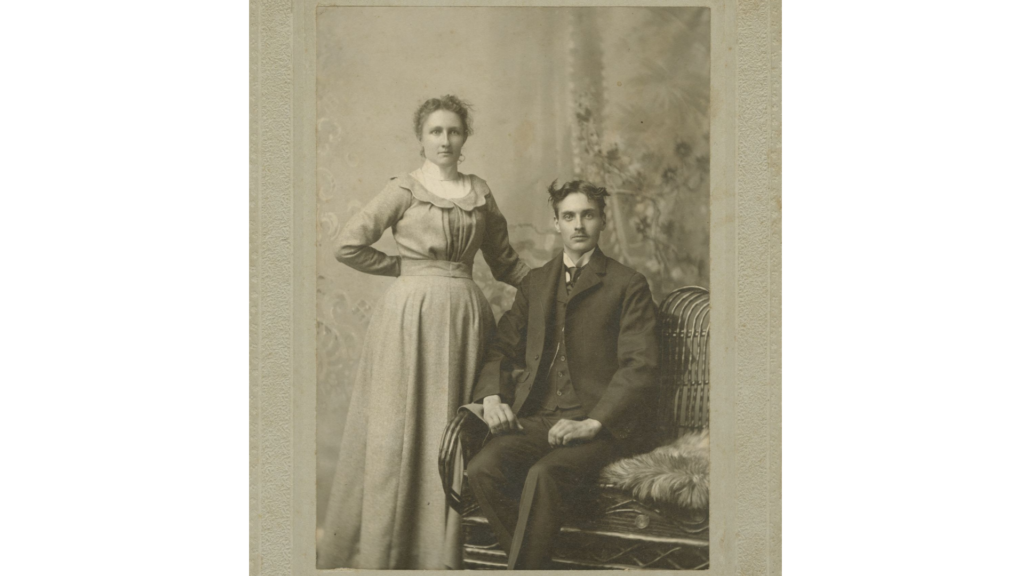
“This picture was taken at Maryville Tenn on Saturday afternoon of January 26, 1901… Next day, Sunday, Nancy Ann and I rode horseback… to Cades Cove a distance of 20 miles… We were 22 years old and not married. We were married Sept. 4, 1901.” —John W. Oliver 

Oliver (1878–1966) is the author of the Fifty Years in Cades Cove memoirs, a handwritten account of the valley’s families and daily life from early settlement through the early 1900s. Photo courtesy of University of Tennessee, Knoxville. “Fifty Years in Cades Cove Collection.” John W. Oliver and wife, Nancy Ann (Maryville, 1901). 

Sparking often moved toward marriage. In much of Southern Appalachia, weddings were informal during this era, staged in either the bride’s or groom’s home.  

Some newlyweds would spend their early days of marriage in a “weaner cabin,” far enough away for independence but close enough for family assistance. 

After the ceremony, friends sometimes returned late at night to “serenade” the couple. They’d go from house to house making noise, ringing cowbells and even firing guns. This was part of a wider rural tradition known elsewhere as a “shivaree” or “charivari.” 

Born and raised in Maryville, Tennessee, with roots tracing back to Cades Cove, Emily Huffstetler is a proud Maryville College graduate and storyteller of the Greater Smokies region. 

Enjoy a Driving Tour of Cades Cove with the Family

Heading out into the wilderness seems simple, but it can be complicated – especially when the whole family, with everyone’s disparate ages and tastes, is heading out together. The teenagers in the group want to tackle a challenging trail, while the older and younger crowds are looking for something that’s a little slower-paced. Grandparents and grandchildren may need stroller and walker accessibility, and some members of the family would just as soon be lounging on the back of a pontoon boat, waiting for the fish to bite. How can you keep everyone together?

Take Everyone on a Drive Through Cades Cove

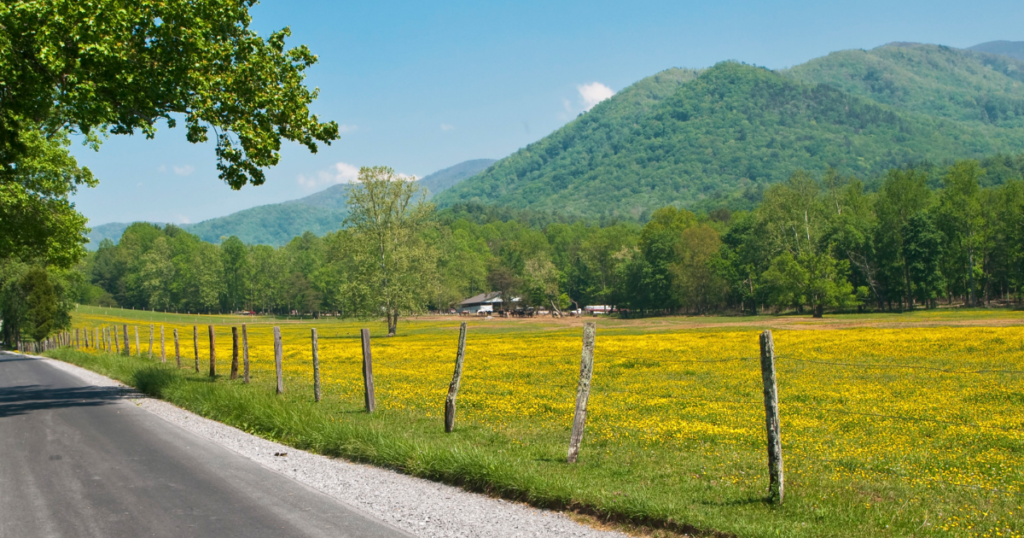
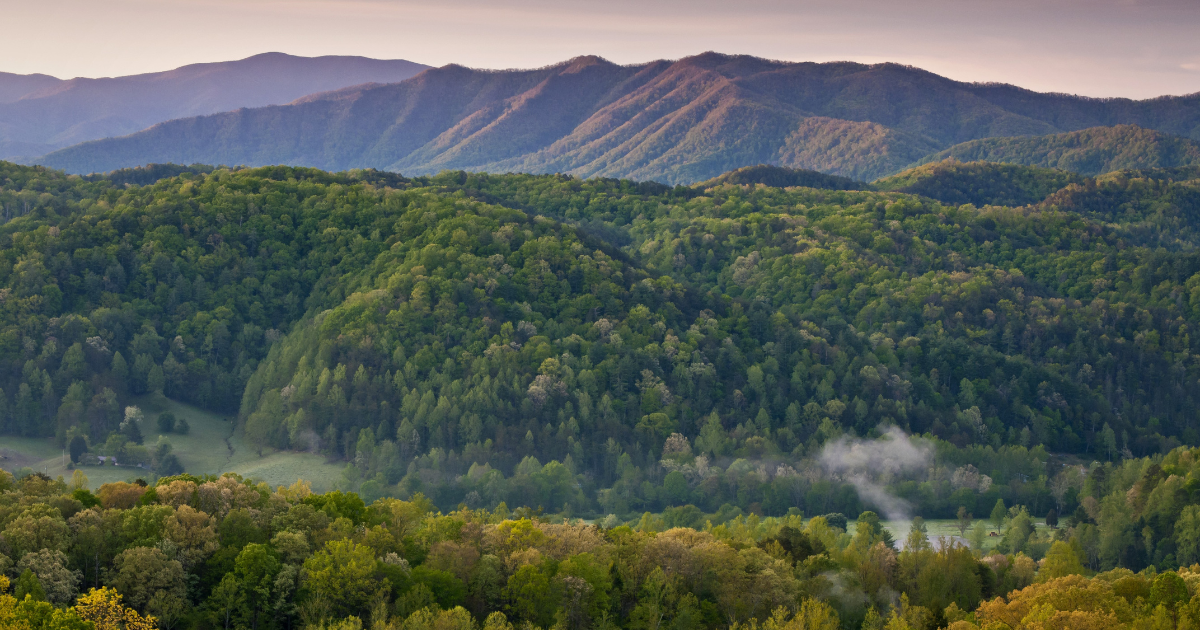
Anyone coming to the Blount County sections of Great Smoky Mountains National Park who hasn’t heard of Cades Cove is sure to get the scoop eventually. It’s well-known for good reason. The Cove is a broad, green, lush mountain valley in the middle of the Smokies, and one of its most popular destinations.

Cades Cove also includes an 11-mile loop road that circles the Cove in one direction and is open to tourists year-round. Bicyclists and hikers can enjoy it traffic-free every Wednesday and Saturday morning before 10 AM; otherwise it’s “open season” for motorists on driving tours. Taking everyone on a driving tour is a great way to keep the family connected – you’re all in the same car (or caravan!), and you can listen to the music of your choice and chat about the scenery as you cruise past.

What You Might See in Cades Cove

Great Smoky Mountains National Park and Cades Cove are famous for wildlife viewing, including white tail deer, coyote, elk, fox, and black bears, as well as groundhogs, turkeys, raccoons, and skunks (be careful!). That’s not all – the loop road has a rich history, as well.

As you drive along the loop road, you can see (or park and walk to) buildings like churches, a working grist mill, log houses, and other buildings from the 19th century that have been restored since being originally built by the area’s first migrants from Europe. Numerous trails are also accessible from the road, so you – or just the more active members of your party – can park and walk off the beaten path for a closer look at some Tennessee wilderness.

Get More Details at the Visitor Center

When planning your drive of the Cades Cove loop road, make sure to dedicate at least 2 to 4 hours for the experience, especially during the summer and fall seasons when traffic can be heavy. Cades Cove is accessible from Laurel Creek Road year-round, and Parson Branch Road or Rich Mountain Road during the warmer months.

Cades Cove also includes a Visitor Center halfway around the loop that features restrooms and a bookstore, as well as trail maps and guides that provide more information on the history of the trail and of Great Smoky Mountains National Park. Open every day but Christmas, it’s there to provide visitors with a more educational, immersive, safe and fun Smokies experience.

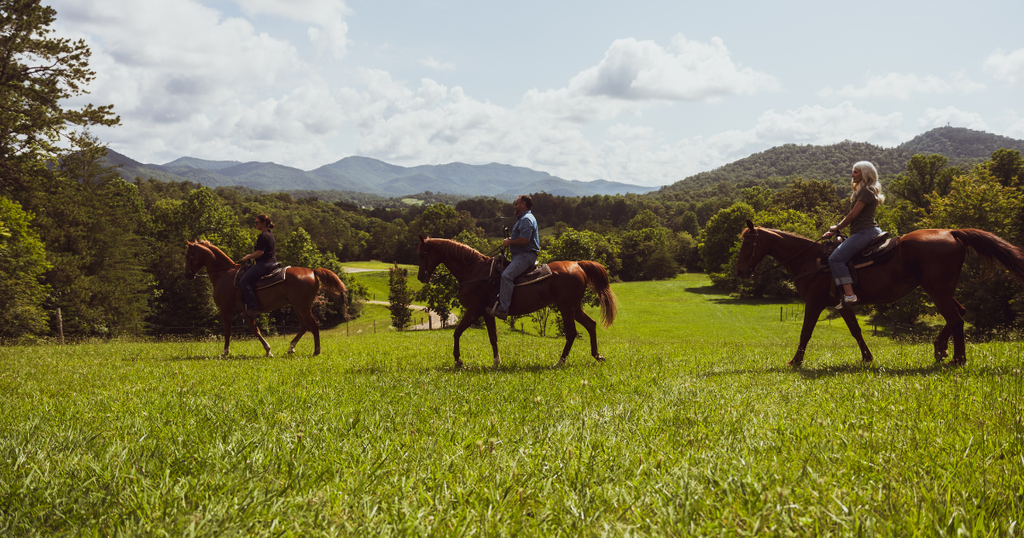
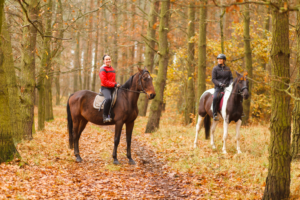
For a Unique View of the Smokies' Fall Foliage, Saddle Up and See it from Horseback

Are you planning an autumn visit to the Smokies? If so, you’ll love the peacefulness of the season. The summer crowds have departed, and colors of fall are settling into the region. Look up at the peaks and you’ll see the first hints of red, gold and orange, and along with those colors comes a wonderful change in the weather. Cool and sunny days make it easier than ever to spend most of your time outdoors in the amazing landscape.
And while there are many amazing trails, drives and attractions to visit, you don’t have to walk or drive to all of them. In fact, one of the best ways to take in the views of the autumn season are from the back of a horse!

Smoky Mountains Activities

A lot of travelers think of spending their time in the area in their cars, on foot, on bicycles or even floating in a boat or inner tube, yet the beauty of the autumn season can also be experienced via horseback riding. There are many different stables available, and all of the horses are well-accustomed to first-time riders as well as experienced travelers.
There are not many options for unguided journeys, but if you wish to go on your own along the trails, it is possible. Either way, whether as part of a group and guided ride or on your own, you’ll find the woods remarkably quiet and peaceful and the experience unforgettable.

Horseback Riding Stables in the Smokies

For those eager to see for themselves just how wonderful a visit to the Smokies might be when a horseback riding adventure is included, we suggest the following stables:

Next to Heaven Mountain Adventures

This is for those who want an unguided experience. You are carefully matched with your horse and you can then follow the existing trail that leads into the mountains surrounding the stables. The horses are so clever that you just cannot possibly get lost, and even if you get confused, they’ll take you right back home! The site also makes ziplining available in the canopy of trees overhead.

Cades Cove Riding Stables

This is one of the most familiar and famous because it is the only option within the actual Great Smoky Mountains National Park. There are fully guided trails, and riders can rest assured that the horses are incredibly gentle and patient. You can also book a hayride or a carriage ride.

Davy Crockett Stables

Another of the stables open to people of all riding levels or skill is Davy Crockett Stables. You can take half day rides or shorter adventures, and most of the tours lead into the woodlands and beautiful, natural areas.
You can also book your accommodations at a ranch, the Twin Valley Horse Ranch and enjoy full or half day rides, and if you don’t yet know how to ride, why not enjoy a day spent in the autumn landscape at the Rolling Hills Farm Equestrian Center or the Mountain Meadow Equestrian Center?
The fall colors come and go quickly, and you can really make the most of them when you enjoy them from the comfort of a calm, friendly horse’s back!

From Great Depression to Great Smokies: The CCC’s Legacy in East TN 

Written by: Emily Huffstetler

On September 2, 1940, thousands gathered at Newfound Gap to dedicate Great Smoky Mountains National Park. President Franklin D. Roosevelt, standing against the backdrop of spruce and fir, promised the land “to the service of the millions of American people.”1 

“There are trees here that stood before our forefathers ever came to this continent; there are brooks that still run as clear as on the day the first pioneer cupped his hand and drank from them. In this Park, we shall conserve these trees, the pine, the red-bud, the dogwood, the azalea, the rhododendron, the trout and the thrush for the happiness of the American people,” Roosevelt said.

That moment didn’t come without a cost. When Congress authorized the park in 1926, Tennessee and North Carolina set out to buy nearly half a million acres from private owners. For many residents, the outlook was grim. Offers often amounted to only half of a farm’s value, and when owners resisted, the state invoked eminent domain. More than 5,000 people ultimately left their homes

By the early 1930s, the park was a patchwork of cut-over timberlands, abandoned farms and rough roads—a challenge only deepened by the Great Depression. 

Change arrived in 1933 with Roosevelt’s creation of the Civilian Conservation Corps (CCC). The program put young men to work on conservation and infrastructure projects across the country. In the Smokies, it became the single most important force in shaping the new park. 

The first CCC camps arrived that May. Within a few years, there were 22 across the Smokies, with Tennessee sites at Sugarlands, Elkmont, Cades Cove, Greenbrier, Cosby Creek and along the Middle Prong of Little River. At the program’s peak in 1935, 17 camps operated at once—nearly 15 percent of all CCC camps in national parks nationwide.

From 1933 until the program ended in 1942, enrollees transformed the Tennessee side of the park. They cut and graded trails across rugged ridges and converted logging railroad beds into roads still traveled today, including the Little River Road. Road crews stabilized slopes, laid culverts and rebuilt bridges near Cades Cove and Townsend.3

Building the Miry Ridge Trail. Photo courtesy of the National Park Service.

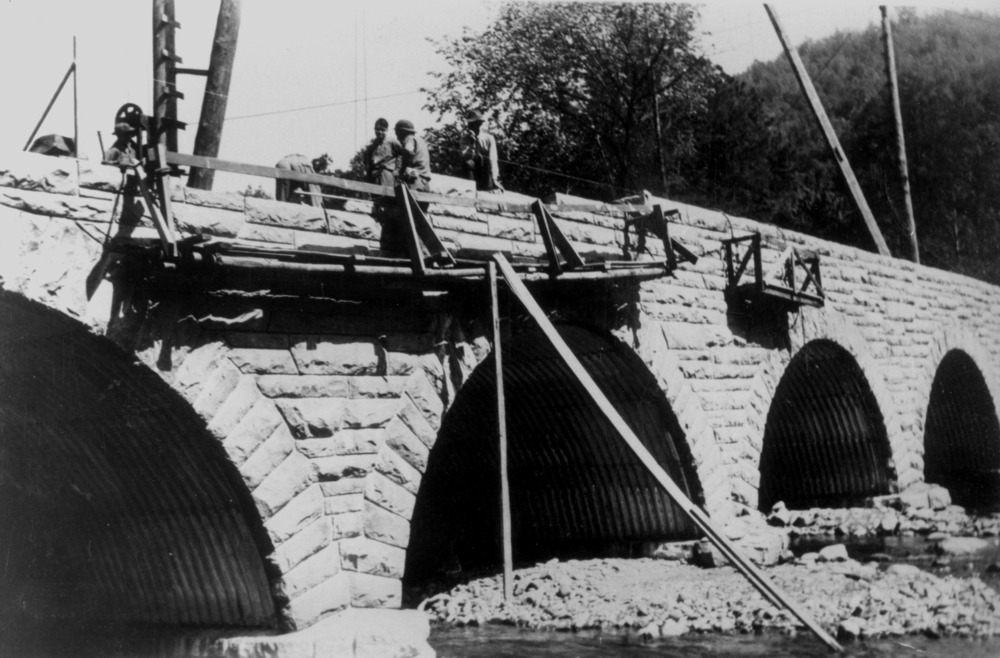
Stone masonry became one of the CCC’s most lasting signatures. Workers built miles of guardrails and dozens of bridges with locally quarried rock. In Elkmont, they completed the arched stone bridge over the Little River, still in use over 80 years later. 

Building the Elkmont Bridge. Photo courtesy of the National Park Service.

Key sites across the Smokies also bear their imprint. At Newfound Gap, crews landscaped the overlook, created parking areas and erected the Rockefeller Memorial. Near Kuwohi (formerly Clingmans Dome), they carved a trail to the summit and, in 1938, raised a 40-foot wooden observation tower. In Sugarlands, they laid the foundation for the park’s headquarters complex.3

The CCC also supported park management, stringing telephone lines, maintaining fire breaks and building nine fire towers with lookout cabins. At Kephart Prong, they constructed a fish hatchery that stocked mountain streams with trout. 

In Cades Cove, crews turned their attention to cultural preservation. Between 1935 and 1937, they restored the Cable Mill and moved historic farm buildings to the site, creating the park’s first outdoor museum. They stabilized homesteads belonging to the John Oliver, Elijah Oliver, Henry Whitehead and Peter Cable families, ensuring some of the cove’s oldest structures survived.3 

By the time the last camps closed in 1942, more than 4,000 men had passed through 22 Smokies camps.What Roosevelt dedicated in 1940 as a promise to the American people was, in large part, the hard work of the CCC. 

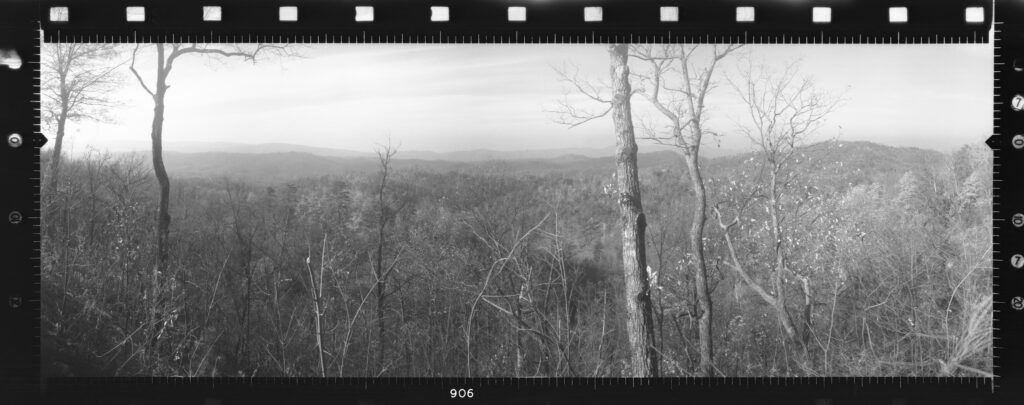
Panoramic view from Hesse Creek. Photo courtesy of the National Park Service.

The CCC’s work also included documenting the landscape. In 1933, a young enrollee named Lester Maynard Moe was assigned to photograph panoramic views from fire towers as part of a nationwide project to map and manage the new parks.

Moe later continued the effort with the National Park Service, producing nearly a hundred sweeping images of the Smokies. His photographs remain among its earliest enduring records.

__________________________________________________________________________________________________________________________________

  1. Tennessee State Library and Archives
  2. Superintendent’s Monthly Report, May 1933
  3. National Register of Historic Places Multiple Property Documentation Form, prepared by The Public Archaeology Laboratory, Inc.
  4. National Park Service

Born and raised in Maryville, Tennessee, with roots tracing back to Cades Cove, Emily Huffstetler is a proud Maryville College graduate and passionate storyteller of the Greater Smokies region.

History Buffs Love Learning the History of the Smokies at Cades Cove

Cades Cove is one of the most visited parts of America’s most visited national park, but there’s more going on in these Tennessee woods than breathtaking natural beauty. Visitors to the Cove with a taste for history will get more than their fair share when they experience the famous Cades Cove loop for themselves.
How to Do the Loop
Cades Cove is a wide valley famous for its wildlife viewing, and it’s also one of the most accessible ways to experience a national park. No hiking is necessary; visitors can drive an 11-mile, one-way loop road through the park, and pull off at certain points to stretch their legs and experience the Cove. It takes from 2 to 4 hours to make it through the Cades Cove Loop in a car, but bikers and pedestrians have the loop road all to themselves on Wednesdays and Saturdays before 10 AM, and so they won’t be slowed down by traffic.
Look Out for the Locals
Cades Cove isn’t just popular with people; animals like white-tailed deer, black bears, coyotes, ground hogs, and wild turkeys also love the valley. Foxes and even the occasional beaver also make the region their home. The hiking trails nearby, like the trail to Abrams Falls or to Rocky Top, offer even better chances to see some animals in action, since they are less likely to be spooked by crowds. Birders will want to keep their eyes peeled for Great Blue and Green Herons, as well as Golden Eagles and American Kestrels.
Check Out the Architecture
Cades Cove was settled by Europeans beginning in the 1820s, and some of their architecture is still standing. Pioneer life in early Appalachia wasn’t easy, and the buildings reflect that. The John Oliver cabin, built in 1822, is sturdy and still stands, as do a number of churches from the mid-1800s, and other 19th– and early 20th-century pioneer cabins and outbuildings.
Cades Cove is also famous for the John Cable Grist Mill, which features the typical mill wheel. The mill actually still works; Cades Cove visitors can watch grain being ground, and then purchase the results at the Cades Cove Visitors Center (along with various jams, jellies, and locally-made trinkets). How’s that for a taste of history?
Take in History, Step by Step
One of the great things about Cades Cove is how visiting these buildings in the Tennessee woods feels like stepping directly into the past. Make sure to stop at the Cades Cove Visitor Center for trail maps and historical information to give you all the context you need to fully appreciate your visit, and don’t procrastinate about taking your trip to see Cades Cove. Even history buffs shouldn’t wait forever!
 

It’s Camping Season: Places to Stay in the Peaceful Side of the Smokies

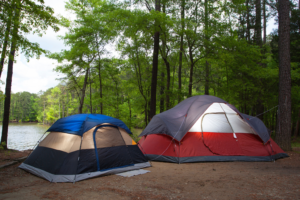
With cooler temperatures and the emergence of vibrant red and orange hues, fall is upon us, which means camping season is here. Bundle up! These are the top places to camp in the Peaceful Side of the Smokies.

Make it a family vacation.

Big Meadow Family Campground (RV only)

It’s no surprise the National Association of RV Parks and Campgrounds named this RV park its National Small Park of the Year in 2013 and 2019. They offer easy in, easy out pull-through campsites on concrete pads and patios, protected by 24/7 security. Their full hook up sites include water, sewer, major cable, Wi-Fi and 30/50 AMPs. And with a dog park, workout room, splash pad, basketball court and corn hole, there’s something for the whole family to enjoy.

Townsend Great Smokies KOA (RV, tent and cabin)

With recreational activities abounding, including an outdoor cinema, a playground, a basketball court, wagon rides, a pool, bike and tube rentals, tie-dyed t-shirts and more, Townsend Great Smokies KOA is a great family vacation destination. Rough it in a tent, park an RV and plug into 50 AMPs, or book a cabin. Deluxe cabins feature private bedroom(s), bathroom, patio with a grill, and full linens. You can even stay right on the Little River.

Little River Campground & RV (RV, tent and cabin)

Little River Campground is a great place to make memories with your family. Go tubing in the Little River, swim in the pool, or play in the game room. There are arts/crafts to do on Fridays, including souvenir t-shirt decorating, and there are hayrides on Saturdays. The campsite has 30/50 AMPs, Wi-Fi and Direct TV.

Go on an adventure.

Twin Valley B&B Horse Ranch (Cabin and primitive shelter)

If you’re down for an adventure, consider camping at Twin Valley B&B Horse Ranch. They offer horseback trail riding and miniature horse hiking, and you can swim and fish in a spring fed pond on your own time. Lodge in a fully furnished cabin, or backwoods “rough it” in a one-room, four-sided primitive shelter. To make things easy, they can even pick you up and drop you off at the airport.

Keep it simple.

Riverstone Campground (RV and tent)

Perhaps, you aren’t about the razzle dazzle of most campgrounds. Riverstone Campground offers a more rustic experience. It has shaded and riverfront campsites, which come with a fire pit a picnic table and a nearby bathhouse, It also has places to park your RV. Tent sites start as low as $25 a night, with discounts available for extended stay.

Keep it classy.

Little Arrow Outdoor Resort (RV, tent and cabin)

If you like glamping, you’ll like Little Arrow. You can bring your tent or RV, or you can stay in a heated platform tent, Airstream trailer, cabin or tiny home. The resort has a full calendar of activities for everyone in the family to enjoy, as well as a Spa, community garden, pool/hot tub, cabana, dog park, food truck area and gift shop.

Dancing Bear Lodge (Cabin)

If glamping is still too rustic for you, Dancing Bear Lodge provides the “in nature” experience, without the hassle. Dancing Bear is a full-service Lodge with hotel-like amenities, like daily housekeeping and complimentary snacks. Their cabins and cottages have access to two miles of hiking trails, so you’ll never be too far away from outdoor exploration.

Stay on the Little River.

Mountaineer Campground (RV, tent and cabin)

If you’re looking for the full Smokies experience, Mountaineer Campground is just a half mile from the entrance to the national park. There are a variety of sites to choose from, including ones right on the trout stocked river, with 30/50 amp service. If glamping’s more your speed, there are also cabins with kitchen and bath. In your downtime, enjoy the wildlife photo gallery, playground, pool, pavilion, cable TV and Wi-Fi.

Whispering River Resort (RV, tent and cabin)

Whispering River Resort has more direct river access than any other resort or campground in the area—and it’s yours to enjoy. Go kayaking, enjoy the swimming beach or simply walk the trails. Then, kick back at the bonfire area or pool. Tent and 30/50 AMP RV sites, as well as cabins, are available. There’s even a meeting room and an event center.

Lazy Daze Campground & Motel (RV, tent and cabin)

This family-owned and operated campground has a mix of cabins and campsites—including ones right on the river. Take a splash in the pool, or let your kids get their wiggles out on the playground. Wind down with complementary cable and Wi-Fi. With 24/7 laundry, bathhouses and 30/50 AMPs, this Lazy Daze has all the essentials.

For some fun camping ideas, check out the blog posts below:

Visit Cades Cove

Gourmet S’more Ideas

Learn About the History of the Region with a Tour of Cades Cove

If you are coming to the Townsend, TN area for a vacation, a trip into the Great Smoky Mountains National Park is a must. And if you really want to learn all about the history of the region, then the best place to do so is by taking a tour of Cades Cove.

A First-Hand View of Cades Cove

If you are looking for a first-hand experience of what it must have been like to live here “back in the day,” then you have only to go inside the park and visit Cades Cove. From long walks through the grassy valleys, hikes in the mountains, a chance to see some of the local wildlife, or a walk through the historic buildings, this is the place to be. You and your family can get a taste of what it was like to live here in the early days.
The Cades Cove Loop Road typically takes around 3 to 4 hours to drive, but if you go this fast, you might miss out on a lot. Most of those who come here tend to be here all day since there is so much to see and do.

Things You Might Not Know About Cades Cove

Many of the buildings on display here in Cades Cove have been moved here from elsewhere or were built here after the park opened. For example, the Gregg-Cable House was built out on Forge Creek Road in 1879 by Leason Gregg. Many of the buildings around the John P. Cable Mill have been moved from their original location.
Did you know that the Cades Cove area is the most popular spot in the entire park, bringing in 2 million visitors every year? They come for the hiking trails, the biking opportunities, the spectacular scenery, and the deep history the area has to share with everyone who visits here.

Just Like It Used to Look  

Perhaps the one thing that makes Cades Cove the perfect place to learn about the history of the area is the number of historic buildings and structures you get to see as you drive or walk along the route. There are churches, barns, a working grist mill that just got a new waterwheel, plenty of log houses, and many others to see. Make sure you pick up one of the Tour Guide Booklets at the entrance to the loop.
The guide can provide you with a vast amount of information on the various buildings, the park, and the history of the entire region. Be sure you stop by the Cades Cove Visitors Center to learn about the many Park Ranger-led tours scheduled for the day you plan to be here. Between the knowledgeable and friendly staff in the visitors’ center and your tour guide, you can learn all about the history of Cades Cove, the park, and the surrounding area.
When you are all done for the day, be sure you stop back in at the visitors’ center and pick out a few souvenirs to take home with you. No matter what else you do, be sure you take lots of pictures so you can show the folks back home how beautiful the Peaceful Side of the Smokies truly is!
 

New Year Reset: 5 Gentle Ways to Get Outside 

Written by: Emily Huffstetler 

Feeling cooped up after the holidays? Kick off the New Year with fresh air and a fresh start. Here are five gentle ways to get outside on the Peaceful Side. 

  1. See Sculptures on the Maryville-Alcoa Greenway 
Photo: Dogwood Arts & Jared Worsham Photography

Dogwood Arts’ Art in Public Places brings outdoor sculptures to spots around Maryville and Alcoa, and several are easy to pair with a walk on the Maryville-Alcoa Greenway. 

The greenway is a paved route that stretches nine miles, connecting Springbrook Park in Alcoa with Maryville’s Bicentennial Greenbelt and Sandy Springs Park. You can park, walk a short section and admire public art. 

Look for these installations on or near the greenway: 

  • “Archaeopteryx” (John Parker) near the Blount County Courthouse greenbelt
  • “Airstream” (David Sheldon) at Jack Green Park
  • “Lil Blue” (Nathan Pierce) near Vienna Coffee House
  • “Cathedral” (Ann Melanie) across from the Alcoa Municipal Building 

Related read: “Art in Public Places” Brings Six New Sculptures to Blount County

  1. Sit Outside and Sip a Hot Coffee  
Photo: Southern Grace Coffee Co.

A hot drink outside is a cozy reset. Find a porch or patio seat and slow down for a bit. Research shows that time in a natural setting can lower stress hormone levels, with strong results reported around the 20 to 30 minute mark. 

Vienna Coffee House in Maryville is nestled beside Pistol Creek, and Southern Grace Coffee Co. is great for porch-sitting. In Townsend, The Dancing Bean has outdoor deck seating with a Smokies backdrop. 

  1. Stroll Along the Little River 

For a peaceful river walk, head to the Townsend River Walk and Arboretum. The path runs along the Little River and stays close to town. 

Keep an eye out for the fairy villages tucked along the trail and the Children’s Discovery Garden. If you want to add a short side trail, the Bluebell Trail features a footbridge and a Little River viewing platform with benches. 

Related read: Discover Fairy Villages and the Troll Bridge in the Smokies

  1. Go for a Leisurely Hike 

You don’t have to go far to make your hike count. For a slow start, pick a shorter trail and turn around when you’re ready. 

Here are a few low-elevation trails on the Peaceful Side: 

  • Avent Cabin (Elkmont) – 2 miles roundtrip, ~500 ft gain   
  • Abrams Falls (Cades Cove/Townsend) – 5.2 miles roundtrip, ~675 ft gain   
  • Schoolhouse Gap (Townsend) – 3.8 miles roundtrip, ~513 ft gain   
  • Spruce Flats Falls (Tremont) – 1.4 miles roundtrip, ~460 ft gain   
  • Middle Prong Trail (Tremont) – choose your distance; ~200–300 ft gain for the first 1–2 miles   
  • Little River Trail (Elkmont) – 4.9 miles roundtrip, ~412 ft gain   
  • Little Brier Gap / Walker Sisters Place (Metcalf Bottoms) – 2.6 miles roundtrip, ~285 ft gain   
  • Meigs Mountain Trail (Elkmont) – 4.6 miles roundtrip (out-and-back section), ~661 ft gain 

Before heading out, check the Great Smoky Mountains National Park’s official alerts page for closures and updates.  

Related read: 10 Tips for Winter Hiking in the Smokies – Safety, Trails 

  1. Take a Scenic Drive in the Mountains 

Scenic drives are a calm way to feel the Smokies in winter. You get the views and fresh air, without needing a big plan. 

Cades Cove is a classic near Townsend. The 11-mile, one-way loop circles the valley and gives you access to historic sites, trailheads and wildlife viewing. 

For panoramic mountain views, the Foothills Parkway is the best option. The Walland to Wears Valley section is 14.75 miles one-way. This is the newer section, completed in 2018, with 10 designated waysides and overlooks along the route. 

Alternatively, the Chilhowee to Walland section is 16.6 miles one-way. It has more pull-offs overall, with 16 parking areas and 14 scenic overlooks. 

Born and raised in Maryville, Tennessee, with roots tracing back to Cades Cove, Emily Huffstetler is a proud Maryville College graduate and storyteller of the Greater Smokies region.   

Visit Cades Cove

Cades Cove Loop Tour in Jeep

Cades Cove is one of the most popular destinations in the Great Smoky Mountains National Park. Visitors can explore a variety of historical sites, enjoy the majestic mountain beauty, and find the thrill of spotting life in the wild. Whether you want to visit the grist mill or hope to run across a family of bears, a visit to Cades Cove will keep the whole family engaged.
Cades Cove Loop Tour in Jeep

New Cades Cove App

The Cades Cove Guide puts the history, nature, wildlife, and trails of the Cove in the palm of your hands. It provides a convenient, safe way to keep track of your locations in the Great Smoky Mountain National Park. Whether you are connected to Wi-Fi or exploring the scenic route, your personal park tour guide brings adventure up close.
Features

  • View points of interest as a list or on a map, both online and offline.
  • Click on the point of interest for photos, quick facts, unique descriptions, hidden treasures, and related content.
  • Share your experience in the “stories” section for others to enjoy.
  • Filter points of interest by The Loop, Trails, Visitor Info, and List View.
  • View the full app navigation, including the loop, stories, nature, wildlife, history, and visitor information.

Cades Cove Guide for Phones

Cades Cove History

The first European settlers arrived in the Cove during the early 1820s, quickly clearing the abundant lands for farming. Community buildings were erected, such as log homes, barns, and smokehouses. But even before the Europeans arrived, Cherokee Indians traveled through the valley hunting for deer, bear, elk, and bison. 
By 1850 the population had grown to 685, and it was not uncommon for households to have ten to twelve children. As the population grew, the community’s needs grew. Soon Baptist and Methodist churches were built, followed by schoolhouses for the kids. Neighbors often worked together, creating social events from tasks like corn husking and molasses making, allowing young couples to court, eventually leading to marriages. Deaths also brought the community together. Men would make coffins and dig graves, while the women would prepare the body for burial. Then everyone chipped in to help the grieving families by cooking meals and helping bring in crops. 
In 1927 the state began purchasing the land for the creation of the national park. Some families welcomed the state’s effort and willingly sold their property and moved out, but many families resisted the attempts. Several residents signed life-leases that allowed them to stay on the land for the rest of their lives, as long as they abided restrictions on hunting, trapping, and timber cutting. The last school in Cades Cove closed in 1944, and the post office soon followed in 1947. Today the National Park Service designated the Cove as a “historical area” and restored and maintains the buildings as they looked in the early days of the settlers.
Cades Cove Historical Sites      Cades Cove Backpacker

Explore the Cove

Each Wednesday, through September 30th, the park offers vehicle-free access along the Cades Cove Loop. The loop is an 11-mile, one-way road circling the Cove, which gives motorists access to sites and the opportunity to sightsee at their own pace. Allow for two to four hours to tour Cades Cove, longer if you stop to explore any of the area trails. Traffic is heavy during the summer, fall, and weekends throughout the year.
Many trails begin in the Cove, including accessible hikes like Abram Falls or more time-consuming hikes like Thunderhead Mountain. Also, make sure to check out the many historical landmarks located within Cades Cove. Sites like the John Oliver Cabin, the Becky Cable House, and the Elija Oliver Place give you a peek into the settler’s home lives in the 19th century. You can also check out the Primitive Baptist Church, the Missionary Baptist Church, and the Methodist Church to learn more about where to community came together to worship. And don’t forget to check out local wildlife like black bears, elk, white-tailed deer, turkey, or woodchucks. But make sure to follow these safety tips and do not feed or approach any animals.  
There is so much to do, so download and use the Cades Cove App to plan your next visit.
Cades Cove App in Use on Phone
 
For more information on the Great Smoky Mountain National Park, check out these posts:

5 Tips for Planning the Perfect Smoky Mountains Vacation

Planning a Family Trip to Great Smoky Mountains National Park

Top 5 Things To Do in the Great Smoky Mountains National Park in the Spring