Tag: cultural heritage

Celebrate Appalachian History at the Townsend Spring Festival and Old Timers Day

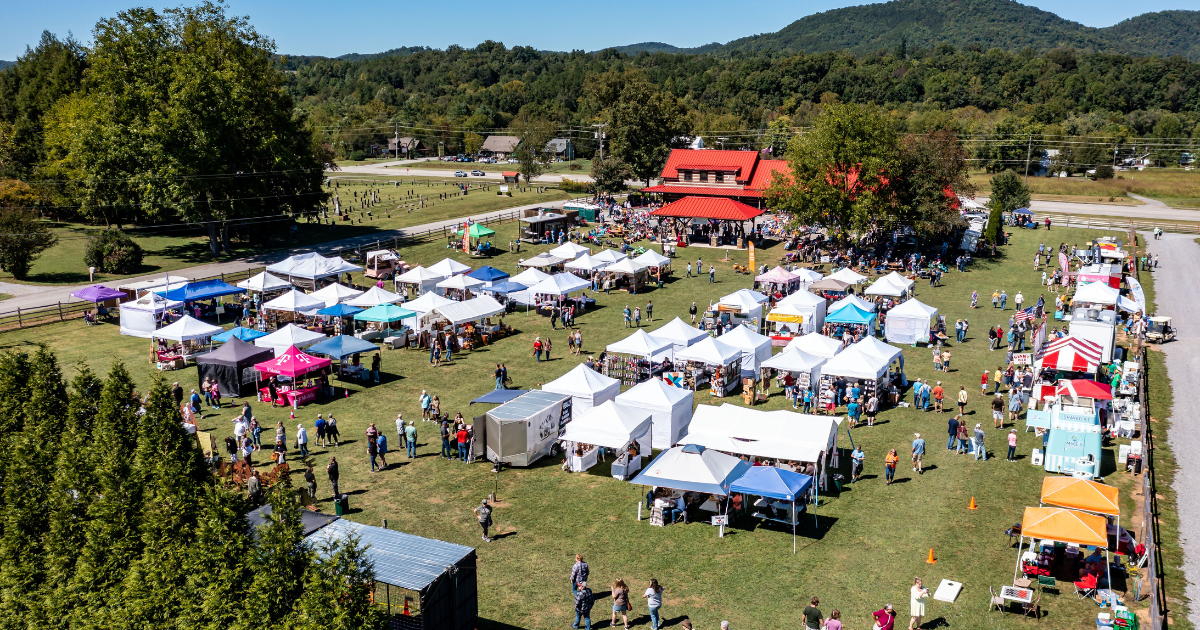
Spring is in the air, and that means it must be time for the Townsend Spring Festival and Old Timers Day! This free two-day event celebrates the rich history of the Appalachian way of life. You will find plenty of Bluegrass music, handmade crafts, and delectable food choices.
Bring a chair or a blanket for sitting back and enjoying the fresh mountain air.  You will want to plan to stay all day because this event is packed to the brim with historical fun. There will be bands to listen to, handmade goods to peruse, food to sample, and other activities to participate in. Head out to Townsend, TN on May 3rd and 4th to join the fun.

About Townsend Spring Festival

On May 3rd, the fun will start at 10am with the craft vendors and food vendors opening up their booths. The demonstrators will begin showing off their talents at 10 am as well. At noon, the music will kick in to really get the party started. The festivities will last all day with bands playing until 10 pm. You can expect the same basic schedule on the 4th with except that the bands will start a little earlier.
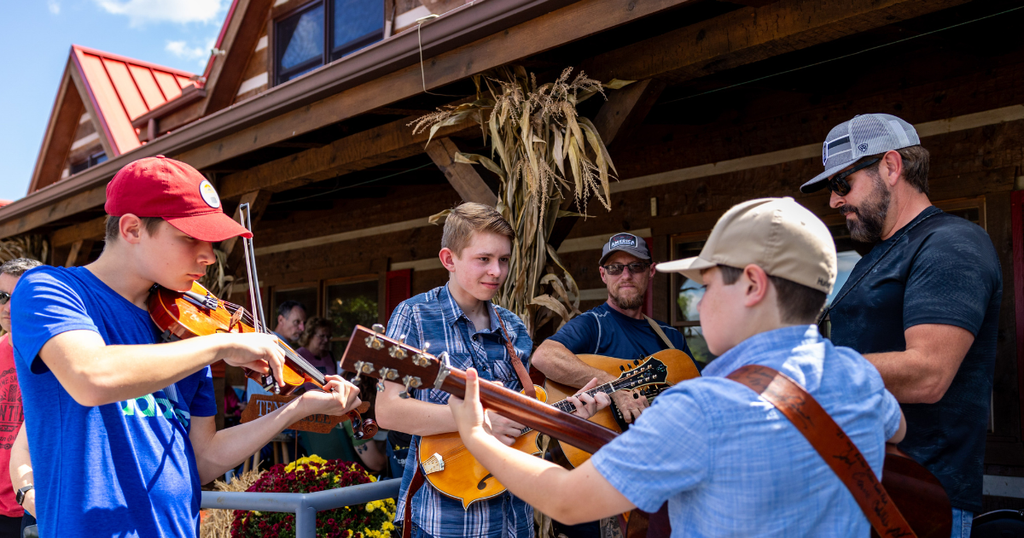
While the full list of vendors and bands is yet to be announced. There are a few activities that you can expect. The author of the book “The Last Man from Tremont,” Roy Oliver, will be in attendance. If you would like to have a book signed or just simply have a chat, make sure to stop by and see Mr. Oliver. The pickers in attendance will definitely want to check out the tents for Jammers.
Other area initiatives and associations will be on hand to help you learn more about the area. These groups include:

  • Appalachian Bear Rescue
  • Cades Cove Preservation Association
  • Great Smoky Mountains Institute of Tremont
  • Keep Blount Beautiful
  • Chilhowee Area Ministries

Some of the bands scheduled to play so far include Wayne Wright Review, Blackberry Jam, Grandview Pickers, Appalachian Grass, Raven Welch and Crew, Foothills Express, Steve Jordan Band, Muleskinner, and many more!

Parking at the Event

Parking at the event can be purchased daily for $10 or you can get a two-day pass for $15. The parking fee proceeds will go to support the Townsend Volunteer Fire Department, and they can be purchased in advance at the Townsend Visitor Center and the Maryville Visitor Center. However, if you do not purchase in advance, you will be able to pay at the gate when you arrive.
If you would like to experience a little more of what Townsend has to offer, you can take the FREE shuttle from the Townsend Visitor Center and get a good tour of the town. The shuttles will start running at 10:30 am and continue until 6 pm on both days.
The Townsend Spring Festival is an annual event that is beloved by all. Come for the bluegrass once, and you will find yourself making the trip back year after year. The beauty of the Appalachian way of life will call to you across the miles.
 

Celebrating 50 Years at Tremont

Monarch butterfly tagging. Photo by Stephanie Bowling.

The Institute at Tremont, in the Great Smoky Mountains, has been serving the Walker Valley community for 50 years. It all started in 1969 when a group of local leaders and educators came together to turn a group of old Job Corps buildings, slated for demolition, into a residential environmental learning center. The idea was to offer hands-on outdoor discovery experiences accessible to everyone. The successful implementation has only grown stronger and flourished over the years, with programs for everyone – from young children to adults, and educators to the curious public.
Monarch butterfly tagging. Photo by Stephanie Bowling.
To celebrate this golden anniversary, they have invited everyone to attend their annual Homecoming gathering on the weekend of October 12 – 14, 2019. A full weekend package is available online, which will include Saturday and Sunday night lodging in their dormitory. Four meals will be provided, including Saturday supper, Sunday breakfast, a sack lunch, and Homecoming dinner. Many informal activities have been planned, such as a campfire and moonlight walk, a waterfall hike, and a tour of Tremont’s new property in Townsend. Space is limited, so if you are interested, please go to http://gsmit.org/event/homecoming-full-weekend-package/ to register.
If you aren’t able to make the homecoming celebration, there are many other ways to get involved with the Institute at Tremont. A popular fall activity is their Monarch Tagging program in Cades Cove. Each year monarch butterflies migrate to Mexico for the winter and Tremont Institute using tagging as a way to track their migratory patterns and monitor population status. Tremont has been tagging monarch butterflies for many years, and each year their volunteer pool grows because of its popularity with participants from every age group. Grab your butterfly net and play in the fields of Cades Cove, while also using a field guide to identify the different species. Monarch tagging is just one of several Citizen Science programs, which allows the public to gather hands-on experience with real scientific research. Other Citizen Science programs throughout the year include bird banding, salamander monitoring, phenology tracking, and otter spotting. If you are interested in volunteering and want more information about the Citizen Science programs, please check out http:/gsmit.org/citizen-science/.

The Institute at Tremont also has summer camps and adult programs that are open to the public. Summer camps start at age four and are available through high school ages. They have family camps that allow families to stay on-site and offer all kinds of outdoor activities. Leave the planning to the Tremont Institute and come and enjoy the Great Smoky Mountains in a structured and educational environment. They offer a Firefly Camp, which allows a parent or grandparent to accompany children from four to nine for a one, two, or three-night adventure. There are also discovery camps, science camps, and backpacking camps. Leave the kids for a unique camp experience while you and your spouse enjoy some private time alone in the mountains for the week. With so many different camp experiences, there is one for any family.

Not to leave the adults out of the fun, Tremont has a wide variety of programs for the older generation, as well. There are Road Scholar hiking trips, Sierra Club hikes, and a Women’s Fall Backpacking excursion. Twice a year, they offer photography workshops, which allow students to stay at the facility and sharpen their nature photography skills. They also provide Naturalist Classes and Certifications under the Southern Appalachian Naturalist Certification Program, which is a field-based program in Southern Appalachian ecology and interpretive techniques. The Wilderness First Responder course is led by instructors from Roane State Community College and meets the Tennessee Emergency Medical Services curriculum standards. If you love the outdoors, Tremont Institute has the program for you.

With 50 years of experience, the Institute at Tremont has been instrumental in serving our community with environmental educations resources and programs. Their journey is far from over, as new environmental concerns arise, they are prepared to teach the public how to get involved and make a difference. For more information on the Tremont Institute or any of their programs, please go to their website at www.gsmit.org.

Cherokee Place Names in and Around Blount County 

Written by: Emily Huffstetler

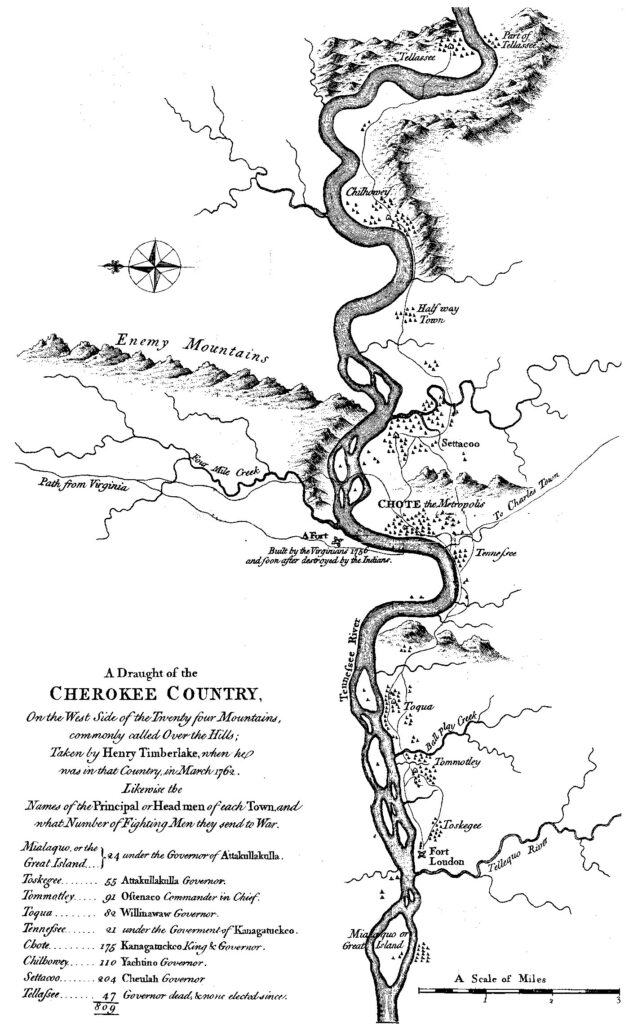
Many East Tennessee place names come from the Cherokee language, especially from the Overhill Cherokee—settlements along the Little Tennessee River that English traders in the 1700s reached by traveling “over the hills.” Some names remain nearly unchanged, while others were adapted by settlers. Here are a few examples located in and around the Peaceful Side. 

Timberlake’s “Draught of the Cherokee Country.”

Kuwohi 

In 2024, the U.S. Board on Geographic Names restored Kuwohi as the official name for the Smokies’ highest peak—long called Clingmans Dome. The name has been translated by Cherokee speakers as “mulberry place,” though the precise meaning is debated.  

Kuwohi was a site of ceremony for Cherokee medicine people, and its renaming came through a partnership between the Eastern Band of Cherokee Indians and the National Park Service. Each year, the park closes Kuwohi to the public for three days to give Cherokee students the opportunity to learn about its history.   

Cades Cove and Abrams Falls 

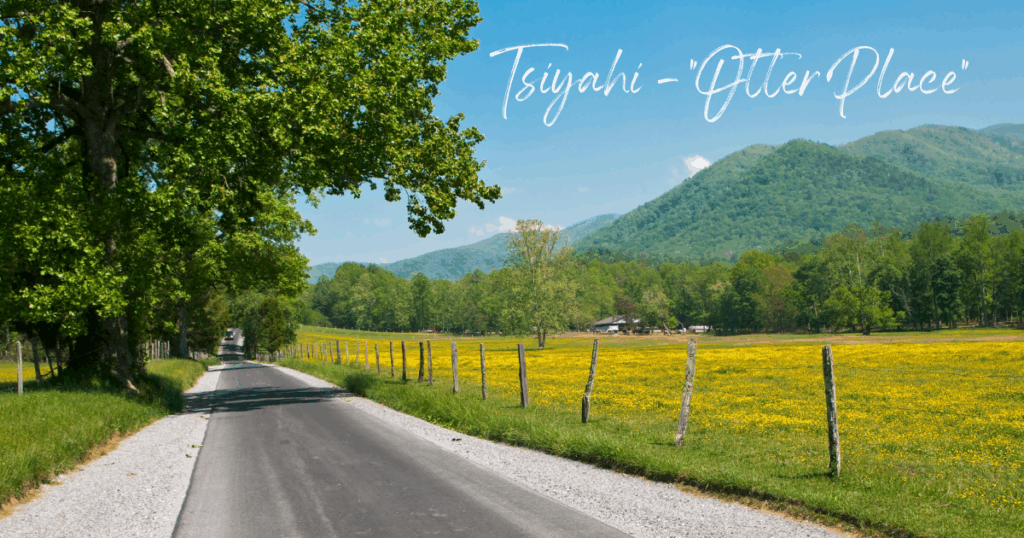
Cades Cove was once a seasonal Cherokee hunting ground. Its Cherokee name, Tsiyahi, means “place of the otter.” The cove’s current name is believed to honor a leader remembered as Chief Kade. Nearby Abrams Creek and Abrams Falls are named for Oskuah, a Cherokee leader later called Abram (or Abraham) by settlers. 

Chilhowee and Tallassee 

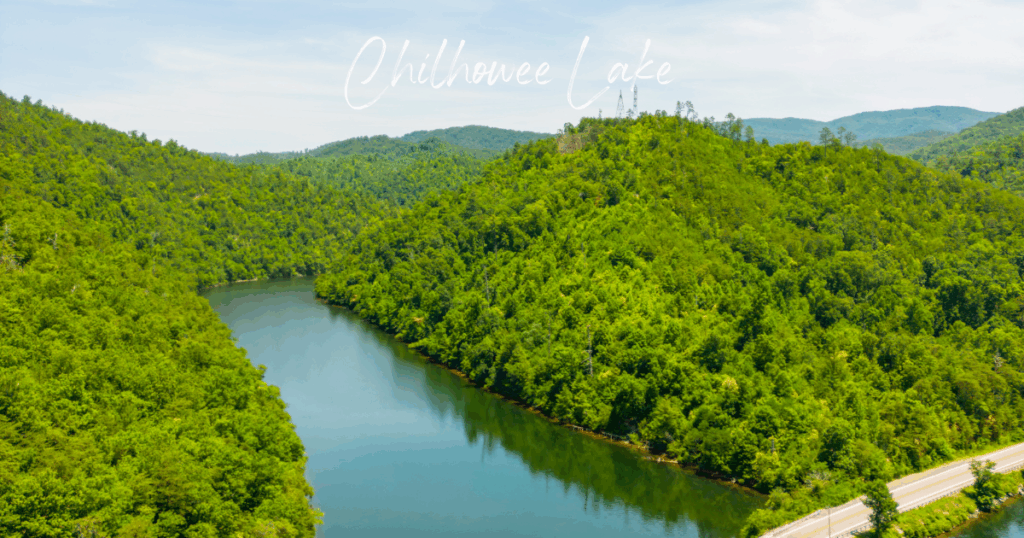
Two major Overhill Cherokee towns—Chilhowee and Tallassee—once stood along the Little Tennessee River. Their sites were inundated by the construction of Chilhowee Dam in 1957. However, the names remain on the map: Chilhowee Mountain is a local landmark, and the unincorporated community of Tallassee lies just downstream along U.S. 129. 

Tuckaleechee 

Modern-day Townsend lies within Tuckaleechee Cove, named from the Cherokee word Tikwalitsi. The original meaning has been lost, though many affectionately interpret it as “Peaceful Valley.” Tuckaleechee Caverns, the largest cave system in East Tennessee, carries the name today. 

Tellico 

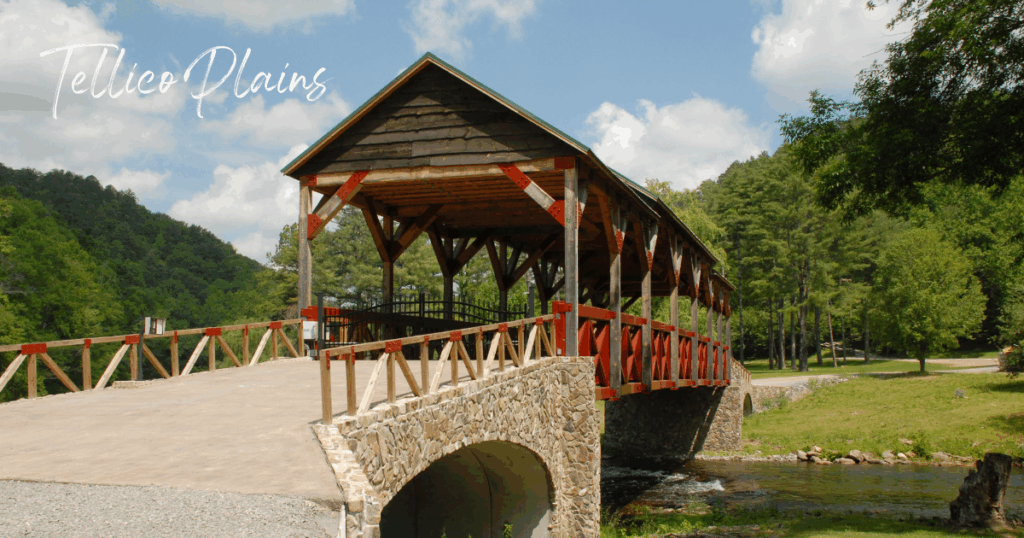
South of Blount County, Tellico Plains preserves the name of the Cherokee town of Great Tellico. Located at the junction of the Trading Path and the Warrior Path, Great Tellico was one of the most important Cherokee towns of the late 18th century. 

Tanasi 

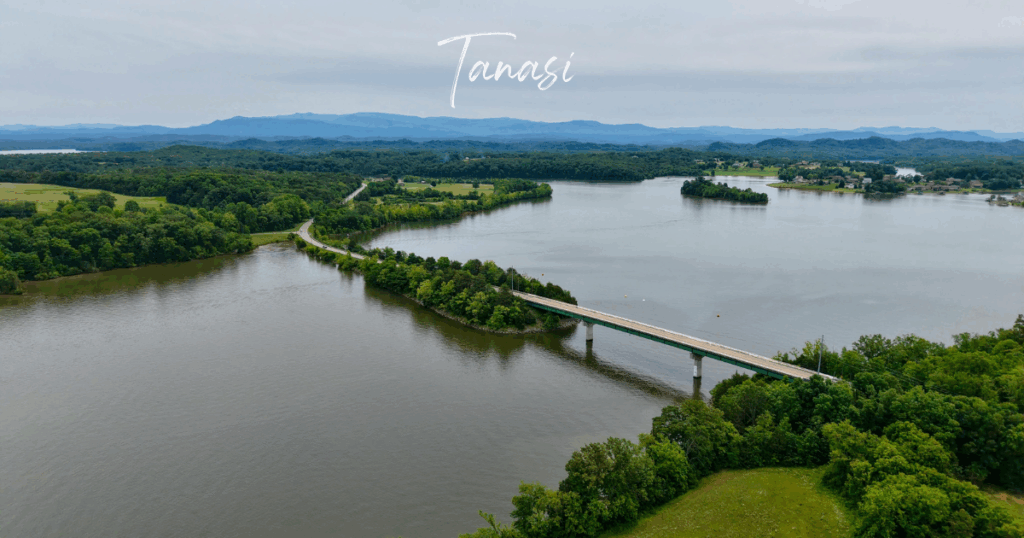
Along the Little Tennessee River in what is now Monroe County stood the Cherokee town of Tanasi. Early colonial maps recorded its name, which was later carried to the Tennessee River and eventually to the state itself. 

Born and raised in Maryville, Tennessee, with roots tracing back to Cades Cove, Emily Huffstetler is a proud Maryville College graduate and passionate storyteller of the Greater Smokies region. 

Courtship in Cades Cove: Corn Husking, “Sparking” and Weaner Cabins 

Written by: Emily Huffstetler 

Still looking for a Valentine? In Cades Cove, you might have started with a corn husking. 

Cades Cove’s first permanent Euro-American settlers arrived in 1818, and the community grew steadily through the mid-1800s. By 1850, the Cove’s population was in the high six hundreds.   

In a working valley, neighbors relied on each other. Seasonal labor brought people off isolated farms and into the same place at the same time. 

Corn husking, molasses making and gathering chestnuts were some of the community events where young people could mingle under adult supervision. 

One local account describes a tradition that turned the search into a game. If a young man found a red ear of corn in the husking pile, the discovery earned him the right to “kiss the lady of his choice.” 

Weekly church services brought people together, too. Baptist life split into two congregations in 1839, when a group left over mission work and other practices. Methodists also had an established church presence in the Cove by the 1820s.

For courting couples, Sunday was another chance to see each other. 

Large households shaped the logistics of dating. Families of 10 to 12 children weren’t unusual, and privacy was limited in one- and two-room cabins. That pushed conversations outside, on porches and in yards. 

One interpretive guide for the Cove published by the Great Smoky Mountains Institute at Tremont points visitors to a porch bench near Cable Mill used for “sparking,” an older term for courting. 

The word also shows up in a recorded Cades Cove interview from the 1930s, where a speaker recalls older boys teasing children about “sparking,” and an adult stepping in to explain what it meant. 

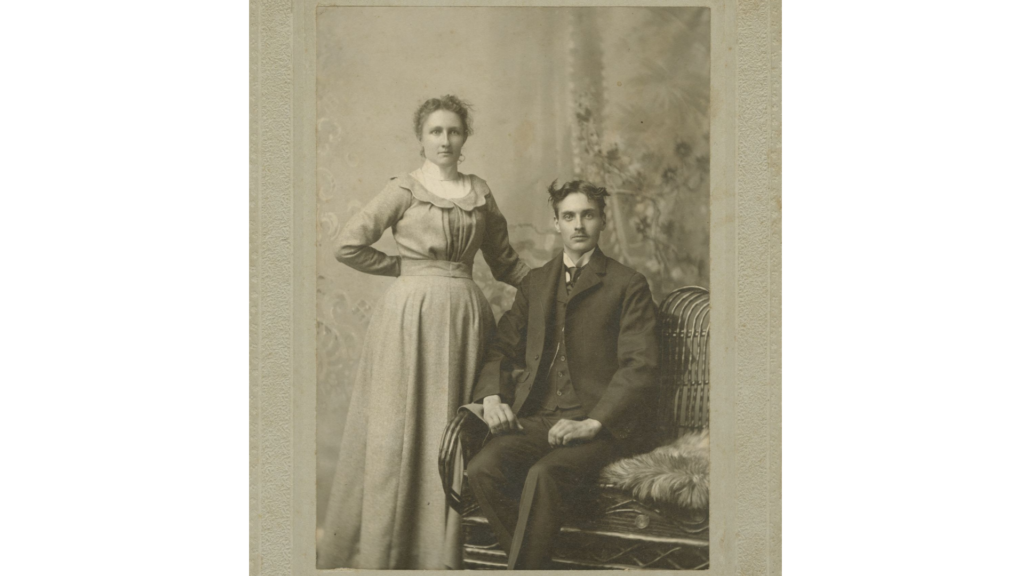
“This picture was taken at Maryville Tenn on Saturday afternoon of January 26, 1901… Next day, Sunday, Nancy Ann and I rode horseback… to Cades Cove a distance of 20 miles… We were 22 years old and not married. We were married Sept. 4, 1901.” —John W. Oliver 

Oliver (1878–1966) is the author of the Fifty Years in Cades Cove memoirs, a handwritten account of the valley’s families and daily life from early settlement through the early 1900s. Photo courtesy of University of Tennessee, Knoxville. “Fifty Years in Cades Cove Collection.” John W. Oliver and wife, Nancy Ann (Maryville, 1901). 

Sparking often moved toward marriage. In much of Southern Appalachia, weddings were informal during this era, staged in either the bride’s or groom’s home.  

Some newlyweds would spend their early days of marriage in a “weaner cabin,” far enough away for independence but close enough for family assistance. 

After the ceremony, friends sometimes returned late at night to “serenade” the couple. They’d go from house to house making noise, ringing cowbells and even firing guns. This was part of a wider rural tradition known elsewhere as a “shivaree” or “charivari.” 

Born and raised in Maryville, Tennessee, with roots tracing back to Cades Cove, Emily Huffstetler is a proud Maryville College graduate and storyteller of the Greater Smokies region. 

Enjoy Mountain Music on the Pickin' Porch at Wood-N-Strings Dulcimer Shop

There’s more to the Smokies than just industry and the great outdoors. Cultural traditions brought to the Smokies by different waves of immigrants and frontier settlers have taken on lives of their own in the mountain hollows that dot the region, and they continue to provide great entertainment to locals and visitors alike.
In particular, the music of Appalachia and the Smokies has its own rich history, one that’s kept alive today in Blount County and especially at the Wood-N-Strings Dulcimer Shop. Read on to learn more about it, as well as how you can get a taste of it for yourself right in Blount County.

Wood-N-Strings Dulcimer Shop Dates Back to the 18th Century

Immigrants from Ireland and what is now called the United Kingdom first settled in the mountain foothills of the southeastern U.S. in the late 18th century, bringing their traditional ballads and dance music (typically fast-paced violin or “fiddle” music) with them. Here, these traditions intersected with others, like banjo-playing, which came up from farther down South. Banjo playing was actually first documented in Knoxville in 1798, so it’s been a part of the region’s legacy for quite some time.
The dulcimer was also a major part of this tradition. Interestingly enough, although the first Appalachian dulcimer was played by Scots-Irish immigrants, there’s no record of anything like the dulcimer in Scotland or Ireland. The instrument itself seems to be a true Southern original, much like the Wood-N-Strings Dulcimer Shop.

Visit Wood-N-Strings to See Dulcimers in Action

Anyone is welcome to come down to Wood-N-Strings in Townsend, Tennessee, which is not a just a shop, but a destination in its own right for fans of the region’s traditional music. The shop offers CDs and books about traditional music, as well as different kinds of dulcimers and other instruments like banjos, lap harps, and even some steel drums. Owners Mike and Connie Clemmer are happy to introduce anyone interested to the virtues of the dulcimer and the joy of playing an instrument that’s relatively easy to learn, and yet provides tremendous satisfaction to both players and audiences.

Check Out the Pickin’ Porch

If it’s summertime, it’s pickin’ time at Wood-N-Strings. Connie and Mike Clemmer play host to local and traveling musicians on their Pickin’ Porch at Wood-N-Strings every 1st, 3rd, and 5th Saturday at 7 PM, from May through September. Bring your lawn chairs and relax at their woodsy riverside location, while musicians share their talents and commitment to preserving tradition just for the love of it.
When winter rolls around, that doesn’t mean there’s no pickin’ left to enjoy. TheWood-N-Strings Dulcimer Shop has a section of the website dedicated to sharing videos from past Pickin’ Porch evenings, so you can still listen to old and new favorites long after the camping chairs have been folded up for the season.

From Great Depression to Great Smokies: The CCC’s Legacy in East TN 

Written by: Emily Huffstetler

On September 2, 1940, thousands gathered at Newfound Gap to dedicate Great Smoky Mountains National Park. President Franklin D. Roosevelt, standing against the backdrop of spruce and fir, promised the land “to the service of the millions of American people.”1 

“There are trees here that stood before our forefathers ever came to this continent; there are brooks that still run as clear as on the day the first pioneer cupped his hand and drank from them. In this Park, we shall conserve these trees, the pine, the red-bud, the dogwood, the azalea, the rhododendron, the trout and the thrush for the happiness of the American people,” Roosevelt said.

That moment didn’t come without a cost. When Congress authorized the park in 1926, Tennessee and North Carolina set out to buy nearly half a million acres from private owners. For many residents, the outlook was grim. Offers often amounted to only half of a farm’s value, and when owners resisted, the state invoked eminent domain. More than 5,000 people ultimately left their homes

By the early 1930s, the park was a patchwork of cut-over timberlands, abandoned farms and rough roads—a challenge only deepened by the Great Depression. 

Change arrived in 1933 with Roosevelt’s creation of the Civilian Conservation Corps (CCC). The program put young men to work on conservation and infrastructure projects across the country. In the Smokies, it became the single most important force in shaping the new park. 

The first CCC camps arrived that May. Within a few years, there were 22 across the Smokies, with Tennessee sites at Sugarlands, Elkmont, Cades Cove, Greenbrier, Cosby Creek and along the Middle Prong of Little River. At the program’s peak in 1935, 17 camps operated at once—nearly 15 percent of all CCC camps in national parks nationwide.

From 1933 until the program ended in 1942, enrollees transformed the Tennessee side of the park. They cut and graded trails across rugged ridges and converted logging railroad beds into roads still traveled today, including the Little River Road. Road crews stabilized slopes, laid culverts and rebuilt bridges near Cades Cove and Townsend.3

Building the Miry Ridge Trail. Photo courtesy of the National Park Service.

Stone masonry became one of the CCC’s most lasting signatures. Workers built miles of guardrails and dozens of bridges with locally quarried rock. In Elkmont, they completed the arched stone bridge over the Little River, still in use over 80 years later. 

Building the Elkmont Bridge. Photo courtesy of the National Park Service.

Key sites across the Smokies also bear their imprint. At Newfound Gap, crews landscaped the overlook, created parking areas and erected the Rockefeller Memorial. Near Kuwohi (formerly Clingmans Dome), they carved a trail to the summit and, in 1938, raised a 40-foot wooden observation tower. In Sugarlands, they laid the foundation for the park’s headquarters complex.3

The CCC also supported park management, stringing telephone lines, maintaining fire breaks and building nine fire towers with lookout cabins. At Kephart Prong, they constructed a fish hatchery that stocked mountain streams with trout. 

In Cades Cove, crews turned their attention to cultural preservation. Between 1935 and 1937, they restored the Cable Mill and moved historic farm buildings to the site, creating the park’s first outdoor museum. They stabilized homesteads belonging to the John Oliver, Elijah Oliver, Henry Whitehead and Peter Cable families, ensuring some of the cove’s oldest structures survived.3 

By the time the last camps closed in 1942, more than 4,000 men had passed through 22 Smokies camps.What Roosevelt dedicated in 1940 as a promise to the American people was, in large part, the hard work of the CCC. 

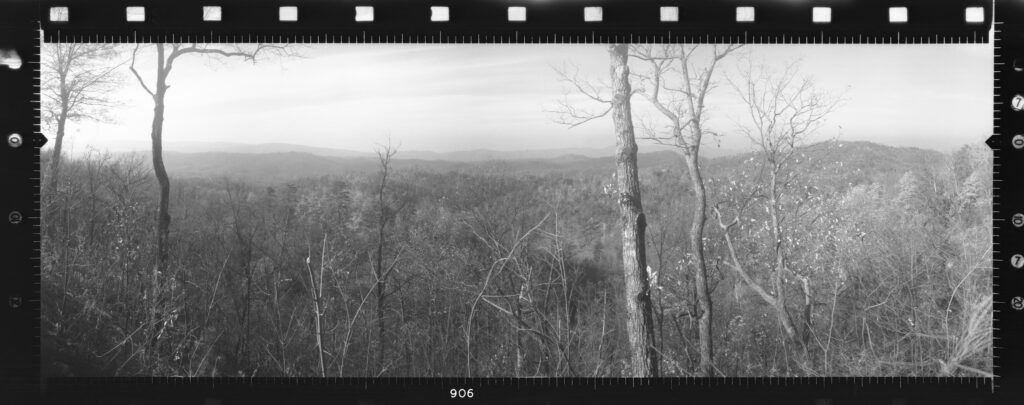
Panoramic view from Hesse Creek. Photo courtesy of the National Park Service.

The CCC’s work also included documenting the landscape. In 1933, a young enrollee named Lester Maynard Moe was assigned to photograph panoramic views from fire towers as part of a nationwide project to map and manage the new parks.

Moe later continued the effort with the National Park Service, producing nearly a hundred sweeping images of the Smokies. His photographs remain among its earliest enduring records.

__________________________________________________________________________________________________________________________________

  1. Tennessee State Library and Archives
  2. Superintendent’s Monthly Report, May 1933
  3. National Register of Historic Places Multiple Property Documentation Form, prepared by The Public Archaeology Laboratory, Inc.
  4. National Park Service

Born and raised in Maryville, Tennessee, with roots tracing back to Cades Cove, Emily Huffstetler is a proud Maryville College graduate and passionate storyteller of the Greater Smokies region.

History Buffs Love Learning the History of the Smokies at Cades Cove

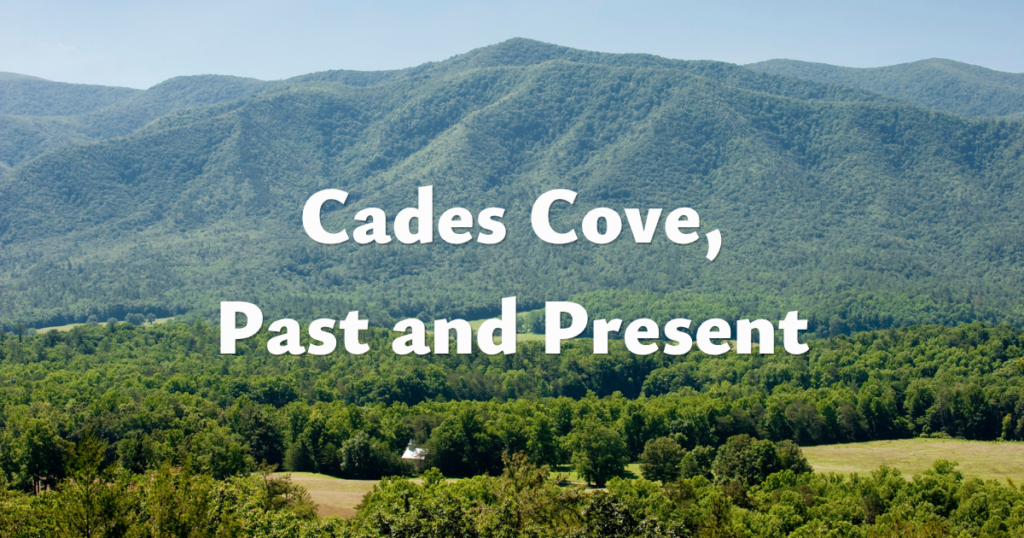
Cades Cove is one of the most visited parts of America’s most visited national park, but there’s more going on in these Tennessee woods than breathtaking natural beauty. Visitors to the Cove with a taste for history will get more than their fair share when they experience the famous Cades Cove loop for themselves.
How to Do the Loop
Cades Cove is a wide valley famous for its wildlife viewing, and it’s also one of the most accessible ways to experience a national park. No hiking is necessary; visitors can drive an 11-mile, one-way loop road through the park, and pull off at certain points to stretch their legs and experience the Cove. It takes from 2 to 4 hours to make it through the Cades Cove Loop in a car, but bikers and pedestrians have the loop road all to themselves on Wednesdays and Saturdays before 10 AM, and so they won’t be slowed down by traffic.
Look Out for the Locals
Cades Cove isn’t just popular with people; animals like white-tailed deer, black bears, coyotes, ground hogs, and wild turkeys also love the valley. Foxes and even the occasional beaver also make the region their home. The hiking trails nearby, like the trail to Abrams Falls or to Rocky Top, offer even better chances to see some animals in action, since they are less likely to be spooked by crowds. Birders will want to keep their eyes peeled for Great Blue and Green Herons, as well as Golden Eagles and American Kestrels.
Check Out the Architecture
Cades Cove was settled by Europeans beginning in the 1820s, and some of their architecture is still standing. Pioneer life in early Appalachia wasn’t easy, and the buildings reflect that. The John Oliver cabin, built in 1822, is sturdy and still stands, as do a number of churches from the mid-1800s, and other 19th– and early 20th-century pioneer cabins and outbuildings.
Cades Cove is also famous for the John Cable Grist Mill, which features the typical mill wheel. The mill actually still works; Cades Cove visitors can watch grain being ground, and then purchase the results at the Cades Cove Visitors Center (along with various jams, jellies, and locally-made trinkets). How’s that for a taste of history?
Take in History, Step by Step
One of the great things about Cades Cove is how visiting these buildings in the Tennessee woods feels like stepping directly into the past. Make sure to stop at the Cades Cove Visitor Center for trail maps and historical information to give you all the context you need to fully appreciate your visit, and don’t procrastinate about taking your trip to see Cades Cove. Even history buffs shouldn’t wait forever!
 

Learn About Appalachian Music and Instruments from the Experts: Wood-N-Strings Dulcimer Shop

In the Smokies region, history is all around you. Some might think that this history mostly just involves all the historic buildings in Great Smoky Mountains National Park and nearby, but there’s also an important musical legacy available to all who are curious, and there are two experts in Townsend with tons of knowledge on the subject. Connie and Mike Clemmer own the Wood-N-Strings Dulcimer Shop and keep an Appalachian musical tradition alive around the world with their handmade dulcimers.
Decades of Knowledge
Mike first began building dulcimers as a hobby in 1976, and eventually he and Connie opened up their shop. Each dulcimer takes weeks to build, using local woods like walnut, sassafras, butternut, cherry, or wormy chestnut, and customers can custom-order their own dulcimer with the soundhole pattern design that suits them.
Plenty of Innovation
Mike invented an instrument called the Ban-Jammer, his own banjo-dulcimer hybrid. Known for its distinct sound, ease of playability, and high-quality construction, the Ban-Jammer is tons of fun for musicians looking for an authentic Eastern Tennessee sound. Mike also created, upon request, a dulcimer called the “Baby Grand,” an extra-large dulcimer with a deep and resonant sound.
Besides both hammered and mountain dulcimers, the shop also offers banjos, guitars, harps, psaltries, lap harps, bohdrans, and even some steel drums and djembes, as well as a huge selection of books and CDs relevant to the Appalachian music scene.
Music for Everyone
Mike famously says, “If you can count to twelve without taking off your shoes, you can play a dulcimer.” That may be true, but musicians still need an audience! At Wood-N-Strings Dulcimer Shop, Mike and Connie host free concerts on the “Pickin’ Porch” every Saturday evening, May through September, and all are welcome to bring their camping chairs, relax and enjoy the music and the scenery of the shop’s woodsy location.
Mike and Connie also release their own CDs of mountain music. They actually have a book and CD combo, called Simple Faith & Homestead, that includes 2 CDs and tablature, so that listeners can actually learn to play the songs, whether in time along with the CDs, or on their own.
Fans of the music can also check out the resources they’ve gathered online, especially hours of free videos of their Saturday evening concerts, and clips from Tennessee Home and Farm, Tennessee Crossroads, a PBS special, and other clips that include tours of the shop or interesting facts about dulcimers and Appalachian music.
Come on Down and Visit
Mike and Connie invite everyone to visit them and learn more about the dulcimer and dulcimer music. The shop is open from 10 AM to 6 PM, Monday through Saturday, at 7645 E. Lamar Alexander Parkway in Townsend. More information, including an online shop (yes, they ship instruments!) is available on their website. Check them out, and whether you’re new to Appalachian music or an expert, you’re guaranteed to learn something before you leave!

Learn About the History of the Region with a Tour of Cades Cove

If you are coming to the Townsend, TN area for a vacation, a trip into the Great Smoky Mountains National Park is a must. And if you really want to learn all about the history of the region, then the best place to do so is by taking a tour of Cades Cove.

A First-Hand View of Cades Cove

If you are looking for a first-hand experience of what it must have been like to live here “back in the day,” then you have only to go inside the park and visit Cades Cove. From long walks through the grassy valleys, hikes in the mountains, a chance to see some of the local wildlife, or a walk through the historic buildings, this is the place to be. You and your family can get a taste of what it was like to live here in the early days.
The Cades Cove Loop Road typically takes around 3 to 4 hours to drive, but if you go this fast, you might miss out on a lot. Most of those who come here tend to be here all day since there is so much to see and do.

Things You Might Not Know About Cades Cove

Many of the buildings on display here in Cades Cove have been moved here from elsewhere or were built here after the park opened. For example, the Gregg-Cable House was built out on Forge Creek Road in 1879 by Leason Gregg. Many of the buildings around the John P. Cable Mill have been moved from their original location.
Did you know that the Cades Cove area is the most popular spot in the entire park, bringing in 2 million visitors every year? They come for the hiking trails, the biking opportunities, the spectacular scenery, and the deep history the area has to share with everyone who visits here.

Just Like It Used to Look  

Perhaps the one thing that makes Cades Cove the perfect place to learn about the history of the area is the number of historic buildings and structures you get to see as you drive or walk along the route. There are churches, barns, a working grist mill that just got a new waterwheel, plenty of log houses, and many others to see. Make sure you pick up one of the Tour Guide Booklets at the entrance to the loop.
The guide can provide you with a vast amount of information on the various buildings, the park, and the history of the entire region. Be sure you stop by the Cades Cove Visitors Center to learn about the many Park Ranger-led tours scheduled for the day you plan to be here. Between the knowledgeable and friendly staff in the visitors’ center and your tour guide, you can learn all about the history of Cades Cove, the park, and the surrounding area.
When you are all done for the day, be sure you stop back in at the visitors’ center and pick out a few souvenirs to take home with you. No matter what else you do, be sure you take lots of pictures so you can show the folks back home how beautiful the Peaceful Side of the Smokies truly is!
 

Learn About the Peaceful Side's Native American Heritage

A recent article out of Maryville, TN asks a very simple question: “Do you know who lived in your house before you did? How about what stood a century ago on the land where your house now sits?” And it is a good question to ask anyone since few of us could explain who may have lived in our family home or on our family’s land. We might guess that Native Americans may have lived in certain areas, but few of us are certain of the facts.
If you are eager to discover the facts about the Native American history of the Great Smoky Mountains region, you have a rare chance to do so thanks to a permanent display created by the Great Smoky Mountains Heritage Center.
Asking just that same question as the one above (Do you know who lived on your land before you?), but increasing the time to ten thousand years, the museum offers a great deal of information as an answer to it.

Looking Back Thousands of Years in the Smokies’ History

The modern city of Townsend, Tenn. was once the home of the Cherokee people. They lived in the region more than ten thousand years ago and inhabited the area today known as the Tuckaleechee Cove area. The Heritage Center has a collection of more than one thousand artifacts by this ancient people, and even had the Townsend Archaeology Project from 1999 to 2001 in order to gather and curate the collection on display.
Because so many people envision pioneers as settling the area, they overlook that there is a great deal more history to discover prior to the pioneer days. Today, there are still Cherokee people in the area, but there is a difference between those who live today and the ancient Cherokee. Historians and archaeologists even have a specific way to describe them, calling them historic Cherokee since their land holdings actually ran from modern day Cincinnati over to Atlanta and eastward to Asheville, NC as well as westward towards Birmingham, AL. They lived through three different periods, known as the Archaic, Woodland and Mississippian, and visitors can see artifacts dating from all three eras of the historic Cherokee peoples.
It is difficult to imagine a time of hunters and gatherers in modern North America, but this is precisely what the historic Cherokee of the Smokies area were. They followed their animal game and foraged for wild foods. Artifacts include some of the actual arrowheads used in hunting, and even fishing tools and household tools like axes. They were also adept with clay pottery and built wooden structures in which to live.
If you want to learn all that you can about these historic people, the Center’s Native Americans of East Tennessee Collection is on permanent display at the Heritage Center and can be viewed whenever you pay a visit to this fascinating destination.
 

Learn Why Appalachian Folk Music is Still Being Played in the Smokies

No matter where you go in the Smoky Mountains, you are sure to hear someone playing Appalachian folk music. It might be coming from one of the many bars, clubs, restaurants, venues, or even on the street corners. What’s funny about this particular genre of music is that no matter what your personal preference in music might be, you can’t help but stop to listen to the banjo and fiddle combinations (along with a vocalist in some instances). Before long, you will likely find your foot tapping along with the tune as the music swells in your soul.
Multiple Influences
The music favored for decades in Appalachia is thought to have its roots in English, Irish, and Scottish ballads and hymns, and later in African-American blues. Over time, this unique blend of vocals, fiddles, and banjos led to the development of other forms of music, including blues and country. Along with the fiddles and banjos, you might also find guitars and the fretted dulcimer being played.
Among the many well-known artists who are known to have been influenced by or played Appalachian music are country stars like Earl Scruggs, Dolly Parton, and Loretta Lynn. But country music artists are not the only ones to be influenced by this form of music. Legends like Bruce Springsteen, Bob Dylan, The Statler Brothers, even Jerry Garcia (The Grateful Dead) have all play songs from Appalachian music or have rewritten them to suit their musical style.
Appalachian Music Will Never Die
There is an old saying that goes “Rock and roll will never die,” but the same can be said of Appalachian music. With a history dating back centuries, instead of waning in popularity, this beautiful music seems to be growing in popularity. Maybe this simply represents a change in tastes, or perhaps more people have become interested in the roots of the music they prefer and suddenly find themselves lost in the sound of the banjo and fiddle together.
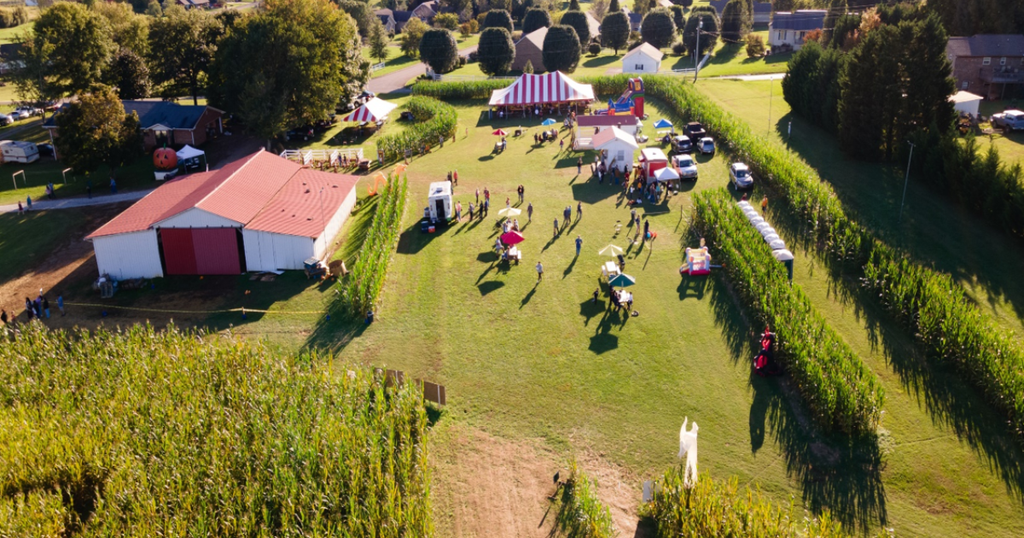
Like many other popular forms of “old-school” music, there are numerous Appalachian music festivals all along the Appalachian mountain range from the Appalachian String Band Music Festival held annually in Clifftop, WV to the Museum of Appalachia’s Tennessee Fall Homecoming that takes place in Clinton, TN every year.
Why do people still love this form of music? There are millions of reasons, but for many, it is the simplicity of the music, the stories told, and the ability to sit back and relax while you take in the melodies. For others, listening to Appalachian music is a great way to get back to the roots of so many different varieties of music being played today.
In the early days, Appalachian folk music was considered to be a great way to bring the entire community together. People would sit on the front porch or stoop, in the town square, or around a big fire just to listen to the music, dance to it, and enjoy the spirit of camaraderie that came with it. Today, it has a similar effect on anyone listening to it; they want to get together to celebrate the music with others, share in the stories, and be washed clean of their normal lives, if only for a few minutes.
 
Take a few minutes out of your busy day to stop and listen to the many wonderful local musicians on “The Peaceful Side of the Smokies,” in Blount County, who truly love the music they play.

Letters to Santa in Blount County: 1920s–1960s

Written by: Emily Huffstetler

In the weeks leading up to Christmas, children in Blount County wrote letters to Santa Claus for publication in the local newspaper. These letters, spanning the 1920s through the 1960s, record Christmas wishes and everyday life across the county. 
The 1920s 

In the 1920s, Blount County was still rural, and Christmas lists reflected everyday life. Children asked for dolls, wagons, beads, wristwatches and BB guns. Apples, oranges, nuts, candy and chocolates appear again and again, listed alongside toys. Coats and gloves appear without explanation. Most children asked for only a few things.

Some children were more imaginative. Sampson, 1921, requested a few firecrackers and torpedoes, claiming that he’d tried “ever since last year to be as good as [he] can.” Photo courtesy of Blount County Virtual Archives.

Late 1920s to 1930s 

Letters to Santa from the late 1920s and 1930s. Photos courtesy of Blount County Virtual Archives.

As the county moved into the late 1920s and 1930s, many of the same items stayed on Christmas lists. Children continued asking for wagons, bicycles, marbles, balls and toy guns. Fruit and candy appear year after year. Some lists grew longer. Others stayed brief. Toys and practical items continue to appear together.

Late 1930s to 1940s 

By the late 1930s, Christmas lists expanded again. Children asked for a wider range of toys, including trains, tool sets, horns, sparklers and balls. Fruit, nuts and candy rounded out longer lists.

Stanley and Jerry Kirby, 1938. The oldest brother butters up Santa, calling him “the best looking man in Maryville.” Photo courtesy of Blount County Virtual Archives.

As the decade turned and the 1940s began, lists tightened. Children still asked for dolls, balls and small toys, but requests became shorter and more exact.

Jo Ann, 1941, carefully itemized the price of each item she hoped to receive. Photo courtesy of Blount County Virtual Archives.

The 1950s 

Letters to Santa from the 1950s. Photos courtesy of Blount County Virtual Archives.

By the 1950s, Christmas lists reflect a growing toy market. Children named specific gifts. Tiny Tears dolls are popular, along with doll buggies, doll furniture and playsets. Toy guns, cowboy and cowgirl outfits, tricycles, coloring books and crayons show up across multiple letters.

The 1960s 

Letters to Santa from the 1960s. Photos courtesy of Blount County Virtual Archives.

By the 1960s, Christmas lists leaned into popular toys of the moment. Children asked for Thirsty Cry Baby dolls, skates, army men, helmets, periscopes and sleds. Some lists included jewelry and Bibles.

Born and raised in Maryville, Tennessee, with roots tracing back to Cades Cove, Emily Huffstetler is a proud Maryville College graduate and passionate storyteller of the Greater Smokies region.