If you are coming to the Townsend, TN area for a vacation, a trip into the Great Smoky Mountains National Park is a must. And if you really want to learn all about the history of the region, then the best place to do so is by taking a tour of Cades Cove.
A First-Hand View of Cades Cove
If you are looking for a first-hand experience of what it must have been like to live here “back in the day,” then you have only to go inside the park and visit Cades Cove. From long walks through the grassy valleys, hikes in the mountains, a chance to see some of the local wildlife, or a walk through the historic buildings, this is the place to be. You and your family can get a taste of what it was like to live here in the early days. The Cades Cove Loop Road typically takes around 3 to 4 hours to drive, but if you go this fast, you might miss out on a lot. Most of those who come here tend to be here all day since there is so much to see and do.
Things You Might Not Know About Cades Cove
Many of the buildings on display here in Cades Cove have been moved here from elsewhere or were built here after the park opened. For example, the Gregg-Cable House was built out on Forge Creek Road in 1879 by Leason Gregg. Many of the buildings around the John P. Cable Mill have been moved from their original location. Did you know that the Cades Cove area is the most popular spot in the entire park, bringing in 2 million visitors every year? They come for the hiking trails, the biking opportunities, the spectacular scenery, and the deep history the area has to share with everyone who visits here.
Just Like It Used to Look
Perhaps the one thing that makes Cades Cove the perfect place to learn about the history of the area is the number of historic buildings and structures you get to see as you drive or walk along the route. There are churches, barns, a working grist mill that just got a new waterwheel, plenty of log houses, and many others to see. Make sure you pick up one of the Tour Guide Booklets at the entrance to the loop. The guide can provide you with a vast amount of information on the various buildings, the park, and the history of the entire region. Be sure you stop by the Cades Cove Visitors Center to learn about the many Park Ranger-led tours scheduled for the day you plan to be here. Between the knowledgeable and friendly staff in the visitors’ center and your tour guide, you can learn all about the history of Cades Cove, the park, and the surrounding area. When you are all done for the day, be sure you stop back in at the visitors’ center and pick out a few souvenirs to take home with you. No matter what else you do, be sure you take lots of pictures so you can show the folks back home how beautiful the Peaceful Side of the Smokies truly is!
A recent article out of Maryville, TN asks a very simple question: “Do you know who lived in your house before you did? How about what stood a century ago on the land where your house now sits?” And it is a good question to ask anyone since few of us could explain who may have lived in our family home or on our family’s land. We might guess that Native Americans may have lived in certain areas, but few of us are certain of the facts. If you are eager to discover the facts about the Native American history of the Great Smoky Mountains region, you have a rare chance to do so thanks to a permanent display created by the Great Smoky Mountains Heritage Center. Asking just that same question as the one above (Do you know who lived on your land before you?), but increasing the time to ten thousand years, the museum offers a great deal of information as an answer to it.
Looking Back Thousands of Years in the Smokies’ History
The modern city of Townsend, Tenn. was once the home of the Cherokee people. They lived in the region more than ten thousand years ago and inhabited the area today known as the Tuckaleechee Cove area. The Heritage Center has a collection of more than one thousand artifacts by this ancient people, and even had the Townsend Archaeology Project from 1999 to 2001 in order to gather and curate the collection on display. Because so many people envision pioneers as settling the area, they overlook that there is a great deal more history to discover prior to the pioneer days. Today, there are still Cherokee people in the area, but there is a difference between those who live today and the ancient Cherokee. Historians and archaeologists even have a specific way to describe them, calling them historic Cherokee since their land holdings actually ran from modern day Cincinnati over to Atlanta and eastward to Asheville, NC as well as westward towards Birmingham, AL. They lived through three different periods, known as the Archaic, Woodland and Mississippian, and visitors can see artifacts dating from all three eras of the historic Cherokee peoples. It is difficult to imagine a time of hunters and gatherers in modern North America, but this is precisely what the historic Cherokee of the Smokies area were. They followed their animal game and foraged for wild foods. Artifacts include some of the actual arrowheads used in hunting, and even fishing tools and household tools like axes. They were also adept with clay pottery and built wooden structures in which to live. If you want to learn all that you can about these historic people, the Center’s Native Americans of East Tennessee Collection is on permanent display at the Heritage Center and can be viewed whenever you pay a visit to this fascinating destination.
No matter where you go in the Smoky Mountains, you are sure to hear someone playing Appalachian folk music. It might be coming from one of the many bars, clubs, restaurants, venues, or even on the street corners. What’s funny about this particular genre of music is that no matter what your personal preference in music might be, you can’t help but stop to listen to the banjo and fiddle combinations (along with a vocalist in some instances). Before long, you will likely find your foot tapping along with the tune as the music swells in your soul. Multiple Influences The music favored for decades in Appalachia is thought to have its roots in English, Irish, and Scottish ballads and hymns, and later in African-American blues. Over time, this unique blend of vocals, fiddles, and banjos led to the development of other forms of music, including blues and country. Along with the fiddles and banjos, you might also find guitars and the fretted dulcimer being played. Among the many well-known artists who are known to have been influenced by or played Appalachian music are country stars like Earl Scruggs, Dolly Parton, and Loretta Lynn. But country music artists are not the only ones to be influenced by this form of music. Legends like Bruce Springsteen, Bob Dylan, The Statler Brothers, even Jerry Garcia (The Grateful Dead) have all play songs from Appalachian music or have rewritten them to suit their musical style. Appalachian Music Will Never Die There is an old saying that goes “Rock and roll will never die,” but the same can be said of Appalachian music. With a history dating back centuries, instead of waning in popularity, this beautiful music seems to be growing in popularity. Maybe this simply represents a change in tastes, or perhaps more people have become interested in the roots of the music they prefer and suddenly find themselves lost in the sound of the banjo and fiddle together. Like many other popular forms of “old-school” music, there are numerous Appalachian music festivals all along the Appalachian mountain range from the Appalachian String Band Music Festival held annually in Clifftop, WV to the Museum of Appalachia’s Tennessee Fall Homecoming that takes place in Clinton, TN every year. Why do people still love this form of music? There are millions of reasons, but for many, it is the simplicity of the music, the stories told, and the ability to sit back and relax while you take in the melodies. For others, listening to Appalachian music is a great way to get back to the roots of so many different varieties of music being played today. In the early days, Appalachian folk music was considered to be a great way to bring the entire community together. People would sit on the front porch or stoop, in the town square, or around a big fire just to listen to the music, dance to it, and enjoy the spirit of camaraderie that came with it. Today, it has a similar effect on anyone listening to it; they want to get together to celebrate the music with others, share in the stories, and be washed clean of their normal lives, if only for a few minutes.
Take a few minutes out of your busy day to stop and listen to the many wonderful local musicians on “The Peaceful Side of the Smokies,” in Blount County, who truly love the music they play.
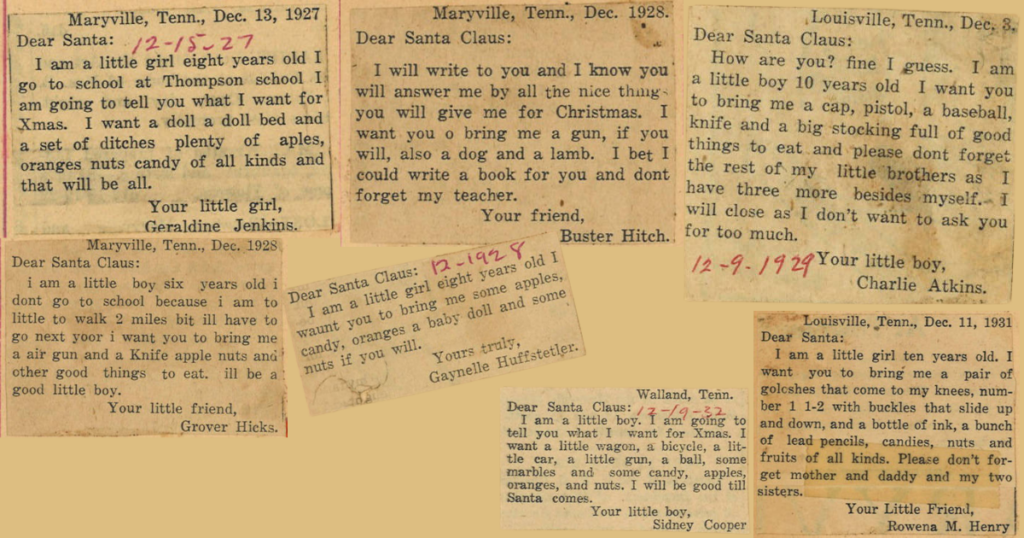
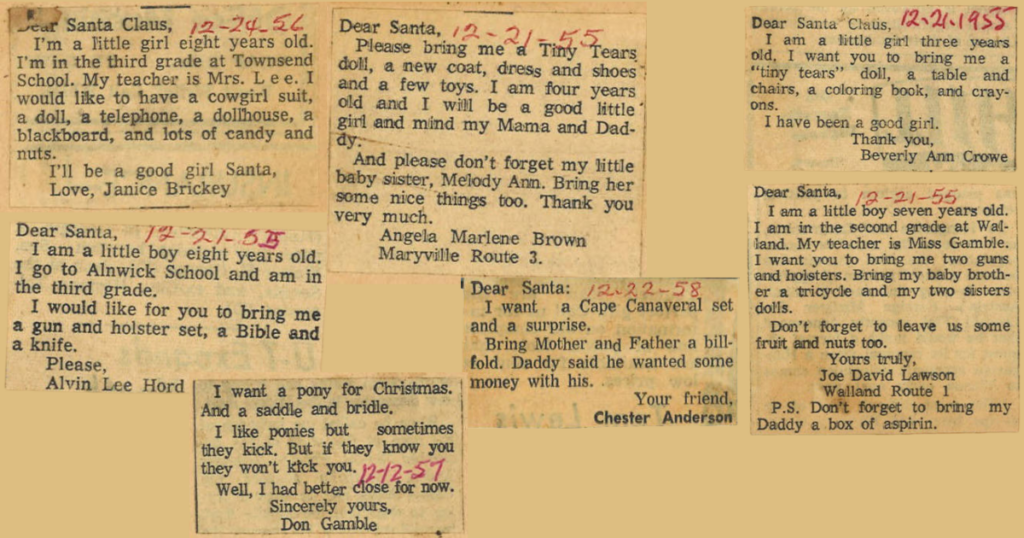
In the weeks leading up to Christmas, children in Blount County wrote letters to Santa Claus for publication in the local newspaper. These letters, spanning the 1920s through the 1960s, record Christmas wishes and everyday life across the county.
The 1920s
In the 1920s, Blount County was still rural, and Christmas lists reflected everyday life. Children asked for dolls, wagons, beads, wristwatches and BB guns. Apples, oranges, nuts, candy and chocolates appear again and again, listed alongside toys. Coats and gloves appear without explanation. Most children asked for only a few things.
Some children were more imaginative. Sampson, 1921, requested a few firecrackers and torpedoes, claiming that he’d tried “ever since last year to be as good as [he] can.” Photo courtesy of Blount County Virtual Archives.
Late 1920s to 1930s
Letters to Santa from the late 1920s and 1930s. Photos courtesy of Blount County Virtual Archives.
As the county moved into the late 1920s and 1930s, many of the same items stayed on Christmas lists. Children continued asking for wagons, bicycles, marbles, balls and toy guns. Fruit and candy appear year after year. Some lists grew longer. Others stayed brief. Toys and practical items continue to appear together.
Late 1930s to 1940s
By the late 1930s, Christmas lists expanded again. Children asked for a wider range of toys, including trains, tool sets, horns, sparklers and balls. Fruit, nuts and candy rounded out longer lists.
Stanley and Jerry Kirby, 1938. The oldest brother butters up Santa, calling him “the best looking man in Maryville.” Photo courtesy of Blount County Virtual Archives.
As the decade turned and the 1940s began, lists tightened. Children still asked for dolls, balls and small toys, but requests became shorter and more exact.
Jo Ann, 1941, carefully itemized the price of each item she hoped to receive. Photo courtesy of Blount County Virtual Archives.
The 1950s
Letters to Santa from the 1950s. Photos courtesy of Blount County Virtual Archives.
By the 1950s, Christmas lists reflect a growing toy market. Children named specific gifts. Tiny Tears dolls are popular, along with doll buggies, doll furniture and playsets. Toy guns, cowboy and cowgirl outfits, tricycles, coloring books and crayons show up across multiple letters.
The 1960s
Letters to Santa from the 1960s. Photos courtesy of Blount County Virtual Archives.
By the 1960s, Christmas lists leaned into popular toys of the moment. Children asked for Thirsty Cry Baby dolls, skates, army men, helmets, periscopes and sleds. Some lists included jewelry and Bibles.
Born and raised in Maryville, Tennessee, with roots tracing back to Cades Cove, Emily Huffstetler is a proud Maryville College graduate and passionate storyteller of the Greater Smokies region.
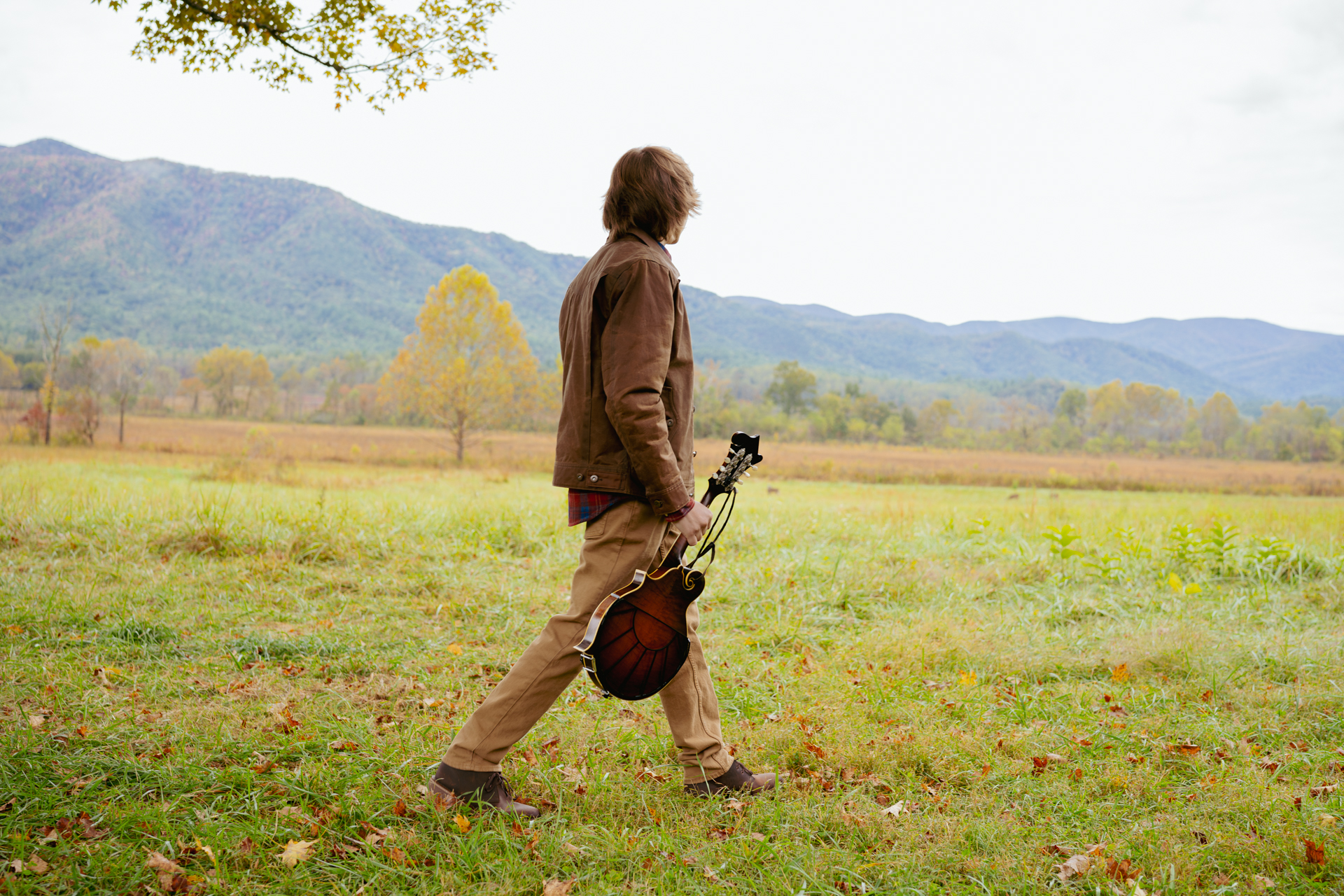
At just 15 years old, Wyatt Ellis has already made a name for himself as one of the most exciting young talents in bluegrass music.
A native of East Tennessee, he picked up the mandolin during the pandemic and quickly earned the mentorship of legends like Sierra Hull and Bobby Osborne. His journey—from local jam sessions to the Grand Ole Opry—has been nothing short of remarkable.
In 2024, his debut album, Happy Valley, soared to the top of Billboard’s bluegrass sales chart, with ten of its twelve tracks landing in the Top 10. His momentum continued into 2025 with the release of “Winds of Rowan County,” a collaboration with bluegrass icon Peter Rowan.
Inspired by the region, Wyatt recently became the ambassador of the Peaceful Side of the Smokies. As he prepares to release a new album with his touring band, we had the opportunity to sit down with him to discuss his music, influences and advice.
You’re preparing to release a new album—what can fans expect from it?
It’s gonna be a hard-driving traditional bluegrass album with some more progressive elements—a fresh edge to the bluegrass that we all love.
Out of all the songs you’ve written or recorded, which one means the most to you and why?
My favorite song that I’ve written is probably my instrumental, “Blue Smoke,” from my album. But my favorite that I’ve ever recorded is one that’s gonna come out in the future called “Heartbreak Highway.”
Some say bluegrass is a dying genre, while others see a resurgence. Where do you think it stands today, and how do you see yourself shaping its future?
I think bluegrass is at a high point for sure, with people like Billy Strings bringing it to a whole new audience, and the younger generation like myself trying to keep it alive.
Bluegrass has deep roots in tradition, but you also bring a fresh take to the genre. How do you balance honoring the past while making music that feels new?
I think that came pretty naturally for me because I learned from the very roots of the music, like the Osborne Brothers and Bill Monroe, you know, the fathers of the music. But I also have studied a ton of other types of music like jazz, different types of country—just pretty much everything. I’m into everything a little bit. I think it all just kind of blends together.
When it comes to jazz, I love it all, from soul to bebop. I love Sonny Rollins. Of course, you have to love all the classics like Miles Davis. Pretty much anything within that genre I find interesting.
You’ve worked with some of the biggest names in bluegrass—what’s been the most valuable lesson you’ve learned from them?
The community is so helpful, and everybody is like a big family. I think that really helped me to learn how to fit in with bluegrass in general.
The most important lesson I’ve learned through studying all types of music is to go back to the roots and build from there. I got that piece of advice from Bobby Osborne.
Bluegrass has its roots in Appalachia. What would you say to someone from outside the region who wants to get into it?
Whether you’re trying to learn it or listen to it, go back and listen to a little bit of everything from the genre. The old stuff and the new stuff. Just try to get an understanding of really what’s out there in bluegrass music.
Performing on big stages like the Grand Ole Opry at such a young age must have been nerve-wracking. Have you always been comfortable in the spotlight, or is it something you’ve had to grow into?
At the very beginning, I may have been a little bit nervous. But to be honest, I’ve never really gotten super nervous.
Right before the pandemic, I started out learning at a place called Rocky Branch [Mountain Music]. They were really welcoming and let me get up in front of some people and play. I think that really got me comfortable playing in front of people.
There aren’t too many people younger people around there, but they definitely welcome that in. It’s a great place for everybody of all ages.
Many people have described you as a child prodigy. Do you feel pressure from that title, or do you see it as motivation?
Eh, you know, I just keep on doing what I’m doing—just keep on my own track.
What advice would you give to other young musicians hoping to follow in your footsteps?
You’ve just got to be determined that you can do it and have the confidence to do it. And, like I said, learn it from the very roots that it came from.
The Peaceful Side of the Smokies has a way of inspiring people. Where do you go when you need to clear your mind or find new ideas for your music?
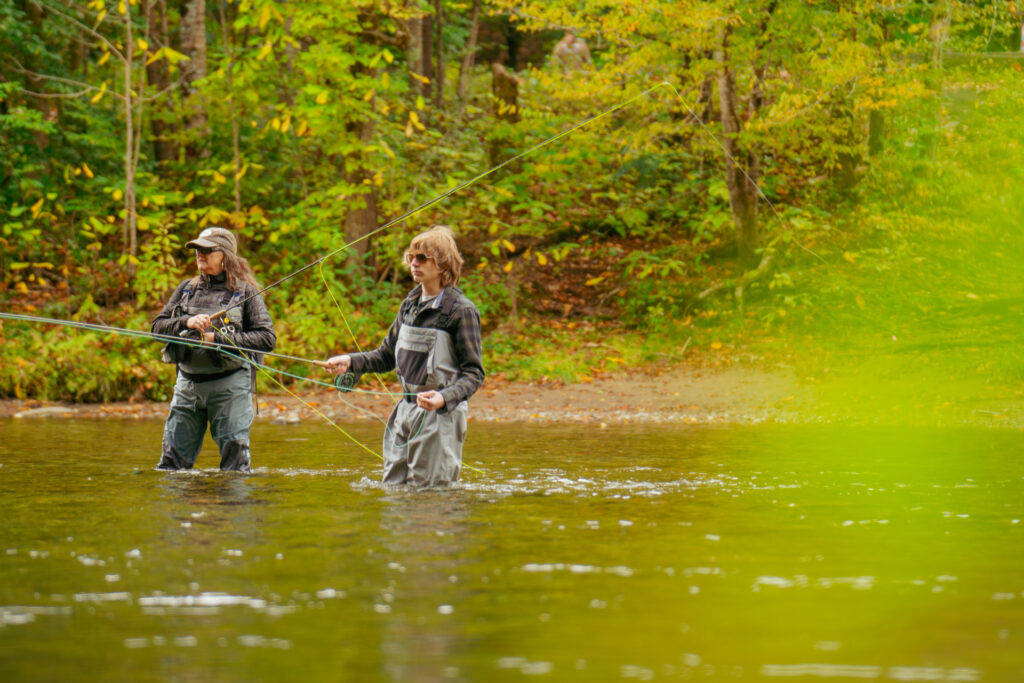
Well, I love to go up in the mountains […] and just be outside. I love to fly fish. Some of my favorite spots up there are Abrams Creek and Tremont.
You’re involved in conservation efforts in the Smokies. Can you share more about your work?
I’ve done a few things. I did a benefit down in Knoxville called Pickin’ Up the Pieces. We raised quite a bit of money. I don’t know exactly [how much], but probably around $20K. That was awesome. It benefitted waterways in the area.
For those who haven’t visited yet, what do you want people to know about the Peaceful Side of the Smokies?
If you’re coming to see the Smokies, [the Peaceful Side] is the place.
Want to learn more about Wyatt and the Peaceful Side? Follow us on social media for exclusive content (@peacefulsmokies).
Born and raised in Maryville, Tennessee, with roots tracing back to Cades Cove, Emily Huffstetler is a proud Maryville College graduate and passionate storyteller of the Greater Smokies region.
The Peaceful Side of the Smokies may be quite peaceful at the moment, but at different points in history it’s been a crossroads for conflicts, and played home to a raucous community of frontier loggers and businessmen. There are plenty of places in Blount County to learn about the region’s history, and here are a few that history buffs and their families are likely to love. The Little River Railroad & Lumber Company Museum Once upon a time (let’s say, oh, 1901), a man named W.B. Townsend founded the Little River Railroad and Lumber Company, which eventually operated for 38 years and sawed 560 million board feet of timber. Far from legend, the actions of W.B. Townsend and the loggers he employed shaped the region, and in 1982 the museum was created to explain their legacy. Visitors can expect a restored Shay train engine, other vintage train cars, restored buildings, and ephemera, like photographs and tools, that tell the story of the Railroad & Lumber Company. Cades Cove and The Cades Cove Museum There’s plenty of history to be had in Cades Cove. The Cades Cove Loop Road offers both motorists and hikers a chance to experience history firsthand, as visitors can drive through the scenery or park and hike through historic structures, some of which, like the Cable Mill, are still in operation. There’s also a Cades Cove Visitors’ Center, offering ranger-led programs and a bookshop. The Cades Cove Museum is run by the Cades Cove Preservation Association, a community of those dedicated to preserving the history of the pioneers who once settled Cades Cove, and who moved to make way for Great Smoky Mountains National Park. The museum celebrating these frontier lives is free and open from 10 AM to 3 PM, Wednesday through Saturday, at the historic Thompson-Brown House at 1004 East Lamar Alexander Parkway in Maryville. Blount County Historical Museum Keeping those same hours and located in the very same historic home as the Cades Cove Museum, the Blount County Historical Museum also offers plenty to keep history buffs entertained. The Museum features Civil War artifacts, including uniforms and women’s clothing, as well as personal items and other equipment, a model railroad display, and information on Cherokee settlement in the region. The Great Smoky Mountains Heritage Center This heritage center offers more than just a museum – their facilities play host to local concerts and other events, their grounds feature a veterans’ honor garden, and they also have a historic village with 13 buildings, including cabins, a chapel, a granary, two barns, a smokehouse, and buildings used by other historical businesses, like a wheelwright’s shop. In the museum itself you can find permanent exhibits on the Native Americans who once lived in the region, as well as the European pioneers who settled in Eastern Tennessee and developed their own culture and way of life. Expect lots of real and replicated tools, utensils, and other equipment, plus the museum is also home to a collection of 19th and 20th century vehicles.
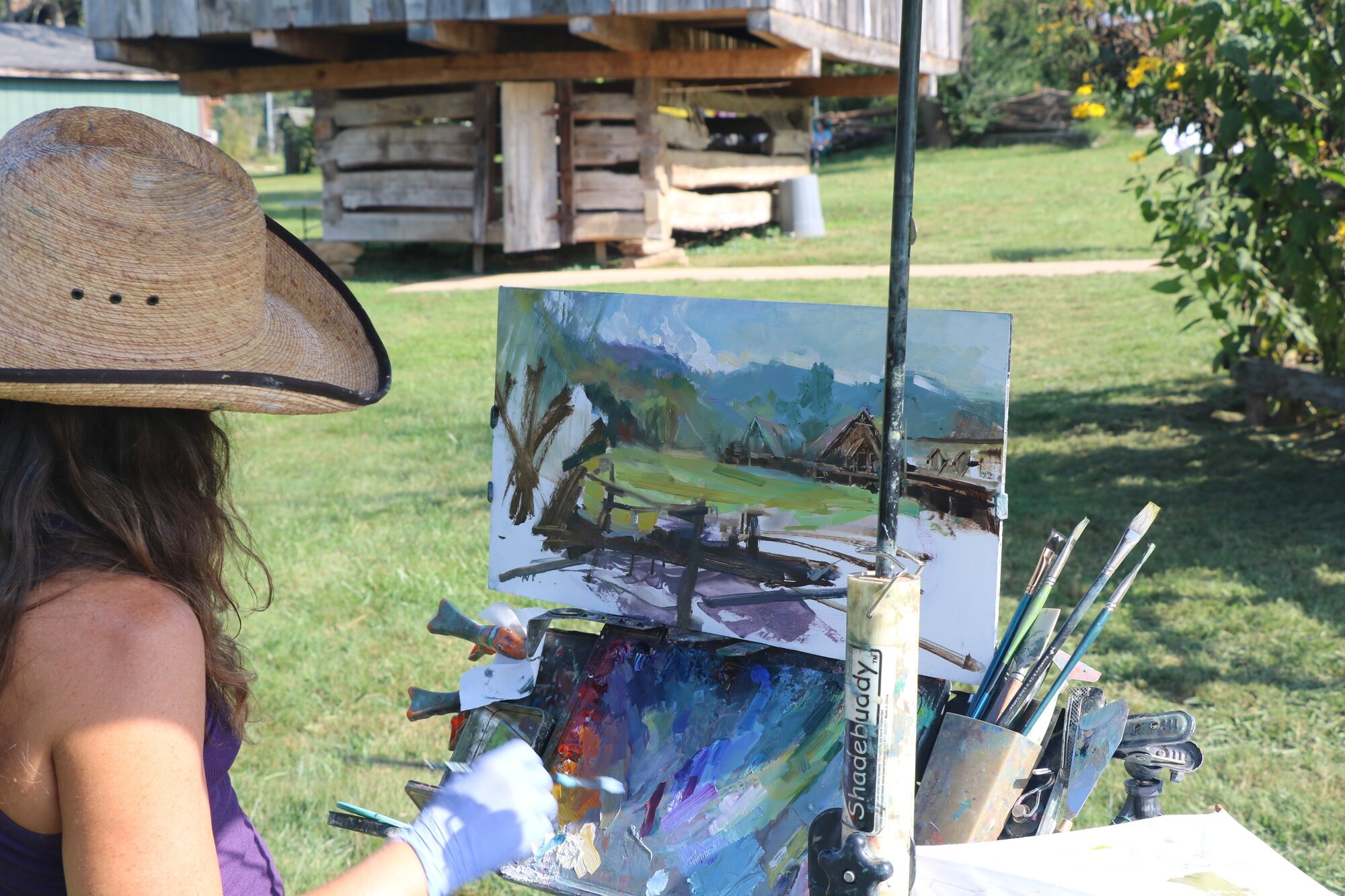
Plein Air Smokies returns Sept. 19-26, with 20 featured artists painting throughout Great Smoky Mountains National Park and the surrounding area.
Hosted by Great Smoky Mountains Institute at Tremont, the fifth annual event celebrates plein air painting, the tradition of painting outdoors directly from the natural landscape. Visitors can watch artists at work in Townsend and Tremont, see the finished pieces at a gallery sale and attend a timed painting competition in Knoxville.
They will set up around the property, using the Heritage Center’s historic Appalachian buildings and grounds as their subjects. Visitors can walk through the site, watch the artists work and see how each approaches the setting differently.
Some artists will be in the Heritage Center’s free public areas, while others will be inside the museum grounds, where regular admission is required.
On Sept. 22, the artists will demonstrate their work at Tremont.
Ten will paint around campus from 9 a.m. to noon, followed by the other 10 from noon to 3 p.m. Visitors can move between locations to watch different techniques and ask questions while the artists work.
The demonstrations are free and open to the public. No registration is required.
Education Day – Sept. 25
Photo courtesy of Great Smoky Mountains Institute at Tremont.
On Sept. 25, students from four area high schools will come to Tremont to paint alongside the featured artists. They will spend the morning outdoors and then wrap up their pieces after lunch.
That evening, paintings created during Plein Air Smokies will be unveiled at The District Gallery & Framery in Knoxville.
The Collectors Celebration & Gallery Sale runs from 5:30 to 8 p.m. and is the first chance to see and purchase work from the week. Guests can also meet the artists. Awards are announced at 7:30 p.m.
The exhibition remains open through 4 p.m. Sept. 26, with artwork available for purchase.
Artists ages 14 and older can register for the Open Division, while the 20 featured artists compete separately.
After checking in and having their canvases stamped between 7 and 9 a.m., participants will choose a spot in Sequoyah Hills Park or along the Cherokee Boulevard median and get to work.
Painting ends at 11 a.m., with finished pieces due for judging at 11:30 a.m. Prizes and public art sales follow the judging.
New this year, Plein Air Smokies wraps up with Behind the Awards at The District Gallery & Framery.
From 1:15 to 2:30 p.m., judge Lori Putnam will discuss the award-winning paintings and explain her judging considerations. Many of the featured artists will also be there to talk about their work.
The event is free and open to the public.
Proceeds from Plein Air Smokies support Tremont’s hands-on outdoor education programs and scholarships. For more information, including the full list of artists, visit pleinairsmokies.org.
Born and raised in Maryville, Tennessee, with roots tracing back to Cades Cove, Emily Huffstetler is a proud Maryville College graduate and storyteller of the Greater Smokies region. She holds a Master of Science in Conservation Education from Mississippi State University.
It has long been said that every picture tells a story, but here in the Smoky Mountains, this truth dates far back before the first camera took a photograph. It dates to the days when the hardy women who lived here began making quilts. While they weren’t the first ones to make quilts, they turned this simple chore into an art form. In the early days when the Peaceful Side of the Smokies was barely settled, the women would use virtually any scrap of material they could find. It could be the scraps left over from making clothes for the family, flour and bean sacks, seed bags, old clothes that have outlived their usefulness, literally anything that could be cut and sewn into the span of the quilt. Some were made to match the patterns of the time, others used a family pattern or even no pattern at all. Today’s electric sewing machines, readily available fat squares have changed what was for many an art built out of necessity has become one that is more often than not done simply for the pleasure of doing so. Here on the Peaceful Side of the Smokies, the skill of quilting is very much still part of our heritage. If you’re interested in quilting, there are several amazing quilt and quilt supply shop in the area, here are three of our favorites.
Quilts to Go at Lid’l Dollies Factory Store
The Lid’l Dollies Factory Store in Pigeon Forge has over three hundred quilt patterns for you to choose from in their store or at their online store. For 200 years Lid’l Dollies has been handcrafted quilts, dresses, and more. Today, they are proud to offer you a piece of true Tennessee heritage to take home with you after your visit to the peaceful side of the Smokies.
Foothills of the Smoky’s Quilt Shop
The Foothills of the Smoky’s Quilt Shop is located a little north of Pigeon Forge in Cosby. The shop is inside a historic log cabin and carries a vast selection of the finest in quilting materials and supplies. They also offer plenty of expert advice and are always happy to provide instruction on your quilting project. Be sure take the short drive out here and check out their fabulous selection of local patterns.
In Stitches Memory Quilts
In Stitches Memory Quilts, located in Maryville, TN says they will take your old t-shirts, sweatshirts, and polos, and create a custom quilt for you from them. The shirts you provide are used by the lovely ladies here to determine the custom pattern of your quilt.
The Cherry Pit
Located in historic downtown Sevierville, The Cherry Pit is an all-in-one quilting store. Along with selling completed quilts along with a fantastic selection of fabrics and patterns for which to choose. They also offer classes for beginners all the way up to advanced quilter. Each year the Cherry Pit participates in Quilt Fest and Shop Hop. They also sponsor an annual quilter retreat that features quilters from all over the country.
Long before DoorDash and Instacart, rolling stores delivered essentials to Blount County residents who couldn’t make a quick run to town. Trucks or retrofitted buses followed regular routes, stocked like a compact general store.
America had traveling merchants long before the term “rolling store” existed. But the model changed once motor vehicles became more common. A driver could carry more goods than a peddler on foot or a wagon could manage and cover longer distances. By the early to mid-1900s, rolling stores were a part of everyday life in many rural communities.
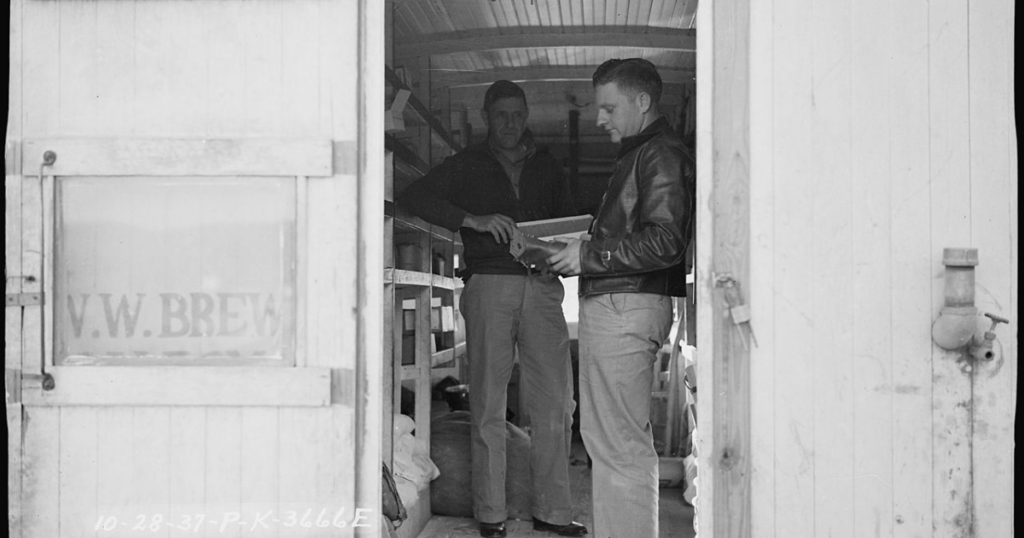
Interior of Murphy Brothers’ Rolling Store (1937). This Tennessee Valley Authority photo offers a helpful example of how rolling stores may have been stocked and arranged in nearby Appalachian communities, including Blount County. Tennessee Valley Authority; National Archives. Public domain.
By the 1940s and into the early 1950s, rolling stores were still part of the landscape here, especially in rural areas. In Snapshots of Blount County History, Volume II, Dean Stone (1924-2016) writes that Charles K. Walker, Henry Ernest Simms and A. W. Walker were among the last to operate rolling stores locally, with as many as five stores operating at a time.
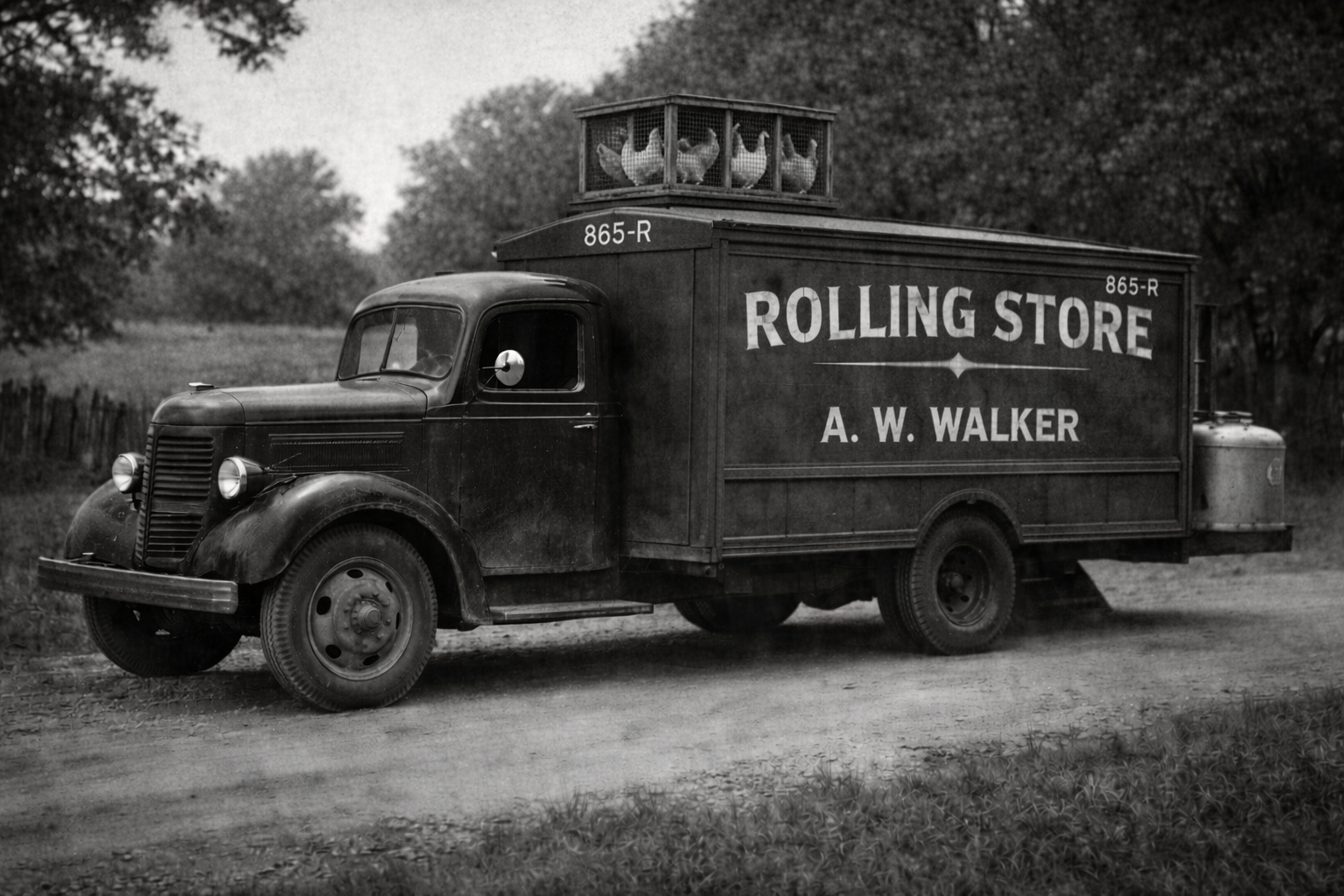
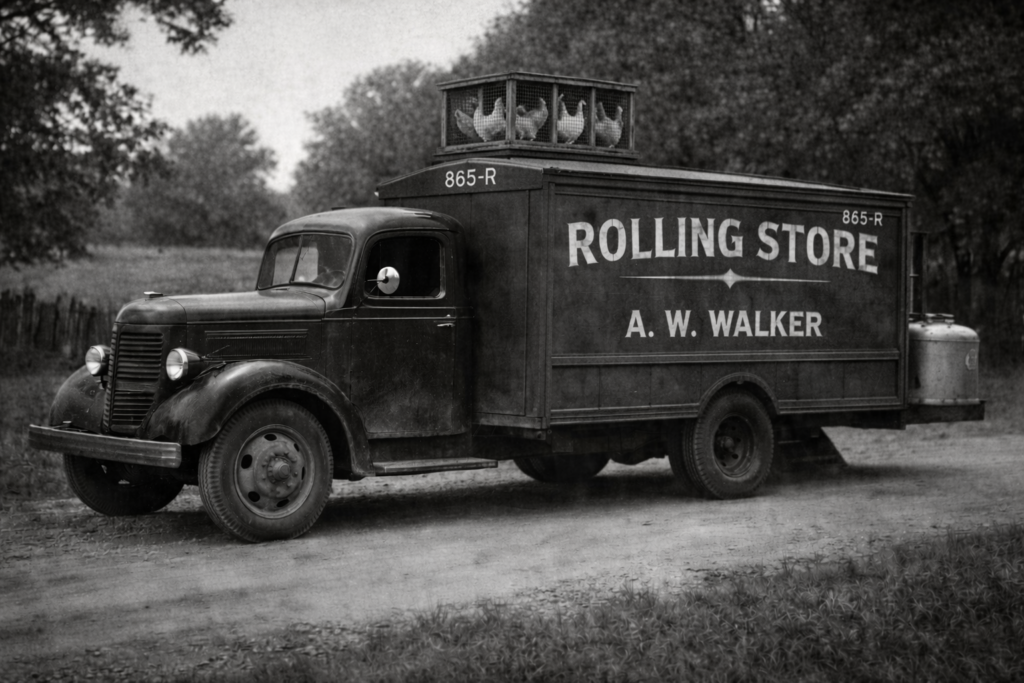
AI-generated reimagination of a Blount County rolling store truck based on a description in Snapshots of Blount County History, Volume II by Dean Stone (details include steps at the rear, a chicken coop above the cab and a kerosene tank). Image generated with OpenAI’s DALL·E, 2026.
One rolling store Stone describes was built on a 2 ½-ton Dodge truck chassis, with steps at the back for customers to climb in. A wooden coop for live chickens rode above the cab, and a kerosene tank often sat on the “back porch” area to supply lamps and stoves, back when kerosene was commonly called coal oil. During World War II, rolling stores were especially useful, since gasoline and tires were rationed.
Although mobile, rolling stores had a home base. According to Stone, many were headquartered at Walker’s Cash Store on Montvale Road, just south of Magnolia Cemetery. Walker’s trucks had the store’s phone number painted on the side, 865-R.
As roads improved and more families had reliable transportation, the rolling store became less necessary. But the tradition of independent grocery stores still has a place in Blount County.
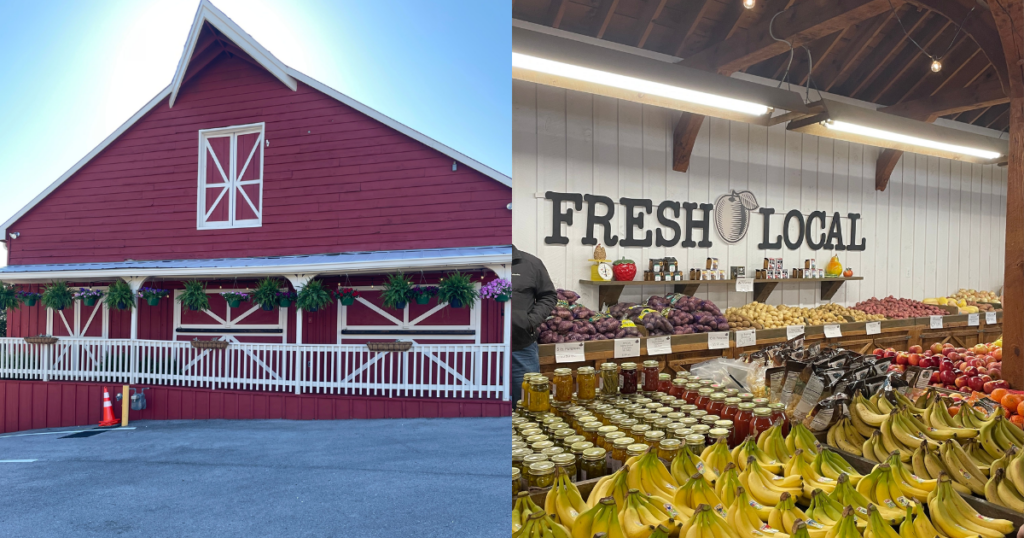
Amburn’s Market exterior and interior. Photos courtesy of Blount Partnership.
In Maryville, Amburn’s Market is one example. The market traces its roots to 1952, when Virgil Amburn began selling fruit from the trunk of his car. Today, it’s known for market-style shopping with a focus on seasonal produce and regional goods, including fresh produce, dairy and eggs, plus locally sourced meats.
A few minutes away, Horn of Plenty Marketplace offers another independent option with a farm-market feel. The shop has local products and specialty items. Along with produce, you’ll find a mix that leans giftable and pantry-friendly, as well as a small nursery on site.
Born and raised in Maryville, Tennessee, with roots tracing back to Cades Cove, Emily Huffstetler is a proud Maryville College graduate and storyteller of the Greater Smokies region.
Spring is in full swing on the Peaceful Side of the Smokies. Check out our full lineup of festivals and fairs, featuring everything from off-roading and folk music to botany, beer and… Bigfoot?
📍 Greater Smokies Event Grounds, 7930 E. Lamar Alexander Pkwy, Townsend, TN
The Bronco Super Celebration is the largest annual Ford Bronco event in the United States, drawing in thousands of attendees and hundreds of Broncos from every generation. Hosted by Bronco Driver Magazine, the event includes daily scenic drives through the Smokies, tech talks, show-and-shine contests, parts vendors, swap meets and product giveaways. Registration is available on site.
📍Great Smoky Mountains National Park (Meeting points vary)
For 75 years, nature lovers have gathered in the Smokies for the Spring Wildflower Pilgrimage—a celebration of Appalachian biodiversity through guided hikes, workshops and exhibits. The event draws attendees from across the U.S. and beyond to explore everything from fungi and ferns to salamanders and stream ecology. Whether you’re a budding botanist or seasoned naturalist, the pilgrimage offers a rare opportunity to learn directly from biologists, artists and park experts.
Full Access: $150
Student (K-12, undergraduate, graduate) Full Access: $50
📍The Capitol Theatre, 127 W Broadway Ave, Maryville, TN 37801
The Capitol Theatre in Downtown Maryville will come alive for an evening of live music, community and good vibes. Livin’ Live ‘25 features a packed lineup of local artists, including folk duo Wilder Things Than Us, genre-bending band HiDaze, and Knoxville staples Connor Kelly & The Time Warp. Music kicks off at 4:30 p.m. and runs through 10:00 p.m., with performances staggered so you can enjoy dinner downtown and pop in and out as you please.
📍Blount County Public Library, 508 N Cusick St, Maryville, TN 37804
This month-long concert series is wrapping up with a FREE performance by The Lonesome Roses. It will take place at the Blount County Public Library’s Main Gallery from 6:00 to 7:00 p.m.
📍 Great Smoky Mountains Heritage Center, 123 Cromwell Dr, Townsend, TN 37882
From 9:00 a.m. to 4:00 p.m. each day, over 20 vendors will gather at the Heritage Center for fiber arts, demonstrations and hands-on learning. Visitors can explore a variety of classes, enjoy spinning and weaving demos, and join the social time to share projects with fellow fiber enthusiasts over tea or coffee.
📍Peaceful Side Brewery, 106 Everett Avenue, Maryville, TN 37804
Peaceful Side Brewery is throwing a party you won’t want to miss. Funky Cinco de Mayo kicks off at 4:30 p.m. with live Latin music from Candela Knox and keeps the energy going with beer tastings from 10 regional breweries. From plantain-infused gose to tequila barrel-aged lagers, this event is all about bold flavors and funky fun. With games like the Can Crushing Competition and the Swag Piñata Smash, plus street tacos from Chapulines and Peaceful Side’s own kitchen, it’s a Cinco celebration with local flair.
📍 Greater Smokies Event Grounds, 7930 E. Lamar Alexander Pkwy, Townsend, TN
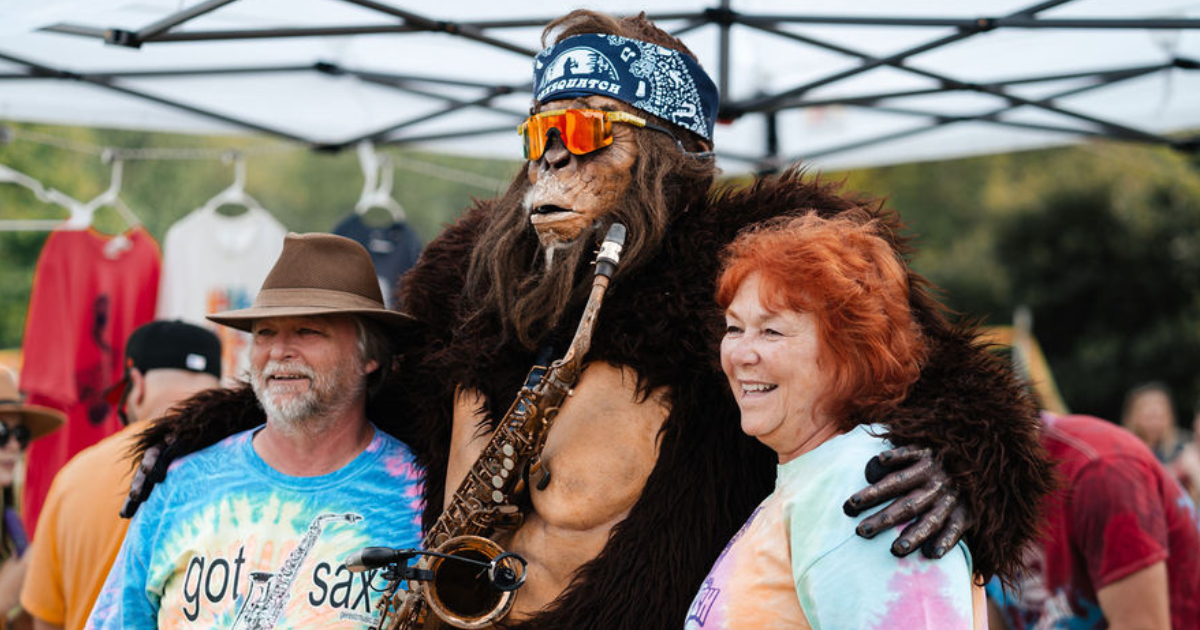
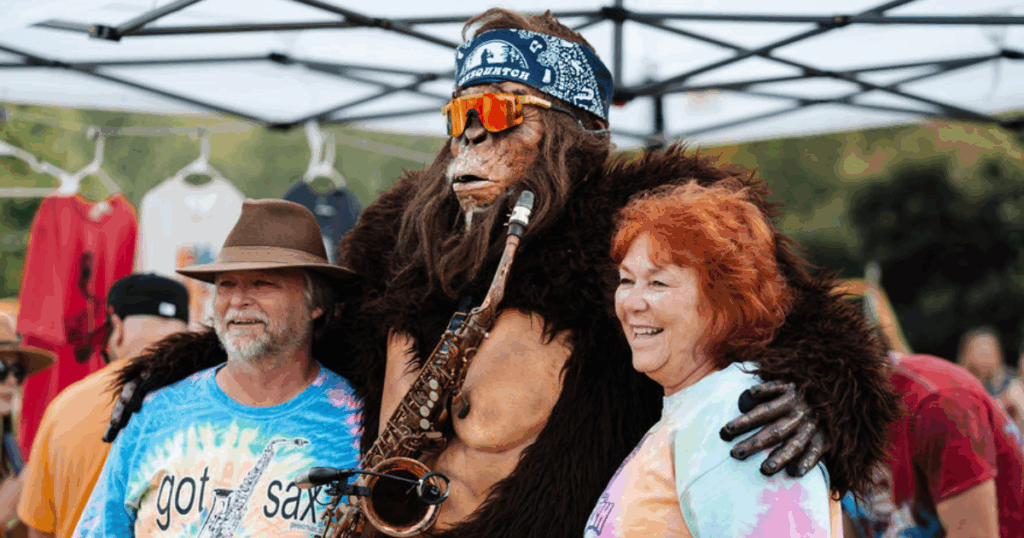
The 5th Annual Smoky Mountain Bigfoot Festival promises a legendary family reunion at the Townsend Event Center. Get ready for a day of live music, tasty food trucks and unique vendors celebrating Bigfoot and his mythical cousins, including Yeti, Mothman and Dogman. Enjoy live music, food trucks and competitions, as well as insightful talks from Bigfoot researchers. There will also be a 5K and Fun Run, where Bigfoot may make an appearance.
📍The Shed Smokehouse & Juke Joint, 1820 W Lamar Alexander Pkwy, Maryville, TN 37801
Southern rockers Blackberry Smoke are bringing their “Rattle, Ramble & Roll” tour to East Tennessee for a three-night run as part of the Brothers & Sisters Family Reunion. Hosted at The Shed in Maryville, this homecoming-style concert series has become a fan-favorite tradition. Friday and Saturday shows are already sold out, but tickets are still available for Thursday night.
📍 Greater Smokies Event Grounds, 7930 E. Lamar Alexander Pkwy, Townsend, TN
Townsend transforms into “Scotland in the Smokies” during the Smoky Mountain Scottish Festival and Games, now in its 43rd year. As Tennessee’s oldest celebration of Celtic heritage, this family-friendly weekend offers everything from traditional athletics and highland dancing to whisky tastings, live music and hearty fare from the British Isles. Set against the scenic backdrop of the Smokies, the event honors the Scots-Irish settlers that shaped the region.
Two-Day Pass: $30
Saturday Only: $20
Sunday Only: $15
Highlander Patron Package: $175
Whisky Seminars: $50
Which festivals will you attend? Tag us to be featured on our social media (@PeacefulSmokies).
Born and raised in Maryville, Tennessee, with roots tracing back to Cades Cove, Emily Huffstetler is a proud Maryville College graduate and passionate storyteller of the Greater Smokies region.
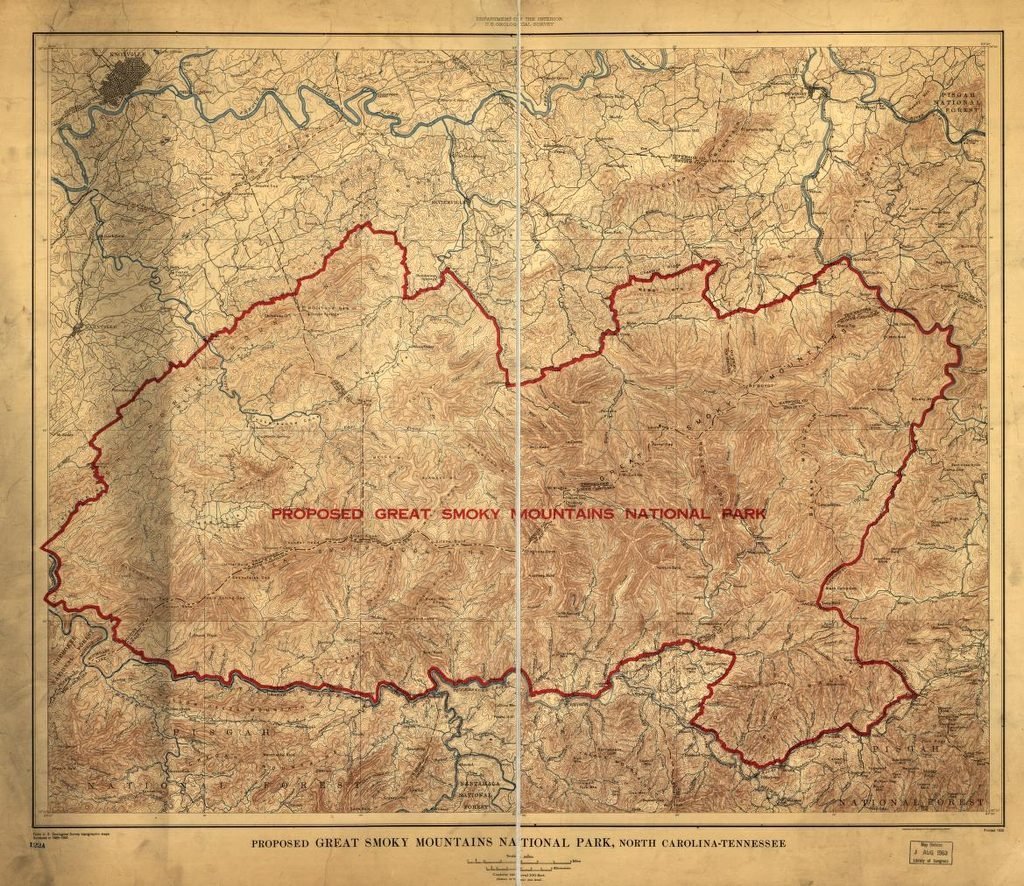
Proposed Great Smoky Mountains National Park map, 1926. Courtesy of Library of Congress, Geography and Map Division.
This year marks 100 years since President Calvin Coolidge signed legislation authorizing the establishment of Great Smoky Mountains National Park.1
By then, families had long lived in Cades Cove, logging crews worked around Tremont, Girl Scouts spent summers in Walker Valley and visitors came to the mountains to hike and swim.
A National Park Was Authorized
The May 22, 1926, act authorized both Great Smoky Mountains and Shenandoah national parks, but there were still years of land acquisition ahead. Congress did not authorize full development of the Smokies until 1934.1,2
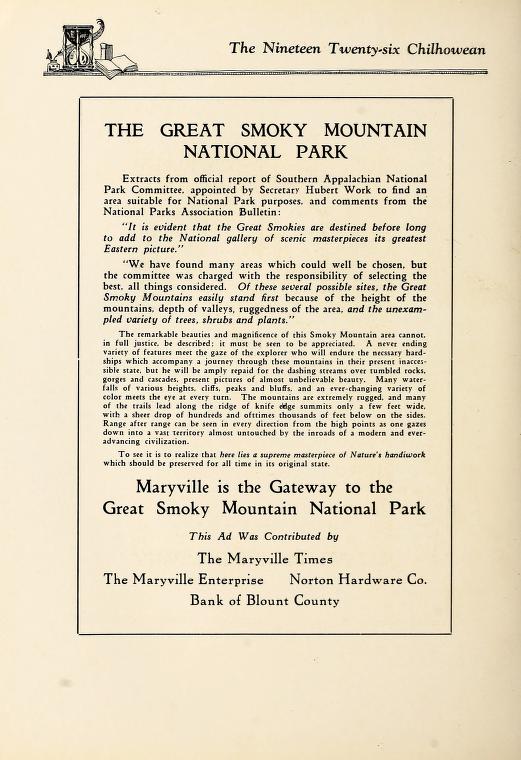
Even so, local boosters were already promoting the proposed park. A full-page advertisement in Maryville College’s 1926 Chilhowean yearbook declared: “Maryville is the Gateway to the Great Smoky Mountain National Park.”3
Advertisement for the proposed Great Smoky Mountains National Park in Maryville College’s 1926 Chilhowean yearbook. Courtesy of Maryville College.
Much of the proposed park remained privately owned, and people continued to live and work throughout the mountains.2
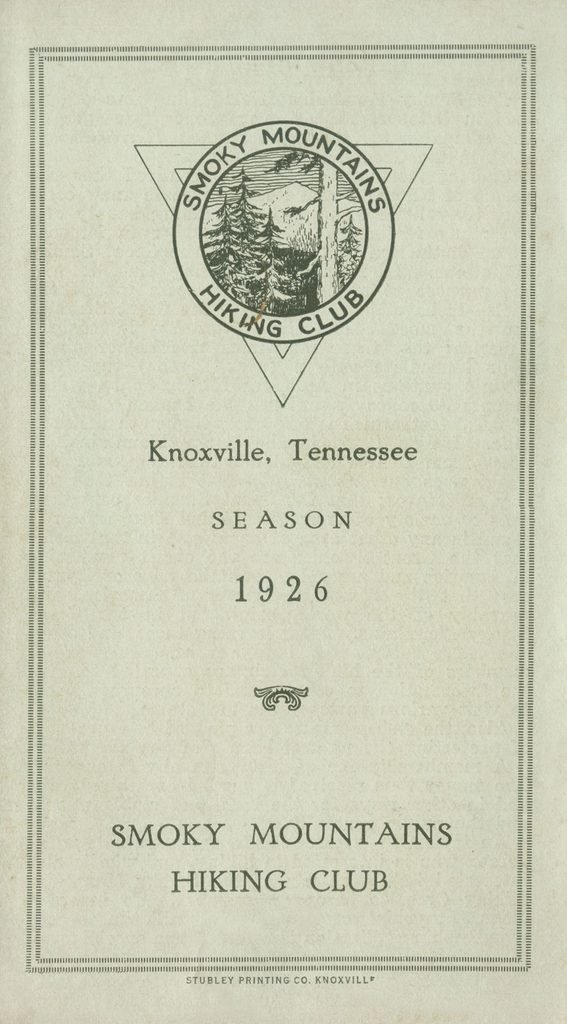
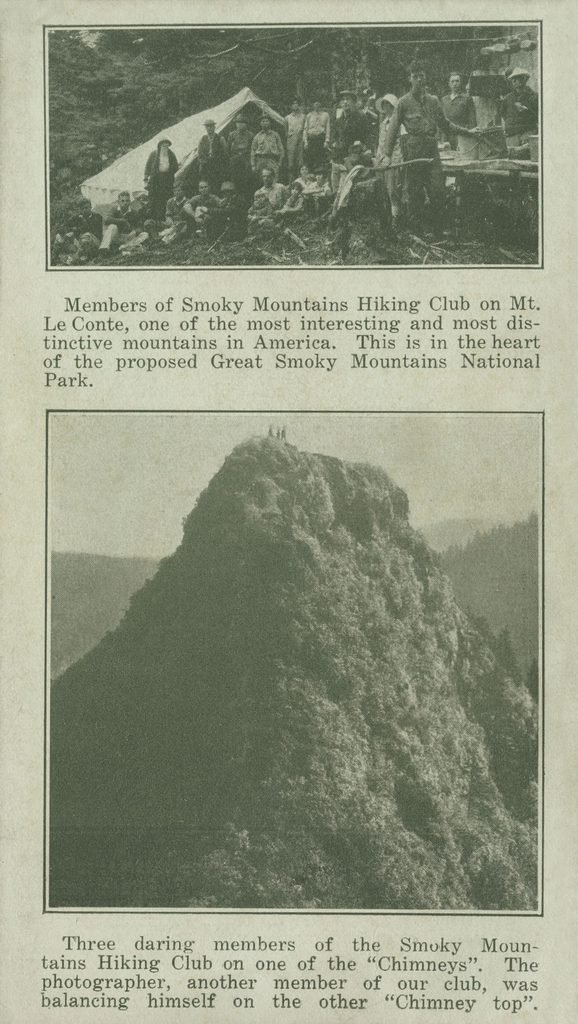
Cover of the Smoky Mountains Hiking Club’s 1926 season brochure. Courtesy of University of Tennessee, Knoxville Libraries.Page from the Smoky Mountains Hiking Club’s 1926 season brochure. Courtesy of University of Tennessee, Knoxville Libraries.
The Smoky Mountains Hiking Club grew out of an October 1924 hike to Mount Le Conte. By 1926, the club had a regular schedule of hikes and social events, along with practical guidance on what hikers should wear and bring.4,5
Club members also supported efforts to establish the national park.4
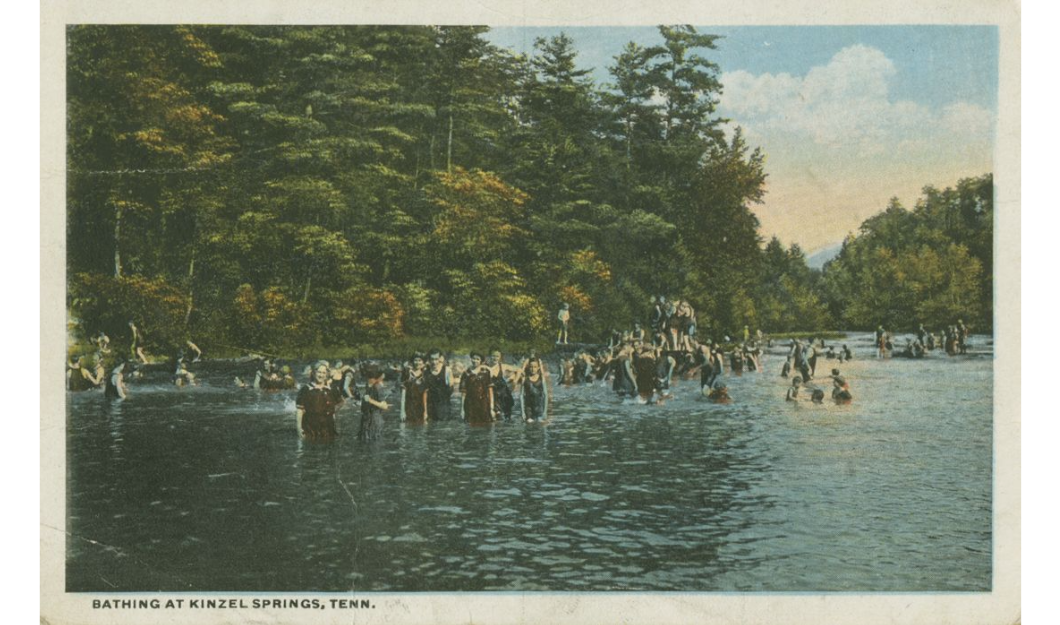
Kinzel Springs Drew Visitors
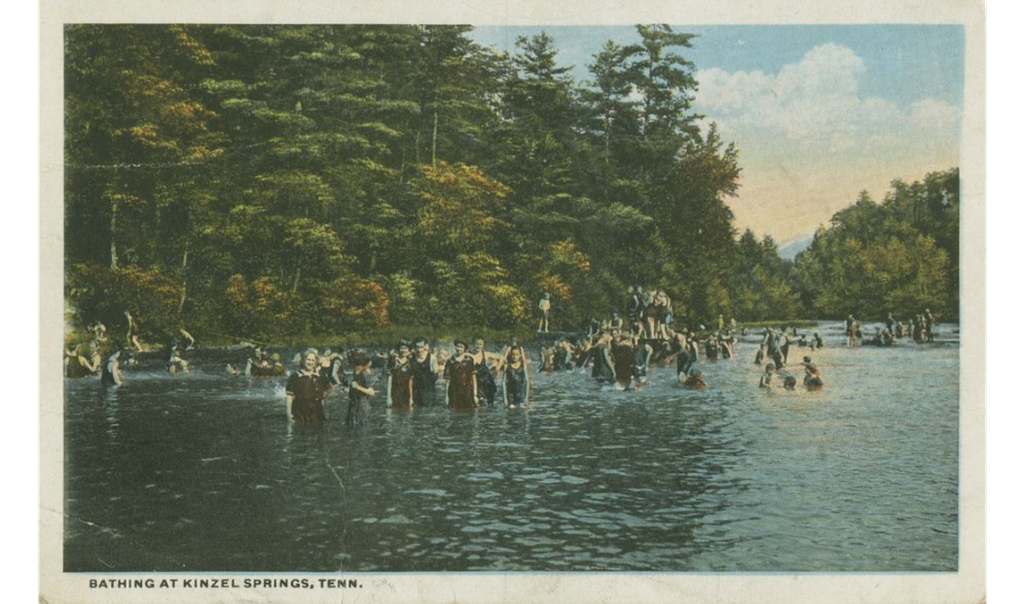
“Bathing at Kinzel Springs, Tenn.,” postcard mailed in 1926. Courtesy of University of Tennessee Libraries, Postcards from the Great Smoky Mountains Collection.
Kinzel Springs developed into a resort community near the western end of Tuckaleechee Cove. E.J. Kinzel acquired property there in 1894, and railroad service beginning in 1902 brought more visitors to the area. By 1914, the Kinzels had added a 28-room hotel and 10 cottages; a post office followed in 1925.6
By 1926, visitors were coming to Kinzel Springs to stay near the mountains and swim.6,7
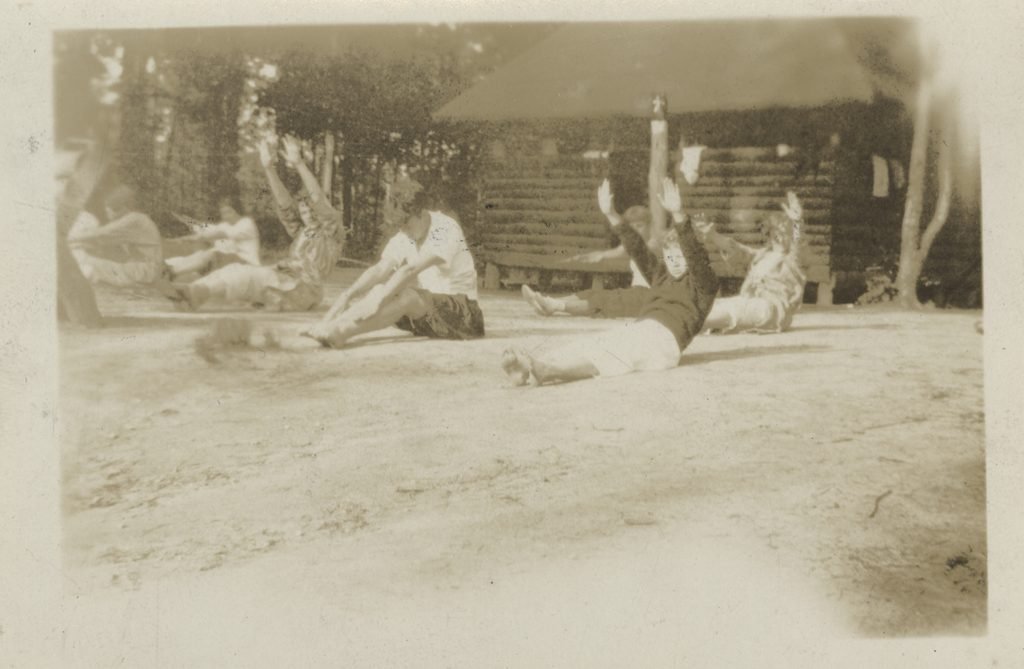
Girl Scouts at summer camp in Virginia, 1926. Courtesy of Virginia Commonwealth University Libraries.
Camp Margaret Townsend was a Girl Scout summer camp in Walker Valley, on land that is now home to Great Smoky Mountains Institute at Tremont.
The camp opened in 1925 and held four two-week sessions each summer, making 1926 its second season. Camp life was rustic: there was no electricity, and the girls bathed in the Little River in the early years.8
Tremont Became a Logging Town
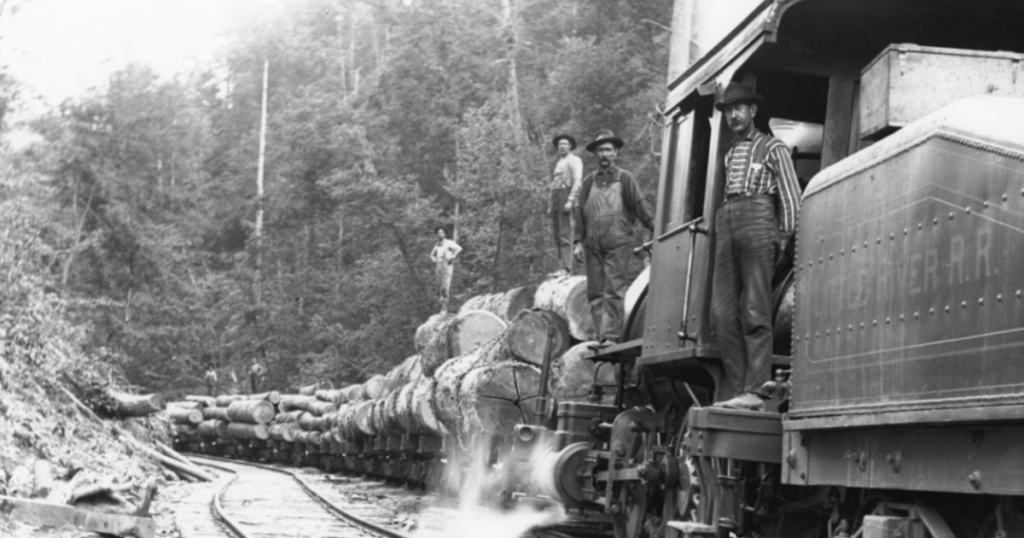
Little River Railroad during the logging era in the Smokies. Courtesy of University of Tennessee, Knoxville Special Collections.
Little River Lumber Company laid railroad tracks into Walker Valley and began logging there in 1924. By 1926, Tremont was a company logging town at the confluence of Lynn Camp and Thunderhead prongs.9
The community housed workers and supported logging operations in the Middle Prong watershed. A hotel also opened that year, providing lodging for logging workers and visitors.10
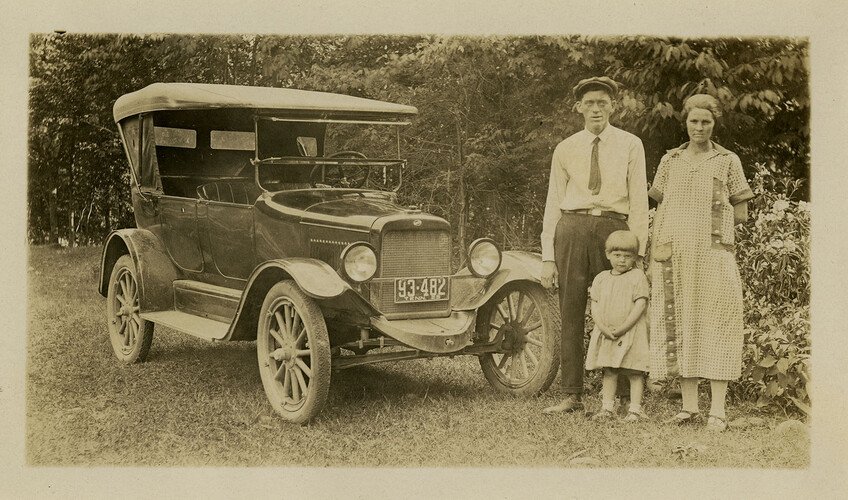
The first automobile in Elkmont. Courtesy of Hunter Library Special Collections, Western Carolina University.
Little River Lumber Company ended train service to Elkmont in 1925 and removed the tracks. In 1926, the former railroad bed from Townsend to Elkmont was converted into a gravel automobile road.11
Cars also played a role in the national park campaign. In 1923, members of the Knoxville Automobile Club helped organize the group that became the Great Smoky Mountains Conservation Association to promote the proposed park.12
Families Lived in Cades Cove
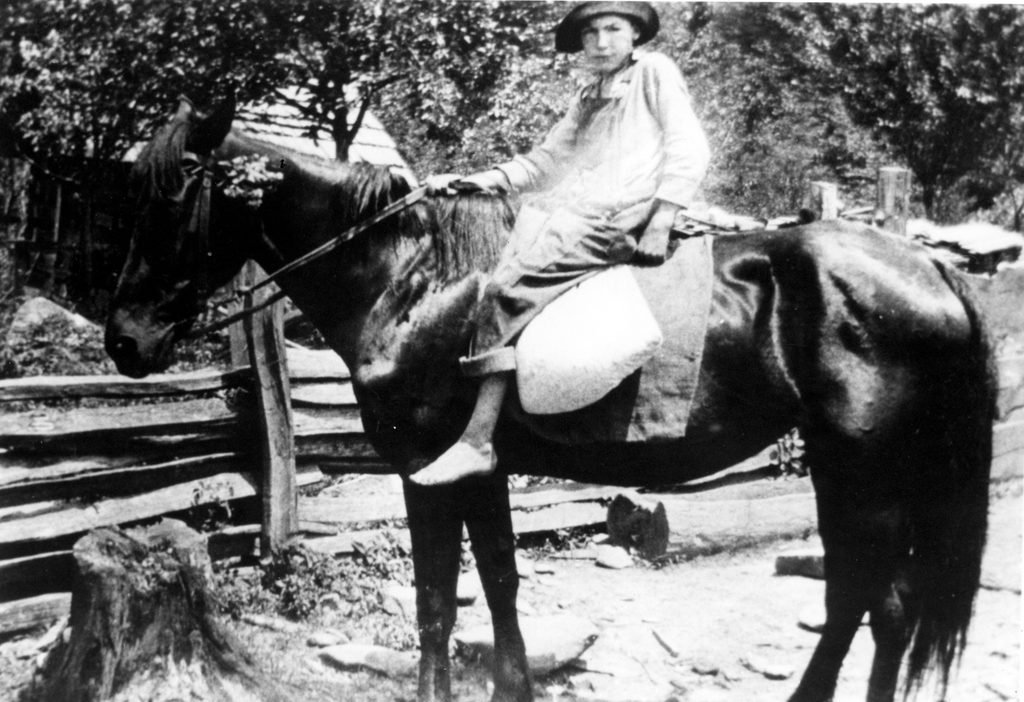
A boy takes corn to the mill in Cades Cove, 1920. Courtesy of National Park Service.
Families still lived, farmed, attended church and school and worked alongside their neighbors in Cades Cove in 1926. Neighbors also came together for corn huskings, molasses making and chestnut gathering.13
Tourists were already visiting the Cove. By 1924, resident John W. Oliver was renting cabins to visitors. He built a tourist lodge in 1928.14
A major park-related purchase in 1927 included most of the mountains north of Cades Cove.13
Born and raised in Maryville, Tennessee, with roots tracing back to Cades Cove, Emily Huffstetler is a proud Maryville College graduate and storyteller of the Greater Smokies region. She holds a Master of Science in Conservation Education from Mississippi State University.
Although the United States Congress authorized the creation of the Foothills Parkway far back in 1944, it has remained incomplete for more than 50 years. Yet, a giant step forward has been made with the completion and opening of the 16-mile stretch running between Wears Valley, TN and Walland, TN, in November of 2018. Though it is unclear if the original plans for a 72-mile stretch of highway will be complete, the segments that are finished can be accurately said to do as was intended, and “provide magnificent views into the Great Smoky Mountains National Park from a road corridor that was outside the Park.” The only incomplete of the seven Congressionally Mandated Parkways created at that time, it is intended to run from Cosby, TN to Chilhowee, TN. Though construction has been stop and go for years, and sees the Parkway divided into eight sections (known as 8A and 8H), it has been the 1.5 mile section known as the “missing link” that has been keeping the project from completion. Obstacles and Challenges For many years, travelers could drive eastern end’s 5.5-mile portion from Interstate 40 to Cosby. Additionally, many have traversed the 17-mile stretch in Blount County that runs from U.S. 129 to Walland. However, the 16 mile stretch recently completed proved a real difficulty. According to a report from WBIR, “Crews spent a couple of decades working on a 16-mile segment from Walland to Wears Valley and nearly finished it. But right in the middle, the construction hit rugged peaks and valleys too tough to overcome. The walls they built crumbled and the soil was filled with minerals that caused environmental damage.” By the late 1980s, crews stopped work and a 1.65 mile gap – the missing link mentioned above – remained. Around 2009, work began again and brand-new bridge building technologies were put to use in solving the challenges posed by the missing link. According to that report, this tech has allowed the gap to be closed through “several bridges that essentially float along the edge of the mountain and minimize the number of cuts that plow through the mountain.” Using technologies similar to the Linn Cove Viaduct in North Carolina, they are actually cantilevered bridges that preserved the surrounding landscape and offered only a small amount of interference or environmental impact. A real bonus is that they also emphasize the scenery and give a sense of being out in the wilderness, above the treetops and flying above it all! With minimal impact and unimpeded views, the solution could not have been more ideally designed. Expected to become one of the prettiest drives in the country, Tennessee Senator Lamar Alexander said that the Foothills Parkway will be the “only way you can see the highest part of the mountains in the eastern United States” from such a viewpoint. So, when visiting Blount County, be sure you make a point to take a scenic drive along the newly-completed portion of the stunning Foothills Parkway.
















Recent Comments