
Tag: Economic Development

Downtown Maryville Alliance Receives Multi-Year Grant to Present the Levitt AMP Maryville Music Series

Levitt Award logo

The Downtown Maryville Alliance in partnership with the City of Maryville, the Blount Partnership and the Clayton Center for the Arts announced that it has been awarded a multi-year grant of $36,000 in matching funds to present a free outdoor music series at the Charles West Amphitheater at Jack Greene Park in 2026, 2027, and 2028. The schedule, along with performing artists, will be released in early 2026.

“We are thrilled to bring the Levitt AMP Maryville Music Series to life at Jack Greene Park,” said Amanda Gillooly, Director of the Downtown Maryville Alliance. “This grant allows us to create a vibrant, welcoming space where our community can come together and celebrate the power of live music. It’s more than concerts—it’s about building connections, supporting local culture, and making downtown Maryville a destination for everyone.”

Levitt Music Series Grants are an exciting, multi-year matching grant program bringing the joy of free, live music to towns and cities across the country. Each Levitt Music Series location presents 7-10 free outdoor concerts per year, injecting new life into underused public spaces and creating joyous, welcoming community destinations. Levitt Music Series Grants encompass several grant opportunities, including the Levitt AMP program that the Downtown Maryville Alliance will be presenting as the Levitt AMP Maryville Music Series.

In a first of its kind collaboration, the Levitt Foundation—a national social impact funder supporting the largest free outdoor concert series in America—has partnered with the Tennessee Entertainment Commission, with support from the Tennessee Department of Economic & Community Development and the Tennessee Department of Tourist Development, to award six communities based in Tennessee with multi-year Levitt AMP matching grants, which will bring up to 180 free concerts across the state over three years.

Levitt AMP grants support free, live music in towns and cities with a population of up to 250,000. Levitt AMP concert series reflect the three goals of the Levitt AMP program: Amplify community pride and a city’s unique character; enrich lives through the power of free, live Music; and illustrate the importance of inclusive and vibrant public Places. From rural Alaska to Appalachian Main Streets and Midwestern locales to now six locations in Tennessee, the Levitt AMP Music Series is a catalytic opportunity for towns and cities across America to realize a shared mission—building community through music to create a healthy and thriving future for all.

“Since the Levitt AMP Music Series began ten years ago in 2015, we’ve seen dynamic social and economic impact as nonprofits across the nation activate public spaces through the power and joy of free, live music,” said Sharon Yazowski, President & CEO of the Levitt Foundation. “Levitt concert series are community destinations, brought to life when friends, families, and neighbors of all ages and backgrounds come together for a shared experience. Through this exciting partnership with the Tennessee Entertainment Commission, the Levitt Foundation is thrilled to welcome [Your Organization Name] as a new grantee and watch as the Levitt AMP [Your City/Town] Music Series plays a meaningful role in strengthening the social fabric, creating economic vitality, and adding to the cultural vibrancy of your community.”

Including the Downtown Maryville Alliance, the six Tennessee Levitt AMP grantees represent towns and cities from across the state. In addition to presenting artists hailing from around the world and nation, these music series will also feature award-winning performers and musicians drawn from the vibrant music communities of Tennessee.

“Tennessee has always been a place where creativity and innovation flourish. Building on our proud history and tradition of progress, we are expanding the state’s entertainment sector and driving local economic growth and tourism thanks to this partnership with Levitt. This series will bring Tennesseans together to celebrate the extraordinary talent that defines our state,” said Deputy Governor and Tennessee Department of Economic & Community Development Commissioner Stuart C. McWhorter.

Combining a total of 34 new and 32 returning grantees, the Levitt Foundation will award over $7 million dollars over the next three years to nonprofits serving towns and cities across the U.S. as part of the Levitt Music Series Grants. Levitt Music Series reach a broad range of communities across America, presenting seasoned, award-winning artists to acclaimed, emerging talent in a wide array of music genres, spanning pop, rock, folk, World music, country, jazz, Latin, children’s shows, blues, and more.
Maryville College announces new Downtown Center hub for hospitality

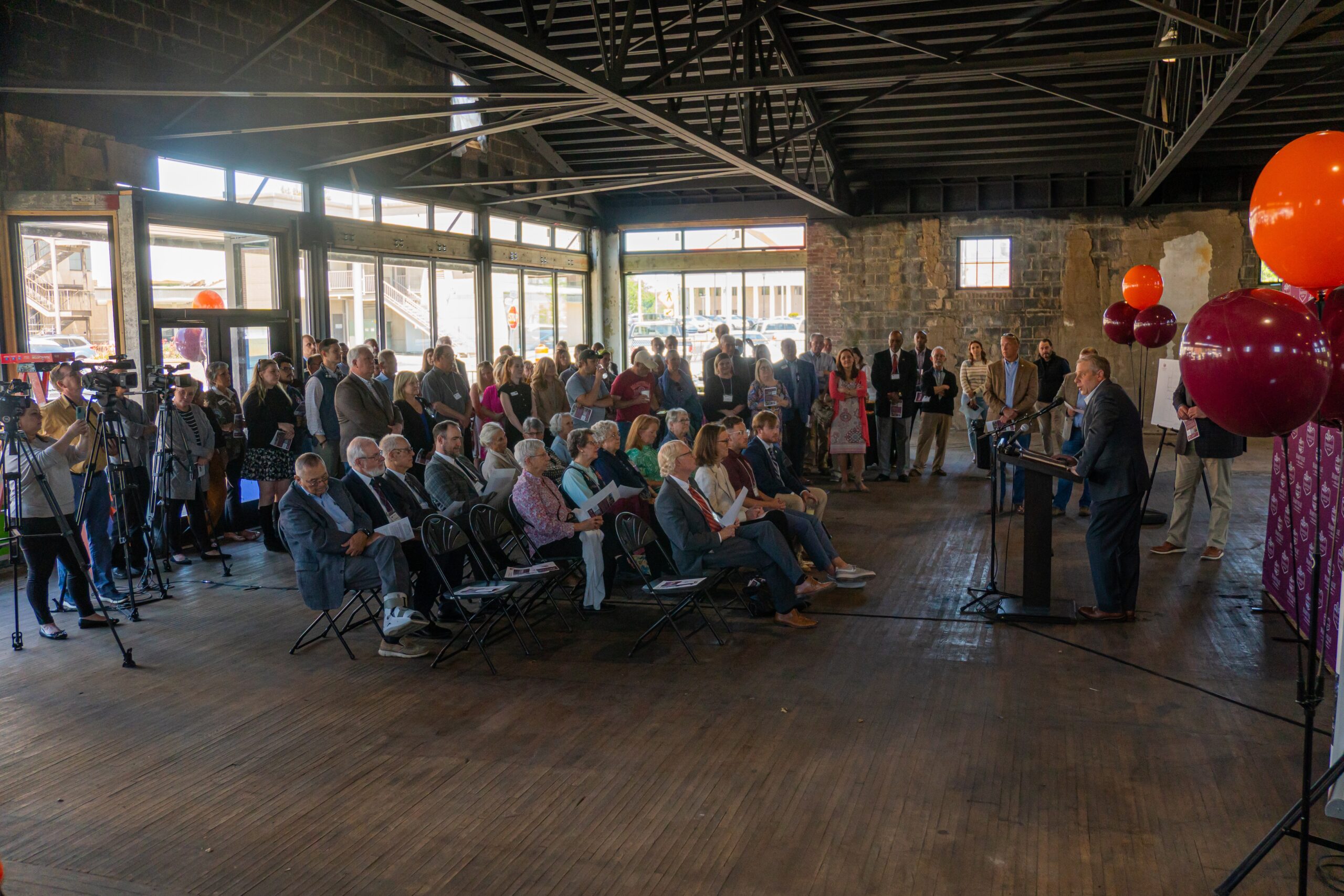
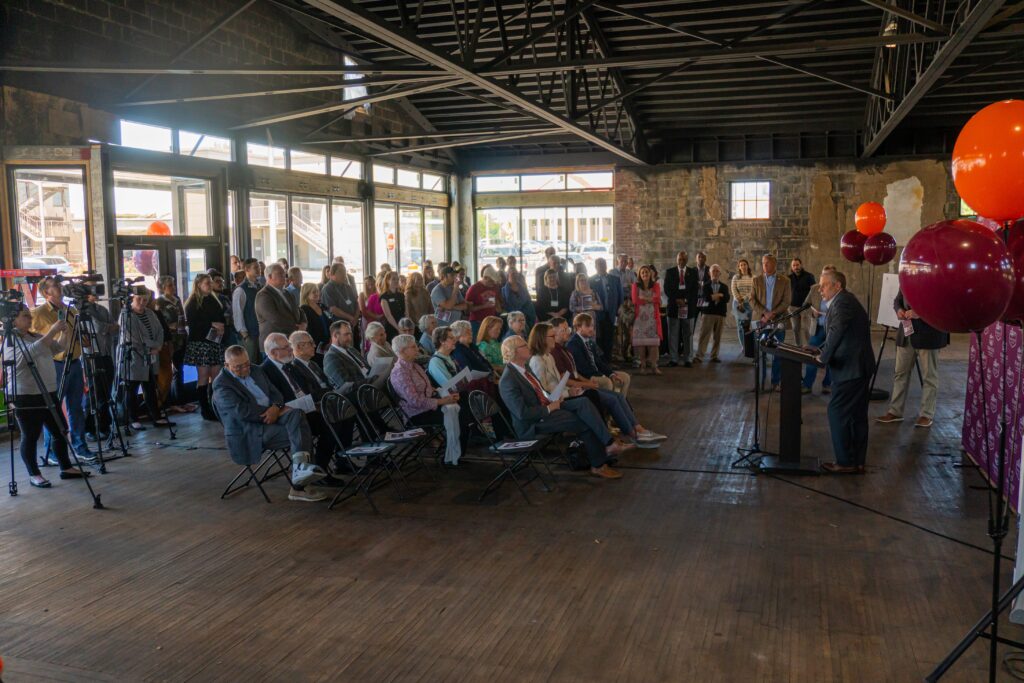
Beginning in 2024, Maryville College will return to the downtown area that shares its name for the first time in more than 150 years.

Established as the Southern and Western Theological Seminary in 1819, the College was a part of downtown Maryville until the completion of Anderson Hall, the oldest building on its present campus, in 1870. In early 2024, however, the Maryville College Downtown Center will open at 205 Court St., serving as both a learning lab and an embassy, of sorts, to the community in which the institution has long been invested.

“To many of you, this news is probably not a surprise, given our goal of being ‘of and for the region,’” MC President Dr. Bryan Coker wrote to faculty, staff and students recently. “As I have often stated, the fates of the College and downtown are inextricably linked; thus, I believe it’s important for us to have a substantive stake in the revitalization of downtown Maryville. I wholeheartedly believe that a stronger downtown means a stronger Maryville College, and vice versa.

“MC alumni often reminisce about downtown Homecoming parades as well as frequenting downtown businesses. However, the proliferation of strip malls and other venues ultimately drove retail and foot traffic away from Maryville’s downtown core. As the years progressed, increased traffic on Lamar Alexander Parkway created a division between the MC campus and downtown, despite the convenience of a pedestrian bridge.

“Fortunately, the tide seems to now be turning for downtown Maryville, thanks to forward-thinking investors who want to see the area thrive once again,” Coker added.

A downtown Maryville landmark, the building — opened in 1941 as J&K Grocery, the storefront of which faces East Church Avenue and extends over the space currently occupied by Tri-Hop Brewery — has undergone extensive renovations, Coker added, giving College leaders, who plan to lease the main/street level floor of the building, a blank slate. As a result, it will serve as a hub for the College’s newly created Hospitality and Regional Identity program of study, coordinated by incoming professor Dr. Angela Sebby and funded through major gifts earmarked specifically for that program.

Once completed, the MC Downtown Center, Coker said, will feature:

  • Two classrooms primarily for Hospitality and Regional Identity courses, but open for any other classes as available;
  • Offices for the program’s faculty;
  • A teaching/demonstration kitchen for the Restaurant at RT Lodge (one of the program’s vocational and financial partners) and other local dining partners, to offer cooking classes for the external community;
  • Brewing equipment and teaching space for the newly created Fermentation Sciences minor at MC, as well as a place to offer beer-brewing classes for the external community; and
  • A small Maryville College gift shop, where MC gear can be purchased.

“This Downtown Center will be the place where the College meets the community, and where the presence of students, faculty and staff contributes to the resurgence and vitality of downtown,” Coker said. “In turn, we believe students and employees will deeply benefit from the experience of learning and working in historic Downtown Maryville, gaining a greater appreciation for the power of ‘place’ in one’s experiences, which is a significant focus of the Hospitality and Regional Identity program.”

The center, Coker said, is another sign of the dual commitment to joint improvements between the College and the City of Maryville. Recently, city officials announced plans to improve the College Street Corridor, running from the pedestrian bridge linking campus over East Lamar Alexander Parkway to the center of downtown, including such improvements as an archway over the bridge entrance, refurbished sidewalks and lighting on College Street and a tartan-themed crosswalk that keeps with the Scots pride that’s an integral part of the MC image. In addition, Christy McDonald Slavick, executive director of strategic initiatives at MC, serves as the chairperson of the Downtown Maryville Association, further strengthening the bonds between the two entities.

“Private colleges must increasingly act in the public interest, and in the case of the MC Downtown Center, we are bringing our programs to the community, as well as playing an important role in historic preservation and revitalization,” Coker said. “In addition, ‘Place’ has a powerful role in educational experiences, and we look forward to our students learning and interacting in a historic downtown setting where an exciting revitalization is occurring. As we endeavor to be a college ‘of and for the region,’ the Downtown Center is a tangible manifestation of this important goal.”

Such an off-campus venture isn’t a first for MC, Coker pointed out: From 1969 to 1980, the College operated the Tremont Environmental Education Center — now known as the Great Smoky Mountains Institute at Tremont — under the supervision of the late Dr. Randolph Shields, a biology professor at the College for decades. In addition, Shields supervised the now-defunct Mid-Appalachian Field Biology Teaching and Research Center from 1967 to 1977, a joint research facility for the Mid-Appalachia College Council.

“The Downtown Center is just another example of the College connecting with the community, in the interest of student learning, as well as serving as a resource for the region,” Coker said. “It’s undoubtedly an audacious and exciting step for the College, and I am grateful for those who are supporting us in this endeavor.”