
Category: Uncategorized

Spend a Day on East Tennessee’s Little River 

Written by: Emily Huffstetler

As you drive into the Smokies from Townsend, the Peaceful Side, roll down your windows and listen. That sound? It’s the Little River, running right alongside you. Centuries ago, these waters sustained the Cherokee people. In the early 20th century, the river’s path became the route for the Little River Railroad, which hauled timber deep from the mountains. 

Today, the river continues to teem with life. You might spot a great blue heron fishing the shallows or a river otter slipping between rocks. Beneath the surface, trout, salamanders and aquatic insects thrive. Fed by over 85 inches of annual rainfall, the Little River nourishes more than 2,000 miles of streams within the park. And the best part? You don’t have to admire it from the car. Here are our favorite ways to spend a day on the Little River. 

Walk the River’s Edge 
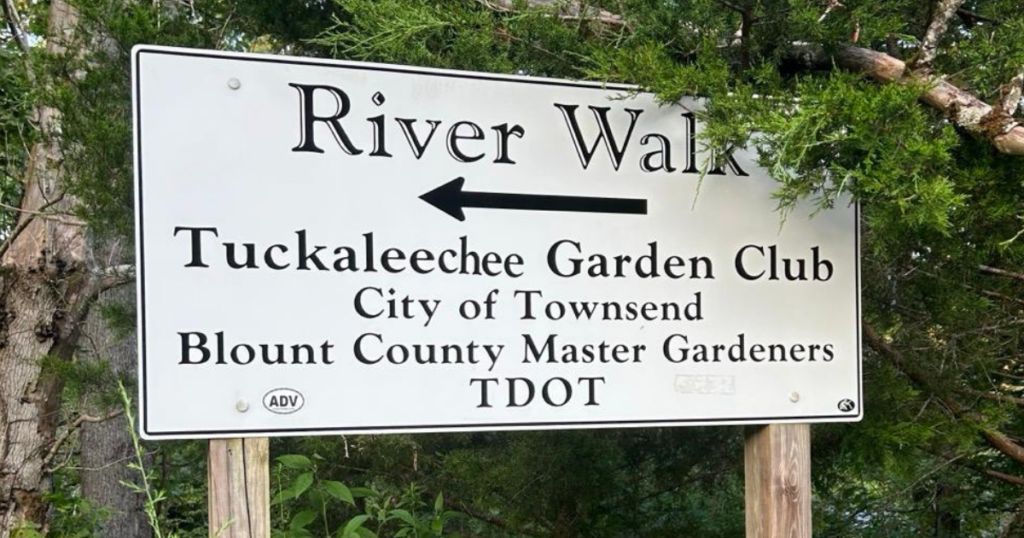
Go for a stroll along The Townsend River Walk & Arboretum, nestled between the Maryville-Alcoa Greenway and the Little River. You’ll come across several points of interest, including fairy villages, a pollinator garden, a children’s discovery garden and artwork made by locals. 

Cast a Line: Fly Fishing 

The Little River’s cool, clear waters are home to rainbow, brown and native brook trout. Whether you’re a seasoned fly fisher or just starting out, there’s something special about stepping into the river with a fly rod in hand and letting the current guide your rhythm. 

Upper sections of the river, especially near Elkmont, are ideal for backcountry solitude and wild trout, while the stretch through Townsend offers easier access and plentiful stocked fish. Local outfitters like Little River Outfitters offer gear, guided trips and expert advice to help you make the most of your time on the water.  

Reminder: Check fishing regulations and bring a valid Tennessee fishing license. 

Float the Day Away: River Rat Tubing 

When the summer heat sets in, nothing beats a cool float down the Little River. Just a few miles from the park entrance, you’ll find River Rat Tubing, a family-owned outfitter that’s been in business since 1995. Choose between two routes: one perfect for families (and small dogs) with gentle currents and scenic views, and another with a bit more excitement for the adventurous crowd. 

You can even splash out on a rental cabana to turn your river day into a full-on retreat. These shaded, private cabanas come with seating, a gift of your choice, and the option to add towel service and a stocked cooler. 

Pro Tip: Book online a day or more in advance for $5 off per person. 

Go for a Swim: The Townsend Wye 

Nestled just inside the entrance of the Great Smoky Mountains National Park, where Little River Road and Lamar Alexander Parkway intersect, the Townsend Wye is one of the most popular swimming holes in the area. 

Besides swimming, it’s a great spot for snorkeling, floating or simply relaxing by the water. You’ll find shallow areas, especially along the pebbly shore, as well as deeper spots where you can’t touch the bottom. 

Safety First: The GSMNP advises against water recreation in the park due to numerous hazards and dangers. If you choose to swim here, take necessary precautions, and remember to supervise children. 

Lend a Hand: Little River Watershed Association 
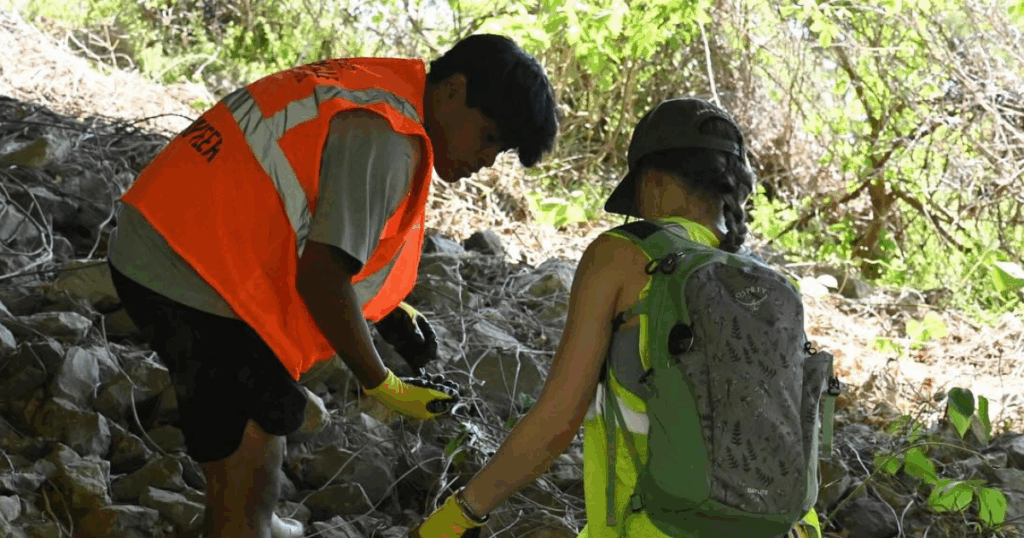
Photo courtesy of the Little River Watershed Association.

The Little River Watershed Association (LRWA) is a local nonprofit dedicated to preserving the health of the Little River and its surrounding environment. They organize river cleanups, streambank restoration projects, water quality monitoring and educational programs for all ages. Whether you’re a visitor or a local, volunteering or donating is a great way to give back. 

What’s your favorite way to enjoy the Little River? Tag us on social media (@PeacefulSmokies) for a chance to be featured. 

__________________________________________________________________________________________________________________________________

Born and raised in Maryville, Tennessee, with roots tracing back to Cades Cove, Emily Huffstetler is a proud Maryville College graduate and passionate storyteller of the Greater Smokies region.
Spooky Spots in Blount County

Written by: Emily Huffstetler

Do you believe in ghosts? According to a recent poll, about 39% of Americans do. While Southern Appalachia has become a trending ghost-hunting hotspot on TikTok, the Peaceful Side of the Smokies seems—well, peaceful. You won’t hear many ghost stories floating around Blount County. But in the spirit of Halloween, here are a few local legends. 

Maryville College 

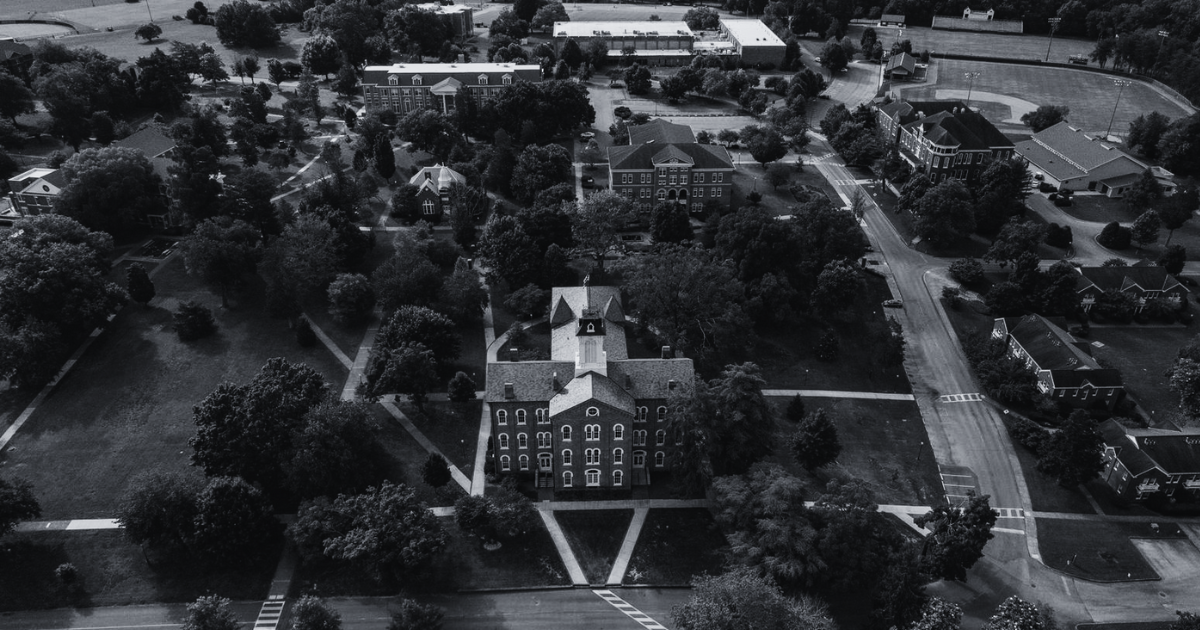
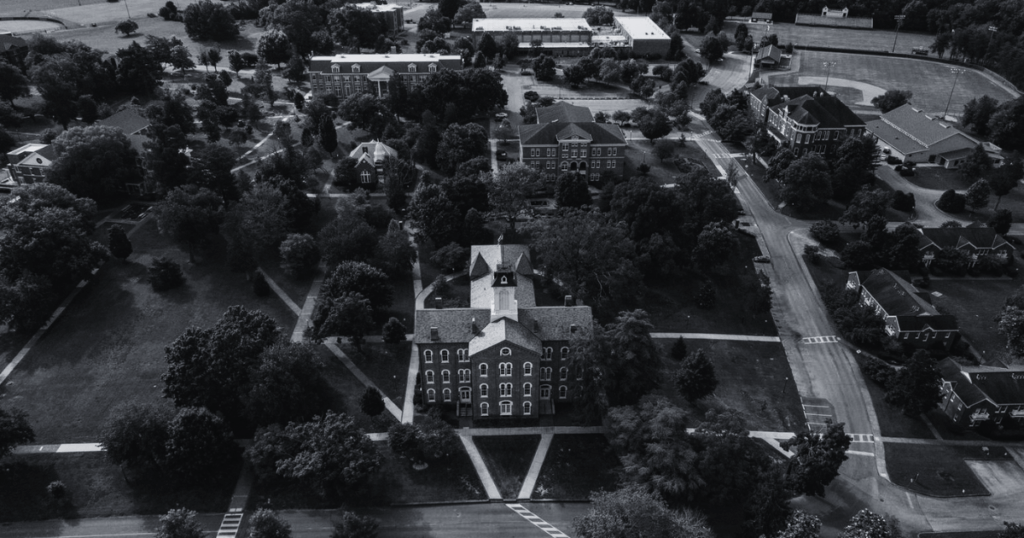
At over two centuries old, Maryville College is one of the oldest institutions of higher education in the country. Students and faculty alike whisper about the campus’s otherworldly residents, whose legends have been passed down through old issues of The Highland Echo and Alpha Psi Omega ghost tours. 

The most famous of these spirits is Whiskers, said to roam the halls of Anderson Hall, the oldest building on campus. Described as an elderly man with a peg leg, Whiskers is forever searching for his missing limb. Some say he was a Civil War soldier who lost his leg in battle, while others claim he was an old night watchman who never truly clocked out.

Then there’s Lily, the theatre ghost. Long ago, when Maryville College Theatre stood where the Clayton Center is now, Lily was said to be a stagehand with dreams of stepping into the spotlight. Her spirit reportedly lingers in the catwalks above the stage—sometimes seen as a flicker of white just before showtime. 

Other tales include a restless female student in Pearsons Hall, who reportedly haunts the building where her dorm once stood, and the Woman in White who drifts through the upper floors of the House in the Woods, combing her long hair as she gazes out the windows. 

Millenium Manor 

On North Wright Road in Alcoa stands one of Blount County’s strangest and most enduring landmarks, Millennium Manor. Built by William Andrew Nicholson beginning in 1937, the gray marble house was designed to last forever. A skilled mason, Nicholson worked days at the Alcoa plant and nights on his home, hauling 300-pound stones by wheelbarrow and stacking them into fourteen rooms of Roman arches and keystones. 

Nicholson believed the house would survive the end of the world and shelter his family during the thousand-year reign of Christ foretold in the Book of Revelation. He once said his fortress “cannot rust or rot, and if nothing wrecks it, there is no reason why it shouldn’t last a million years.” 

When his wife, Fair, died in 1950, Nicholson kept building, convinced his faith would spare him from death. He passed away in 1965, never seeing the Millennium he expected. Over time, rumors grew that he had buried his wife within the walls, though her marked grave suggests otherwise. 

Locals still tell of flickering lights, echoing footsteps and faces in the windows. Some believe Nicholson’s spirit remains inside the house he swore would outlive him. When current owner Dean Fontaine was once asked if the manor is haunted, he simply replied, “We don’t talk about that.” 

Millenium Manor is on the National Register of Historic Places and is open to the public from noon to 5 p.m. on weekends. 

__________________________________________________________________________________________________

Born and raised in Maryville, Tennessee, with roots tracing back to Cades Cove, Emily Huffstetler is a proud Maryville College graduate and passionate storyteller of the Greater Smokies region.

Spring Festivals and Fairs on the Peaceful Side

Written by: Emily Huffstetler

Spring is in full swing on the Peaceful Side of the Smokies. Check out our full lineup of festivals and fairs, featuring everything from off-roading and folk music to botany, beer and… Bigfoot?

Bronco Super Celebration: April 23–26

📍 Greater Smokies Event Grounds, 7930 E. Lamar Alexander Pkwy, Townsend, TN

The Bronco Super Celebration is the largest annual Ford Bronco event in the United States, drawing in thousands of attendees and hundreds of Broncos from every generation. Hosted by Bronco Driver Magazine, the event includes daily scenic drives through the Smokies, tech talks, show-and-shine contests, parts vendors, swap meets and product giveaways. Registration is available on site.

  • Registration: $100 per Bronco
  • Visitor Parking: $10

Spring Wildflower Pilgrimage: April 23–26

📍Great Smoky Mountains National Park (Meeting points vary)

For 75 years, nature lovers have gathered in the Smokies for the Spring Wildflower Pilgrimage—a celebration of Appalachian biodiversity through guided hikes, workshops and exhibits. The event draws attendees from across the U.S. and beyond to explore everything from fungi and ferns to salamanders and stream ecology. Whether you’re a budding botanist or seasoned naturalist, the pilgrimage offers a rare opportunity to learn directly from biologists, artists and park experts.

  • Full Access: $150
  • Student (K-12, undergraduate, graduate) Full Access: $50
  • Student (pre-K or younger) Full Access: FREE

Livin’ Live ‘25: April 24

📍The Capitol Theatre, 127 W Broadway Ave, Maryville, TN 37801

The Capitol Theatre in Downtown Maryville will come alive for an evening of live music, community and good vibes. Livin’ Live ‘25 features a packed lineup of local artists, including folk duo Wilder Things Than Us, genre-bending band HiDaze, and Knoxville staples Connor Kelly & The Time Warp. Music kicks off at 4:30 p.m. and runs through 10:00 p.m., with performances staggered so you can enjoy dinner downtown and pop in and out as you please.

  • General Admission: $16.07
  • VIP: $20.17

Sounds of Spring: April 24

📍Blount County Public Library, 508 N Cusick St, Maryville, TN 37804

This month-long concert series is wrapping up with a FREE performance by The Lonesome Roses. It will take place at the Blount County Public Library’s Main Gallery from 6:00 to 7:00 p.m.

Great Smoky Mountain Fiber Fair: April 25-26

📍 Great Smoky Mountains Heritage Center, 123 Cromwell Dr, Townsend, TN 37882

From 9:00 a.m. to 4:00 p.m. each day, over 20 vendors will gather at the Heritage Center for fiber arts, demonstrations and hands-on learning. Visitors can explore a variety of classes, enjoy spinning and weaving demos, and join the social time to share projects with fellow fiber enthusiasts over tea or coffee.

  • Adults (13-59): $12
  • Seniors (60+): $10
  • Children (5-12): $8
  • Children 4 and Under: FREE

Funky Cinco de Mayo: May 3

📍Peaceful Side Brewery, 106 Everett Avenue, Maryville, TN 37804

Peaceful Side Brewery is throwing a party you won’t want to miss. Funky Cinco de Mayo kicks off at 4:30 p.m. with live Latin music from Candela Knox and keeps the energy going with beer tastings from 10 regional breweries. From plantain-infused gose to tequila barrel-aged lagers, this event is all about bold flavors and funky fun. With games like the Can Crushing Competition and the Swag Piñata Smash, plus street tacos from Chapulines and Peaceful Side’s own kitchen, it’s a Cinco celebration with local flair.

Tickets: $65

Smoky Mountain Bigfoot Festival: May 3

📍 Greater Smokies Event Grounds, 7930 E. Lamar Alexander Pkwy, Townsend, TN

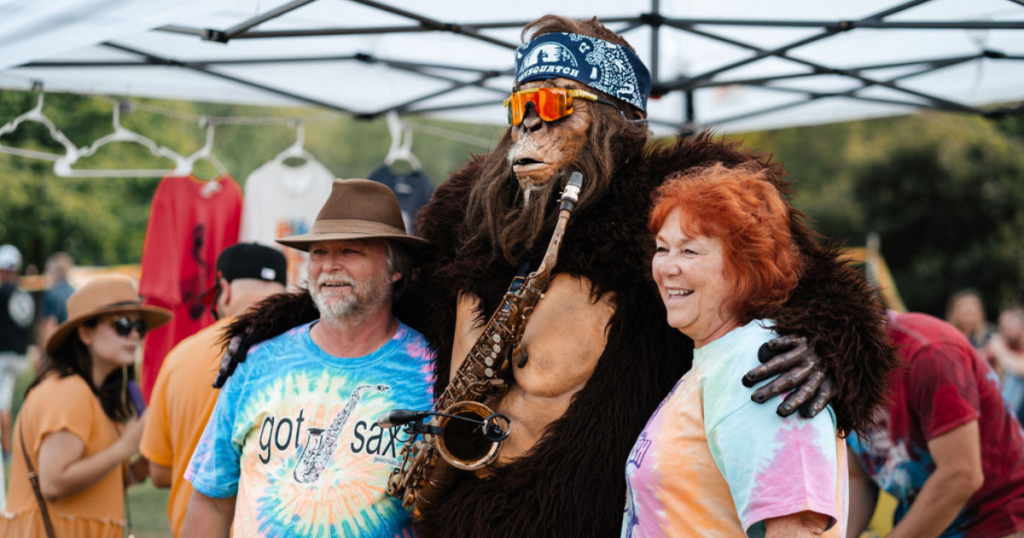
The 5th Annual Smoky Mountain Bigfoot Festival promises a legendary family reunion at the Townsend Event Center. Get ready for a day of live music, tasty food trucks and unique vendors celebrating Bigfoot and his mythical cousins, including Yeti, Mothman and Dogman. Enjoy live music, food trucks and competitions, as well as insightful talks from Bigfoot researchers. There will also be a 5K and Fun Run, where Bigfoot may make an appearance.

  • Adults: $10
  • Children 10 & Under: FREE
  • VIB (Very Important Believer) Meet & Greet: $175
  • 5K: $54
  • 1-Mile Fun Run: $54

Blackberry Smoke – Rattle, Ramble & Roll Tour: May 15–17

📍The Shed Smokehouse & Juke Joint, 1820 W Lamar Alexander Pkwy, Maryville, TN 37801

Southern rockers Blackberry Smoke are bringing their “Rattle, Ramble & Roll” tour to East Tennessee for a three-night run as part of the Brothers & Sisters Family Reunion. Hosted at The Shed in Maryville, this homecoming-style concert series has become a fan-favorite tradition. Friday and Saturday shows are already sold out, but tickets are still available for Thursday night.

Tickets: $40

Smoky Mountain Highland Games: May 17–18

📍 Greater Smokies Event Grounds, 7930 E. Lamar Alexander Pkwy, Townsend, TN

Townsend transforms into “Scotland in the Smokies” during the Smoky Mountain Scottish Festival and Games, now in its 43rd year. As Tennessee’s oldest celebration of Celtic heritage, this family-friendly weekend offers everything from traditional athletics and highland dancing to whisky tastings, live music and hearty fare from the British Isles. Set against the scenic backdrop of the Smokies, the event honors the Scots-Irish settlers that shaped the region.

  • Two-Day Pass: $30
  • Saturday Only: $20
  • Sunday Only: $15
  • Highlander Patron Package: $175
  • Whisky Seminars: $50

Which festivals will you attend? Tag us to be featured on our social media (@PeacefulSmokies).

__________________________________________________________________________________________________________________________________

Born and raised in Maryville, Tennessee, with roots tracing back to Cades Cove, Emily Huffstetler is a proud Maryville College graduate and passionate storyteller of the Greater Smokies region.

Spring Festivals on the Peaceful Side of the Smokies 

Written by: Emily Huffstetler 

Spring on the Peaceful Side of the Smokies brings Broncos, Bigfoot, bagpipes and craft beer to Townsend and Maryville. Here are four festivals to put on your calendar. 

Bronco Super Celebration 

April 15-18, 2026 | Greater Smokies Event Grounds  

Bronco Super Celebration welcomes Ford Bronco owners and enthusiasts to Townsend for four days of shows and drives. Vendor booths, club parking, giveaways and rows of classic and newer Broncos fill the event grounds. Hosted annually since 2006, the event has grown into the world’s largest Bronco enthusiast gathering. 

Organized drives send participants into the Smokies and onto nearby scenic roads. Back at the event grounds, Battle of the Broncos, the RTI flex ramp challenge and a live Bronco auction keep the action going between time checking out builds and connecting with other owners. 

Register for the event at www.broncodriver.com. 

Smoky Mountain Bigfoot Festival 

May 2, 2026 | Greater Smokies Event Grounds 

The Smoky Mountain Bigfoot Festival returns to Townsend for its sixth year as a Bigfoot Birthday Bash. Guest speakers, live music, food trucks and vendors are all on the lineup, along with cupcakes, candles and confetti. Visitors can sign Bigfoot’s giant birthday card and take photos with Party Sasquatch. 

The day starts early with the Smoky Mountain Bigfoot 5K and 1-mile fun run at Peaceful Side Social. The 1-mile begins at 8:50 a.m., followed by the 5K at 9 a.m. Race participants receive festival entry, free parking and a swag bag. 

Get your tickets at www.thebigfest.com. 

Smoky Mountain Scottish Festival and Games 

May 16-17, 2026 | Greater Smokies Event Grounds 

Recognized as Tennessee’s oldest festival of Scottish, Irish and Celtic culture, the Smoky Mountain Scottish Festival and Games is back for its 44th year. The weekend includes heavy athletics, piping and drumming, Highland dance, live music, demonstrations and traditional food and drink. 

More than 50 Scottish clans take part, along with cultural heritage organizations focused on Scots-Irish history in East Tennessee. Clan hosts can help visitors discover their clan connections. Sheep herding demonstrations, whisky tastings, axe throwing, children’s activities, clan challenges and ceremonies like the Parade of Tartans and the Sunday dog parade round out the weekend. 

Tickets are on sale now at www.smokymountaingames.org. 

Hops in the Hills Craft Beer Festival 

June 13, 2026 | Maryville Greenway Amphitheater 

Hops in the Hills Craft Beer Festival closes out the spring festival season in its 11th year. The event showcases regional craft beer, with tastings, food and live music throughout the evening. Held at the Maryville Greenway Amphitheater, there’s plenty of room to play games and set up a lawn chair. 

Brew Week leads up to the festival June 8-11, with stops at participating spots in Maryville and Townsend. This year’s lineup includes The Casual Pint, Two Doors Down, Peaceful Side Brewery, Swäˈrā Brewing Company, Brackins Blues Club and Tri-Hop Brewery. 

Purchase tickets at www.hopsinthehills.com. 

Born and raised in Maryville, Tennessee, with roots tracing back to Cades Cove, Emily Huffstetler is a proud Maryville College graduate and storyteller of the Greater Smokies region.  

State Report Shows Tourism Remains Key Economic Driver in Blount County

Visitor spending

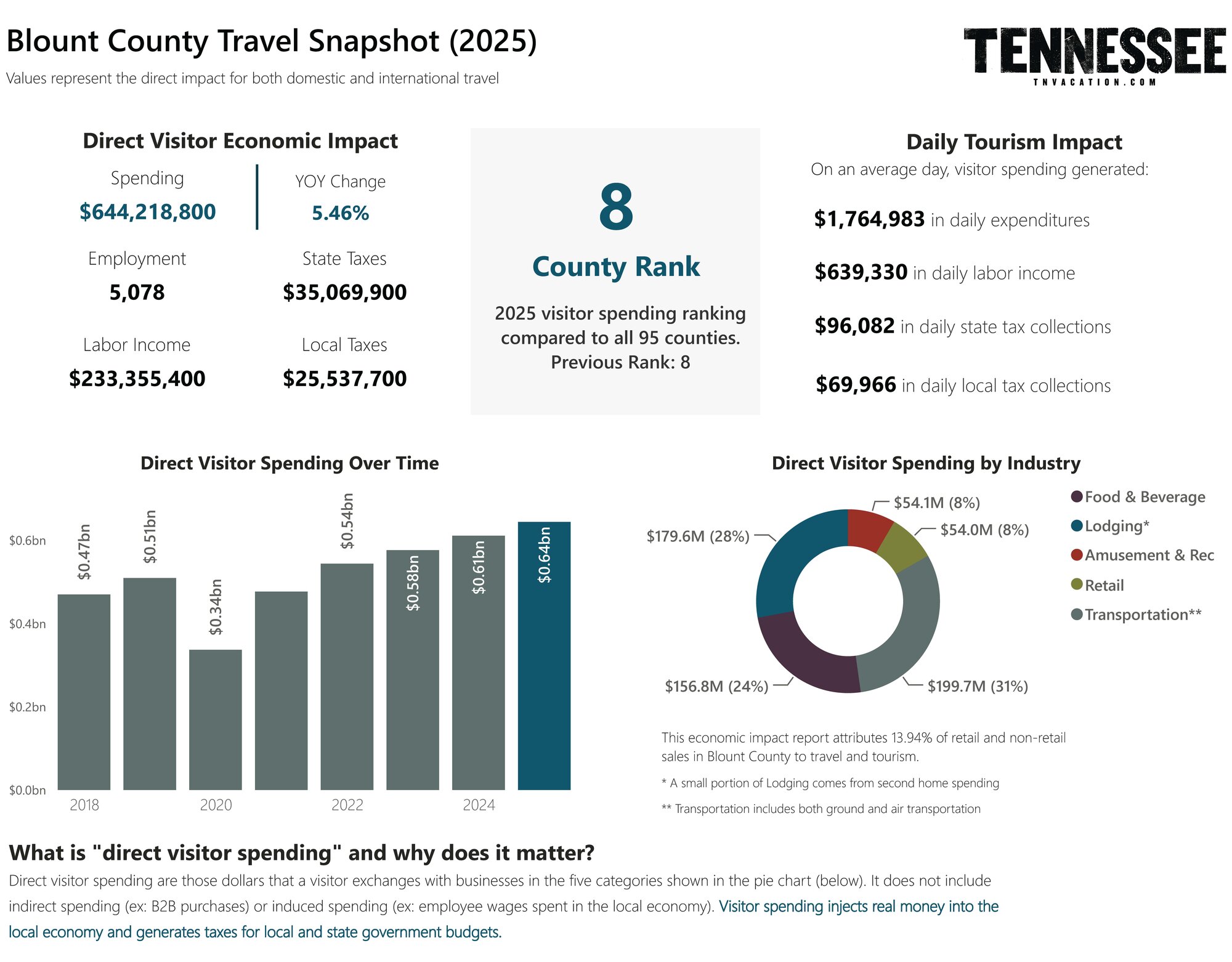
As a gateway to the Smoky Mountains, Blount County ranked eighth among Tennessee’s 95 counties in 2025 visitor expenditures at $644.2 million, a 5.5 percent increase from $610.9 million in 2025, outpacing the statewide growth of 2.7 percent, according to the Economic Impact of Travel on Tennessee Counties report issued by the Tennessee Department of Tourist Development and Gov. Bill Lee.

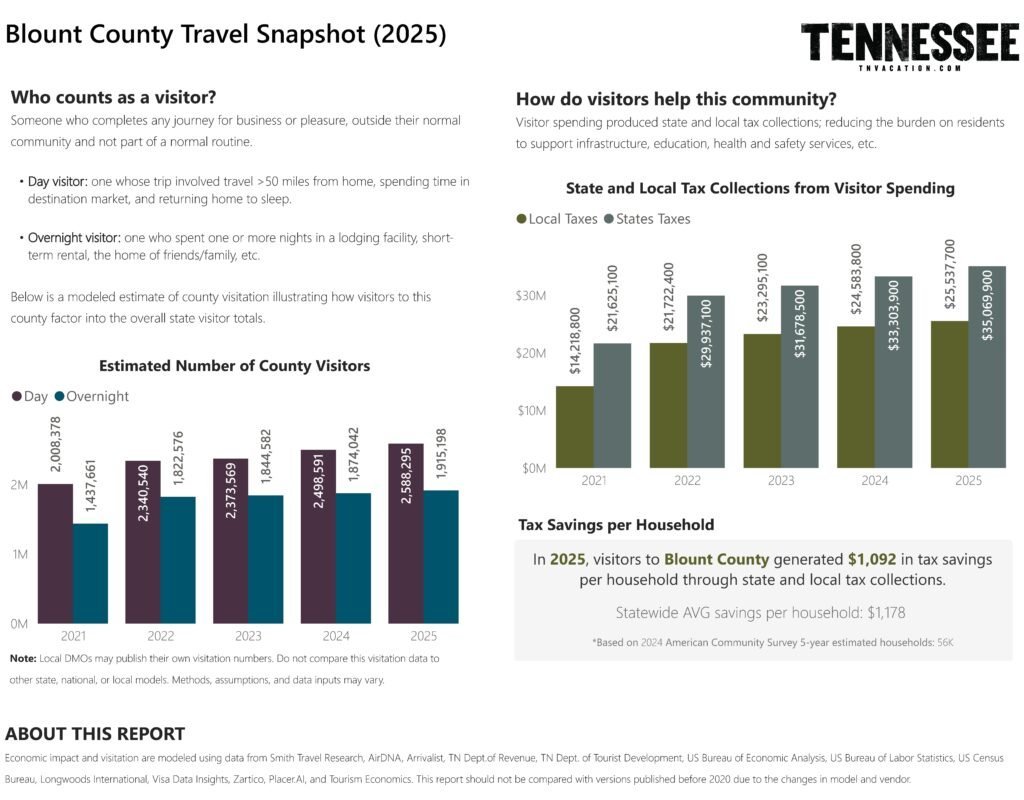
On an average day, Blount County visitor spending generated $1.8 million in daily expenditures on lodging, retail, transportation, recreation, and dining. It produced $639,330 in daily labor income and $69,966 in daily local tax collections. In total, visitor spending in Blount County generated $25.5 million in local tax revenue meaning that each household in the county saw a $1,092 annual tax savings.

Davidson County, which includes the city of Nashville, topped all county indices with $11.6 billion in tourism economic impact. Shelby County was second at $4.2 billion, Sevier third at $4.1 billion, Knox was fourth at $2.2 billion and Hamilton fifth at $1.9 billion. Williamson County entered in sixth with $1.4 billion and Rutherford County was seventh at $804.5 million. Montgomery and Sullivan counties at $441.6 and $393.3 million, respectively, round out the top 10.

“We’re excited to see continued growth in Tennessee’s tourism industry, especially here in Blount County, where visitor spending has hit record highs,” said Kim Mitchell, Director of the Smoky Mountain Tourism Development Authority. “As one of the state’s leading economic drivers and employers, the leisure and hospitality industry depends on ongoing efforts to showcase everything our region has to offer, from outdoor adventures to outstanding dining and lodging experiences.”

Tourism employment in the county was at an all-time high of 5,078 which also led to an all-time high payroll of $233.4 million.

State tax receipts for the county totaled $35.1 million, marking the 10th consecutive year of reaching at least $20 million.

Blount County is part of Tennessee’s Middle East tourism region which encompasses 16 counties, where visitor spending reached $7.9 billion in 2025, up 3.6% over 2024 and up 46.9% since 2018.

Statewide, Tennessee’s tourism industry generated a record $32.5 billion in direct visitor spending in 2025 and $3.3 billion in state and local tax revenue. The state’s tourism economy has grown 40 percent since 2018, nearly double the national growth rate of 22 percent.

Visitor spending in Blount County grew 37.1 percent during that time, also ahead of the national average, led by increases in lodging.

“Tennessee is a sales tax state. The quality of our assets – whether that’s live music or entertainment or outdoors – are attractive to visitors,” said Mark Ezell, commissioner of the Tennessee Department of Tourist Development. “Every tax dollar captured from an out-of-state visitor is a dollar retained in Tennessee and used for Tennesseans. It’s incredible to see communities understanding the power of visitor spending, and leveraging that spending for the good of their residents.”

Visitor spending graphic

Sweet Fall Treats on the Peaceful Side

Fall in the Smokies isn’t just about scenic drives and hikes—it’s also a time to savor the season’s best flavors. With charming markets and cozy coffee shops, the Peaceful Side is brimming with autumnal treats to satisfy your sweet tooth. These are our top picks.

Photos courtesy of Amburn’s Market.

Amburn’s Market in Maryville is fully stocked with fall goodies, including apple and pumpkin butters, jelly pumpkins and pumpkin spice caramels, caramel and candy apples, creamed honey, apple cider and a variety of baked goods. Indulge in fresh pumpkin bars, pumpkin Biscoff cake, pumpkin bread, pumpkin roll slices, pumpkin spice yogurt pretzels or pumpkin whoopie pies.  

While you’re there, you can also pick up your fall decor. They have pumpkins and gourds, corn stalks, small scarecrows and mums. 

Photo courtesy of Apple Valley Mountain Village.

Apple Valley Mountain Village in Townsend has pumpkin fudge and pumpkin praline fudge. At the Apple Valley Cafe, enjoy their famous fried apple pie. 

Bear Grounds Coffee in Maryville is offering pumpkin spice lattes—hot, cold or frappe. They recommend adding brown sugar cold foam for the full fall effect.

Photo courtesy of Bigfoot Popcorn.

Bigfoot Popcorn in Maryville has a limited-edition pumpkin spice flavor, perfect for getting cozy and watching your favorite fall series. 

Photo courtesy of Blackhorse Pub & Brewery – Alcoa.

Blackhorse Pub and Brewery in Alcoa is offering Apple Crumb Crunch for dessert. 

Photos courtesy of The Dancing Bean.

The Dancing Bean in Townsend added the Pumpkin Spice Latte, Apple-achian Chai-der (apple cider and chai), Honey Bear Latte (butter pecan, honey and caramel) and Pumpkin Cinnamon Horchata to the fall menu. 

RT Lodge in Maryville has Caramel Apple Cake and Caramel Floating Island on the menu. 

Photos courtesy of Towns End Coffee.

Towns End Coffee in Townsend has several seasonal beverages, including Campfire Cold Brew (chocolate and marshmallow), The Cozy Pumpkin and Stars Hollow (salted caramel, toffee crunch and pumpkin). Pair your coffee with a pumpkin cream cheese muffin. 

Vienna Coffee House in Maryville is honoring local bakers with lattes that mimic their signature items for the month of October. They have lattes for Small Comforts Kitchen (gluten free) – Brown Sugar Cinnamon Hand Pie Latte (brown sugar and cinnamon), Crustic – Cardamom Bun Latte (brown sugar, honey, and cardamom) and Hammie’s Sammies – Vanilla Almond Macaron Latte (vanilla, almond, amaretto, and white chocolate).

Photo courtesy of the Walnut Kitchen.

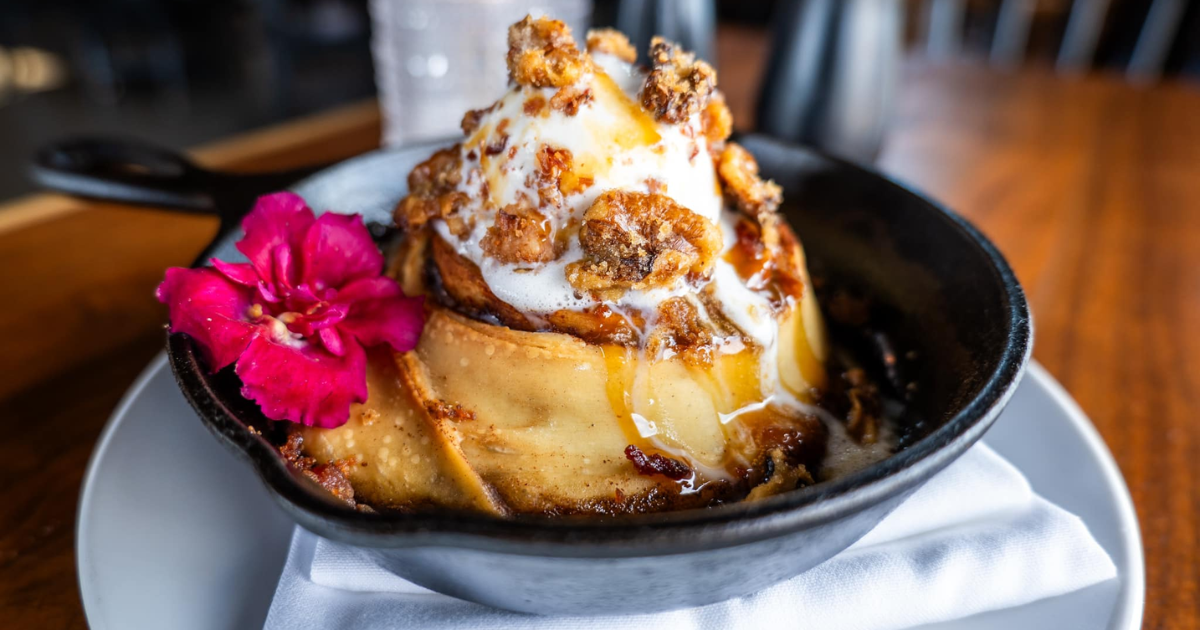
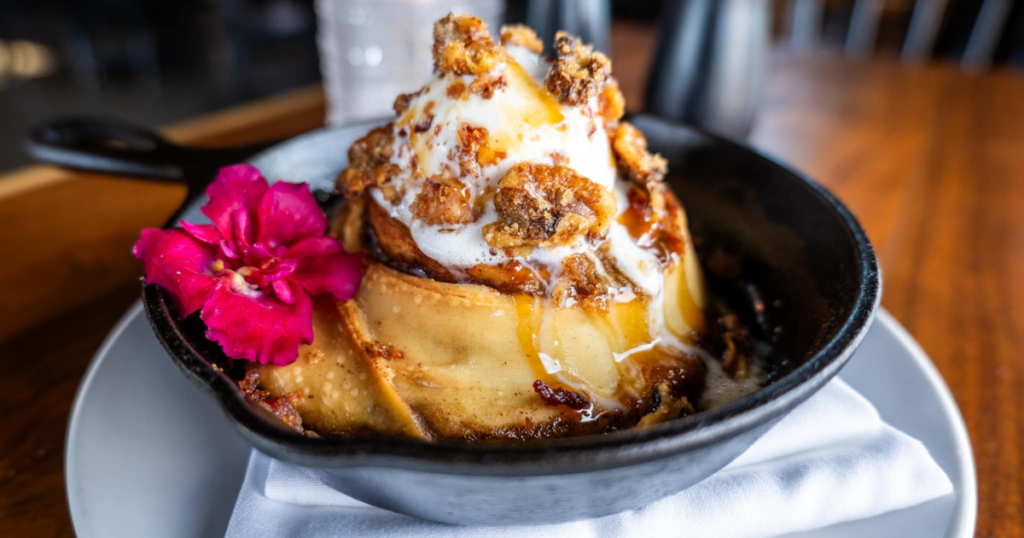
The Walnut Kitchen in Maryville is serving the Tellico Grains Cinnamon Roll, topped with house bourbon caramel, bacon, walnuts and vanilla bean ice cream. 

Will you be trying any of these sweet treats? We’d love to hear about it. Be sure to tag us on social media (@peacefulsmokies). 

__________________________________________________________________________________________________________________________________

Born and raised in Maryville, Tennessee, with roots tracing back to Cades Cove, Emily Huffstetler is a proud Maryville College graduate and passionate storyteller of the Greater Smokies region.

Take a Historic Walk in Downtown Maryville

Written by: Emily Huffstetler

In February, local leaders unveiled a master plan to revitalize Downtown Maryville, focusing on six key goals: economic investment, expanding housing options, creating interconnected public spaces, promoting placemaking, improving connectivity and accessibility, and broadening the customer base. As Downtown Maryville evolves, its historic charm endures. Take a stroll down Broadway and explore the past lives of the city’s most iconic buildings.

Then: New Providence Presbyterian Church

Now: St. Andrew’s Episcopal Church

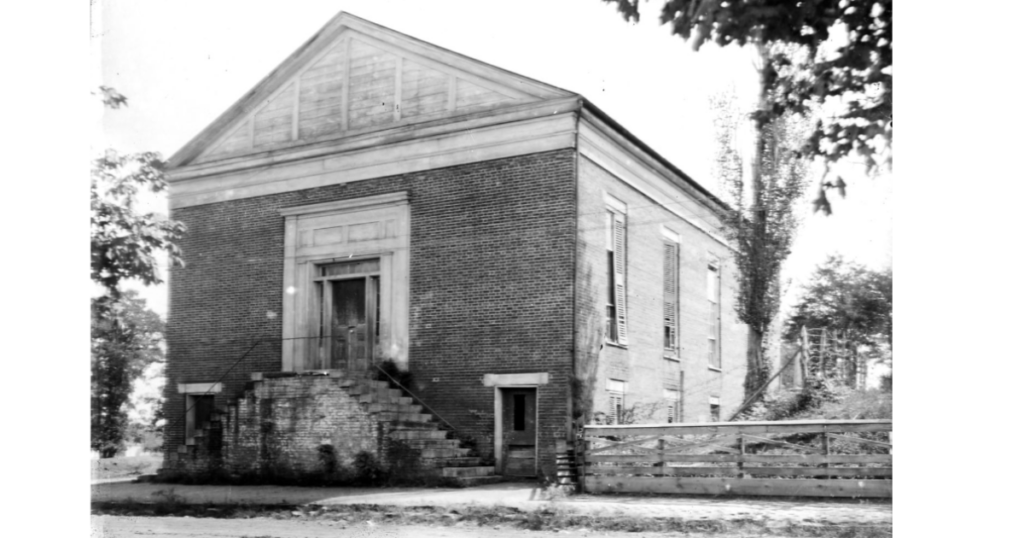
Columbian Hall, Broadway entrance. Photo courtesy of University of Tennessee, Knoxville. Libraries.

Location: 314 W. Broadway Ave., Maryville, TN

New Providence Presbyterian Church was one of Maryville’s first two churches. This fourth building, completed in 1893, initially served as a community space known as Columbian Hall from 1893 to 1911. A large Sabbath school annex was added in 1916. In 1953, the congregation moved to its current Gothic-style structure across from Maryville High School. Today, the building houses St. Andrew’s Episcopal Church.

Many of Maryville’s early leaders are buried in the New Providence Church Cemetery, including William Bennet Scott Sr., the first African American to run a newspaper in Tennessee. His paper was Maryville’s only one for a decade. Scott also helped establish the town’s Freedman’s Normal Institute and was elected mayor of Maryville in 1869.

Then: White Star Bus Station

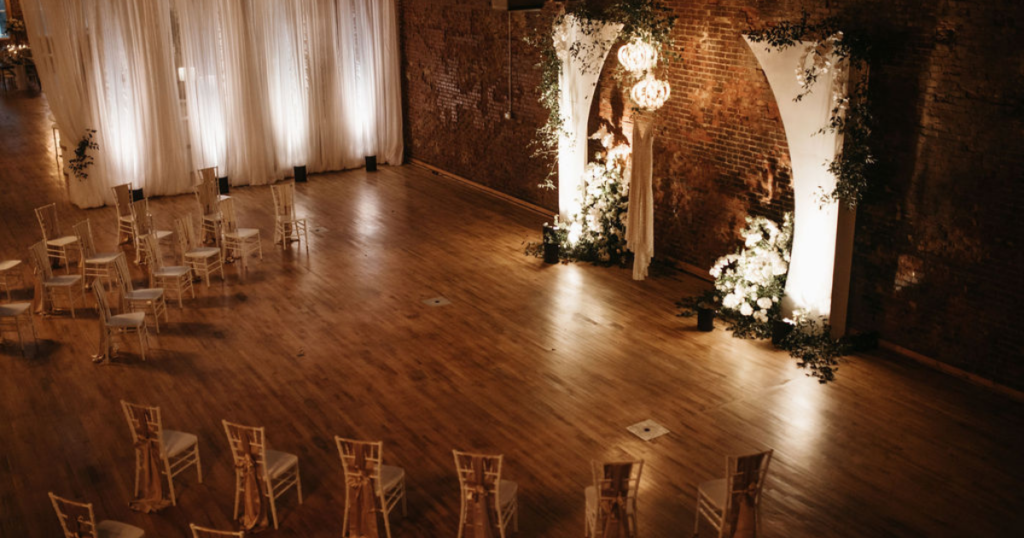
Now: White Star Station (Event Venue)

White Star Station event venue. Photo courtesy of White Star Station.

Location: 133 W. Broadway Ave., Maryville, TN

Built in 1800, this building was partially destroyed by arson in the early 1900s. In 1926, it became home to Maryville’s first bus service, the White Star Bus Line. During the 1930s, it housed a Sterchi Brothers store, a Knoxville-based company that once held the title of the world’s largest furniture chain. In 2015, the building was restored and transformed into a premier event space.

Then: Park Theatre

Now: Bluetick Tavern

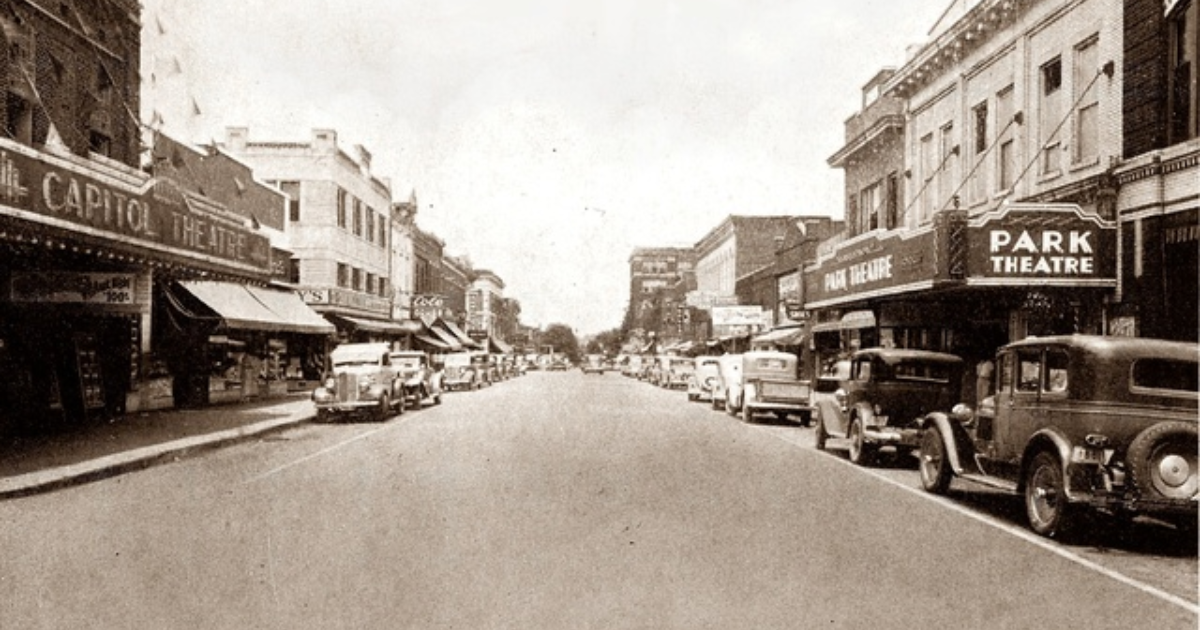
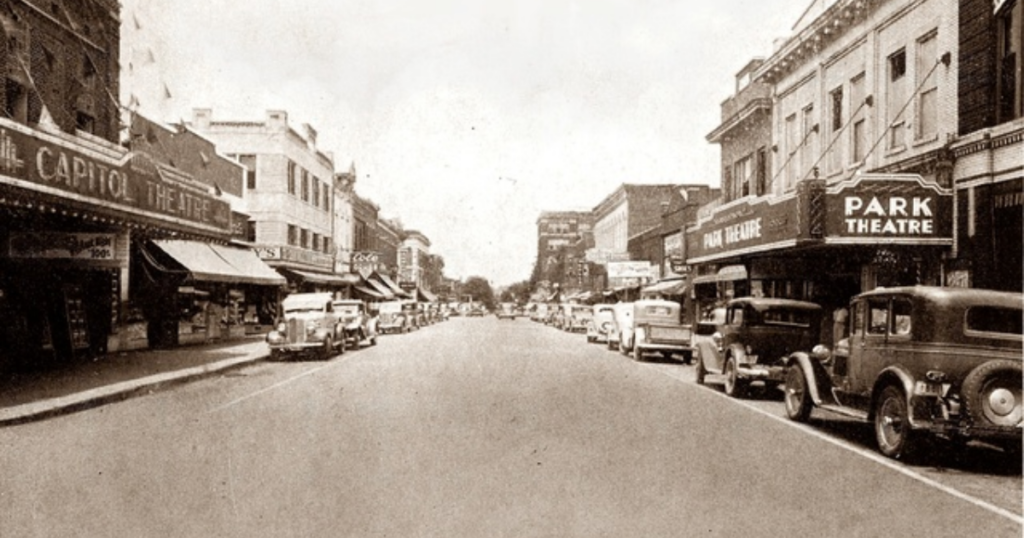
The Capitol Theatre (left) and Park Theatre (right).

Location: 128 W. Broadway Ave., Maryville, TN

This building was originally home to the Park Theatre, one of three theaters in Downtown Maryville. Later, it became the fourth and final location of Roy’s Record Shop, a beloved hub for music enthusiasts, operating from 1965 until its closing in 2007. It’s now Bluetick Tavern, a popular spot for pizza, burgers, and drinks.

Then: WA Dunlap Building

Now: The Capitol Theatre

Location: 127 W. Broadway Ave., Maryville, TN

This site was originally the WA Dunlap Building, built around 1910, and home to the Bogle McCammon Furniture Co. and Undertaking establishment. Later, the J.C. Penney Company leased the space until 1934, when the Crescent Amusement Company, which owned theaters throughout the South, constructed the Capitol Theatre. It became the largest movie house in downtown Maryville, with seating for nearly 1,000 people.

The Capitol Theatre closed in the 1970s, and various tenants followed, including a record shop, disco, wedding dress store, and sports collectibles shop. In 2008, the theater was revived and is now an award-winning event space, featuring an art deco coffee shop and ice cream parlor.

Then: Bank of Maryville

Now: Available for lease

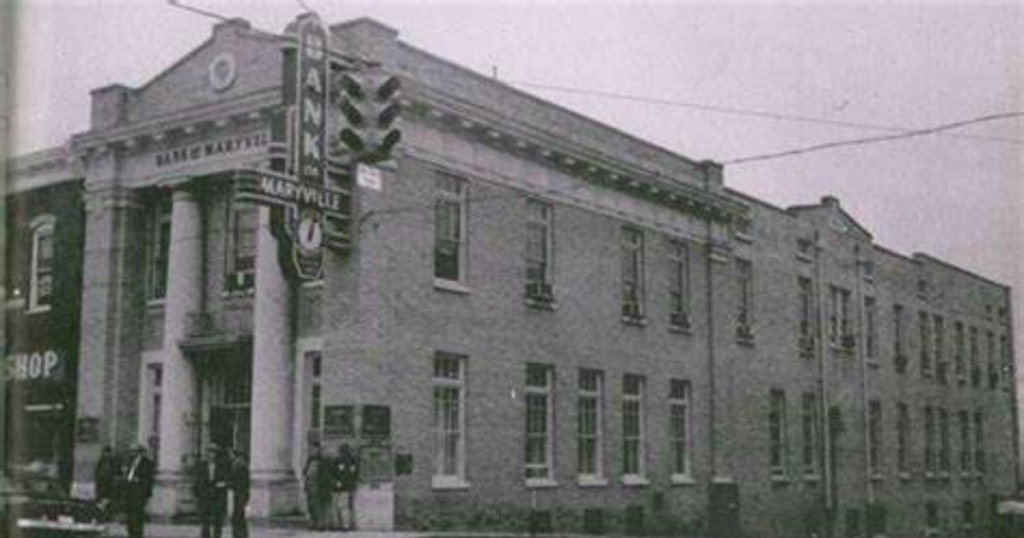
Bank of Maryville.

Location: 131 E. Broadway Ave., Maryville, TN

This building was the third home of the Bank of Maryville, established in 1885 to support the growing banking needs of Maryville College, which was one of the town’s largest institutions at the time. The bank later merged with the Bank of Blount County, located nearby at 101-103 W Broadway Ave. In the 1980s, it became First Tennessee Bank, eventually rebranding as First Horizon Bank in 2019.

Then: Federal Building

Now: Office building

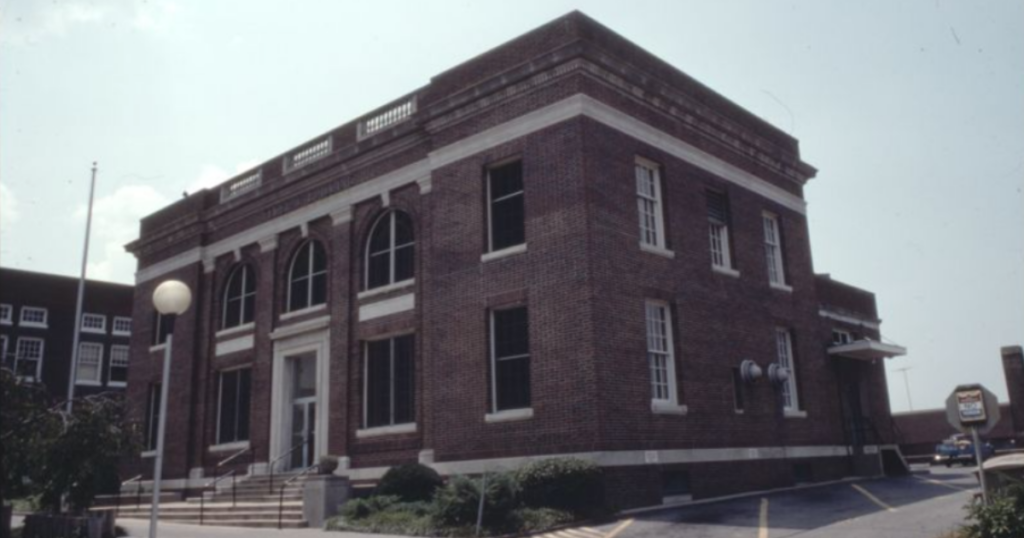
Federal Building. Photo courtesy of Blount County Public Library.

Location: 201 E. Broadway Ave., Maryville, TN

This was Blount County’s first federal building, serving as the Main Post Office from 1917 to 1962 and then as a branch from 1962 to 1990. In 1935, it became the first headquarters for the Great Smoky Mountains National Park. Most recently, it was home to a family dentistry practice.

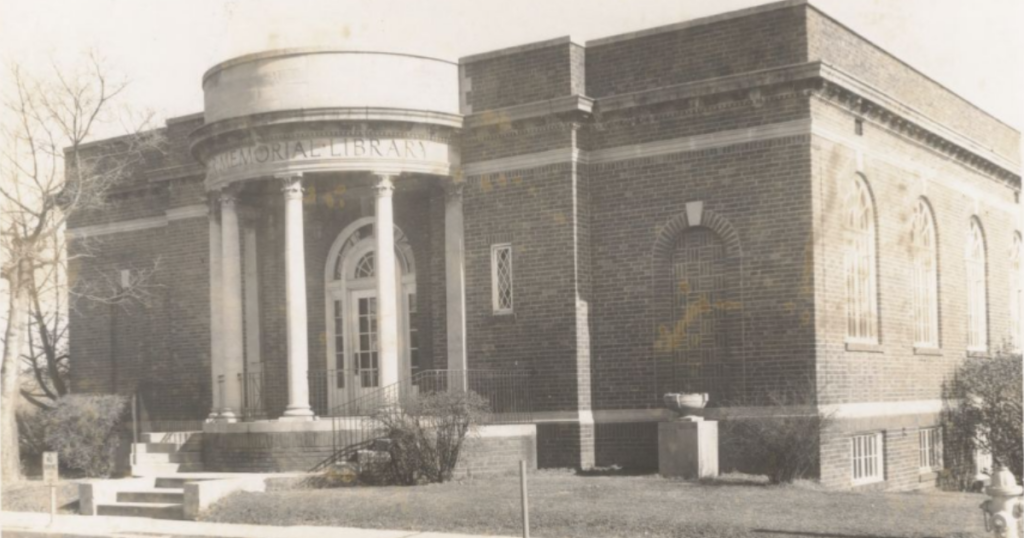
Then: Maryville’s Public Library

Now: Dandy Lions Gifts

A.K. Harper Memorial Library. Photo courtesy of University of Tennessee, Knoxville. Special Collections.

Location: 300 E. Church St., Maryville, TN

Built in 1917, this served as Maryville’s first library building. In 1931, it was dedicated to the late mayor A.K. Harper. It continued to house Blount County’s Public Library until 1981, when a larger building was occupied. Then, the American Red Cross moved in and remained until 2006. Since 2007, the former library has belonged to Dandy Lions Gifts. Two concrete lions, installed by the current owner, serve as a reminder of the building’s past.

Do you have a favorite memory in Downtown Maryville? We’d love to hear about it. Be sure to tag us on social media (@peacefulsmokies).

__________________________________________________________________________________________________________________________________

Born and raised in Maryville, Tennessee, with roots tracing back to Cades Cove, Emily Huffstetler is a proud Maryville College graduate and passionate storyteller of the Greater Smokies region.

Tastes of the Smokies

The Great Smoky Mountains Heritage Center (GSMHC) is excited to announce Tastes of the Smokies (TastesoftheSmokies.com), a new annual event focusing on Appalachian culture, food,
and music. The event is Saturday, June 18th from 4:30-7:00PM on the grounds of the Heritage Center at 123 Cromwell Drive, Townsend, TN 37882.

“My staff and I look forward to hosting our entire community for this exciting new event on Saturday, June 18th,” says Brent Lambert, Executive Director of GSMHC, “We invite members and nonmembers alike to spend the late afternoon and evening at Tastes of the Smokies at the GSMHC and then stay for the Carlene Carter concert in our on-site amphitheater.”

Featuring 20 exhibitors spanning various crafts and woodworking skills spread out amongst the unique museum and village, Tastes of the Smokies will also include local restaurants providing
“tastes” of their featured dishes. Elvira’s, the Abbey, and Peaceful Side Social will be serving, as well as other local vendors. Three separate live acoustic music areas will be set up around the
Heritage Center campus. Beverage “tastes” will be provided by Albright Grove Brewing, Blackhorse Pub & Brewery, EZ Stop, and Argentinean wines will be provided by the Boyd Family.

The Heritage Center’s unique Appalachian village and museum will be alive with the sounds and smells of the way life used to be in the Smoky Mountains.

Directly after the Tastes of the Smokies event, there is an optional concert starting at 7:30PM featuring long time country artist and CMA entertainer Carlene Carter. Dusty Leigh will open up
for Carlene Carter. Tickets will need to be purchased separately for the concert.

This is a ticketed event for those 21 and over. All are cordially invited to attend and to support this new annual fundraiser for the GSMHC. Tickets can be found at this link
(TastesoftheSmokies.com).

The Davis Family Series Brings 1830s Blount County to Life 

Written by: Emily Huffstetler 

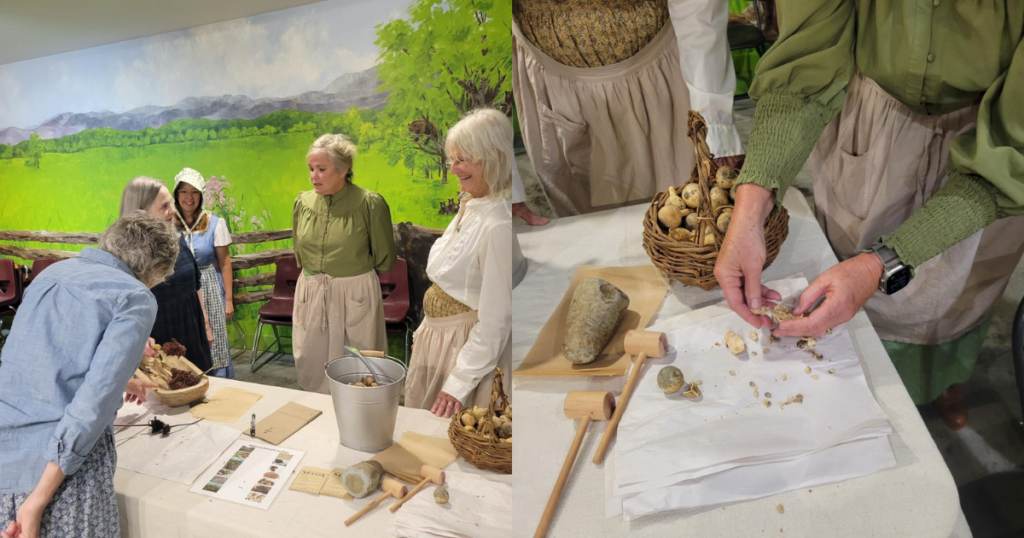
Forget the famous names in history. At the Great Smoky Mountains Heritage Center, one series turns its attention to the daily life of an ordinary settler family in 1830s Blount County. 

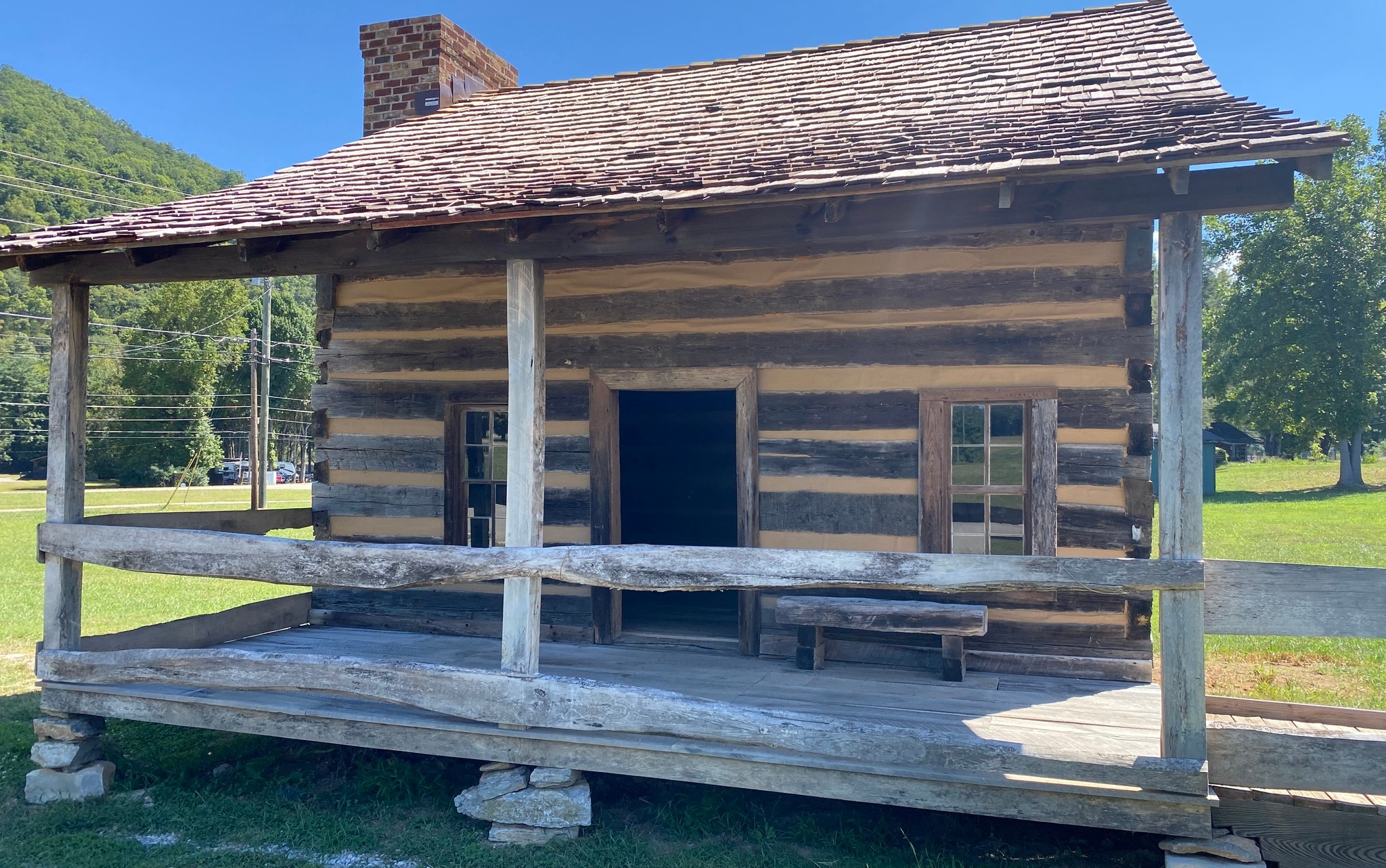
The center’s “A Year in the Life of an Early-American Family: The Davis Family of Seymour, Tennessee, c. 1835” uses the Davis family’s historic log house and farmstead to explore how families lived, worked and survived in 1830s Blount County. 

Rather than offering a single snapshot of the past, the series follows the farming year from fall harvest through spring. It began last September and continues through May, with programs covering everything from gardening and herbal medicine to spinning, weaving, cooking and music. 

“I thought it would be great for our guests to get a sense of the typical, everyday life in the early 19th century for European settler families,” said Trevor Lanier, curator at the Great Smoky Mountains Heritage Center. “Many of our guests see snapshots of various moments in lives from the past, but this program gives them a much more in-depth view of the farming year and other facets.” 

The Davis family is a natural fit for that kind of storytelling. Their cabin sits at the heart of the Heritage Center’s 1830s farmstead, alongside the heirloom garden and other historic features. Lanier said the site offered the strongest opportunity to build a full series around both the agricultural calendar and cultural year. 

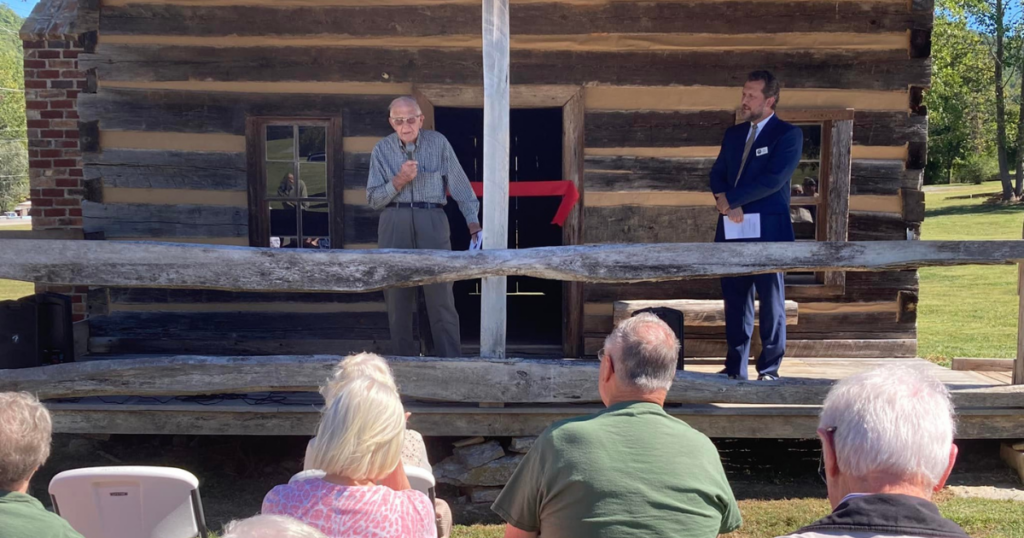
On Sept. 29, 2022, Rex Davis and Jean Davis dedicated the Davis Family Cabin at the Great Smoky Mountains Heritage Center, officially opening the preserved family home to the public. Photo courtesy of Great Smoky Mountains Heritage Center.

The series was made possible through funding from the Tennessee Arts Commission, which helped the Heritage Center bring in knowledgeable artists such as instructors, musicians, living history interpreters, spinners, weavers and gardeners. 

While the focus is on the Davises, the series more broadly reflects what life looked like for a family living in this region at that time. That means the research goes well beyond the house itself. It also considers the political and cultural realities of the period, including the complex web of treaties with the Cherokee during the era. 

Guests can attend a single event or follow the full series across the seasons. Each event was designed to stand on its own, but together, they create a fuller picture of what a year in the life of a family like the Davises might have looked like.  

And according to Lanier, that life was anything but quaint. 

“More chores than we can possibly imagine,” he said with a laugh. 

He described days that started before dawn with caring for animals and continued with “tons of manual labor,” from cooking and cleaning to plowing, planting and animal husbandry. 

One of the clearest windows into that workload is the Davis family’s original loom, still in the house today. Lanier said women in the family would have spent much of the year spinning wool into yarn, then weaving that yarn into cloth, blankets and rugs during the warmer months before sewing the final products.  

“We’re so used to fast fashion and going to the store to get what we need. Realizing someone spent the majority of their time just spinning is a shock to modern people,” Lanier said. 

Just one pair of pants, for example, took about nine miles of yarn. 

“I think something I see most often is our guests tend to look at our log homes as cozy and quaint and romanticize what it would’ve been like living there,” he said. “It’s just so much more difficult when you really imagine actual life back then.” 

“Life was hard. They didn’t know what we do now about medicine, food access, convenience and leisure time. Most of us wouldn’t even make it a day back then!” 

The series doesn’t just celebrate old-time skills. It uses them to create context. 

“There’s an intangible magic that happens when guests get to immerse themselves in a story,” Lanier said. “It brings it to life in a way that reading can’t. In a small sense, they get to live it, even if for a moment, and by that they hopefully get to understand their world a little better.” 

That immersion takes many forms throughout the series, from open-hearth cooking and daily life interpretation with Donna Stinnett to herbal medicine with Debbie Dickey. Gardening programs come with help from the Tuckaleechee Garden Club, while local artists, musicians, spinners and weavers feature the sounds and skills of the era. 

The Tuckaleechee Garden Club leads guests through hands-on seed saving activities during the Great Smoky Mountains Heritage Center’s Davis Family Programming Series, highlighting how families like the Davises relied on heirloom seeds in daily life. Photo courtesy of Great Smoky Mountains Heritage Center.

For Lanier, the Davis family works so well because their story was not unusual.  

“The main reason we chose the Davis family is that their story is so reflective,” he said. “It is the story of early European settlers in the area.” 

“It’s so important to experience the stories of everyday people, not just the George Washingtons or Andrew Johnsons,” Lanier said. 

In the end, that is what this series does best. It connects the daily labor of one family to the bigger story of how communities were built, how land was settled and how the past still shapes life in the Smokies today. 

“My biggest goal is for people to understand that history is not just about facts and dates,” Lanier said. “It’s about understanding the threads that connect us across time that helps us understand our world a little better.” 

“A Year in the Life of an Early-American Family: The Davis Family of Seymour, Tennessee c. 1835” is free and open to the public, with upcoming events primarily promoted on the Great Smoky Mountains Heritage Center’s Facebook page. All ages are welcome.

Born and raised in Maryville, Tennessee, with roots tracing back to Cades Cove, Emily Huffstetler is a proud Maryville College graduate and storyteller of the Greater Smokies region. 

The Early 20th Century on “The Peaceful Side of the Smokies”, Through Postcards

Written by: Emily Huffstetler

The early 20th century marked a period of transformation for the Peaceful Side of the Smokies. Following the forced removal of the Cherokee people in the late 1830s, European settlers brought new developments to the region. The advent of commercial logging at the turn of the century drastically altered the natural landscape and sparked conversations about conservation. Browse through these vintage postcards and experience the Peaceful Side as it was over 100 years ago.

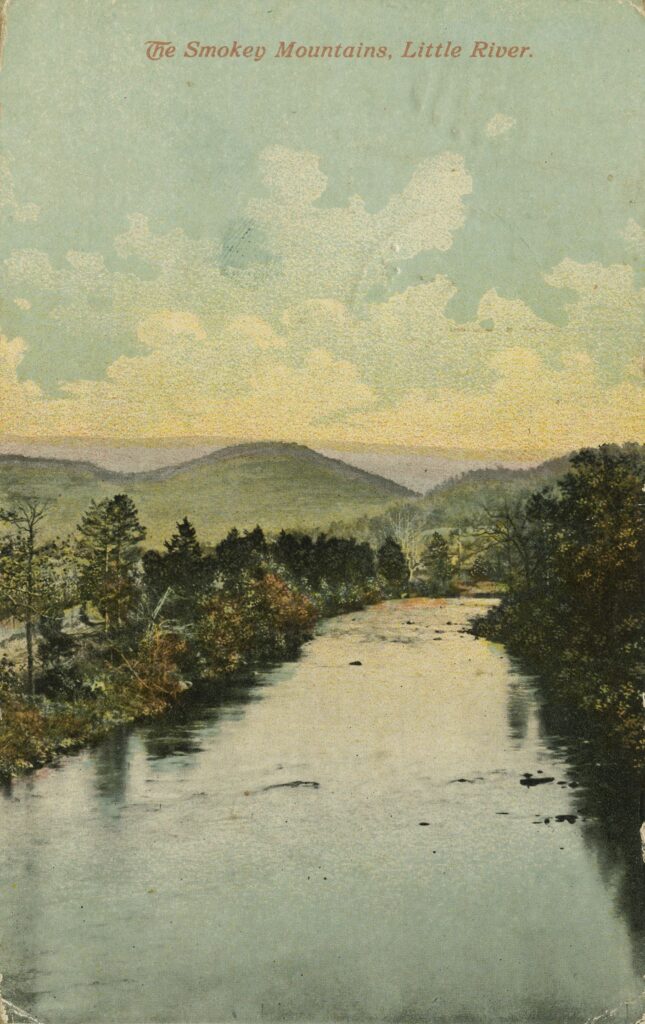
“The Smoky Mountains, Little River“

This postcard, postmarked in Maryville on Sept. 24, 1912, captures a tranquil view of the Little River. The Little River begins at Clingmans Dome, the highest peak in the Great Smoky Mountains National Park, and gains strength as it reaches the foothills.

In 2022, a resolution was passed to restore Clingmans Dome’s original Cherokee name, Kuwahi, which means “mulberry place.” The headwaters of the Little River, considered sacred by the Cherokee, remain a significant cultural landmark today.

Image Source: Great Smoky Mountains Post Cards

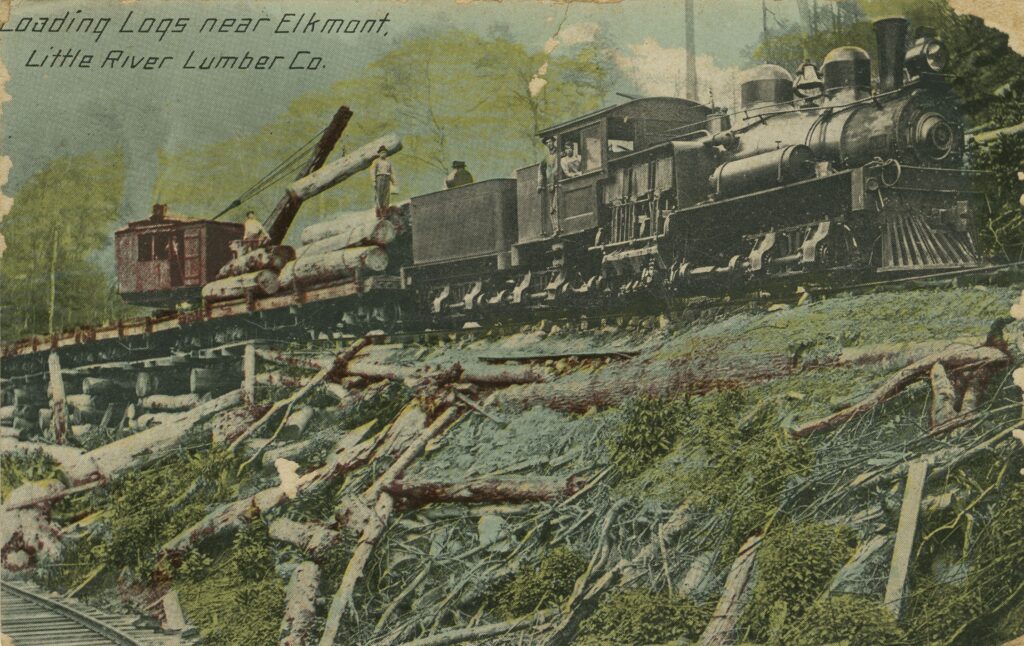
“Loading Logs near Elkmont, Little River Lumber Co.“

Image Source: Great Smoky Mountains Postcard Collection, 1910-1955, MS.3745

The Little River Railroad and Lumber Company, established in 1901, built 150 miles of railroads and sawed 560 million board feet of timber along the Little River and its tributaries. The last logs came out of the mountains in 1939, 15 years after the establishment of the Great Smoky Mountains National Park (GSMNP).

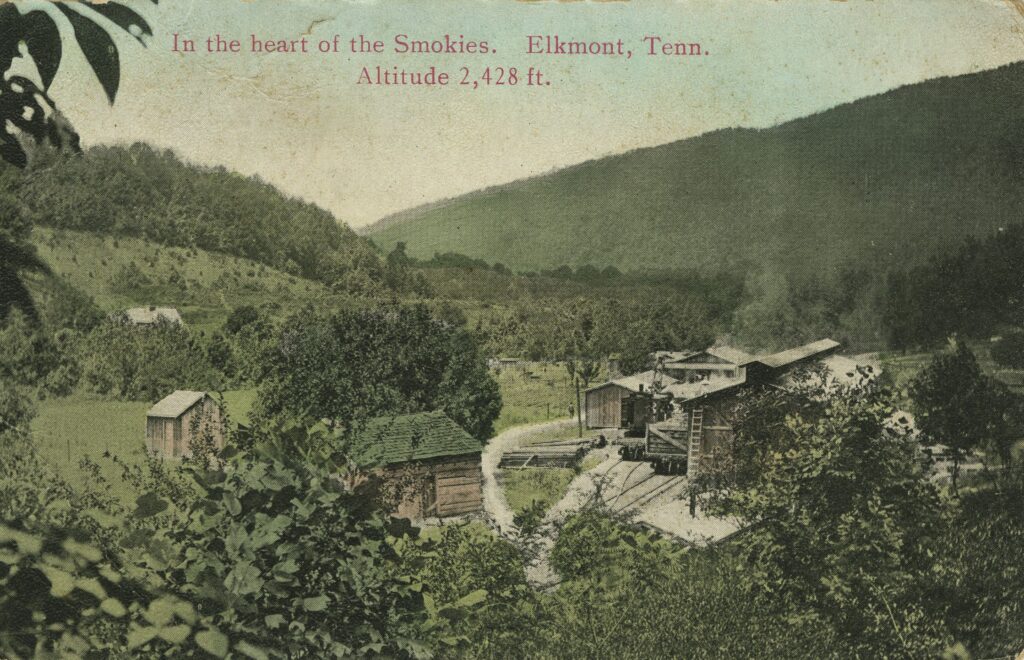
“In the heart of the Smokies. Elkmont, Tenn. Altitude 2,428 ft.”

Image Source: Great Smoky Mountains Postcard Collection, 1910-1955, MS.3745

Elkmont began as a hunting camp, but in the early 1900s, the Little River Railroad and Lumber Company turned it into a logging town. Once the company started offering train service for passengers, Elkmont became a popular getaway for wealthy locals, especially in the summertime.

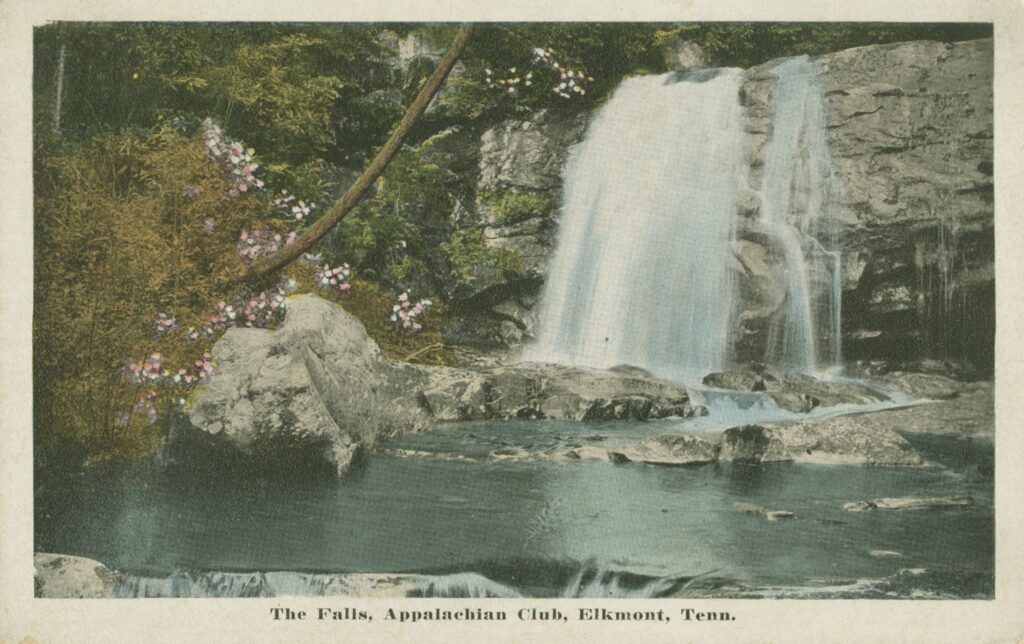
“Falls, Appalachian Club, Elkmont, Tenn.”

Image Source: Great Smoky Mountains Postcard Collection, 1910-1955, MS.3745

In 1910, the Little River Railroad and Lumber Company subdivided Elkmont, selling 50 acres to the Appalachian Club, a group of wealthy Knoxville businessmen. A few years later, three brothers from Knoxville purchased 65 acres and opened the Wonderland Hotel. Both clubs closed in the early 1990s, after their rental agreements with the Tennessee state government ended. Today, Elkmont hosts the most popular campground in the GSMNP.

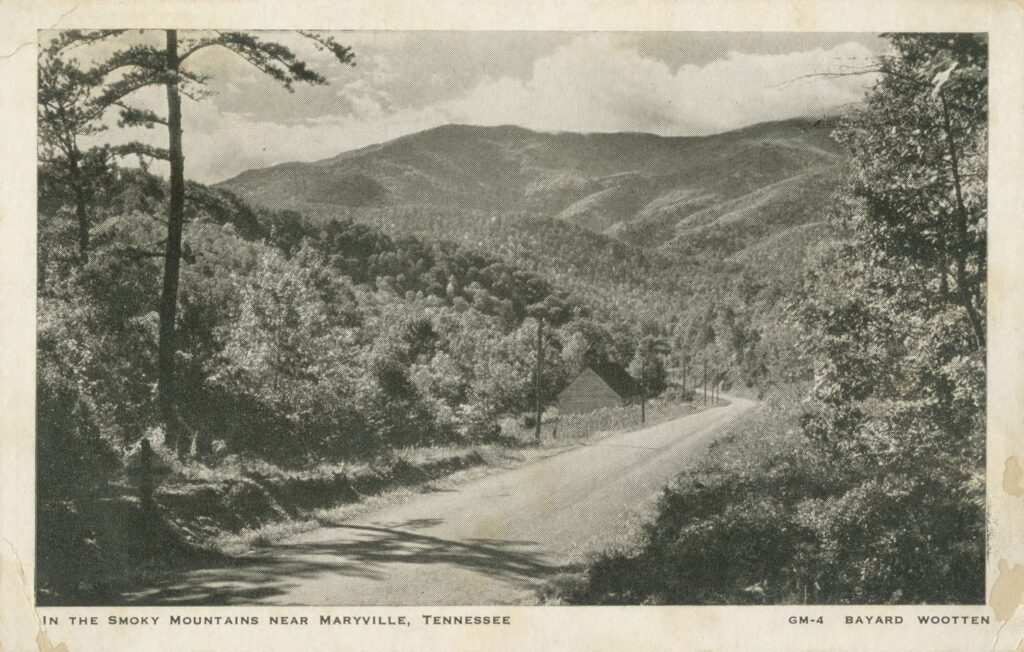
“In the Smoky Mountains Near Maryville, Tennessee“

Image Source: Ridley Wills Postcard Collection, MS.3781

This snapshot of the Peaceful Side of the Smokies, near Maryville, was taken by Bayard Wootten (1875-1959). Wootten was a pioneering female photographer from North Carolina who became the first woman to serve in the North Carolina National Guard as “Chief of Publicity.” In this role, she used her photography to raise public awareness and support for the Guard. Wootten was also among the first women in the U.S. to take aerial photographs. Throughout her career, she produced over a million images.

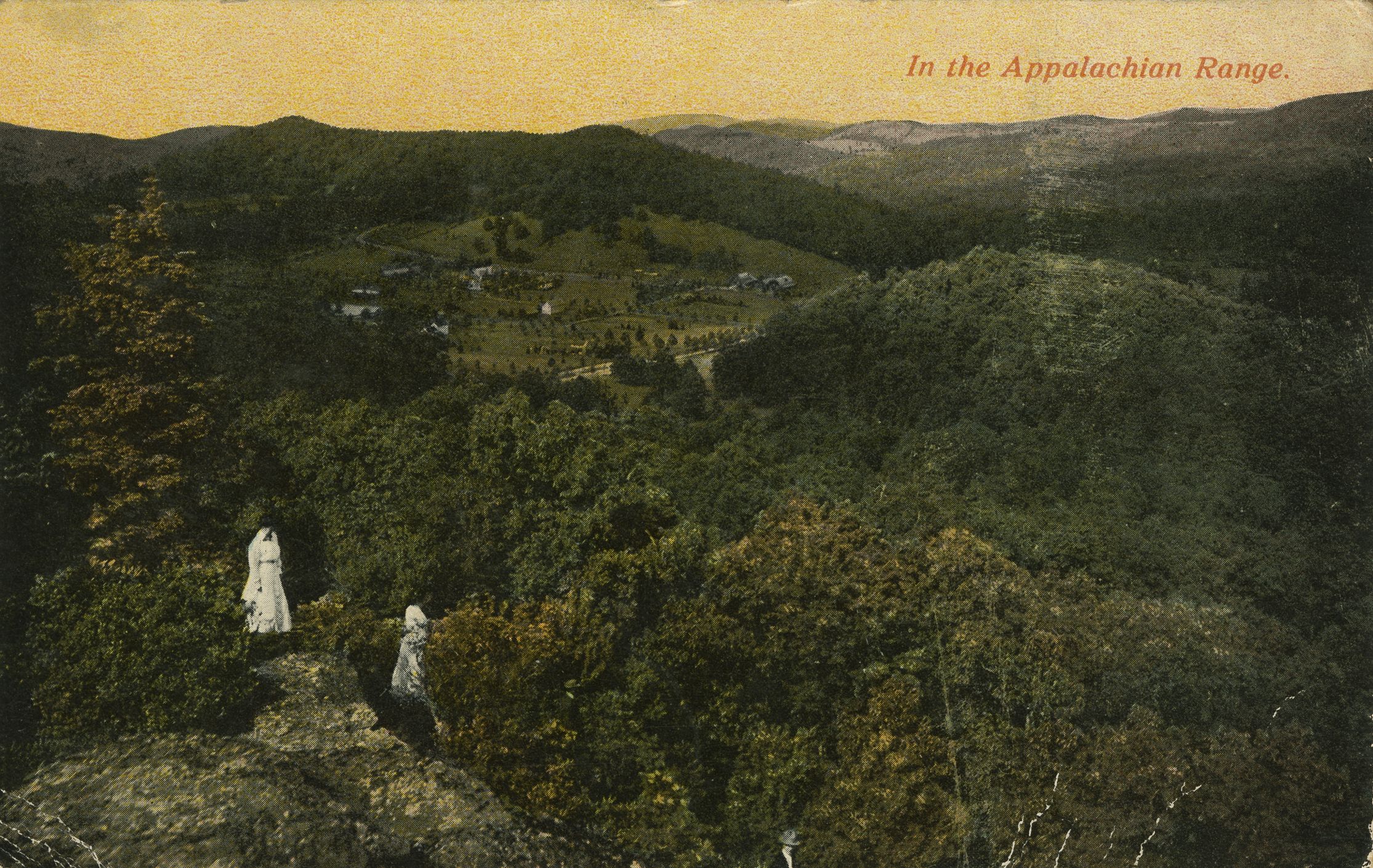
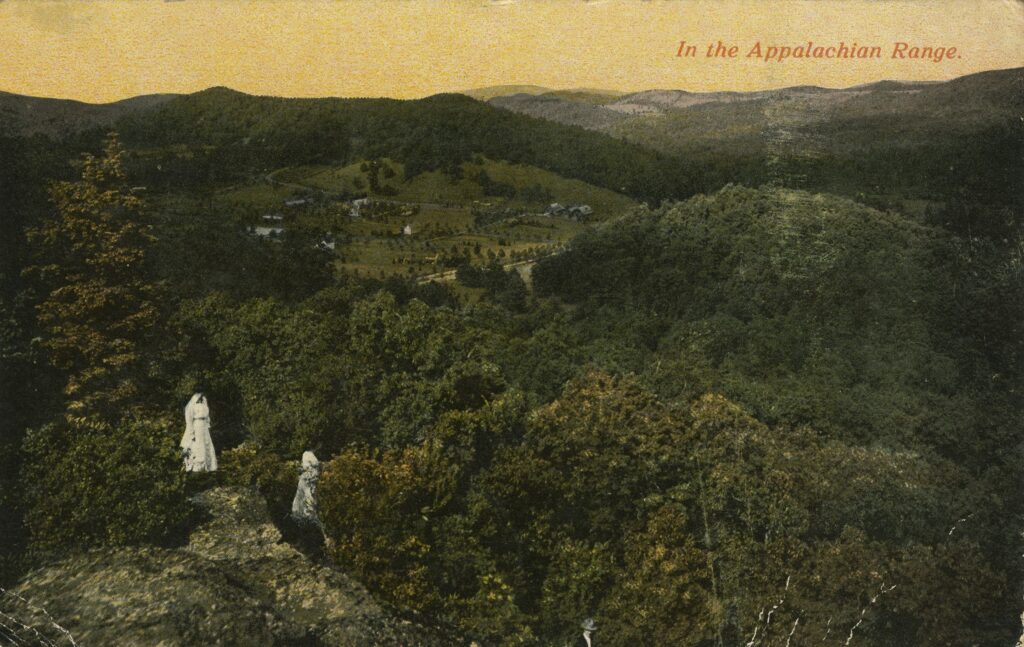
“In the Appalachian Range”

Image Source: Great Smoky Mountains Postcard Collection, 1910-1955, MS.3745

Mailed from Maryville to Knoxville on July 3, 1912, this postcard provides a glimpse into early 20th-century tourism in the Great Smoky Mountains. In the foreground, two women wear white cotton dresses, serving as a reminder of how much outdoor fashion has evolved over the past century.

Interested in learning more about the history of the Peaceful Side of the Smokies? We’re home to a variety of free and low-cost museums.

__________________________________________________________________________________________________________________________________

Born and raised in Maryville, Tennessee, with roots tracing back to Cades Cove, Emily Huffstetler is a proud Maryville College graduate and passionate storyteller of the Greater Smokies region.
The Peaceful Side in 1926: 100 Years Ago in the Smokies 

Written by: Emily Huffstetler 

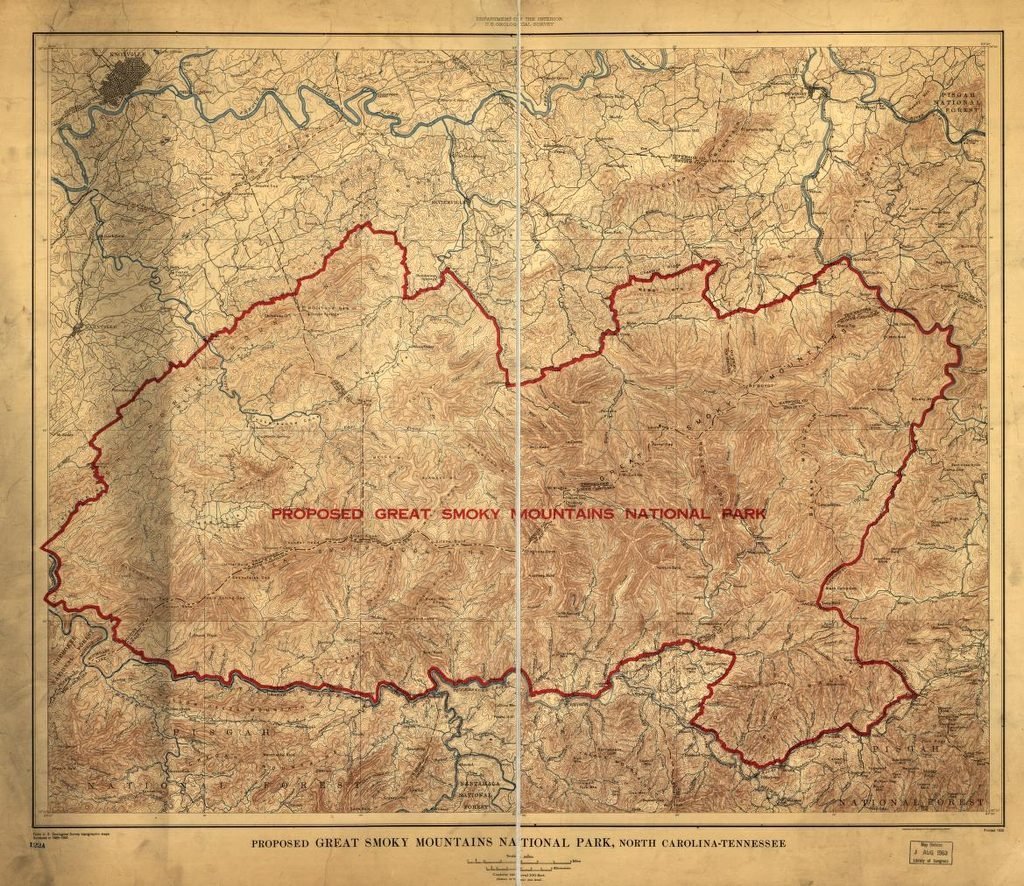
Proposed Great Smoky Mountains National Park map, 1926. Courtesy of Library of Congress, Geography and Map Division.

This year marks 100 years since President Calvin Coolidge signed legislation authorizing the establishment of Great Smoky Mountains National Park.1

By then, families had long lived in Cades Cove, logging crews worked around Tremont, Girl Scouts spent summers in Walker Valley and visitors came to the mountains to hike and swim. 

A National Park Was Authorized 

The May 22, 1926, act authorized both Great Smoky Mountains and Shenandoah national parks, but there were still years of land acquisition ahead. Congress did not authorize full development of the Smokies until 1934.1,2 

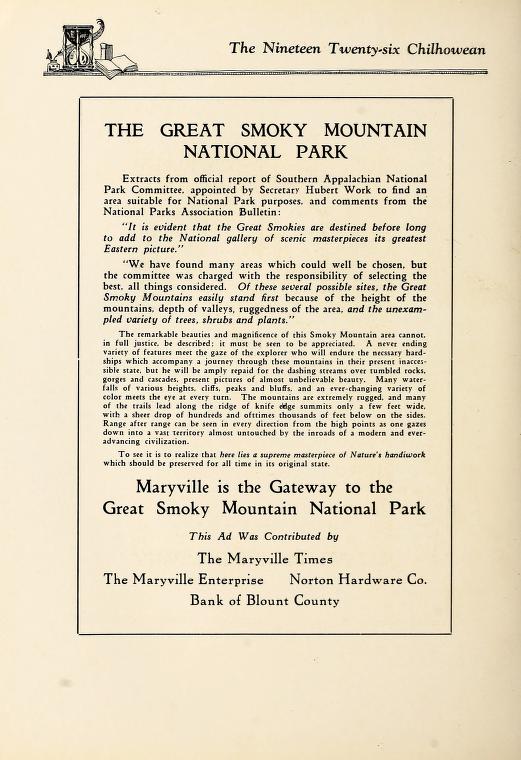
Even so, local boosters were already promoting the proposed park. A full-page advertisement in Maryville College’s 1926 Chilhowean yearbook declared: “Maryville is the Gateway to the Great Smoky Mountain National Park.”3 

Advertisement for the proposed Great Smoky Mountains National Park in Maryville College’s 1926 Chilhowean yearbook. Courtesy of Maryville College.

Much of the proposed park remained privately owned, and people continued to live and work throughout the mountains.2 

Related read: “From Great Depression to Great Smokies: The CCC’s Legacy in East TN”

The Hiking Club Organized Trips 

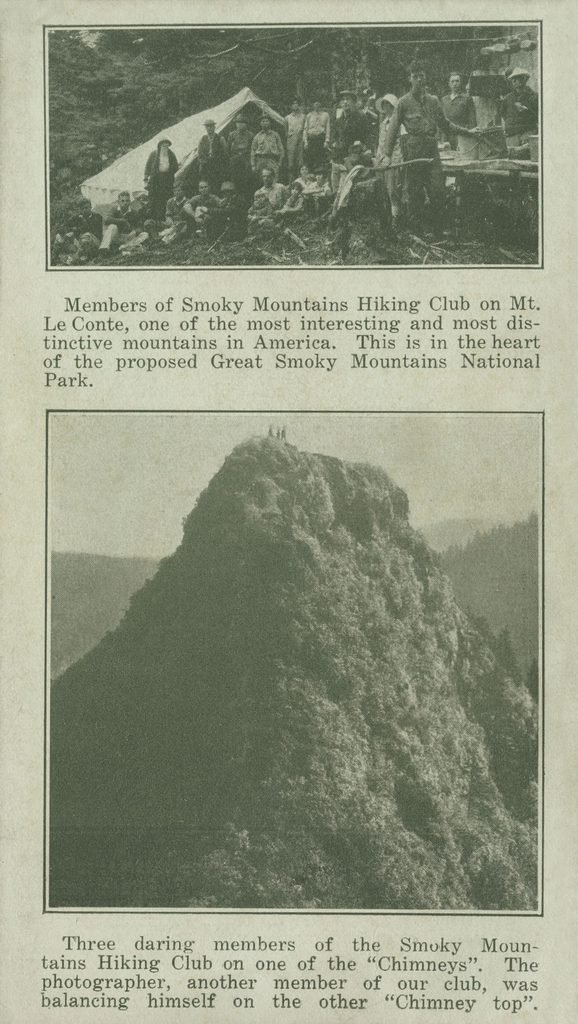
The Smoky Mountains Hiking Club grew out of an October 1924 hike to Mount Le Conte. By 1926, the club had a regular schedule of hikes and social events, along with practical guidance on what hikers should wear and bring.4,5 

Club members also supported efforts to establish the national park.4 

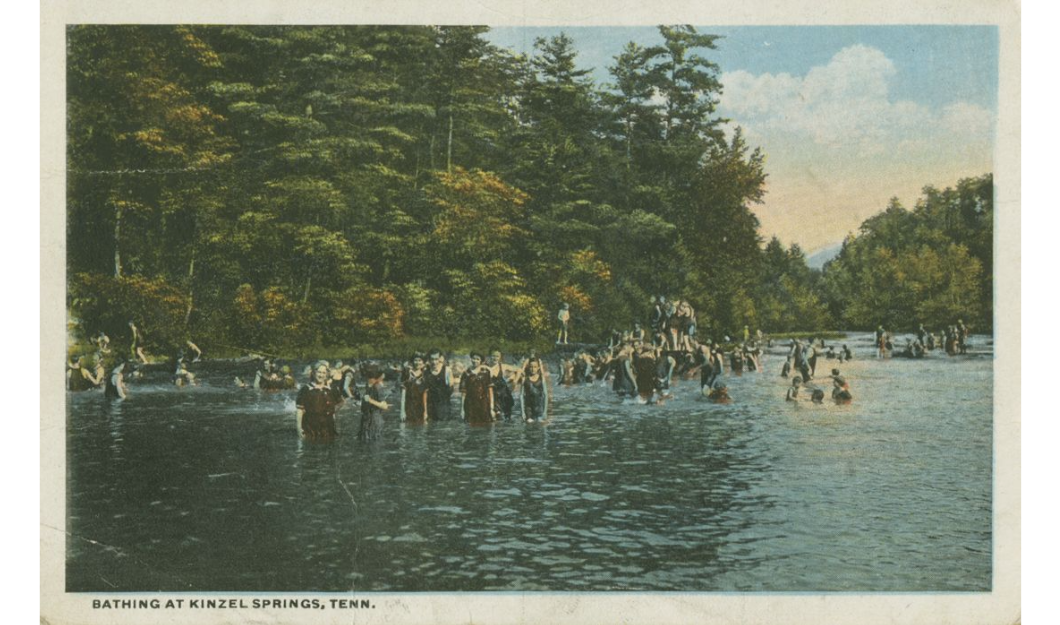
Kinzel Springs Drew Visitors 

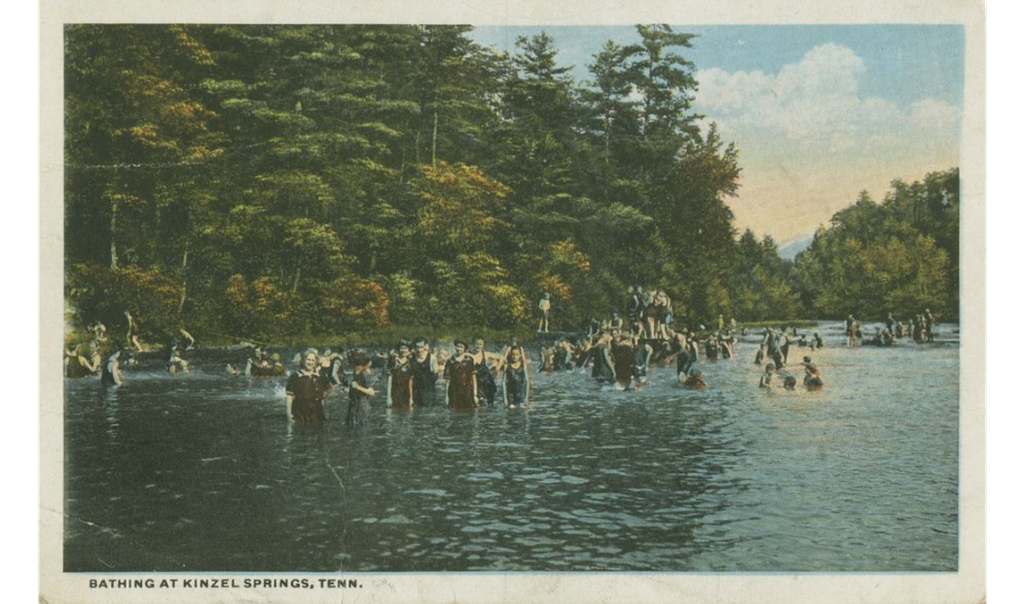
“Bathing at Kinzel Springs, Tenn.,” postcard mailed in 1926. Courtesy of University of Tennessee Libraries, Postcards from the Great Smoky Mountains Collection.

Kinzel Springs developed into a resort community near the western end of Tuckaleechee Cove. E.J. Kinzel acquired property there in 1894, and railroad service beginning in 1902 brought more visitors to the area. By 1914, the Kinzels had added a 28-room hotel and 10 cottages; a post office followed in 1925.6 

By 1926, visitors were coming to Kinzel Springs to stay near the mountains and swim.6,7 

Related read: “The Early 20th Century on the Peaceful Side of the Smokies, Through Postcards”

Girl Scouts Camped in Walker Valley 

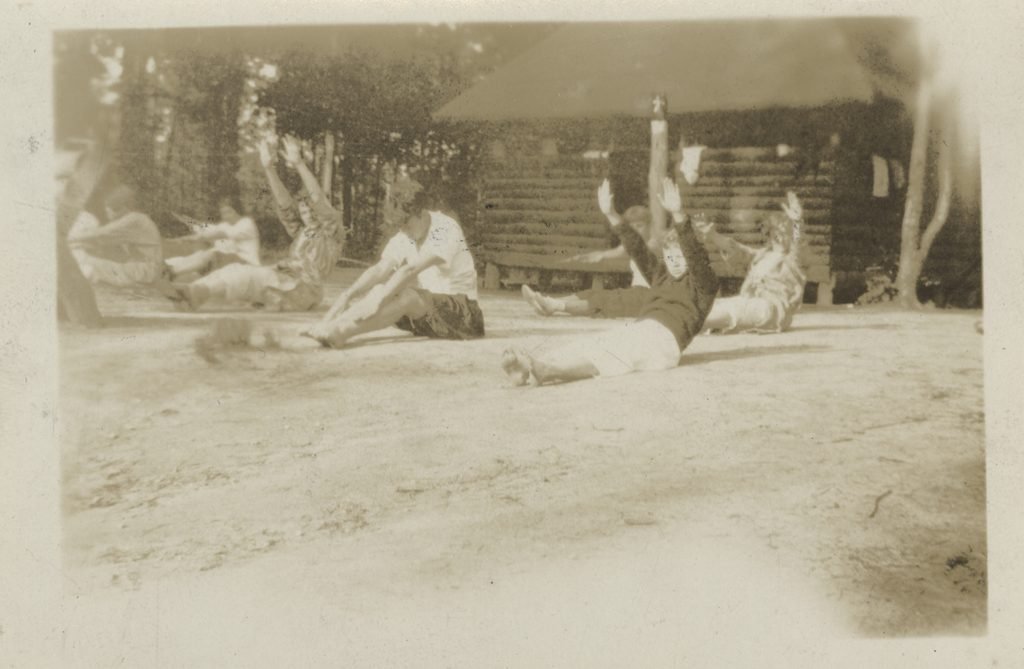
Girl Scouts at summer camp in Virginia, 1926. Courtesy of Virginia Commonwealth University Libraries.

Camp Margaret Townsend was a Girl Scout summer camp in Walker Valley, on land that is now home to Great Smoky Mountains Institute at Tremont. 

The camp opened in 1925 and held four two-week sessions each summer, making 1926 its second season. Camp life was rustic: there was no electricity, and the girls bathed in the Little River in the early years.8

Tremont Became a Logging Town 

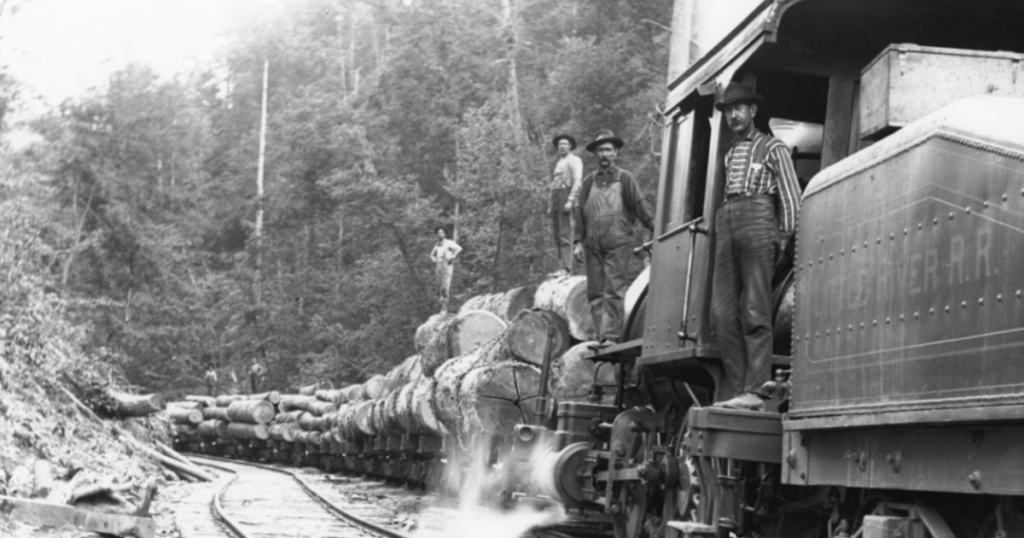
Little River Railroad during the logging era in the Smokies. Courtesy of University of Tennessee, Knoxville Special Collections.

Little River Lumber Company laid railroad tracks into Walker Valley and began logging there in 1924. By 1926, Tremont was a company logging town at the confluence of Lynn Camp and Thunderhead prongs.9 

The community housed workers and supported logging operations in the Middle Prong watershed. A hotel also opened that year, providing lodging for logging workers and visitors.10 

Logging continued in Walker Valley until 1938.9 

Related read: “How Townsend Got Its Name: History of the Little River Railroad and Lumber Company”

Automobile Travel Expanded 

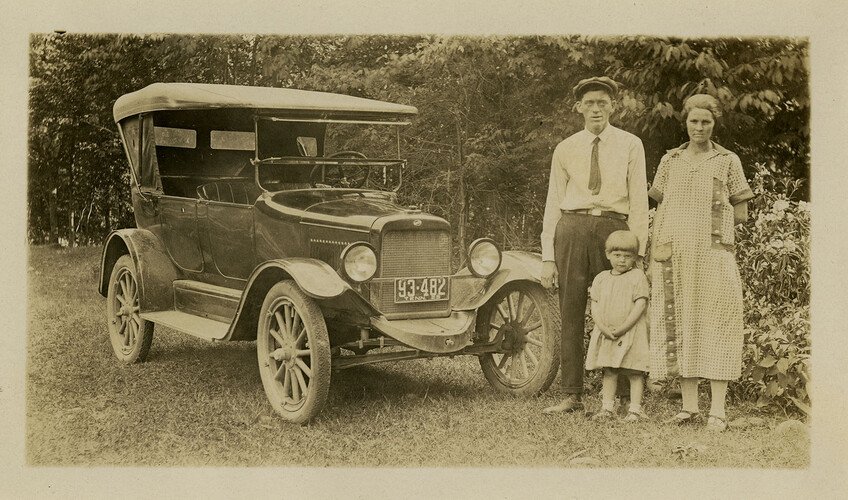
The first automobile in Elkmont. Courtesy of Hunter Library Special Collections, Western Carolina University.

Little River Lumber Company ended train service to Elkmont in 1925 and removed the tracks. In 1926, the former railroad bed from Townsend to Elkmont was converted into a gravel automobile road.11 

Cars also played a role in the national park campaign. In 1923, members of the Knoxville Automobile Club helped organize the group that became the Great Smoky Mountains Conservation Association to promote the proposed park.12 

Families Lived in Cades Cove

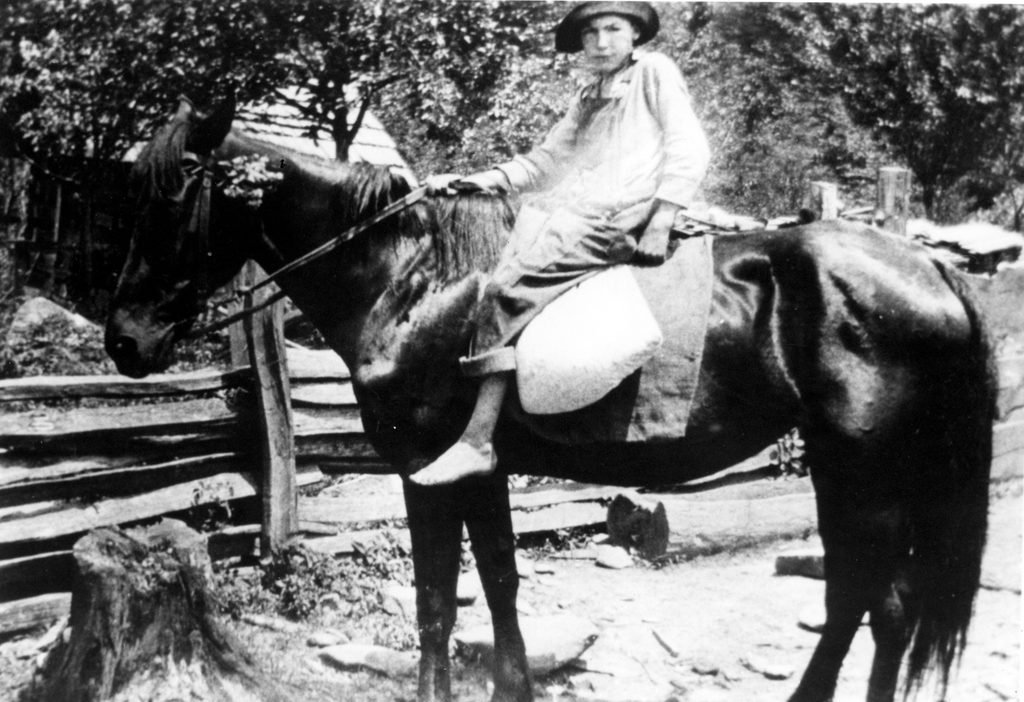
A boy takes corn to the mill in Cades Cove, 1920. Courtesy of National Park Service.

Families still lived, farmed, attended church and school and worked alongside their neighbors in Cades Cove in 1926. Neighbors also came together for corn huskings, molasses making and chestnut gathering.13 

Tourists were already visiting the Cove. By 1924, resident John W. Oliver was renting cabins to visitors. He built a tourist lodge in 1928.14 

A major park-related purchase in 1927 included most of the mountains north of Cades Cove.13 

Related read: “Courtship in Cades Cove: Corn Husking, ‘Sparking’ and Weaner Cabins”

Born and raised in Maryville, Tennessee, with roots tracing back to Cades Cove, Emily Huffstetler is a proud Maryville College graduate and storyteller of the Greater Smokies region. She holds a Master of Science in Conservation Education from Mississippi State University.

_________________________________________________________________________________________________________

The Pink Marble History Beneath Friendsville

Written by: Emily Huffstetler 

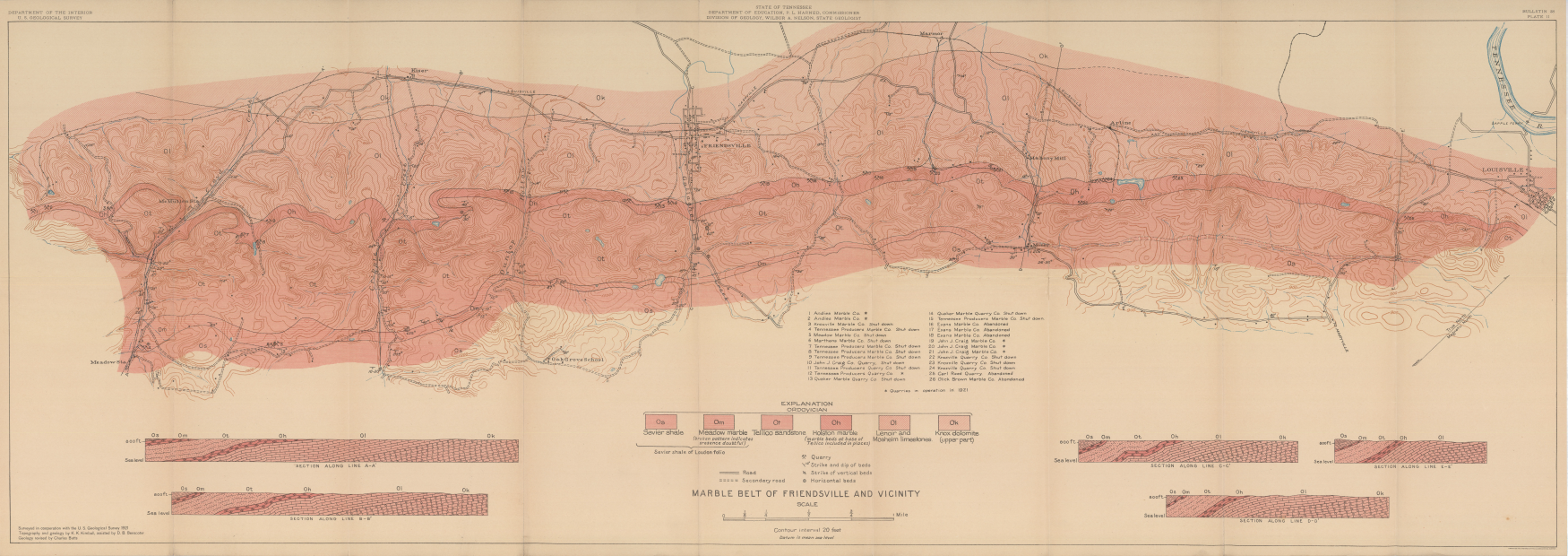
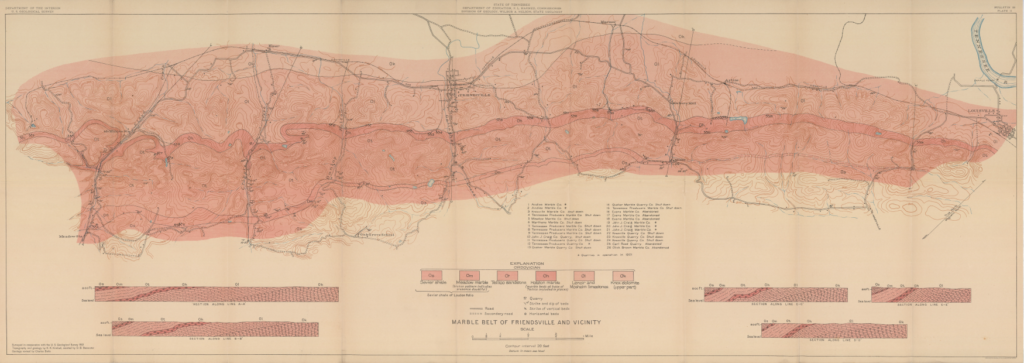
The 1924 map identifies 26 quarry sites along the marble belt around Friendsville, based on a 1921 survey. Courtesy of the Tennessee Geological Survey.

On a 1924 map of western Blount County, 26 quarry sites crowd the countryside around Friendsville. Together, they trace a belt of stone stretching roughly 16 miles from the former community of Morganton toward Louisville.1,2 

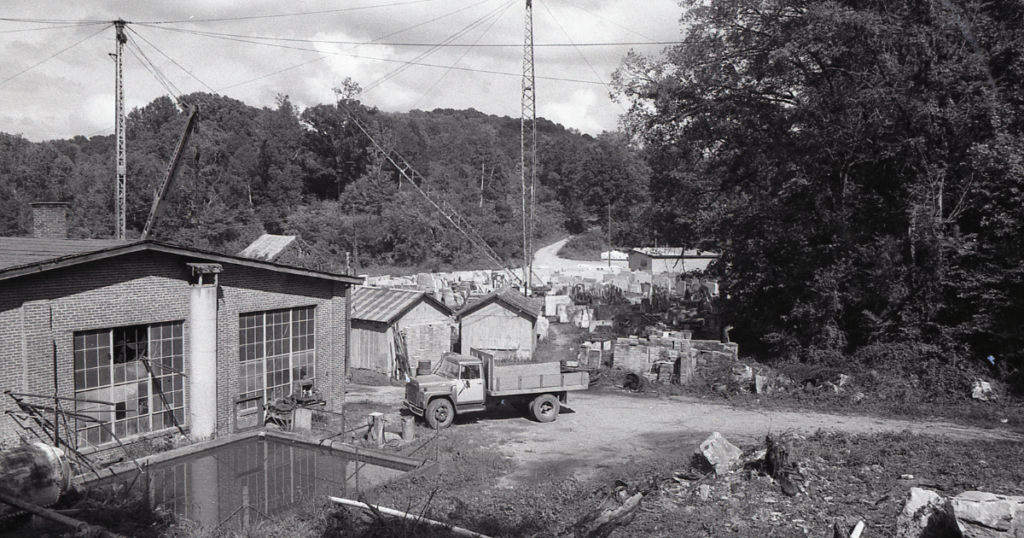
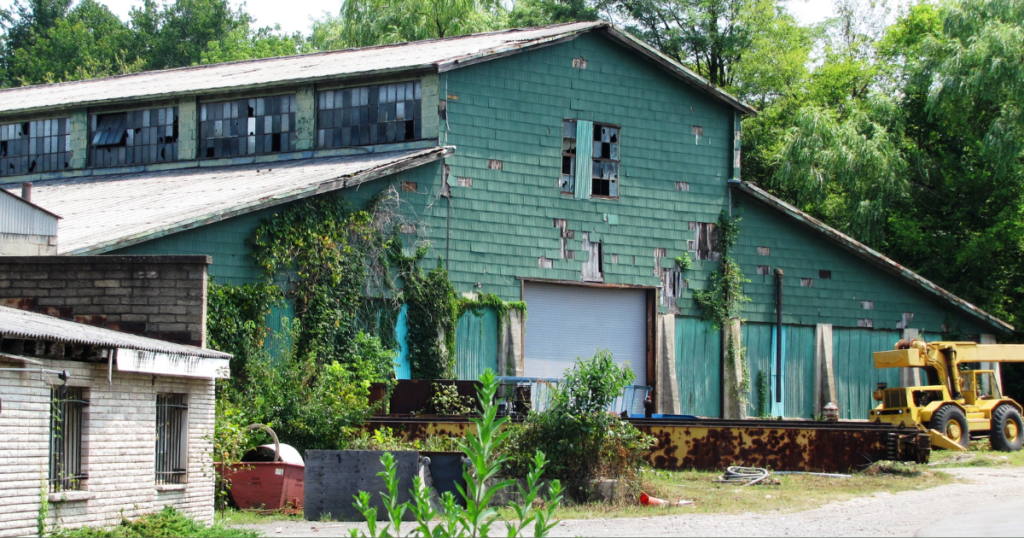
Many of the buildings that once supported the industry are gone. Much of the stone also left Blount County before it was polished, carved or installed, so Friendsville was often left out of the story.1,4,5 

Despite its name, Tennessee marble is limestone rather than true marble. Its color, durability and ability to take a high polish made its pink, rose, red and brown varieties popular for floors, walls, stairways and other architectural details.3 

An Industry Takes Shape 

Commercial quarrying took hold in western Blount County after the Civil War. John J. Craig Company became one of the area’s leading producers.1,4 

John J. Craig entered the marble business in 1878. His company opened its main Friendsville quarry in 1896 and, by 1903, had built a tram road connecting the property to the railroad. A mill equipped with eight gang saws processed stone sold as Pink Tennessee and Dark Cedar.1,4 

Railcars carried Craig stone to New York, Chicago, Houston, St. Louis and San Francisco. The company also sold marble overseas, including to buyers in Italy and Australia.1,4 

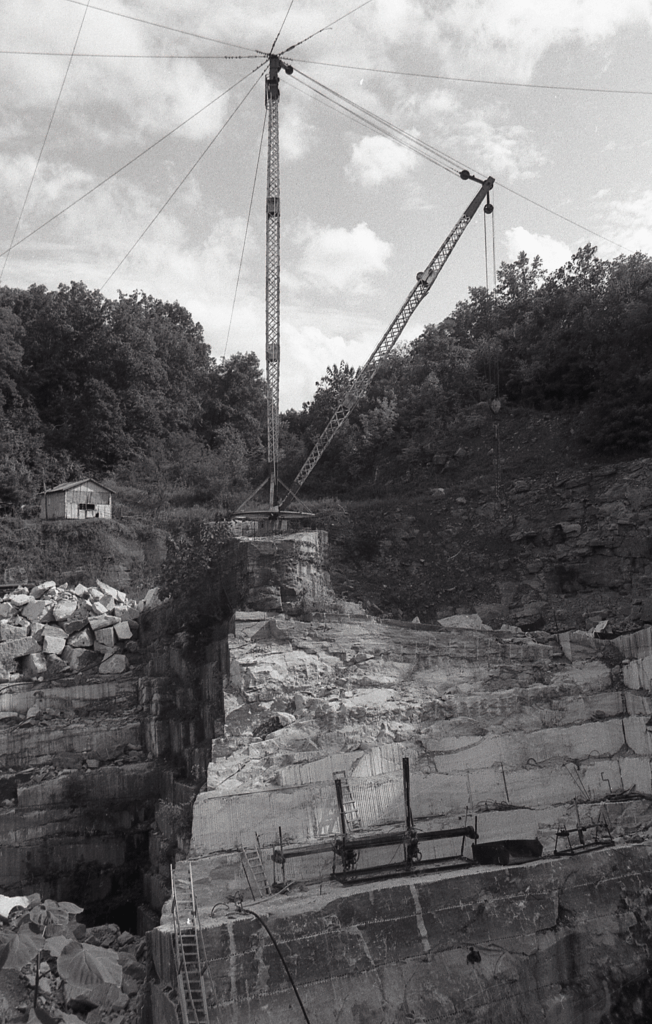
In 1926, Craig expanded the site with a brick gangsaw building, an employee commissary and worker housing. Steel derricks lifted blocks from the pit, while belt-driven saws cut them for shipment.1 

Where Friendsville’s Name Disappeared 

The Friendsville quarries supplied raw material, but much of the finishing happened in Knoxville.4,5 

In 1914, Craig and several business partners established Candoro Marble Company in South Knoxville. Candoro handled milling, finishing and shipping for a network of quarry operations that included Craig’s Blount County properties.4,5 

The former Candoro Marble Works cutting facility in South Knoxville was built in 1914. Photo by Brian Stansberry via Wikimedia Commons, CC BY 3.0.

Craig maintained a local presence, too. In the late 1930s, the company converted a former bank near the Friendsville railroad tracks into an office and showroom with marble floors and wainscoting.4 

After the stone left Friendsville, records might name only the company that finished it or identify it simply as “Tennessee marble.”4,5 

From the Marble Belt to National Landmarks 

The National Register nomination for the Craig quarry credits its Friendsville operation with interior marble used in the National Gallery of Art’s West Building in Washington, D.C. The project drew on three East Tennessee companies and stone from several quarries.1,4

The local industry remained active well after the Gallery opened in 1941. Blount County had eight working marble quarries in 1962. At six of those sites, crews were extracting stone for a new Smithsonian building that became the Museum of History and Technology, now the National Museum of American History.4 

One of the clearest Friendsville connections came from the Endsley Quarry. Tennessee Valley Marble supplied stone for the First Amendment tablet installed on the Newseum’s 74-foot-tall Pennsylvania Avenue facade. Crews quarried 278 tons to obtain 50 tons with a consistent appearance.6 

The First Amendment tablet on the former Newseum showed the pale pink color of Tennessee marble. Photo by David Monack via Wikimedia Commons, CC BY-SA 3.0 US.

After the Newseum closed, the tablet was moved to the National Constitution Center in Philadelphia. Installation was completed in January 2022.7 

The Industry Continues 

By the late 20th century, many of East Tennessee’s historic marble companies had closed. The Craig family retained its Friendsville quarry property until 1982.1,4 

The Craig quarry pit was still active when the property was documented for the National Register in 1988. Photo courtesy of the Tennessee Historical Commission.

The modern Tennessee Marble Company was founded in 1993. It is separate from an earlier company that operated under the same name during the mid-20th century.4,9 

The company supplied Tennessee Dark Rose marble during Grand Central Terminal’s 1990s restoration.8 In 2007, it acquired Tennessee Valley Marble’s assets, including additional quarry and mineral rights.9 

Grand Central Terminal’s Main Concourse, where Tennessee marble was used in the flooring. Photo by D. Benjamin Miller via Wikimedia Commons, CC0 1.0.

In 2014, the company purchased 70 acres associated with the historic Craig property, joining that land with its Brown Quarry holdings along the marble belt. Tennessee Marble Company also operated the Endsley Quarry as a source of Dark Pink marble.10

In November 2025, Raider Quarries LLC, an affiliate of Silvara Stone, acquired Tennessee Marble Company’s operational assets. The new owners announced plans to continue supplying the company’s established marble varieties and fabricating custom stone projects.11 

Today, marble is still quarried and fabricated in Friendsville, more than a century after the area became one of East Tennessee’s major centers of production.10,11 

For a more comprehensive look at where Tennessee marble has been used around the world, visit the Tennessee Marble Company’s project directory.

Born and raised in Maryville, Tennessee, with roots tracing back to Cades Cove, Emily Huffstetler is a proud Maryville College graduate and storyteller of the Greater Smokies region. She holds a Master of Science in Conservation Education from Mississippi State University.     

_________________________________________________________________________________________________________