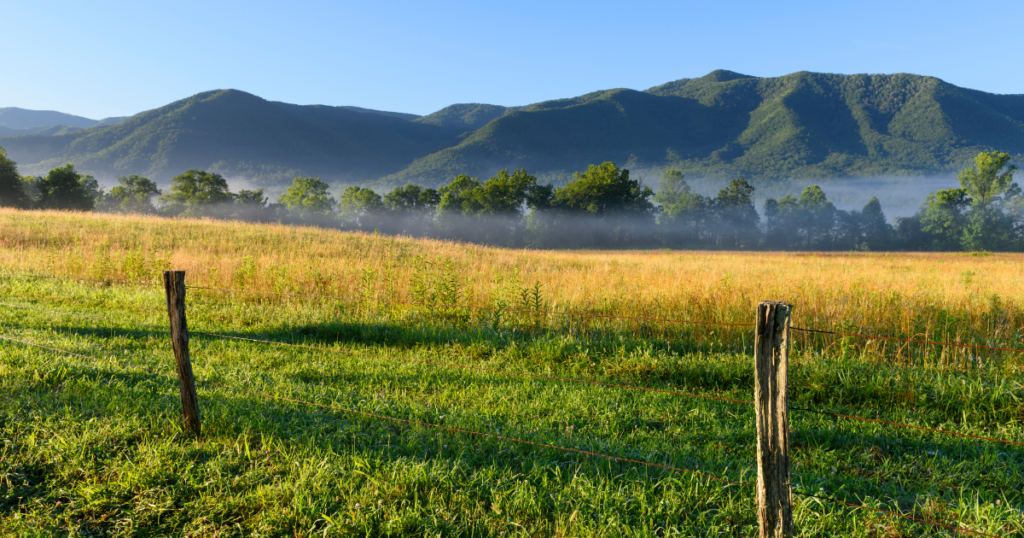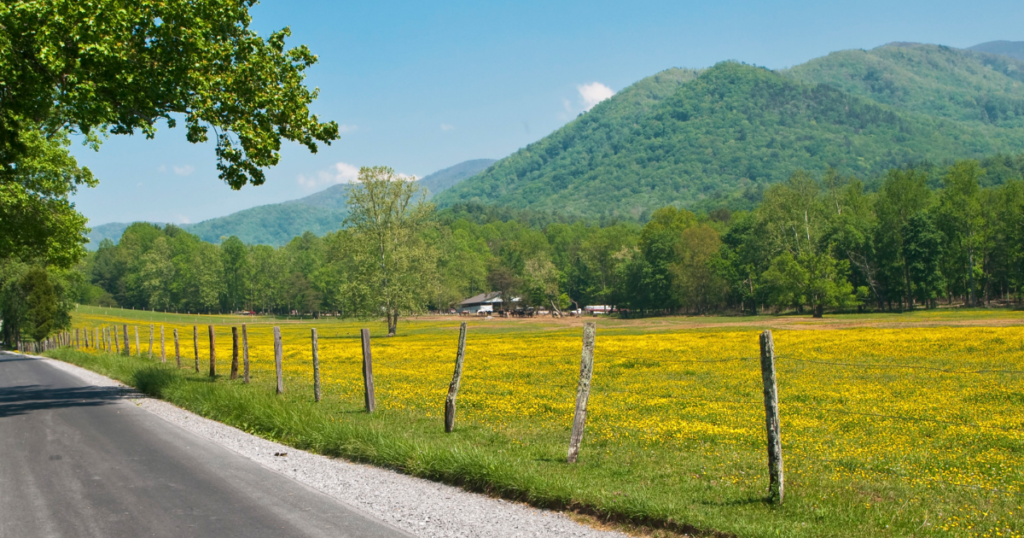
For courting couples, Sunday was another chance to see each other.
Large households shaped the logistics of dating. Families of 10 to 12 children weren’t unusual, and privacy was limited in one- and two-room cabins. That pushed conversations outside, on porches and in yards.
One interpretive guide for the Cove published by the Great Smoky Mountains Institute at Tremont points visitors to a porch bench near Cable Mill used for “sparking,” an older term for courting.
The word also shows up in a recorded Cades Cove interview from the 1930s, where a speaker recalls older boys teasing children about “sparking,” and an adult stepping in to explain what it meant.
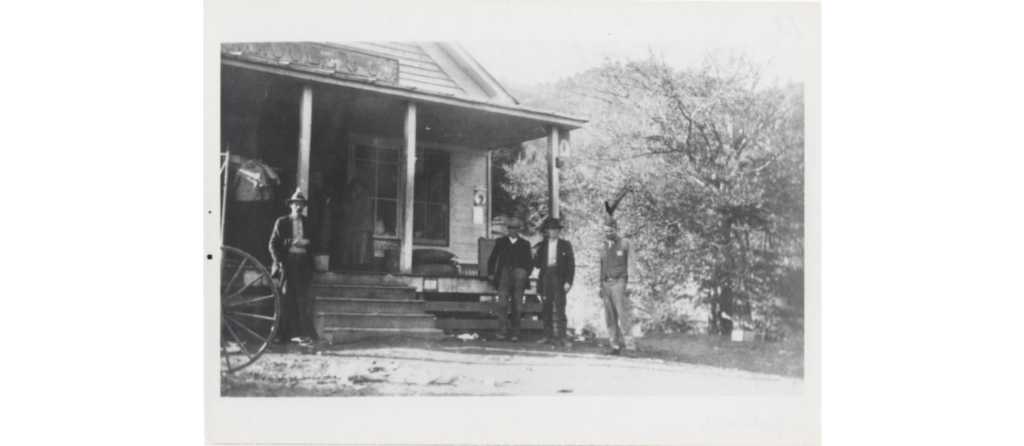
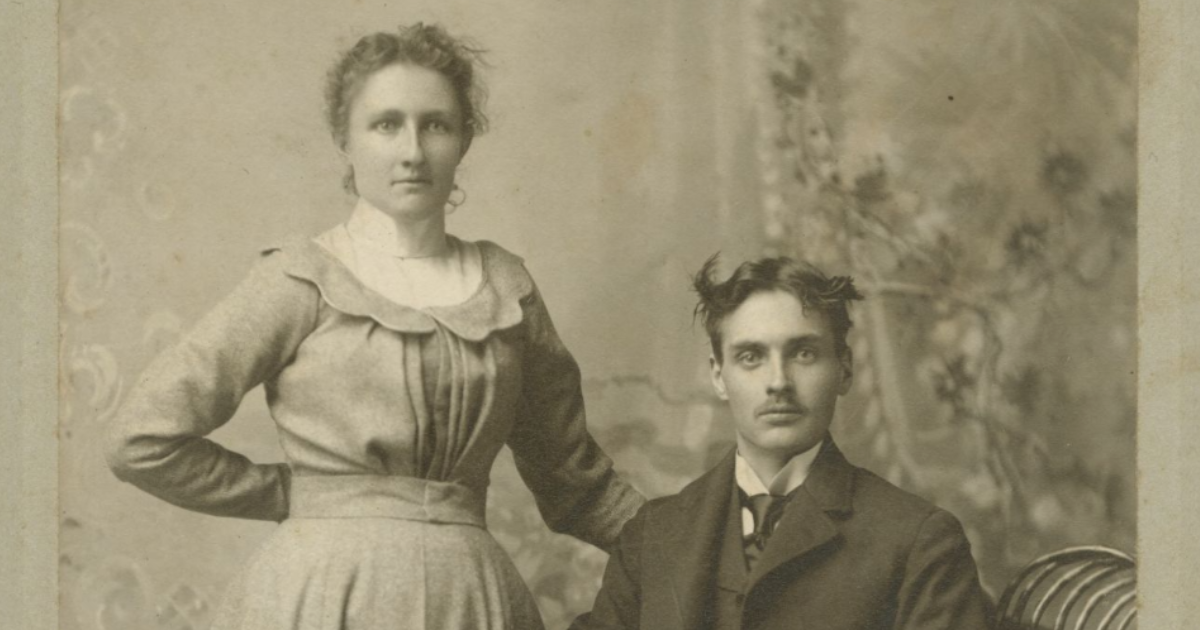
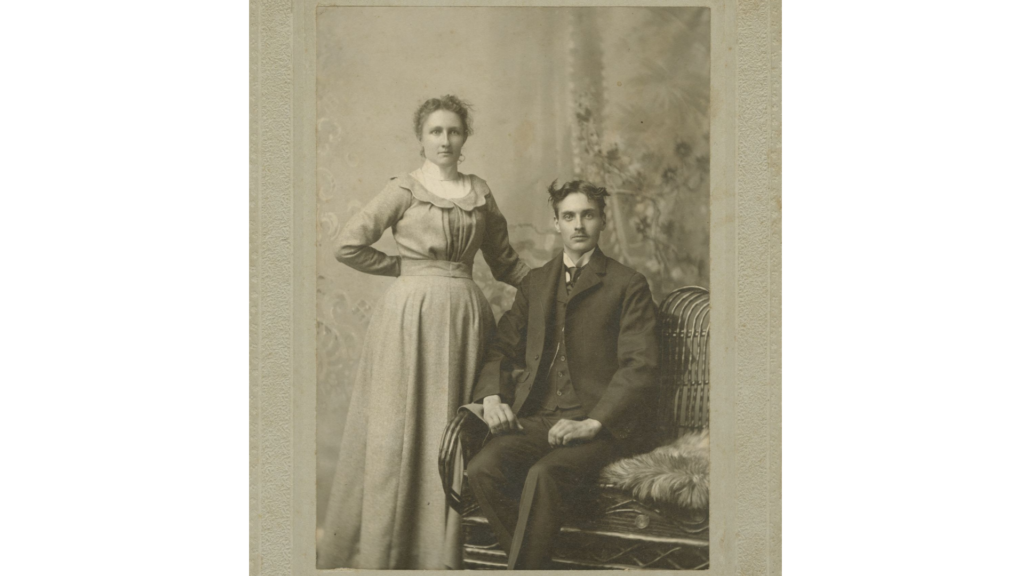
“This picture was taken at Maryville Tenn on Saturday afternoon of January 26, 1901… Next day, Sunday, Nancy Ann and I rode horseback… to Cades Cove a distance of 20 miles… We were 22 years old and not married. We were married Sept. 4, 1901.” —John W. Oliver
Oliver (1878–1966) is the author of the Fifty Years in Cades Cove memoirs, a handwritten account of the valley’s families and daily life from early settlement through the early 1900s.Photo courtesy of University of Tennessee, Knoxville. “Fifty Years in Cades Cove Collection.” John W. Oliver and wife, Nancy Ann (Maryville, 1901).
Sparking often moved toward marriage. In much of Southern Appalachia, weddings were informal during this era, staged in either the bride’s or groom’s home.
Born and raised in Maryville, Tennessee, with roots tracing back to Cades Cove, Emily Huffstetler is a proud Maryville College graduate and storyteller of the Greater Smokies region.
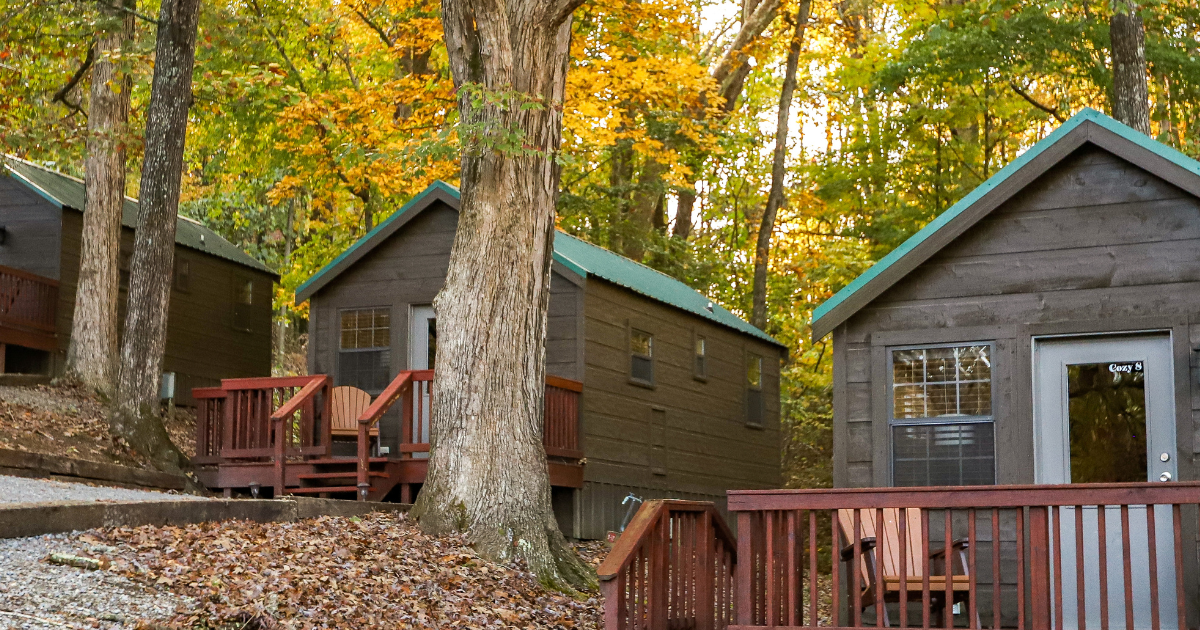
The Peaceful Side of the Smokies is a renowned cycling destination. Over the past 30 years, the local Tour de Blount has attracted thousands of cyclists from across the nation. With scenic mountain roads and quiet countryside rides, discover why so many visitors love cycling on the Peaceful Side.
Maryville and Alcoa
The Maryville-Alcoa Greenway features over 18 miles of trails running alongside Pistol Creek and through scenic parks throughout Maryville and Alcoa. Bikes are also allowed in designated areas within Maryville College’s 140-acre woods.
Cycology Bicycles, a family-owned business in Maryville, sells a variety of bikes, apparel and accessories. Their experienced staff can assist you with all your cycling needs.
They host free intermediate group rides every Tuesday and Thursday, covering 35 to 45 miles at a 15 to 17-mph average pace. From Memorial Day through Labor Day, rides start at 8:30 a.m., then shift to 10 a.m. after the holiday. On Greenway Sundays, which run from April to October, a shorter ride departs from Pearsons Springs at 4 p.m. and turns around at Clayton Homes.
The Cycology Women’s Rides Series (CWRS), now in its 12th year, offers a women’s cycling program from April through October. It caters to all levels with four no-drop pace groups.
Maryville Bike & Trail, named the Best Bicycle Shop by The Daily Times in 2023, offers a variety of bike sales and rentals.
They host beginner rides on Tuesdays at 6 p.m. and intermediate rides on Thursdays at 6 p.m. The beginner rides are about 5 miles long, while the intermediate rides cover about 15 miles at a 10-mph average pace. Holiday social rides are advertised on their Facebook page.
Townsend
Vee Hollow, a 14-mile mountain bike trail network, is free to use and open year-round. It has four distinct zones for riding, ranging from easy to difficult, with a skills area, jump trails, mountain trails and more. Bikes are available for rent for up to three days.
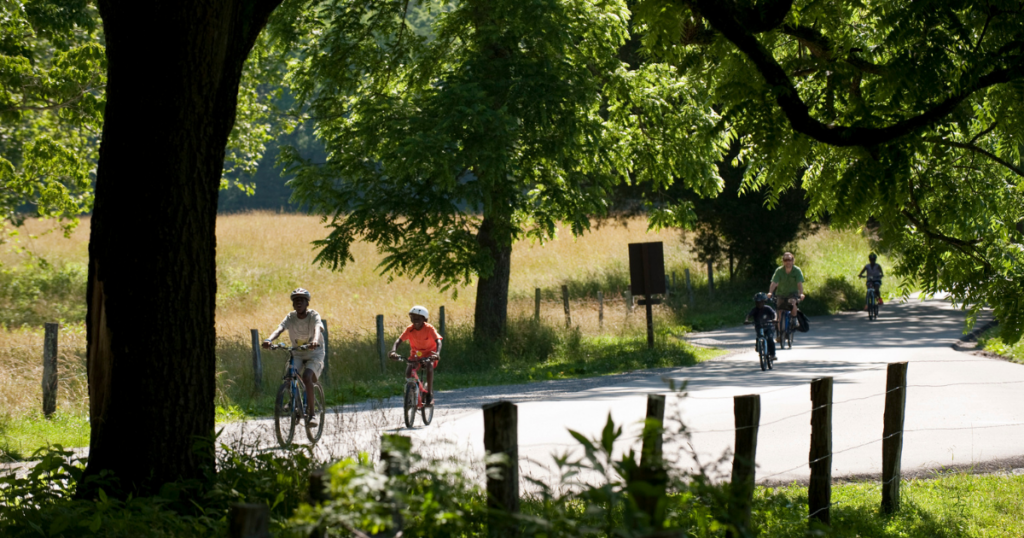
Cades Cove Loop Road is motor vehicle-free on Wednesdays starting in June through September, allowing the perfect opportunity for cycling. The loop is 11 miles long, with historical buildings to check out along the way.
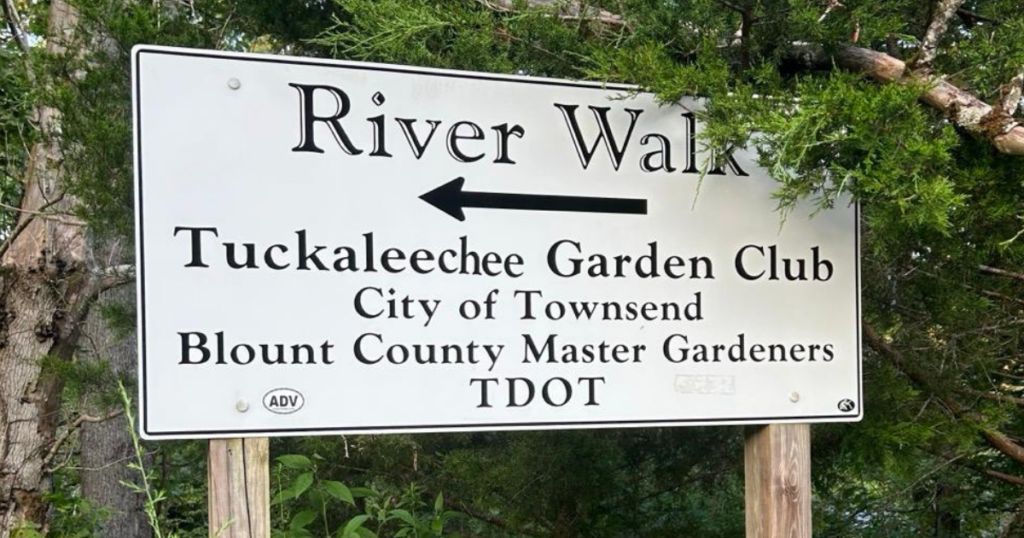
The Townsend Historical Trail spans 4.5 miles on both sides of US 321/Lamar Alexander Parkway, totaling 9 miles. The trail runs along Little River and features a 0.3-mile unpaved River Walk.
Walland offers routes such as Ellejoy Jaunt, a 20.5-mile loop starting at Coulter Bridge with scenic farmland and panoramic mountain views, and Old Walland Hwy, a 17.6-mile out-and-back paved ride. Cyclists should be mindful of motor vehicles on these roads.
Whether you’re an experienced cyclist or a beginner, the Peaceful Side of the Smokies has a variety of trails and resources to ensure an enjoyable ride.
Interested in Tour de Blount? This event takes place every spring. You can learn more on their website.
Born and raised in Maryville, Tennessee, with roots tracing back to Cades Cove, Emily Huffstetler is a proud Maryville College graduate and passionate storyteller of the Greater Smokies region.
On the Peaceful Side, date night doesn’t have to be same ol’, same ol’. And it doesn’t just have to be for singles. Consider these ideas when you and your significant other want to spend quality time together.
Active Adventurers – Townsend
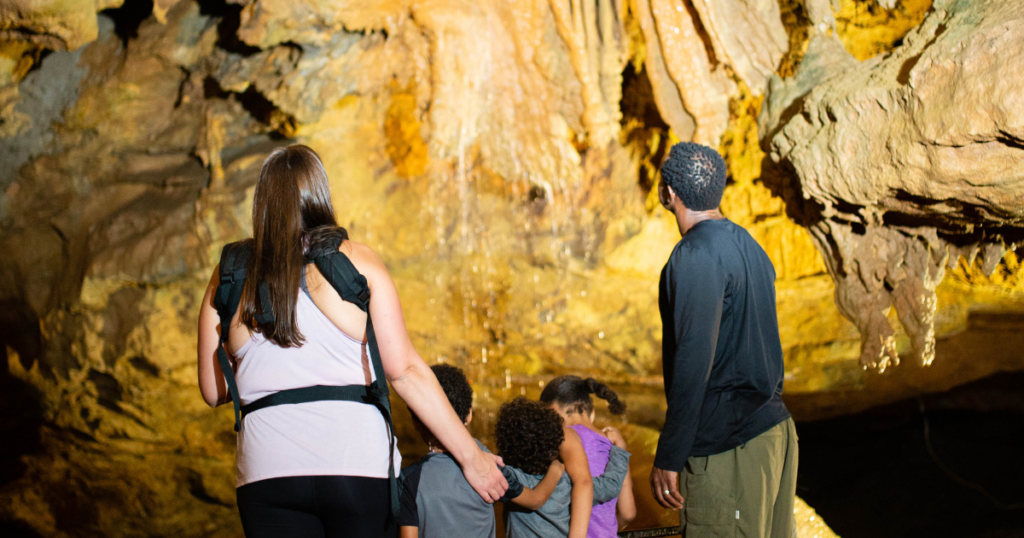
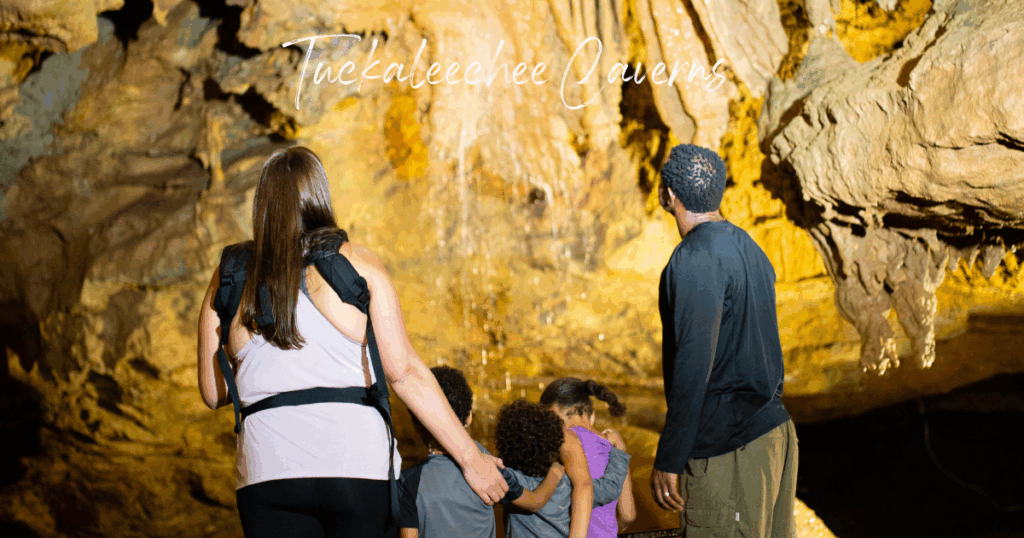
Start the morning off exploring Tuckaleechee Caverns, the highest-rated cavern of the Eastern United States. Along the 1.25-mile tour, there are millions of formations and a 210-foot waterfall to admire. At the end, you’ll experience total darkness in a room big enough to fit a football stadium.
Then, put on your water shoes and head to River Rat, the highest-rated Tubing Outpost in Tennessee. Outpost A, a calmer, two-hour route, features a private rock jump and swimming holes. Meanwhile, Outpost B offers an hour-long, heart-pumping adventure.
You can tube once, or you can go until closing with a Day Tubing Pass. Pro Tip: If you book a day or more in advance, you’ll receive a $5 discount per person.
If you’re not looking to spend money, consider hiking instead. These are a few of our top picks, ranging from easy to strenuous:
All of these hikes have rewarding scenery, ranging from waterfalls to panoramic mountain views. To beat the summer heat (and the crowd), start your trek earlier in the morning, and be sure to bring plenty of water.
Get an early start to the weekend at the Maryville Farmers’ Market, which operates on Saturday mornings from April to November. You can grab coffee, sweet treats, produce, flowers—whatever your heart’s desire.
If you’re looking for a weekday adventure with your sweetheart, embark on a 3.5-hour Cades Cove Heritage Tour. Enjoy a break from driving in a comfortable ADA-compliant bus, while experienced guides reveal the history of Cades Cove and point out wildlife.
Townsend has a variety of museums to explore any day of the week. Dive into East Tennessean history at the Great Smoky Mountains Heritage Center, where you and your loved one can experience live demonstrations and tour 17 preserved Appalachian structures.
Or head down the road to the Little River Railroad and Lumber Company Museum, which preserves the heritage of what was once one of the largest commercial logging operations in southern Appalachia. This museum is free to visit, although donations are appreciated.
Retro Lovers – Maryville
Take a blast to the past at a drive-in movie. But first, you’ll want to get some snacks.
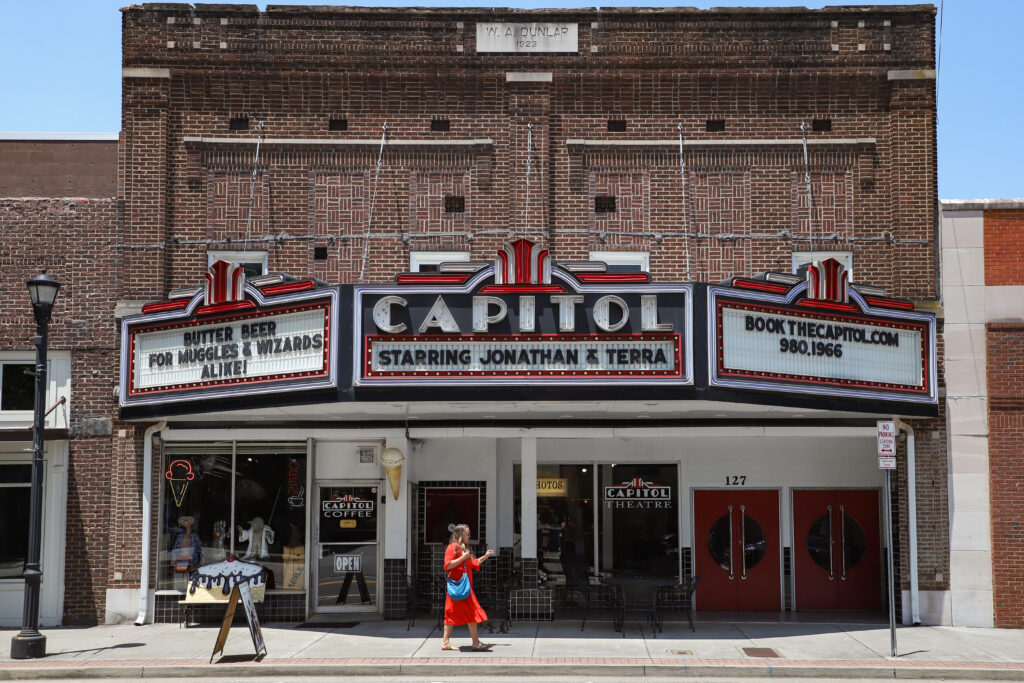
Start your evening off with sweet treats at the Capitol Theatre in Downtown Maryville. There are a variety of movie-themed sundaes, floats, candies and bottled drinks to choose from. The two of you can enjoy ice cream there and pick something else to take with you.
Then, take a short drive to Bigfoot Popcorn. There are unique flavors, like Bigfoot Poop and banana pudding, as well as traditional ones like cheddar and caramel.
Before dusk, make your way to the Parkway Drive-In off East Lamar Alexander Parkway. If you get there early enough, you’ll be able to pick a prime parking spot. You can stick around for both movies or call it a night after the first. Either way, it only costs $10 per adult.
Are you or your loved one planning a date on the Peaceful Side? We’d love to hear how it goes. Be sure to tag us on social media (@peacefulsmokies).
Born and raised in Maryville, Tennessee, with roots tracing back to Cades Cove, Emily Huffstetler is a proud Maryville College graduate and passionate storyteller of the Greater Smokies region.
From tree lightings and makers markets to concerts, fun runs and cozy workshops, December on the Peaceful Side is full of festive fun. Here’s a preview of what’s happening this month, with a late November event to kick things off.
Wrap up the downtown holiday market with the City of Maryville tree lighting at the Maryville Municipal Parking Garage on Broadway. The tree will be lit at approximately 5:30 p.m.
Celebrate the lighting of the City of Alcoa Christmas tree at the pedestrian bridge at the Springbrook Corporate Center in Alcoa at 6:15 p.m. Following the ceremony, enjoy special music, refreshments and a visit with Santa Claus.
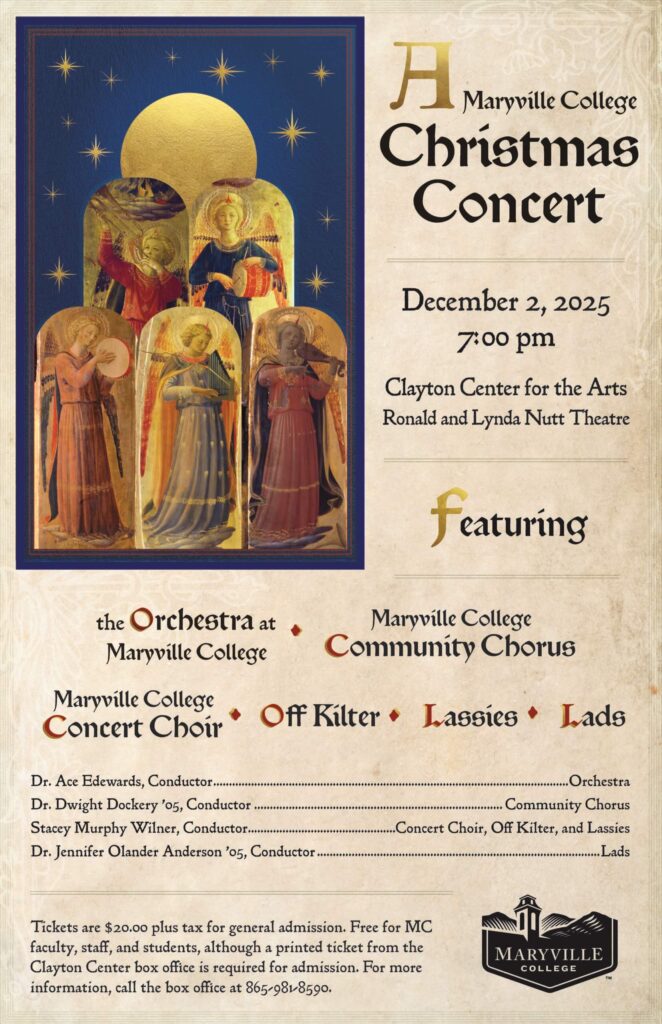
The annual “A Maryville Christmas” concert begins at 7 p.m. in the Ronald and Lynda Nutt Theatre at the Clayton Center for the Arts. The evening features the Maryville College Concert Choir performing A Ceremony of Carols by Benjamin Britten, sing-along selections with the Orchestra at Maryville College, the Maryville College Community Chorus, and chamber ensembles Off Kilter, Lads and Lassies sharing beloved holiday classics.
The Blount County Courthouse lawn in Downtown Maryville will be illuminated by live Christmas trees of all sizes, colors and themes, with the tree lighting at 6:30 p.m. The opening celebration includes entertainment, refreshments and Santa Claus, and the trees remain on display throughout the month for visitors to walk through or drive by and enjoy.
Presented by the Blount County Arts & Crafts Guild, the Santa Mouse Christmas House fills Dotson Memorial Baptists Church in Maryville (814 Dotson Memorial Rd) with handmade arts and crafts. Shop unique gifts and decor from local artisans throughout this three-day holiday event.
Join Peaceful Side Brewery in Maryville from 5:30 to 7 p.m. for an evening of education and tasting. Learn about the history of farmhouse brewing and taste a curated selection of Belgian and American saisons, each paired with the story behind the brewery that created it.
Broadway Center for the Arts presents The Best Christmas Pageant Ever, a heartwarming holiday tradition filled with laughter and the true meaning of Christmas. Performances are Friday at 7 p.m. and Saturday at 3 p.m. and 6 p.m., featuring a talented cast from across East Tennessee.
H.O.M.E. (Hall-Oldfield-Maryville Empowerment) and the Martin Luther King, Jr. Community Center in Alcoa partner for this annual community celebration to kick off the Christmas season, with the tree lighting at 6 p.m. Enjoy family fun and light refreshments at 209 E Franklin Street.
Head to Maryville College campus from 10 a.m. to 3 p.m. for the Maryville Makers Market Christmas Event. Browse more than 100 makers, and enjoy live music, demonstrations, kids’ activities and food vendors.
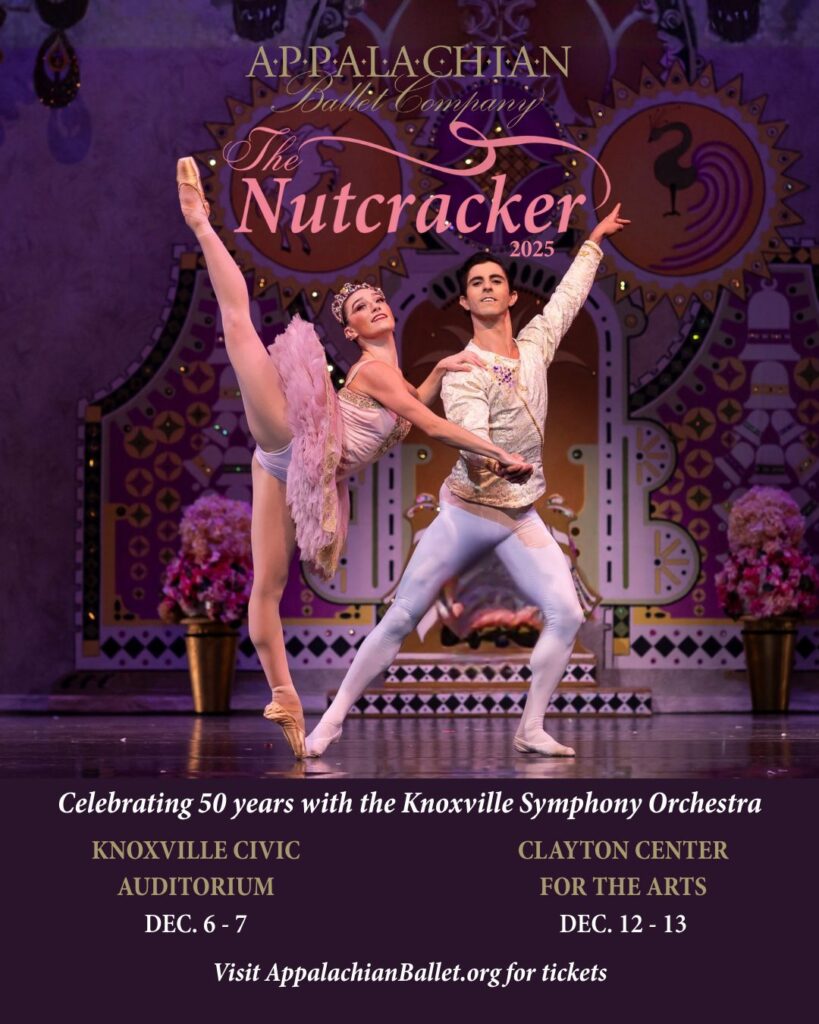
The Appalachian Ballet Company and the Knoxville Symphony Orchestra present The Nutcracker, bringing this beloved holiday classic to life at the Clayton Center for the Arts over two days. Act One features a glittering holiday party and snowy scene, while Act Two transports audiences to the Land of the Sweets with the Sugarplum Fairy, Cavalier and more.
The final leg of the Healthy Blount Triple Crown of Running features a 5K road race and 1-mile Fun Run/Walk from 2 to 4 p.m. Awards are given to Overall and Masters winners, the top three in each age division and the best male and female Christmas costumes. All Fun Run participants receive a keepsake, and a portion of proceeds benefits the Empty Pantry Fund.
Louisville Mercantile kicks off a week of holiday fun, running December 8-13. Each day features a new special, with a highlight Sip & Shop event on Thursday, December 11 from 5 to 7 p.m.
Children ages 3–6 in Blount County can receive a very special phone call from Santa Claus between 5 and 7 p.m. Thaks to volunteers from the Maryville-Alcoa Civitan Club, Santa will ring directly from the North Pole for this free program. The deadline to register is December 8.
Southern Grace Coffee Co. Hosts its annual Christmas Market from 9 a.m. to 2 p.m., packed with local vendors, hot coffee and cocoa, baked goods (including dairy-free and gluten-free options), boutique clothing, handcrafted decor and gifts.
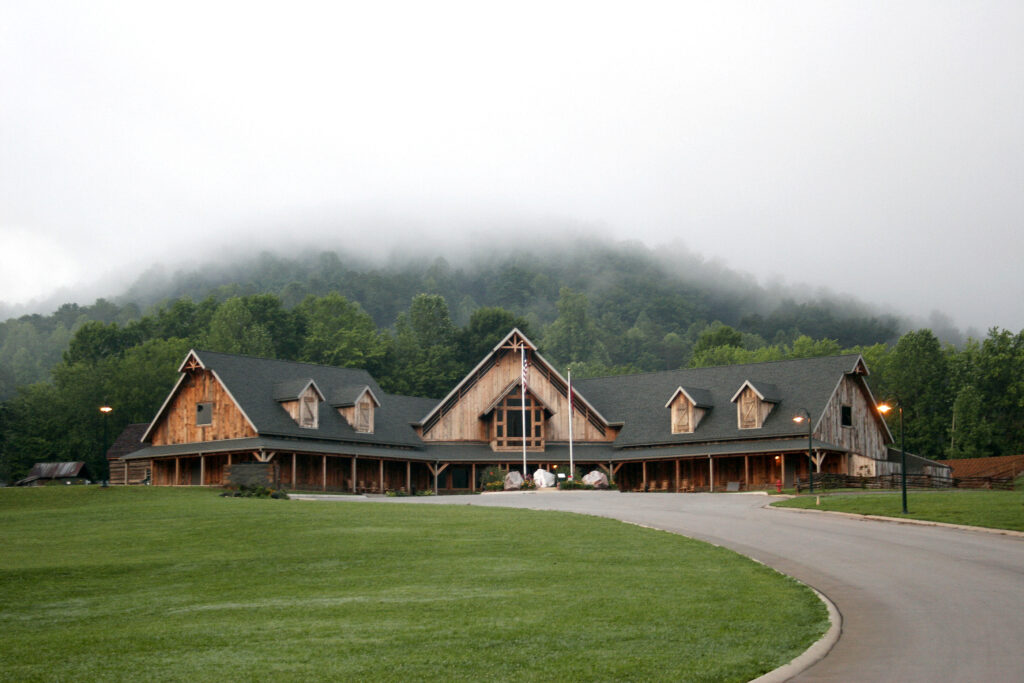
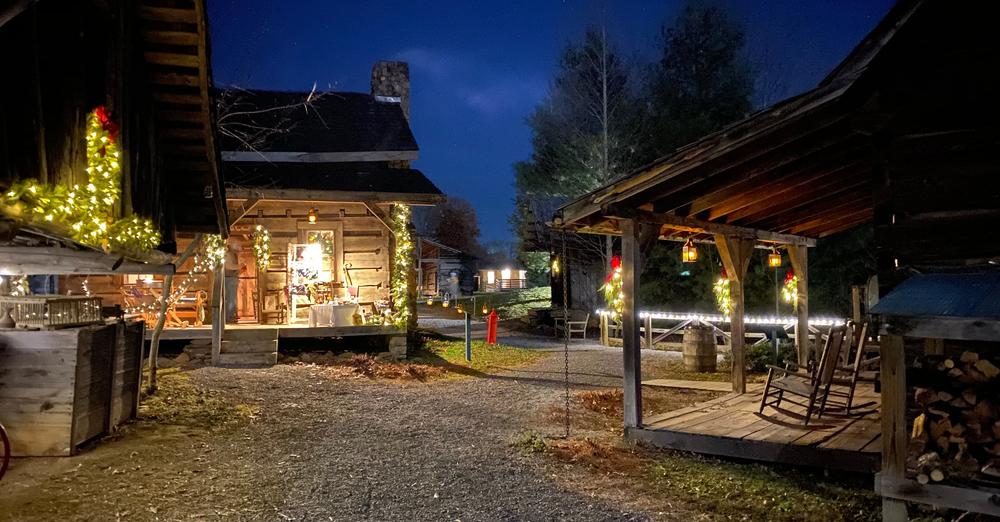
Experience a taste of Appalachian Christmas traditions at the Great Smoky Mountains Heritage Center’s Christmas in the Village festivities. Enjoy living history demonstrations, evening tours of historic structures and warm refreshments during select weekend evenings (12/5–12/6, 12/12–12/13 and 12/19–12/20) from 5:30 to 7 p.m.
Born and raised in Maryville, Tennessee, with roots tracing back to Cades Cove, Emily Huffstetler is a proud Maryville College graduate and passionate storyteller of the Greater Smokies region.
The Smokies are home to wonders that feel magical—synchronous fireflies, a rainbow waterfall and bioluminescent mushrooms, to name a few. Take a walk on the Peaceful Side and discover fairy villages and a troll bridge nestled in the woods, where fairytales and reality meet.
Fairy Villages in The Townsend River Walk & Arboretum
The Townsend River Walk & Arboretum, nestled between the Maryville-Alcoa Greenway and the Little River, has several enchanting points of interest, including two fairy villages. Maintained by visiting children, these villages spark creativity and invite young imaginations to flourish.
The villages are part of the Children’s Discovery Garden, a lively space filled with activities like a mud pie kitchen, a seesaw, a wooden tent and a sandbox.
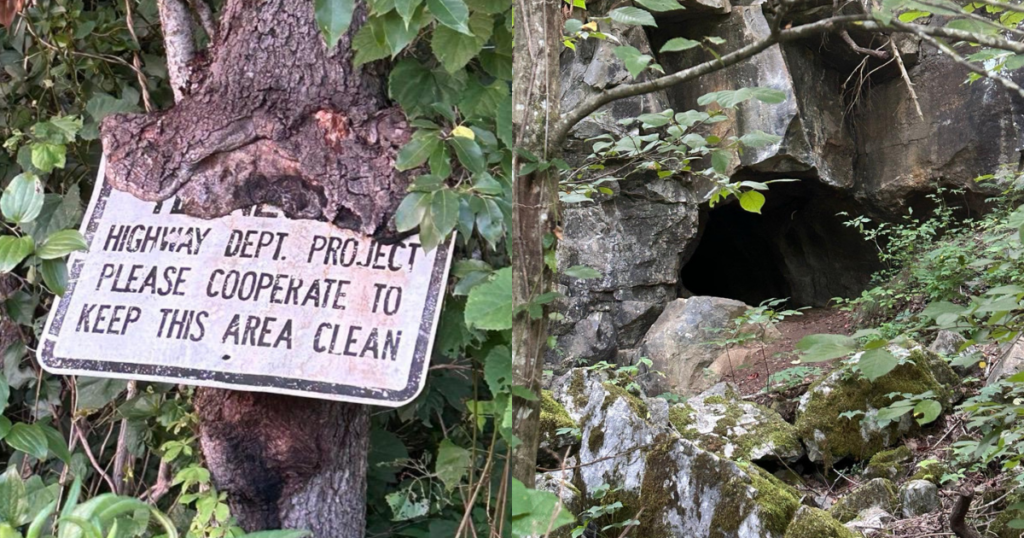
As you stroll along the trail, you’ll discover whimsical artwork by local artisans, including wood carvings of spirits and animals, as well as stones decorated with bird paintings. If you look closely, you’ll also spot a tree embracing a road sign and a cave tucked away in the woods.
This hidden gem is free to explore and wheelchair accessible at the north end. Visit the Townsend River Walk & Arboretum website for a preview of what’s in bloom throughout the year.
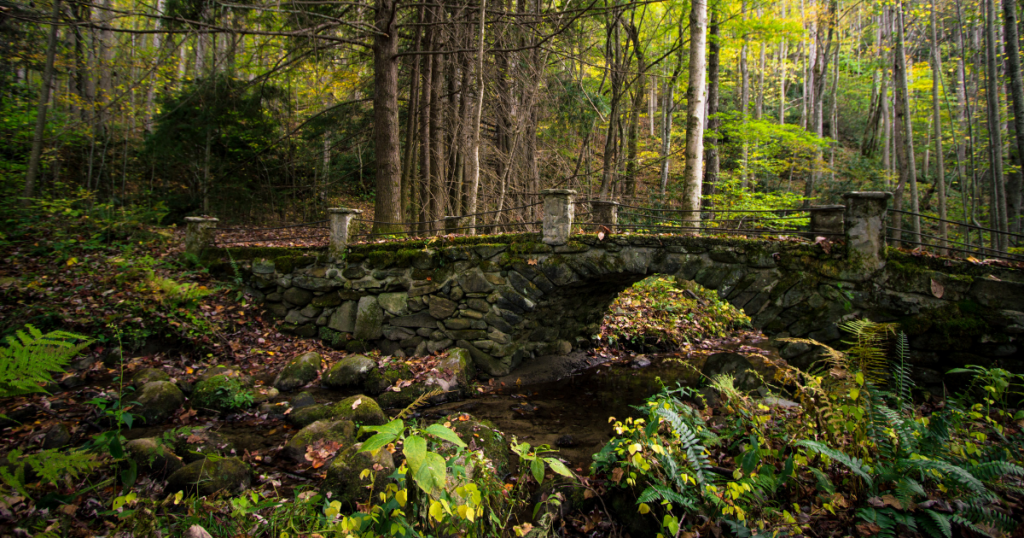
While many of the structures have been torn down, a few remain, including the “Troll Bridge”. Tucked away from regular foot traffic, this moss-covered stone bridge looks like something straight out of a fairytale.
To reach the Elkmont Troll Bridge, set off on the Little River Trail. About 100 feet in, you’ll see a small side trail that leads to the bridge. Just follow the stone walls, and you’ll soon reach your destination.
Have you found something magical on the Peaceful Side? Share your photos with us on social media (@peacefulsmokies).
Born and raised in Maryville, Tennessee, with roots tracing back to Cades Cove, Emily Huffstetler is a proud Maryville College graduate and passionate storyteller of the Greater Smokies region.
From pool parties to scenic hikes, the Peaceful Side of the Smokies offers a variety of dog-friendly activities. Whether you’re a local resident or just vising the area, there are plenty of opportunities for your furry friend to play, socialize and enjoy the great outdoors.
Paws in the Pool – Springbrook Pool
The 3rd annual “Paws in the Pool” dog festival will take place at Springbrook Pool on Saturday, August 10 from 9 a.m. to 1 p.m. The rain date is set for August 11 from 1 to 5 p.m.
Large dogs (over 40 lbs) check in at 8:30 a.m. and swim from 9 to 10:30 a.m. Small dogs check-in at 10:45 a.m. and swim from 11:15 a.m. to 12:45 p.m.
Tickets cost $8 per pup on the day of the event, including swimming in the chlorinated pool, fun activities, on-site vendors, dog goodies and an event keepsake. Register by noon the Friday before the event for a discounted price of $5.
Dogs must be good swimmers or have their own life jacket to participate. You can learn more about the event on the Parks & Rec website.
Dog Parks on the Peaceful Side
The Petsafe Dog Park at Pistol Creek, nestled in Maryville’s Bicentennial Park, is open from dawn until dusk. It features a half-acre for small dogs, an acre for large dogs, a pavilion, benches, waste stations, dogs-only water fountains and an unleashing area.
Limited parking is available on McCammon Ave, or you can walk from the municipal lot or parking garage nearby on Harper Ave. Learn more about the park rules on the Parks & Rec website.
Louisville Dog Park, next to Henry Beal Park in Louisville, offers fenced-in areas for small and large dogs, including agility equipment, a dog water fountain, a digging pit and a hose to rinse your pup off. There’s also a lakeside loop trail nearby.
Great Smoky Mountains National Park
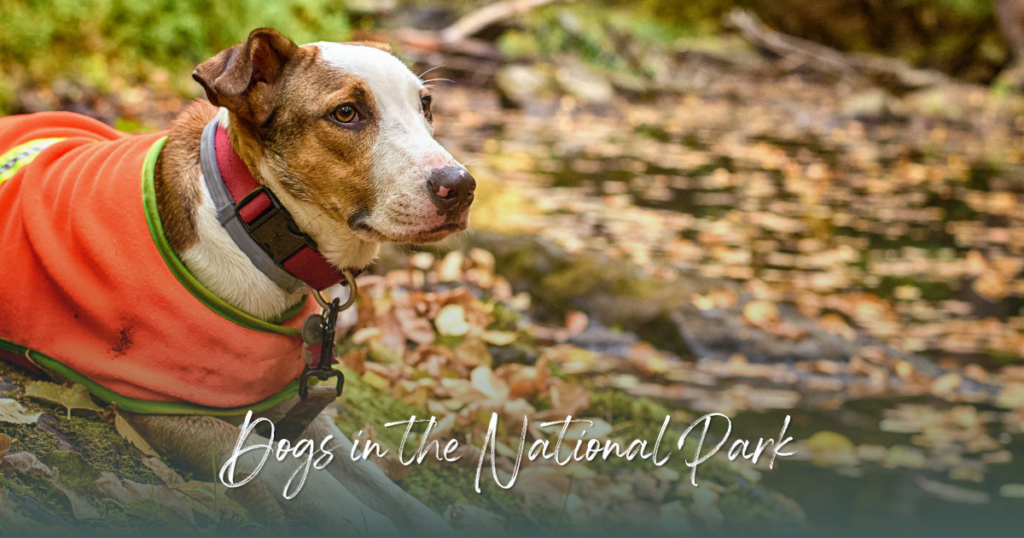
Dogs are allowed in campgrounds, picnic areas and along roads in the Great Smoky Mountains National Park if they’re on a leash that doesn’t exceed six feet in length. Owners must clean up after their dogs immediately and should never leave them unattended in a vehicle or RV.
The Gatlinburg Trail is a convenient option near the Peaceful Side. About four miles roundtrip, this riverside stroll winds through a cove hardwood forest and features historic chimneys. You can learn more about the trail, including where to park, on the GSMNP website.
Service dogs are allowed anywhere in the park that visitors can go. You can learn more about service dog policies on the National Park Service website.
Born and raised in Maryville, Tennessee, with roots tracing back to Cades Cove, Emily Huffstetler is a proud Maryville College graduate and passionate storyteller of the Greater Smokies region.
The bridges on the Peaceful Side of the Smokies bring charm to local trails, parks and scenic spots. From unique pedestrian walkways to historic covered bridges, each crossing offers a glimpse into the area’s past and invites exploration. Here are a few of our favorites.
The Sunshine Bridge, a rustic covered bridge in Townsend, connects both sides of the Little River and serves as a link between the past and present. This nearly 190-foot bridge, with its tin roof and graceful arches, was once a one-lane river crossing for vehicles and is now part of the Townsend Historical Trail.
Originally known as the Kinzel Springs or Wilson Bridge, it gained the nickname “Sunshine” in honor of a historic hotel in Townsend. Today, it’s a community landmark offering views of the river and places to walk, bike or even fish. Completed thanks to local leaders, particularly the late Jim Hind, the Sunshine Bridge celebrates Townsend’s heritage while welcoming new memories.
Nestled alongside The Abbey in Townsend, the Dark Island Swinging Bridge accommodates up to four visitors at a time. Known for its gentle sway, the bridge is a fun stop for stretching your legs on the way to the Great Smoky Mountains National Park or after a hearty meal at a nearby restaurant.
The Joy M. Bishop Bridge, a scenic spot on the Maryville-Alcoa Greenway, offers a view of a tranquil pond where visitors can often see ducks and even the occasional beaver. This bridge, a favorite among walkers and nature enthusiasts, was recently named in honor of Joy M. Bishop (1934–2023).
Bishop had a distinguished 30-year career with the United States Air Force, where she was the first woman to be appointed to the Senior Executive Service. Her dedication to civic service in Blount County extended through volunteer efforts with a wide variety of local organizations.
This pedestrian bridge links Maryville College to the heart of downtown over East Lamar Alexander Parkway. Plans for a new College Street Corridor will soon add an archway over the bridge, along with refreshed sidewalks, lighting and a distinctive tartan-themed crosswalk honoring the college’s Scots heritage. The bridge’s location and proposed enhancements reflect the importance of Maryville College as a vibrant part of the city’s cultural and social scene.
Stretching 225 feet across Highway 129, this pedestrian bridge in Alcoa was funded through the American Recovery and Reinvestment Act of 2009. It connects western Alcoa neighborhoods with the scenic Alcoa Greenway, creating a safe and direct path for pedestrians. The bridge is part of a broader greenway system that encourages outdoor activity and exploration for Alcoa residents and visitors.
This bridge is a key feature of the Alcoa Greenway, linking Alcoa High School, Marconi Boulevard and East Edison Street. It is part of a 2.2-mile greenway stretch completed in 2022. Offering picturesque views of Pistol Creek, the bridge gives both residents and students a scenic route for walking, jogging or biking through the area.
The Elkmont Troll Bridge in the Great Smoky Mountains National Park feels like something out of a storybook. Located just off the Little River Trail near the Elkmont Campground, this moss-covered stone bridge arches gracefully over a small creek, creating a magical backdrop for photos.
Do you have a favorite bridge on the Peaceful Side? We’d love to hear about it. Be sure to tag us on social media (@peacefulsmokies).
Born and raised in Maryville, Tennessee, with roots tracing back to Cades Cove, Emily Huffstetler is a proud Maryville College graduate and passionate storyteller of the Greater Smokies region.
Long rooted in Appalachian traditions of resourcefulness and seasonal cooking, the Peaceful Side of the Smokies has quietly grown into a destination for fine dining. Here, chefs aren’t just drawing on advanced culinary training—they’re working with local farmers and finding inspiration in the Smokies themselves. These are our top picks in Maryville, Townsend and Walland.
The Restaurant at RT Lodge — Maryville
Tucked in the Maryville College woods, The Restaurant at RT Lodge combines rustic charm with a refined, seasonal menu focused on from-scratch cooking. The kitchen makes everything in-house, from pickles to pimento cheese, and sources locally whenever possible. After dinner, guests are invited to enjoy s’mores by the fire pit. This hidden gem was ranked one of the top 13 things to do in Maryville by Southern Living.
About the Chef:
Executive Chef Trevor Stockton brings thoughtful, Southern-inspired dishes to life with precision and creativity. Named one of Plate Magazine’s “Top Chefs to Watch,” he’s helping put Maryville on the culinary map.
Tucked inside a century-old, cathedral-like barn on the grounds of Blackberry Farm, The Barn offers a fine dining experience unlike any other in the region. This James Beard Award-winning restaurant crafts multicourse meals using seasonal Appalachian ingredients—many harvested just steps from the kitchen. Elegant service, a world-class wine cellar and a 300+ bottle spirits list elevate every meal into a celebration.
Please note, the Barn is open to outside guests by reservation only. Availability resumes Winter 2025.
About the Chef:
Executive Chef Cassidee Dabney leads the culinary team with a deep-rooted respect for seasonality and Southern heritage. A New England Culinary Institute grad with a Four Seasons pedigree, she’s earned national acclaim including multiple James Beard nominations and features in Food & Wine and Art Culinaire.
At Dancing Bear, modern Appalachian cuisine takes center stage, rooted in local tradition and elevated with contemporary flair. Known for its warm ambiance and award-winning cuisine, it’s an ideal spot for romantic dinners and special occasions. The bistro has earned national attention, including multiple Travelers’ Choice Awards from TripAdvisor and a spot on OpenTable’s list of the 100 Most Romantic Restaurants in the U.S.
About the Chef:
Executive Chef Jeff Carter brings deep regional roots and serious culinary pedigree to the table. His elevated approach to comfort food reflects the heart of the Smokies—warm, soulful and beautifully composed. In 2025, he was recognized by Cityview Magazine as the region’s top chef, sweeping first place in appetizer, entrée, dessert and overall experience.
With its upscale-rustic charm and devotion to Tennessee-grown ingredients, The Walnut Kitchen delivers a refined yet approachable dining experience. Set in a restored historic building in downtown Maryville, the restaurant blends Southern hospitality with contemporary culinary technique. The open kitchen, wood-fired grill and thoughtful seasonal menus highlight the best of East Tennessee’s bounty, from prime cuts to heirloom vegetables.
About the Chef:
Executive Chef Jason Scott brings both precision and heart to the kitchen. A Massachusetts native with family ties to the restaurant world, he’s spent the last decade honing his craft in Tennessee. Formerly Executive Chef at Knoxville’s Lonesome Dove, he was named Cityview Magazine’s Top Chef in 2022 (Dessert Category) and now leads the Walnut Kitchen’s culinary team with passion, technique and a love for elevated Southern fare.
Rooted in the Appalachian tradition of the community mill, Foothills Milling Company transforms the spirit of the Smokies into an elegant fine dining experience. What began as a humble 13-table restaurant in Wears Valley has evolved into one of Maryville’s most celebrated destinations, known for its seasonal menus, Southern hospitality and devotion to local sourcing.
Now housed in a historic 1920s-era building once home to a Studebaker showroom, the restaurant honors its heritage through both its name and its philosophy, blending refinement with a deep respect for the land and people of East Tennessee. Dishes are crafted with ingredients from regional producers like Benton’s Bacon, Cruze Farm and Vienna Coffee, celebrating the bounty and resilience of Appalachian foodways in every bite.
Born and raised in Maryville, Tennessee, with roots tracing back to Cades Cove, Emily Huffstetler is a proud Maryville College graduate and passionate storyteller of the Greater Smokies region.
Whether you’re searching for a new way to spend time with family or thinking about picking up a relaxing hobby, birdwatching in Cades Cove is hard to beat. The open fields, quiet woods and mountain views make it one of the best spots in the Smokies to see birds up close. From bright bluebirds to rare golden eagles, this guide will help you know what to look for and where to find it.
Tips for Birding Cades Cove
Arrive early: Dawn is peak bird activity.
Drive slow, stop often: Use pull-offs to avoid blocking the loop road.
Scan fence lines and open fields: Many species perch in plain view.
Bring binoculars and a field guide: Even “easy” birds are more fun up close.
Listen first, look second: Calls often lead you to your bird before you see it.
Easy – Great First Targets
These birds are abundant or common here, active in the open and easy to identify even without binoculars.
Eastern Bluebird: Fairly common year-round resident. Brilliant blue and orange, often perched on fenceposts along the loop road.
Wild Turkey: Fairly common year-round resident. Large flocks graze in the fields, sometimes holding up traffic as they cross.
Mourning Dove: Common year-round resident. Soft gray with a gentle coo, often spotted on barn roofs or overhead wires.
Eastern Meadowlark: Common year-round resident. Bright yellow chest with a black “V,” usually singing from a fence rail or post.
Moderate – A Bit More Effort
These birds are less abundant, more skittish or require listening and patience.
American Kestrel: Uncommon year-round resident. A small, colorful falcon that hovers over open fields or perches on high wires, scanning for prey.
Red-headed Woodpecker: Occasional year-round resident. Easily recognized by its striking all-red head and bold black-and-white wings, often found near open woods or dead snags.
Killdeer: Uncommon year-round resident. A plover with a loud, high “kill-deer” call, often seen in open grassy or gravel areas.
Challenging – Seasonal or Rare Treats
These species are uncommon to rare in Cades Cove, often appearing only in certain seasons or during migration.
Bobolink: Uncommon spring migrant. Males sing a bubbly, metallic song from meadows during migration; females are more subdued and harder to spot.
Savannah Sparrow: Uncommon winter and spring migrant. Small and streaky with a faint yellow eyebrow; blends perfectly into tall grass.
Golden Eagle: Rare winter visitor. This massive raptor occasionally soars above the valley, often mistaken for an immature bald eagle.
Born and raised in Maryville, Tennessee, with roots tracing back to Cades Cove, Emily Huffstetler is a proud Maryville College graduate and passionate storyteller of the Greater Smokies region.
On September 2, 1940, thousands gathered at Newfound Gap to dedicate Great Smoky Mountains National Park. President Franklin D. Roosevelt, standing against the backdrop of spruce and fir, promised the land “to the service of the millions of American people.”1
“There are trees here that stood before our forefathers ever came to this continent; there are brooks that still run as clear as on the day the first pioneer cupped his hand and drank from them. In this Park, we shall conserve these trees, the pine, the red-bud, the dogwood, the azalea, the rhododendron, the trout and the thrush for the happiness of the American people,” Roosevelt said.
That moment didn’t come without a cost. When Congress authorized the park in 1926, Tennessee and North Carolina set out to buy nearly half a million acres from private owners. For many residents, the outlook was grim. Offers often amounted to only half of a farm’s value, and when owners resisted, the state invoked eminent domain. More than 5,000 people ultimately left their homes.
By the early 1930s, the park was a patchwork of cut-over timberlands, abandoned farms and rough roads—a challenge only deepened by the Great Depression.
Change arrived in 1933 with Roosevelt’s creation of the Civilian Conservation Corps (CCC). The program put young men to work on conservation and infrastructure projects across the country. In the Smokies, it became the single most important force in shaping the new park.
The first CCC camps arrived that May. Within a few years, there were 22 across the Smokies, with Tennessee sites at Sugarlands, Elkmont, Cades Cove, Greenbrier, Cosby Creek and along the Middle Prong of Little River. At the program’s peak in 1935, 17 camps operated at once—nearly 15 percent of all CCC camps in national parks nationwide.2
From 1933 until the program ended in 1942, enrollees transformed the Tennessee side of the park. They cut and graded trails across rugged ridges and converted logging railroad beds into roads still traveled today, including the Little River Road. Road crews stabilized slopes, laid culverts and rebuilt bridges near Cades Cove and Townsend.3
Stone masonry became one of the CCC’s most lasting signatures. Workers built miles of guardrails and dozens of bridges with locally quarried rock. In Elkmont, they completed the arched stone bridge over the Little River, still in use over 80 years later.
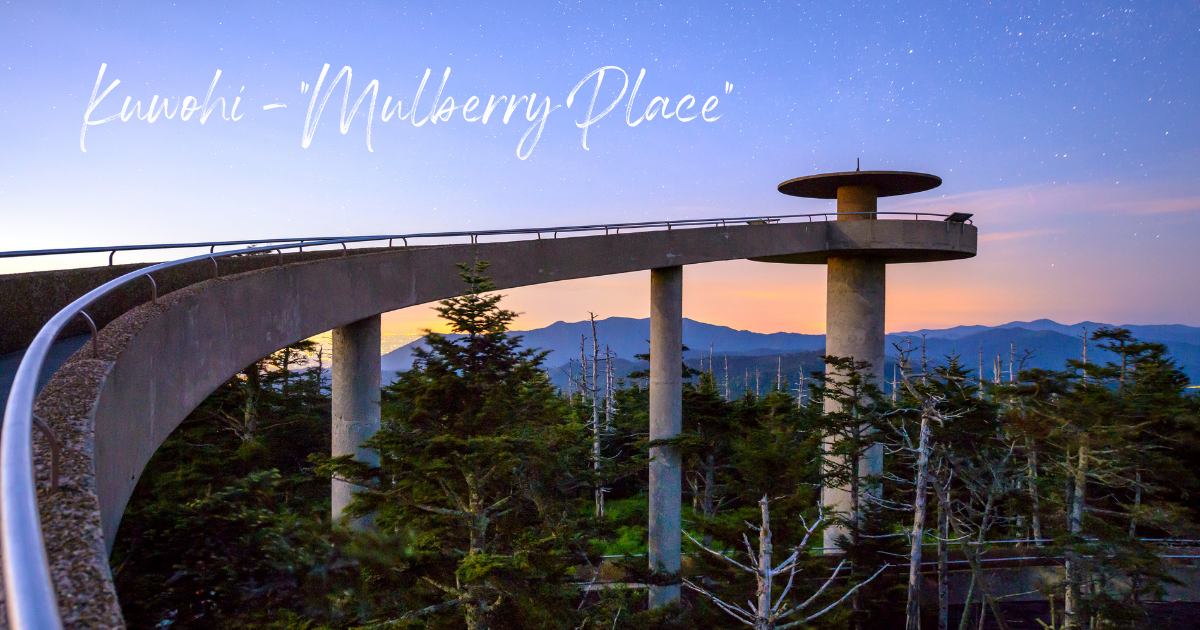
Key sites across the Smokies also bear their imprint. At Newfound Gap, crews landscaped the overlook, created parking areas and erected the Rockefeller Memorial. Near Kuwohi (formerly Clingmans Dome), they carved a trail to the summit and, in 1938, raised a 40-foot wooden observation tower. In Sugarlands, they laid the foundation for the park’s headquarters complex.3
The CCC also supported park management, stringing telephone lines, maintaining fire breaks and building nine fire towers with lookout cabins. At Kephart Prong, they constructed a fish hatchery that stocked mountain streams with trout.
In Cades Cove, crews turned their attention to cultural preservation. Between 1935 and 1937, they restored the Cable Mill and moved historic farm buildings to the site, creating the park’s first outdoor museum. They stabilized homesteads belonging to the John Oliver, Elijah Oliver, Henry Whitehead and Peter Cable families, ensuring some of the cove’s oldest structures survived.3
By the time the last camps closed in 1942, more than 4,000 men had passed through 22 Smokies camps.3 What Roosevelt dedicated in 1940 as a promise to the American people was, in large part, the hard work of the CCC.
The CCC’s work also included documenting the landscape. In 1933, a young enrollee named Lester Maynard Moe was assigned to photograph panoramic views from fire towers as part of a nationwide project to map and manage the new parks.
Moe later continued the effort with the National Park Service, producing nearly a hundred sweeping images of the Smokies. His photographs remain among its earliest enduring records.
Born and raised in Maryville, Tennessee, with roots tracing back to Cades Cove, Emily Huffstetler is a proud Maryville College graduate and passionate storyteller of the Greater Smokies region.
In the decades following the Civil War, Maryville was a town in transition. The war had left Downtown Maryville in ruins, and rebuilding came slowly. Brick and frame storefronts began to rise again, and on the city’s edges, new homes appeared. Among them was Indiana Avenue, where Quaker settlers from Indiana purchased land and built homes east of town.
By the 1880s and 1890s, Indiana Avenue had become the preferred address for Maryville’s professors and businessmen. Its hilltop setting beside Maryville College gave the neighborhood special distinction. Founded in 1819 and relocated from downtown after the war, the college drew faculty and administrators to settle nearby, establishing “College Hill.”
Victorian architecture became a defining feature of the street. The J.C. Barnes House (116 Indiana Avenue), with its corner tower and wide porch, remains Maryville’s only true towered Queen Anne. In recent decades, the house was painted pink, earning its neighborhood nickname as “the Pink House.” The house was painted grey in 2019.
The Hershey House (203 Indiana Ave.) shows a restrained Victorian style with weatherboard and shingles, while the E.E. Combs House (128 Indiana Ave.) stands out in brick with Romanesque touches—arched windows and roof dormers.
The turn of the century brought new influences. Colonial revival details—Doric and Tuscan columns, dentil molding and classical sidelights—were added to both new and existing homes. On Court Street, Samuel H. Dunn’s imposing Classical Revival residence featured paired Ionic columns. Several homes on Indiana Avenue were similarly updated with classically inspired porticos.
By 1905, Maryville’s population had grown to about 3,000. Residential development stretched along the ridgeline above Pistol Creek and continued eastward toward the college. The establishment of Alcoa (1914-1920) spurred even more growth.
The early 20th century brought dozens of Bungalows and Craftsman homes, many built from pattern books or even Sears, Roebuck & Co. Kits. These featured large porches, grouped windows, wide eaves with exposed brackets, and hipped or gabled roofs.
These homes belonged to many notable Maryvillians, including Robert Pflanze, President of the Cherokee Lumber Co. (321 Goddard Ave.); W.M. Caldwell, Director of the Bank of Maryville (138 Stanley Ave.); and W.F. Alien of the Maryville Electrical System (304 Indiana Ave.).1
Since the 1940s, very few houses have been built in the neighborhood, but a handful have been subdivided into boarding houses or apartments. In 1989, the Indiana Avenue Historic District (now known as the College Hill Historic District) was added to the National Register of Historic Places.
Interested in exploring Maryville’s living museum of historic homes? The College Hill Historic District invites visitors to its annual Fall Home Tour on October 11, from 3 to 5 p.m. Tickets are on sale now at www.collegehillhometour.com.
Born and raised in Maryville, Tennessee, with roots tracing back to Cades Cove, Emily Huffstetler is a proud Maryville College graduate and passionate storyteller of the Greater Smokies region.
A Peaceful Side wedding marries breathtaking mountain scenery with ease of access. Loved ones from afar can fly in at the McGhee Tyson airport, a quick drive from a multitude of incredible venues. Here’s a glimpse of our favorites.
A Blackberry Farm wedding unfolds on an enchanting 4,200-acre estate tucked into the foothills of the Smokies. Their wedding packages accommodate up to 140 overnight guests in a variety of luxurious rooms, cottages and private homes.
Indulge in farm-to-table dining, custom menu planning and exclusive access to upscale venues for your events. Leading up to the wedding ceremony, enjoy curated group activities, from clay shooting to guided hikes, along with a wealth of recreational options.
This luxurious 53-acre estate has been owned and operated by the Jopling family for over 30 years, promising exceptional service. Indoor ceremony sites include an upscale party barn, a spacious veranda or an airy tent, while the outdoors offers panoramic mountain views, a dazzling pond and a secluded garden. Any location is available for a private elopement.
Accommodation is available for you and your guests at the Country Manor Inn and Hayloft Sky Cabin, both fully equipped with modern amenities. Just kick back and relax while the experienced staff handles the planning—down to a horse-drawn carriage.
Photo courtesy of Dancing Bear Lodge & Appalachian Bistro.
Up to 200 guests
Experience the magic of a wedding in the Smokies at Dancing Bear Lodge & Appalachian Bistro. This award-winning venue offers exceptional cuisine and a variety of exciting pre-wedding adventures.
Whether you’re planning an intimate elopement or a grand celebration, their versatile spaces can be customized to suit your vision. Choose from an open-air pavilion, a grand event center, an outdoor lawn with a gazebo, a dining room with a seasonal fireplace or a cozy covered patio.
Willow Oaks is a hidden gem nestled among 150 acres of rolling countryside in the foothills of the Smoky Mountains. The venue’s post-and-beam Granary blends rustic charm with modern elegance, offering a warm and inviting indoor space for celebrations of all sizes.
Exchange vows lakeside with breathtaking mountain views as your backdrop, then enjoy an evening by the hand-forged kettle-style fire pit. A spacious covered veranda ensures a seamless event, rain or shine.
Photo Courtesy of Willow Ridge Special Event Center.
Up to 200 guests
Willow Ridge Special Event Center offers tranquility and dreamy mountain views. The venue features a bridal suite, grooms’ quarters and a lodge for family to lounge in. Tie the knot on the scenic ridge or beside the magical Willow Pond. Then, dine and dance the night away at the spacious manor, which features a large fireplace for cooler weather.
Wild Laurel Golf Course boasts private panoramic views of the Smokies. Their clubhouse and veranda are excellent spaces for your ceremony and reception. Make a splash at the pool, bust a move on the dance floor or cozy up by the fireplace—at Wild Laurel, there’s fun for all seasons.
Family-owned and operated, Smith Event Centers truly cares about your special day and offers a variety of indoor and outdoor venues. Their popular Smithview Pavilion is situated on four acres of picturesque green space, but still offers the conveniences of the indoors—climate-controlled suites, a kitchen and restrooms.
The historic Browns Creek Bridge, which formerly served as the gateway between the city of Maryville and Townsend, is the perfect spot for a romantic elopement. This moss-covered bridge offers a lush backdrop for your intimate moment (and great photos). With the additional ceremony package, you can invite up to 50 of your loved ones.
Concealed in a secluded forest on the historic Maryville College campus, just a few minutes’ drive from the regional airport, RT Lodge offers the perfect balance between serenity and accessibility.
From Friday through Sunday, the property is all yours—elegant dining rooms and common areas, outdoor leisure space and an array of ceremony and reception options. The professionals at RT Lodge guide you through the planning process, and the chef designs his menus based on the best the season has to offer.
This 5,000 square foot venue provides plenty of room for celebration, accommodating up to 350 guests. Originally built in the 1930’s, the space has a life of its own, featuring rustic brick walls and elegant vintage décor. Your guests will enjoy free parking and the quaint outdoor patio.
Located in the heart of Historic Downtown Maryville, this lively 7,000 square foot venue can accommodate up to 100 seated guests. It has a private room for intimate gatherings, a prep/catering kitchen, upscale restrooms and a newly refurbished elevator. A variety of additional amenities are available, including a contemporary bar and bar service, bridal lounge and more.
This venue, nestled in the heart of Townsend just minutes from Great Smoky Mountains National Park, offers an all-in-one mountain wedding escape. The two-level event lodge accommodates up to 240 guests, while up to 130 newly renovated rooms and suites keep everyone just steps from the celebration. With flexible indoor and outdoor spaces, trusted catering partners and resort-style amenities, it’s easy to turn your wedding day into a full Smoky Mountain getaway.
White Star Station, located in Historic Downtown Maryville, brings history to life. The building was erected in 1800 and housed Maryville’s first bus line in 1926, before becoming a magical place to say, “I do” in 2020. At 10,000 square feet, it’s one of the most spacious venues on the Peaceful Side, able to accommodate up to 350 guests and customizable to your desires. Their creative partners can help you design the finer details of your wedding, from entertainment to hair and makeup.
Start your married life on 263 acres of beautifully landscaped grounds, surrounded by charming historic buildings. Maryville College and the Clayton Center for the Arts, located on campus, have a variety of picture-perfect spots to choose from. If your wedding is planned for June or July, they even offer overnight housing and meals for your out-of-town guests.
This unique old Hollywood-style venue is an eight-time Wedding Wire Couples’ Choice Awards winner. Receive a stylish introduction when the red curtains reveal you and your sweetheart against a sparkling starry backdrop. The performance stage, 30-foot silver screen, dance floor, and state-of-the art sound and lighting will make the momentous occasion even more special.
Photo courtesy of the The Shed Smokehouse & Juke Joint.
Up to 100 guests
The Shed brings a fun, laid-back twist to your special day with live-music vibes, Southern barbecue and plenty of character. Host your celebration in the Smokin’ Monkey Lounge, ideal for up to 100 guests standing or 50 seated, or customize an outdoor pavilion package that fits your vision. With in-house catering, a dedicated bartender and flexible bar options, it’s easy to throw a memorable, music-filled wedding or rehearsal dinner right next to Smoky Mountain Harley-Davidson.
Nestled beneath J. Danforth Mercantile in Historic Downtown Maryville, The Landmark is an intimate brick-lined venue with a classic wood bar and fireplace, ideal for rehearsal dinners, showers and micro-weddings. With space for up to 130 guests and easy downtown parking, it’s a relaxed spot for low-key celebrations in the heart of Maryville.
Photo courtesy of The Barn Event Center of the Smokies.
Up to 200 guests
Located minutes from Great Smoky Mountains National Park and the Foothills Parkway, The Barn Event Center of the Smokies offers indoor and outdoor wedding spaces with award-winning gardens and a Cantilever Barn. The venue includes a great room with exposed beams and a vaulted ceiling, plus a built-in stage and dance floor. Onsite catering is available, along with AV equipment, lighting, banquet accommodations and a bridal suite for getting ready.
Are you planning a wedding on the Peaceful Side of the Smokies? We’d love to hear about it. Be sure to tag us on social media (@peacefulsmokies).
Born and raised in Maryville, Tennessee, with roots tracing back to Cades Cove, Emily Huffstetler is a proud Maryville College graduate and storyteller of the Greater Smokies region.
Recent Comments