
Bridges are more than just practical objects that connect one place to another. Sometimes they live in literature, like in the Bridges of Madison County, where they serve as a jumping-off point for romance. Bridges also create an aesthetic beauty all their own, through their architecture and the specific details about a single bridge that can impart a sense of place. Bridges throughout the Smokies offer unique opportunities for rest, reflection, and proximity to calming waters that make them well worth a visit.
Check Out the Swinging Bridges
On Old State Highway 73, you’ll find a piece of Eastern Tennessee history. The Dark Island Swinging Bridge was once one of about 20 swinging bridges over the Little River, when it was used by lumber company and railroad workers at the turn of the 20th century to connect the land used for mills and manufacturing with homes on the other side of the banks.
Nowadays you can stand on the bridge and watch people tubing down the river. Some days the water is clear enough that fish can be spotted, just by looking down from the bridge. The bridge is also a romantic destination, too – couples hang padlocks with their initials carved on them onto the bridge, and throw away the key into the rushing river, as a gesture of eternal fidelity.
There’s reportedly another swinging bridge in the area, but the location is a closely guarded secret. You’ll have to make connections with an “old timer” of the Smokies to find it!
Another Secret Bridge
Just like the famed lost city of Atlantis, the Abrams Creek Underwater Bridge near old US Highway 129, in Chilhowee Lake (no, not on Chilhowee Lake) only appears when the water level in the lake is quite low. You can find it when the dam undergoes scheduled maintenance, and possibly in times of extreme drought. Despite its constant soaking, when the bridge does appear it’s apparently quite safe and walkable.
Cades Cove Bridges
The bridges of the famously scenic Cades Cove live up to the area’s picturesque reputation. Both built in 1948, the Laurel Creek Bridge on Cades Cove Road and the Middle and West Prong Little River Bridges are moss-covered stone bridges open to traffic. The water level below each of them varies with the seasons, but they’re all generally calm, charming places to step away from the Cades Cove Loop Road, relax, and take in the ambience.
Grab Your Camera, The Bridges Will Wait
Next time you’re looking for a unique way to spend the day out and about, grab your camera, hunt down these bridges, and snag a few shots for posterity (or maybe just for social media!). Don’t be afraid to take a selfie, either – you’ve got a great backdrop!
Category: Blog
Unwrap Adventure: Giftable Experiences on the Peaceful Side
Written by: Emily Huffstetler
Sometimes, the best gifts don’t fit under the tree. They’re the memories you make with the people you love and the stories you’ll tell for years to come. Here are our favorite giftable experiences on the Peaceful Side.
For the Outdoor Adventurer: A Day Out with Smoky Mountain Guides
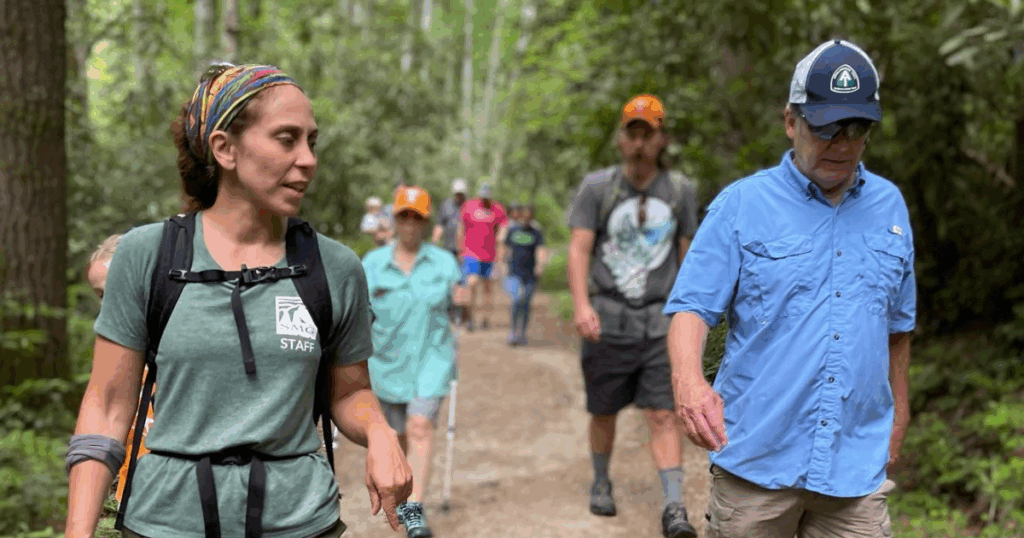
Smoky Mountain Guides offers guided day hikes for all levels, small-group tours, guided backpacking trips, flatwater kayak tours and guided fly fishing in some of the most scenic corners of the Smokies. Their expert guides handle the logistics, while sharing local history and ecology along the way.
Turn it into a gift: Book an adventure they’ll love and tuck the confirmation into a new pair of hiking socks.
For the History Buff: A Great Smoky Mountains Heritage Center Membership
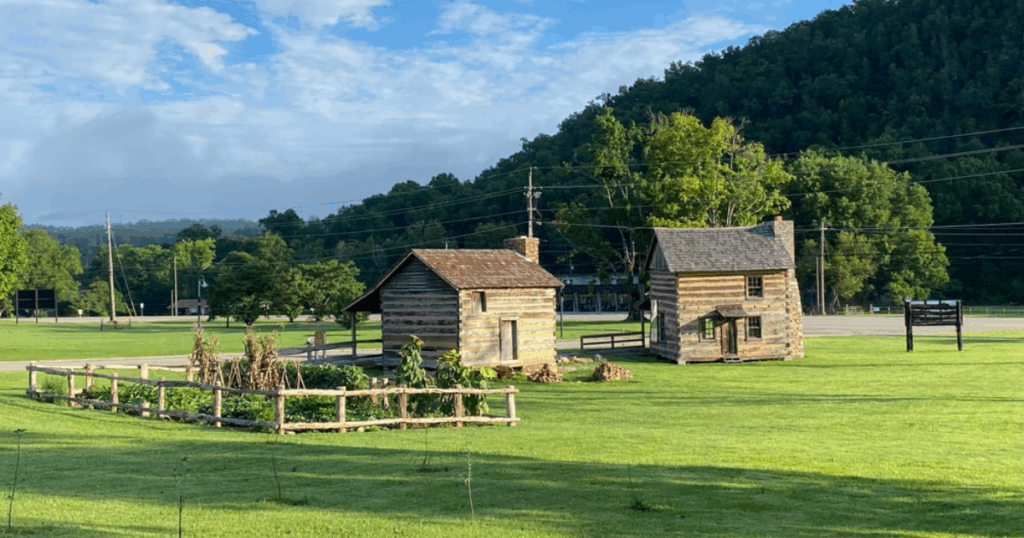
The Great Smoky Mountains Heritage Center is the perfect for anyone who loves local history and Appalachian culture. A membership unlocks unlimited museum admission, free entry to special events like Winter Heritage Fest, Kids Day and the Blue Ribbon Country Fair, plus select concerts, discounts and invitations to member-only happenings.
Turn it into a gift: Choose an Individual, Dual or Family membership and tuck the confirmation into a local history book.
For the Beauty Guru: A Facial at Brooke Nix Medical Aesthetics

Brooke Nix Medical Aesthetics in Maryville turns skincare into a relaxing treat. Guests can choose from a variety of facials and customize the experience with add-ons like a 20-minute face massage, hydration mask, eye and lip treatments, dry brushing, a scalp massage or a soothing hand treatment. It’s an excellent experience for that person who deserves a quiet hour to unwind.
Turn it into a gift: Pick up a gift card for a facial and include a note to choose their favorite add-on.
For the Athlete: A Friendly Match at Pickleville Tennessee

Pickleville Tennessee is East Tennessee’s new go-to spot for pickleball, with climate-controlled indoor courts, outdoor courts, a rooftop lounge and plenty of space to hang out between games. Whether they’re new to the sport or already a pro, it’s a great place to play a friendly match, join open play or take a lesson.
Turn it into a gift: Reserve a court for your crew and pair the confirmation with a new paddle.
For the Artist: A Class at Creative Spark Studio

Creative Spark Studio in Maryville is a DIY art studio where you can drop in for “Art Any Time” projects like string art, alcohol ink tiles, acrylic pours, rock painting, pottery painting and glass fusing, or sign up for a specialty class or workshop. It’s an all-skills-welcome space that makes it fun to try something new.
Turn it into a gift: Purchase a class or studio gift card and tuck it into a nice sketchbook.
For the Golfer: A Round at Wild Laurel Golf Course
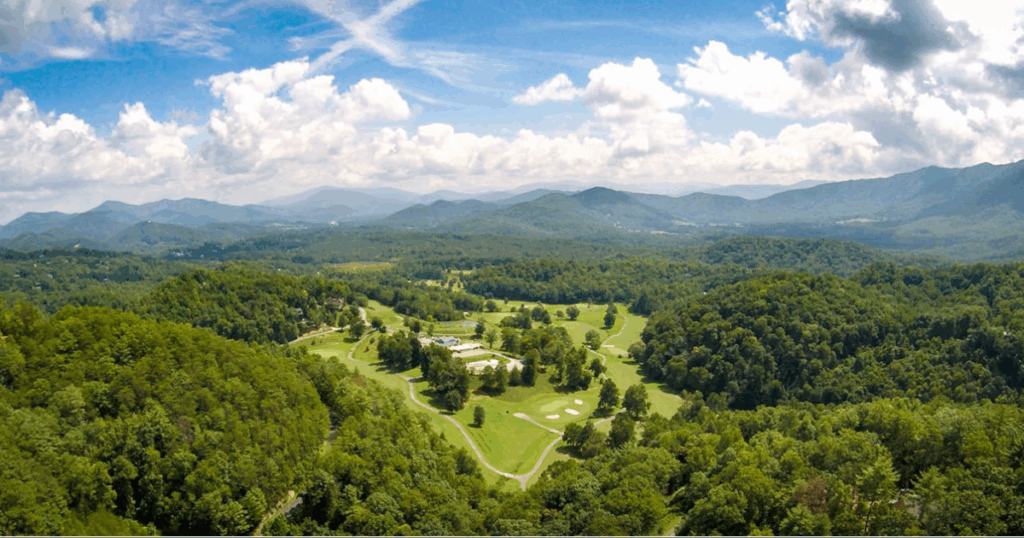
Wild Laurel Golf Course in Townsend is a public 18-hole course tucked into a quiet valley on the Peaceful Side. The course is Audubon International Certified and uses environmentally sound practices, from native wildflower habitat for pollinators to reduced irrigation and water-quality protection. They also have a spacious tavern to unwind after your round.
Turn it into a gift: Book a tee time for 9 or 18 holes and pair the confirmation with a new hat.
For the Glamper: A Stay at Little Arrow Outdoor Resort
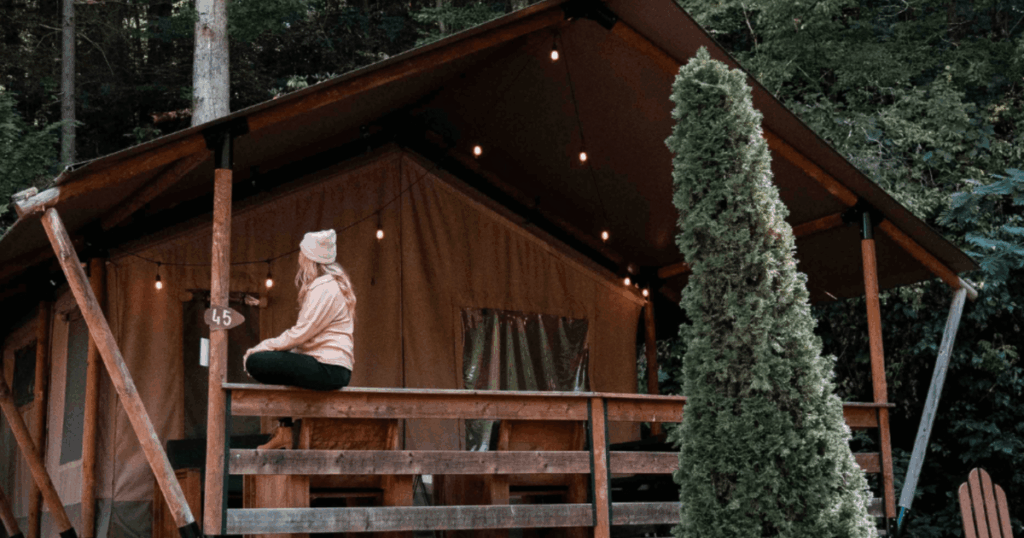
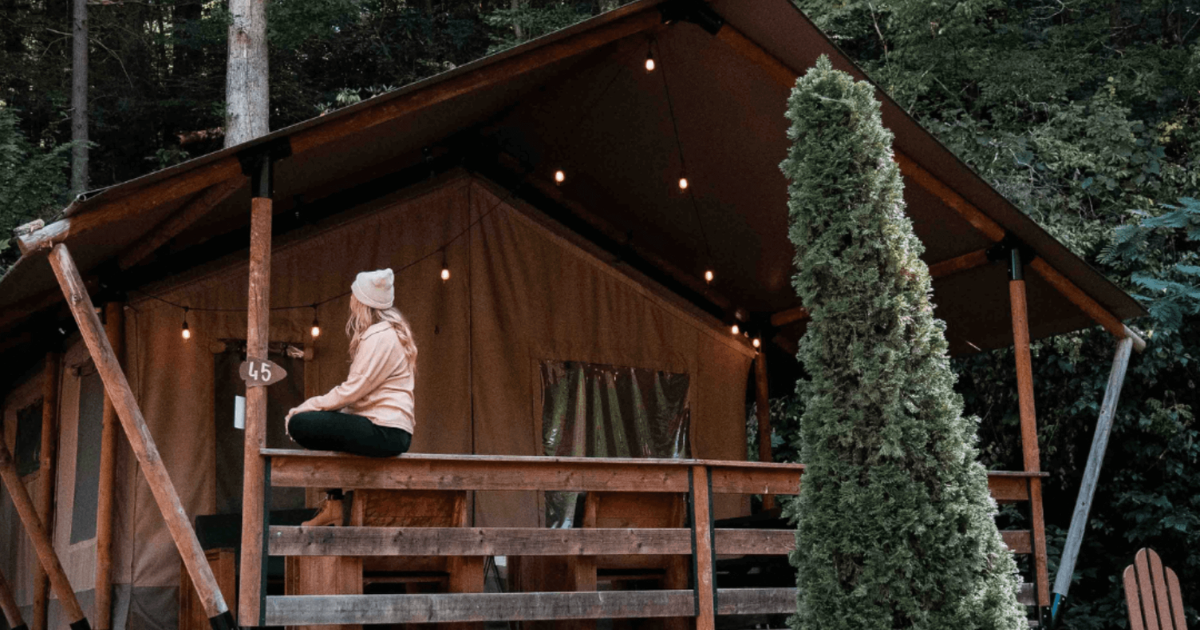
Little Arrow Outdoor Resort in Townsend blends Smoky Mountain scenery with cozy comforts. Guests can choose from cabins, glamping tents, tiny homes, Airstreams and RV sites, all with easy access to the river, pool and hot tub, clubhouse and community firepits.
Turn it into a gift: Book a weekend camping trip and tuck the confirmation into a campfire mug.
For the Foodie: Dinner at RT Lodge

RT Lodge in Maryville is a boutique lodge tucked into the Maryville College woods, and its on-site restaurant was recently recommended in the 2025 MICHELIN Guide to the American South. It serves a seasonal menu with Southern and Appalachian influences.
Turn it into a gift: Make a dinner reservation and tuck the confirmation into a card for a future evening.
Born and raised in Maryville, Tennessee, with roots tracing back to Cades Cove, Emily Huffstetler is a proud Maryville College graduate and passionate storyteller of the Greater Smokies region.
Vacationing on a Budget? Great Smoky Mountains National Park is Free to Enjoy
Did you think that it was only the “Free Entrance Days” in the United States National Park system that let you get into the 400+ parks and enjoy it all for free? This year, National Park Week is April 20 through April 28th, when you can get into all of the parks entirely for free. There are a few other dates, too and you can find them at the National Park Service website, here.
Yet, The Great Smoky Mountains National Park is an entirely unique entity because, as the NPS explains, “Entrance to Great Smoky Mountains National Park is free. The park is one of the few national parks where no entrance fees are charged.” Why? Well, it has to do with the stipulations that Tennessee insisted on when it transferred the land now known as the park to the federal government in the 1930s.
Back then, the state insisted that no toll or fee would be imposed on those who needed to travel the Newfound Gap Road, and so that is why everyone who wants to visit the park is welcome to do so entirely for free. There are some activities with fees attached (such as camping or hiring horses from the providers within the park), and donations are always welcome, but if you have almost no budget for a vacation, this gorgeous paradise is yours to enjoy for free!
What to Do in Great Smoky Mountains National Park
And what sorts of things can you do in the park? Firstly, you should know that people of all ages and capabilities can enjoy the park because it has some truly amazing roadways. If you have a car, motorcycle or even a bicycle, you’ll love planning journeys on the following roads:
- Roaring Fork Motor Trail – This is only six miles, is a loop road and promises amazing views of the mountains, the valleys and two stunning waterfalls. Pack a picnic and plan some hiking because the trails here are also remarkable and let you see the remains of old villages, a cemetery and more.
- Newfound Gap Road – Be sure you drive the road that lets you get in for free! With an amazing number of notches and scenic vistas, it is worth a full day of your time. Stop and explore different points along the 31-mile stretch that takes you from Gatlinburg to the Sugarlands Visitor Center. Be sure to bring your camera!
- Cades Cove – Described as one of the most famous spots in the park, it is surprisingly peaceful and often isolated. It is a gorgeous valley that was once a large settlement, and though you can drive it, you may want to give yourself the delights of a full day of exploration on foot. There are old churches, a grist mill, scores of cabins dating back to the 1700s and 1800s, and all kinds of wildlife to see. It is a loop road and is a real favorite of those who enjoy bicycling (you can rent a bike here, too!) Don’t miss the visitor center.
You can also enjoy a hike to Clingmans Dome, or hike different trails to waterfalls like Grotto Falls, Abrams Falls and Laurel Falls. If you are in good shape and experienced in hiking, a day trip up to Chimney Tops is also an amazing, free activity to enjoy!
Forget the “staycation” when you can head to the Great Smoky Mountains National Park and enjoy days of free activities set in one of the most beautiful spots in the country.
Valentine’s Day Dinner in the Smoky Mountains

A perfect Valentine’s Day date requires forethought and planning. Show your love with a unique Appalachian dining experience. Book a reservation at one of these celebrated restaurants, nestled in the foothills of the Smoky Mountains. Everyone has a different definition of romance, so we found a variety of dining experiences that embrace the distinctive local flair of the Smokies.

Walnut Kitchen
If your date appreciates exquisite cuisine in a more casual setting, this Maryville restaurant is your ideal date night location. It offers culinary artistry with hometown comfort. Their seasonal menu utilizes local produce and an unsurpassed Tennessee dry-aged beef selection. Experience an unmatched farm-to-table experience with a hand-crafted cocktail while toasting to your partner’s continued happiness.

The Barn at Blackberry Farms
Impress your date by reserving a table at this James Beard award-winning Walland restaurant. The multi-course menu uses Applachian ingredients, harvested both regionally and directly from the farm itself. Choose a bottle from one of the 9000 different wine selections in their wine program. Or complete your meal with one of the 300 whiskeys and brandies they have in stock. This fine-dining adventure will undoubtedly spark a little romance into your Valentine’s Day.

Valentine’s Plans on the Peaceful Side

Written by: Emily Huffstetler
Love is in the air! Valentine’s on the Peaceful Side is for couples, families and friends alike. From pop-ups and brunches in Maryville to prix-fixe dinners and overnight getaways in Townsend and Walland, here are the local events and specials happening February 6 through 15.
February 6–7 – Love Local Market

Two full days of Valentine’s shopping inside Foothills Mall in Maryville. Vendors include permanent jewelry, charm bars, boutiques, handmade items, baked goods, a T-shirt bar and a hat bar.
The market runs from 10 a.m. to 8 p.m.
February 7 – Sweetheart Saturday Brunch at Lambert’s

Lambert’s Southern Pies & Bake Shop hosts a ticketed brunch buffet in the event room in Maryville. The menu includes pimiento cheese and bacon biscuit sliders, breakfast bacon and sausage, heart-shaped pastries, Danish, mini cheesecake bites, sliced pies, fresh fruit, biscuits with honey butter, and sausage gravy. Coffee, tea and juice are included.
Doors open at 10:30 a.m. Brunch runs from 11 a.m. to 1 p.m. Seating is limited to 40. Tickets are available for purchase in person or by phone.
February 7 – Moms and Minis Valentine’s Brunch at Bella

Bella hosts a Valentine-themed pop-up in Downtown Maryville with finger foods, mimosas, photo-ops and a live author read-aloud. Local children’s author Leslie Jordan Henry reads The Adventures of Crazy Heels. Tickets include Mom and her mini, with a personally signed copy of the book.
Brunch runs from 11 a.m. to 1 p.m.
February 7 – Valentine’s Day Pop-Up at Appalachian Apothecary + Sundries

Appalachian Apothecary + Sundries hosts a Valentine’s pop-up at 536 E Broadway in Maryville with multiple local vendors, including DaintyLinks Permanent Jewelry, Sourdough & Sundry, Foothills Nutrition, 2 Girls and a Cricket and Ruthie & Rebel Boutique.
The pop-up runs from 10 a.m. to 2 p.m.
February 10-15 – Valentine’s Week at Dancing Bear

Dancing Bear Appalachian Bistro in Townsend runs Valentine’s Week from Feb. 10 to 15, with curated “options for two” offered alongside the regular a la carte menu.
On Saturday, Feb. 14, the Bistro serves a prix-fixe menu for two from 5 to 9 p.m. Reservations are required.
February 12–15 – RT Lodge Valentine’s Dinner + Overnight Getaway

RT Lodge’s Valentine’s Getaway Package runs Feb. 13 to 15 and includes a one-night stay, a 4-course dinner for two and breakfast. The Restaurant also hosts a ticketed Valentine’s dinner on Thursday, Feb. 12 from 5 to 9 p.m.
February 13–14 – Valentine’s Day Getaway at Hilton Knoxville Airport
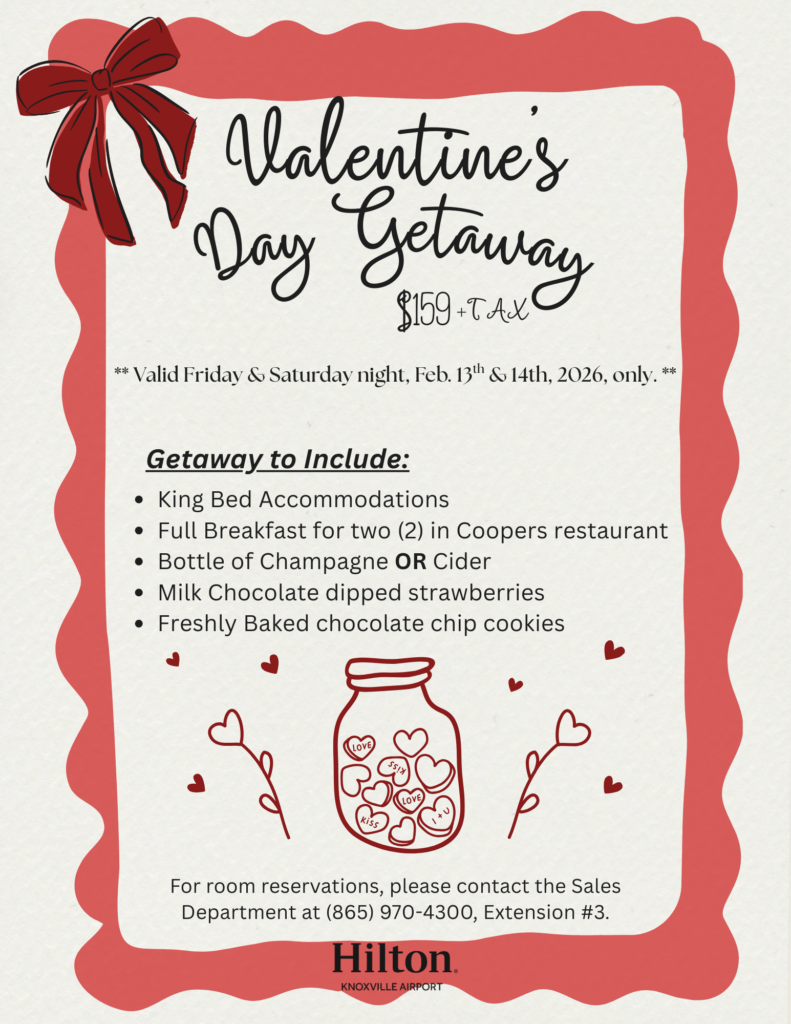
Hilton Knoxville Airport offers a Valentine’s Day Getaway package, available Friday and Saturday night only. The package includes king bed accommodations, a full breakfast for two at Coopers restaurant, a bottle of champagne or cider, milk chocolate-dipped strawberries and freshly baked chocolate chip cookies. For room reservations, contact the Sales Department at (865) 970-4300, extension 3.
February 13 – Show Yourself Some Love at Robin’s Nest Services

Robin’s Nest Services hosts “Show Yourself Some Love” in Maryville with snacks, drinks, massage, stretching, expressive painting, love language discovery and a discussion on self-love. Reservations are required by phone.
The event runs from 4 to 6 p.m.
February 13 – Galentine’s Night at REO Cheesewagon

REO Cheesewagon Cafe in Maryville hosts Galentine’s Night with a grazing table, mocktails, make-and-take gifts, chick flicks and group karaoke.
The event runs from 6 to 8:30 p.m.
February 13 – Sweet Things & Good Company: A Valentine’s Bake Night
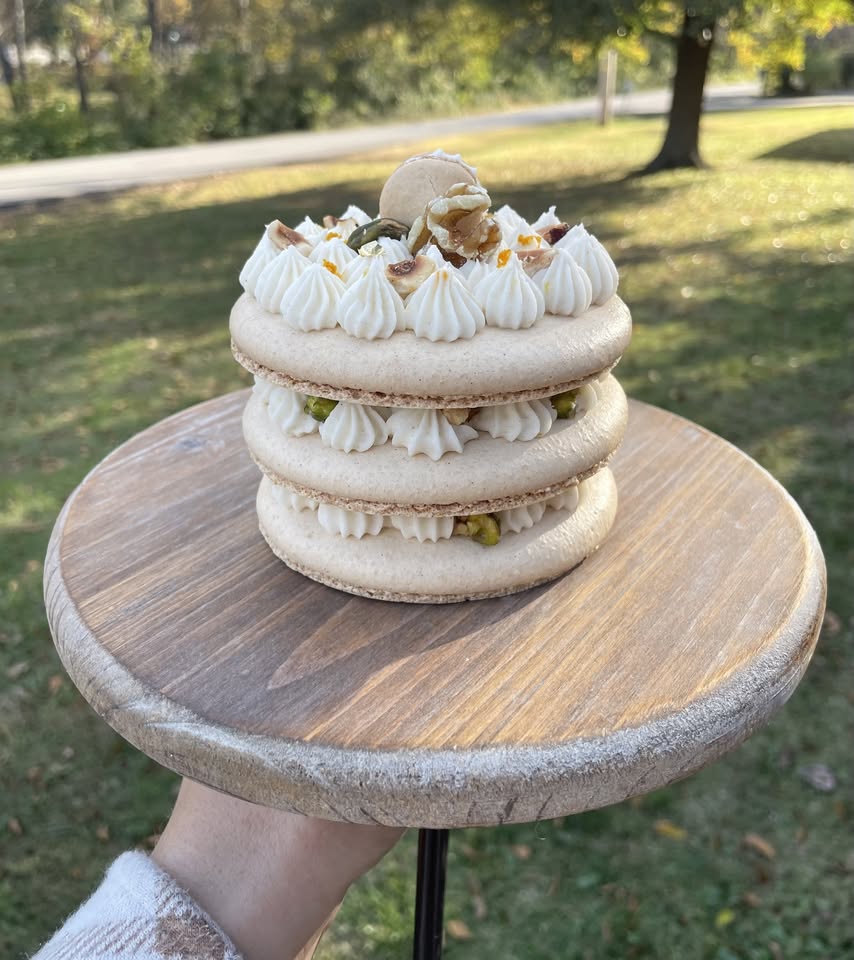
Maryville College Downtown Center hosts a hands-on Valentine’s macaron bake night. Guests work in pairs, learn the fundamentals of macaron making and assemble a festive 4-inch macaron stack cake to take home. Each person receives a charcuterie cup from The Local Board and a sugar cookie from The Wildflour Bakery. Water and lemonade are provided, with beer available for purchase.
The event runs from 7 to 9 p.m.
February 13 – Pal-entine’s Day at Daisy’s NA Bar

Daisy’s NA Bar & Bottle Shop hosts Pal-entine’s Day with BOGO deals on select drinks.
The event runs from 5 to 10 p.m.
February 14 – Valentine’s Day at the Townsend Abbey

The Townsend Abbey celebrates Valentine’s Day from 11 a.m. to 9 p.m., with live music in the evening. Randy Goodman performs from 6:30 to 9 p.m.
February 14 – LOH Valentine’s Day Ride

LOH hosts a Valentine’s Day ride starting at the Smoky Mountain Harley-Davidson in Maryville. Riders meet at 10:30 a.m., heading to the Social on Depot Hill in Athens, with a stop at Love’s Gas.
The ride runs from 10:30 a.m. to 2 p.m.
February 14 – Valentine’s “Date” Day at Raised Valley Ranch

Raised Valley Ranch hosts a Valentine’s “Date” Day with horse activities and charcuterie. Friends and family are welcome.
The event runs from 12:30 to 2:20 p.m. Space is limited.
February 14 – Blacksmithing Basics with Bryan: Heart
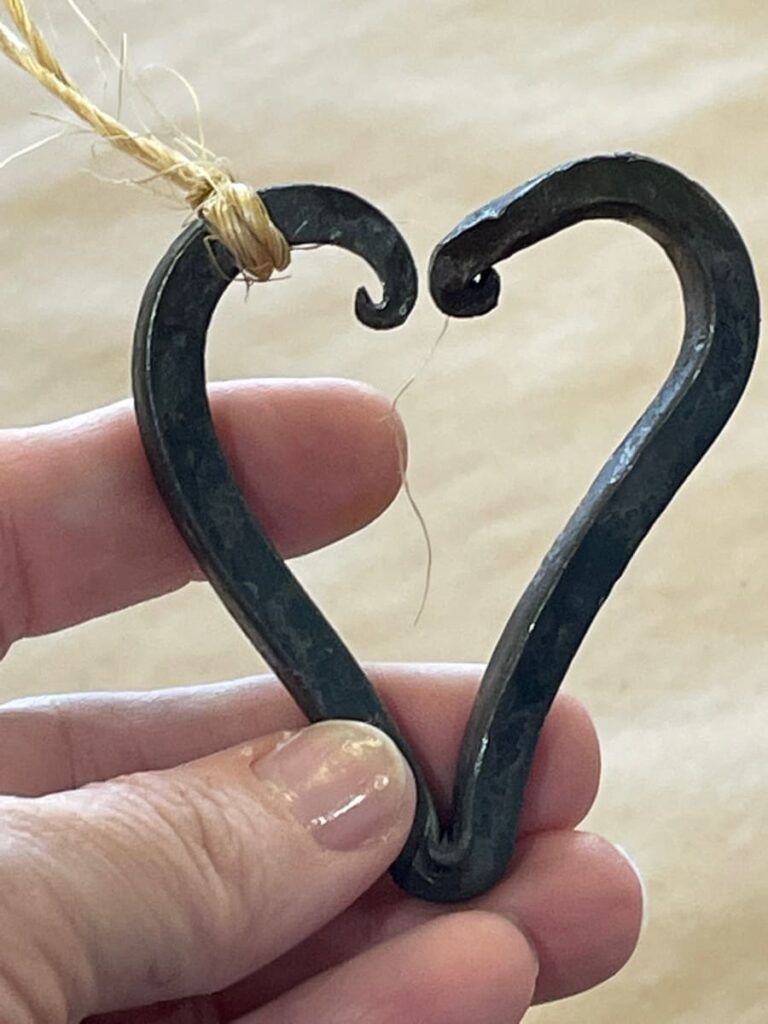
Creative Spark Studio hosts Blacksmithing Basics with Bryan, a beginner class focused on creating a metal heart. Participants learn techniques like heating, hammering and bending metal to create a heart that can work as a pendant, keychain or ornament. The class lasts 1.5 to 2 hours, and materials are included.
Session options run from 1 to 3 p.m. or 3 to 5 p.m. Close-toed shoes are required. The workshop is intended for ages 18+ (16 with a guardian).
February 14 – Valentine’s Day Craft at Little Arrow (Guests Only)

Little Arrow Outdoor Resort hosts a Valentine’s craft at the Lookout Pavilion for guests only. Supplies are first come, first served. Adult supervision is required for children.
The craft starts at 1 p.m.
February 14 – 80’s Valentine’s Dance Night at the Barn

The Barn Event Center of the Smokies hosts an 80’s Valentine’s Dance Night with 80’s dance music, a photo booth, BBQ pork and chicken and Valentine’s desserts. The event is BYOB. Proceeds benefit the Great Smoky Mountains Heritage Center.
The dance runs from 6 to 10 p.m. RSVP by Feb. 11.
February 14 – Valentine’s Day at Blackberry Farm (Guests Only)

Blackberry Farm in Walland offers multiple Valentine’s activities and dining options. The schedule lists a birding walk departing from Oak Cottage, a red wine and chocolate tasting at The Barn and a romantic dinner.
Reservations are required.
February 14 – Meet Your Soul Mutt at Tri-Hop Brewery

Tri-Hop Brewery hosts “Meet Your Soul Mutt” in collaboration with Small Breed Rescue of East Tennessee.
The event runs from 2 to 4 p.m.
February 15 – Galentine’s Spa Party at Skins by Julie

Skins by Julie in Maryville hosts a Galentine’s Spa Party with pop-up shops, goody bags, discounts and a giveaway.
The event starts at 1 p.m.
Born and raised in Maryville, Tennessee, with roots tracing back to Cades Cove, Emily Huffstetler is a proud Maryville College graduate and storyteller of the Greater Smokies region.
Vee Hollow Mountain Bike Trails

Vee Hollow Mountain Bike Trails has become a valued addition to the Peaceful Side of the Smokies. This mountain biking trail offers adventure for riders at every stage of learning and gives bikers the chance to immerse themselves in nature as they pedal through the Smoky Mountains. Trails are open 365 days of the year, weather and maintenance permitting, from sunrise to sundown.
How Do We Get To Vee Hollow?
Located in Townsend, TN, visitors can access Vee Hollow on the east end of town near the Great Smoky Mountain National Park entrance. Parking is in the gravel lots next to Burget Master at 8439 State Hwy 73. Cross the pedestrian bridge, exclusively built for bikers and hikers, over the Little River to access the Trails. Because Vee Hollow built the park to be a pedal park, no shuttles are available.
Drive Times within the Region
Knoxville – 45 minutes
Gatlinburg – 45 minutes
Asheville – 2 hours and 20 minutes
Atlanta – 4 hours
Nashville – 3 hours and 15 minutes
What does Vee Hollow offer?
14 miles of biking trails, varying from short rides and sessions or all-day rides on the multiple paths covering the West and East Mountains. Experience hand-cut singletrack ventures and long enduro-style descents to a range of flow-based trails that allow for maximum progression.

How much experience is needed?
The trails and forest playground offer experiences from the very advanced to those who have never ridden trails before. Vee Hollow consists of four riding zones: Skills Area, Demo Flow Trails, Jump Trails, and Mountain Trails (West and East Mountains). Each course is rated: Green for Beginners, Blue for Intermediate, Black for Advanced, and Double Black for Experts.
For another Vee Hollow Trail Overview and Ranking, check out this link at TRAILFORKS.com.
For more posts about activities in the Peaceful Side, see below:
Smoky Mountain Fly Fishing
Waterfalls in The Great Smoky Mountains
Vegetarian-Friendly Restaurants on the Peaceful Side

Written by: Emily Huffstetler
Scouting out vegetarian options in the American South can feel like an Olympic sport. Even a simple bowl of grits might hide sausage, and house salads often come topped with bacon by default. When you’re on a family vacation, the last thing you want is to be that person holding up dinner plans. So we’ve done the legwork for you. Here are our favorite spots for vegetarian-friendly dining on the Peaceful Side.
Best Fine Dining: Foothills Milling Co.
This is hands down the most vegetarian-friendly fine dining option on the Peaceful Side. Foothills Milling Co. offers a dedicated vegetarian menu, with creative, elevated dishes that don’t treat vegetables as an afterthought.
Vegetarian Entrées Include:
- Tempura Fried Vegetables (Vegan): Tempura-fried asparagus, green beans and sesame-roasted mushrooms over scallion jasmine rice, with sweet Thai chili sauce and baby green beans.
- Orechiette Mushroom: Orecchiette pasta tossed with basil pesto, wild mushrooms and roasted tomatoes, topped with shaved parmesan.
- Pasta Primavera (Vegan): Broccolini, baby portabellas, sun-dried tomatoes, heirloom carrots and asparagus in a tomato basil sauce with orecchiette pasta.
612 Sevierville Rd, Maryville, TN 37804
Best Budget Bite: Southland Books & Café
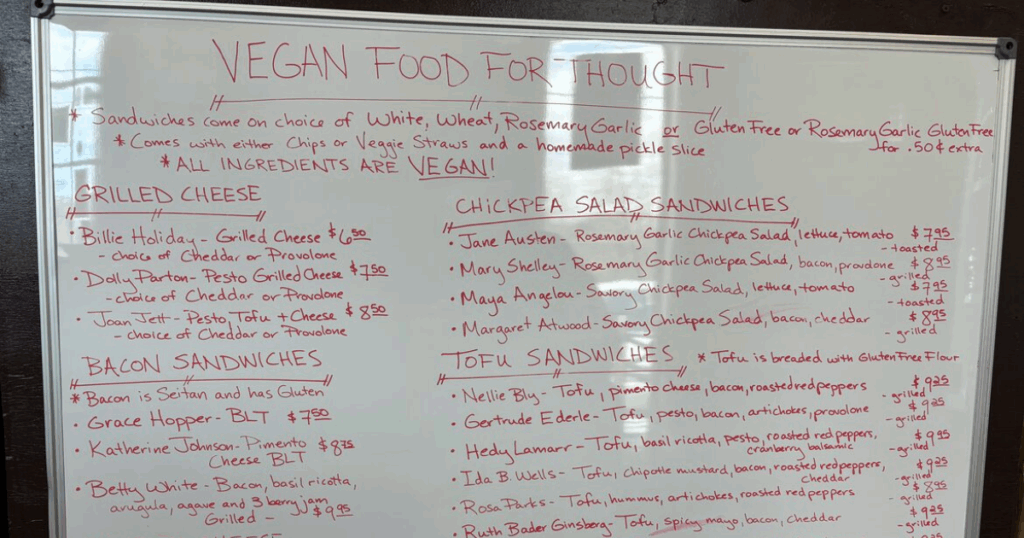
More than just a bookstore and community hub, Southland Café has one of the most expansive vegetarian menus in town—at prices that make you feel like you’ve time-traveled to 2010.
Highlights Include:
- Davinci: Pimiento cheese sandwich with lettuce and tomato on toasted bread
- Dalai Lama: Hummus, black olives, cucumber, tomato, lettuce and feta in a wrap
- Isaac Newton: Hummus, black beans, mushrooms, bell pepper and lettuce in a wrap
- Thomas Edison: Pimiento cheese, cucumber, Swiss, tomato and lettuce in a wrap
Chickpea salad sandwiches, tofu sandwiches, vegan BLTs and classic egg sandwiches round out a menu full of comforting options.
1505 E Broadway Ave, Maryville, TN 37804
More Great Vegetarian-Friendly Stops
A modern space with a dedicated dietary restrictions menu.
- Power Bowl: Quinoa, arugula, tomatoes, cucumbers, radishes, half an avocado, lemon vinaigrette
- Peaceful Garden Salad
- Truffle Fries: Tossed in truffle oil and parmesan (note: made in shared fryer)
7967 E Lamar Alexander Pkwy, Townsend, TN 37882

Upscale Italian spot with lots of veg options (menu changes by time of day).
- Beet Salad: Mixed greens, poached pear, roasted red beets, candied almonds, citrus vinaigrette
- Mushroom Rigatoni, Penne al Pomodoro, Fettuccine Alfredo and Crispy Ricotta Ravioli
- Brunch standouts: Lemon Mascarpone Pancakes, Caprese Frittata
121 West Broadway Avenue, Maryville, TN 37801
Maryville Corner Market & Cafe
A cozy café known for its creative, locally-sourced dishes.
- Veggie Wrap: Seasonal vegetables sautéed and topped with feta and spinach
- Pimento Cheese Scoop Salad: Served over greens with fruit and veggies
- Whipped Ricotta with Lime Thyme Honey: Served with organic veggies
800 Montvale Rd, Maryville, TN Maryville, TN 37803
Casual spot with several veggie-friendly pub fare options.
- Field Burger: Plant-based patty on a multigrain bun
- Spinach Parmesan Flatbread
- Appetizers: Black Bean Hummus, Crispy Brussels and more
441 N Hall Rd, Alcoa, TN 37701

Quick, customizable and surprisingly vegetarian-friendly.
Vegetarian Chili: Beans, rice, cheese, chips and toppings
1427 W Lamar Alexander Pkwy, Maryville, TN 37801
Great for breakfast or lunch with a side of local charm.
- Crustless Quiche: Spinach, tomato, feta
- Egg & Cheese Biscuit
- Hummus and Veggie Wrap
- Grilled Cheese
212 College St, Maryville, TN 37804

Local Asian fast food with classic vegetarian entrées.
Pad Thai, Drunken Noodles and Vegetable Hibachi
2025 Bridgeway Dr, Maryville, TN 37801

Pizzeria with standout vegetarian pies.
Margherita Special, Grande White and The Dillenger (topped with dill pickles and ranch drizzle)
549 Foothills Plz, Maryville, TN 37801
A reliable choice with hearty vegetarian mains and sides.
Veggie Philly, Plant-Based Burger, Stuffed Shells, Veggie Pizza or Calzone
743 Watkins Rd, Maryville, TN 37801
Old-school sub shop with a solid salad bar.
Veggie Sandwich, All-You-Can-Eat Soup & Salad Bar
248 S Calderwood St, Alcoa, TN 37701
Offers at least one vegetarian soup daily, like Tomato Rice and Hearty Vegetable
245 S Calderwood St, Alcoa, TN 37701
Comfort food with nostalgic flair.
- Caprese, Pimiento Cheese and other grilled sandwiches
- Sides include Mac & Cheese and Cheese Curds
429 W Broadway Ave, Maryville, TN, 37801
Asian cuisine with dedicated vegan dishes.
- Vegan Mix Veg in Brown Sauce
- Vegan Eggplant with Basil
- Broccoli & Mushroom with Tofu
- Vegan Fried Rice
912 W Lamar Alexander Pkwy, Maryville, TN 37801
____________________________________________________________________________________________________________________________________
Born and raised in Maryville, Tennessee, with roots tracing back to Cades Cove, Emily Huffstetler is a proud Maryville College graduate and passionate storyteller of the Greater Smokies region.
Visit Blount County’s Two Civil War Trails Stops
Written by: Emily Huffstetler
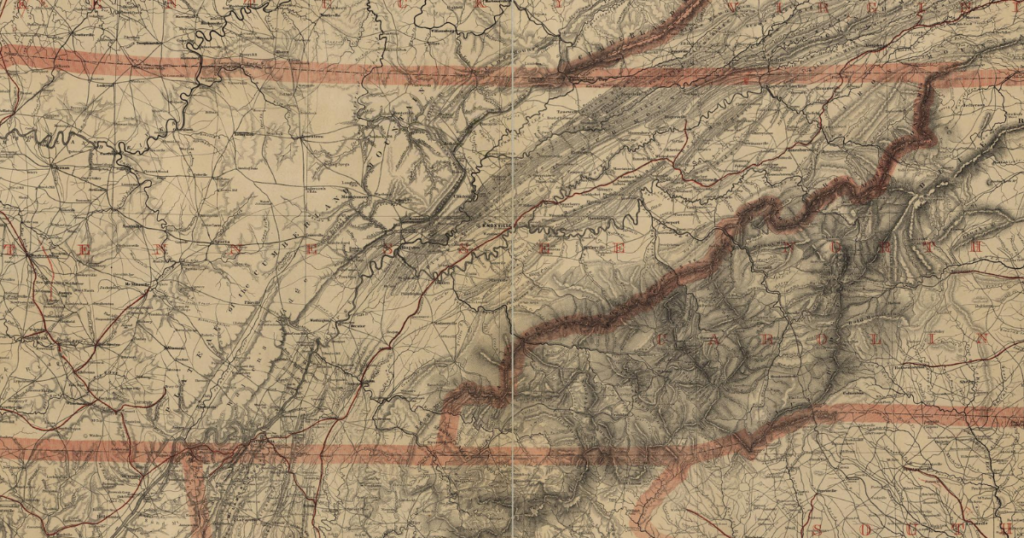
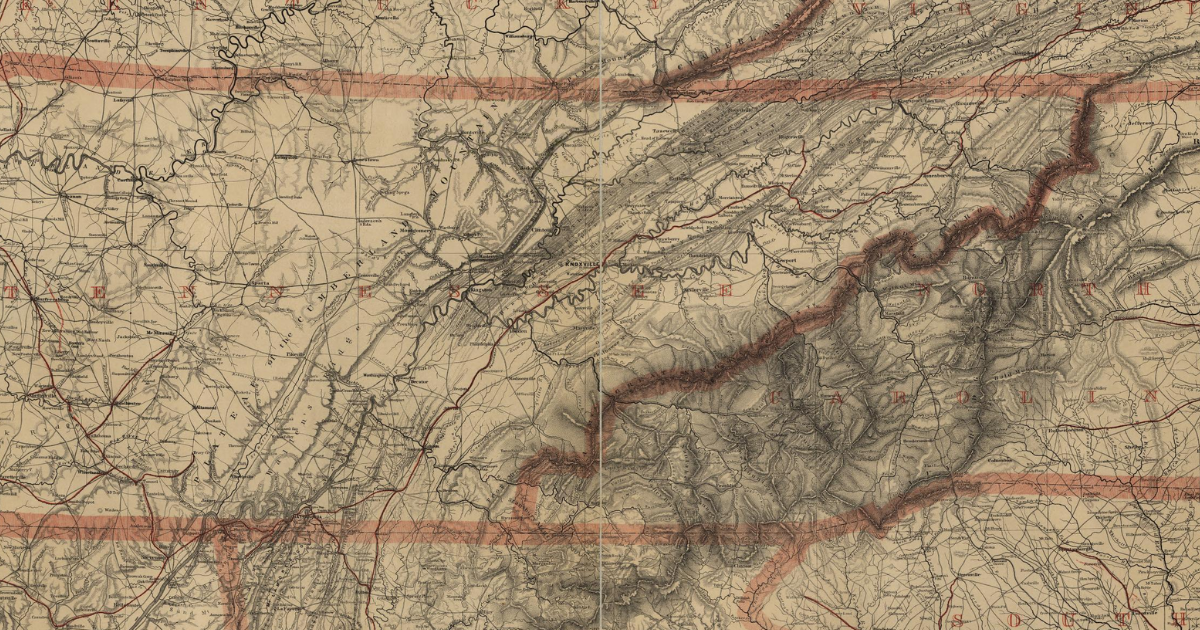
Two Tennessee Civil War Trails markers stand about 10 miles apart in Blount County.1 One tells of a hidden cave used to shelter people seeking freedom and safety. The other marks a Confederate attack that sent fire through downtown Maryville.
Together, the stops reflect the strong Union loyalty that put Blount County, like much of East Tennessee, at odds with the statewide vote.2 Although Tennessee voted to leave the Union in 1861, the Maryville marker records Blount County’s vote as 1,766 against secession and 414 in favor.1
Civil War Trails connects more than 1,500 sites across six states. Rather than focusing only on major battlefields, the program places markers in the communities where the war unfolded. Its maps help visitors follow those stories from one stop to the next.3
The Underground Railroad in Friendsville
“The Underground Railroad” marker stands outside the Friendsville Friends Meeting at 503 W. Hill Ave. Quakers began settling near present-day Friendsville in the 1790s. During the Civil War, members of the meeting helped enslaved people seek freedom, guided Union supporters and conscientious objectors north and raised money for escape efforts.1,4
The marker names William J. Hackney, who began using a nearby cave after the Confederate Conscription Act passed in 1862.4 In his 1895 book, Southern Heroes; or, The Friends in War Time, Fernando G. Cartland described Hackney as a leading member of the Friendsville meeting who opposed secession and conscription. The cave sheltered men avoiding Confederate service and others who opposed the Confederacy.5
Beside a lightly traveled road, boulders, brush and fallen branches concealed an entrance barely large enough to crawl through. Beyond it, the cave opened into a chamber that could hold about 50 people. Hackney brought in bedding and provisions, while his wife prepared food for those hiding inside.5
When conditions allowed, Hackney guided groups west at night to another Underground Railroad station. He then returned home to prepare for new arrivals. The 1895 account credits him with helping more than 2,000 people, though the figure was published about 30 years after the war.5
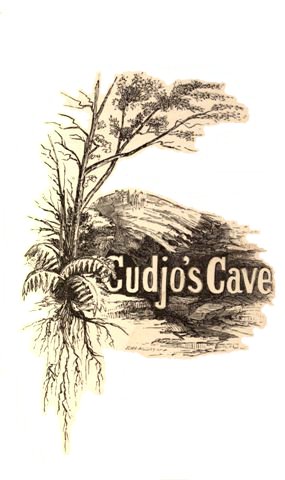
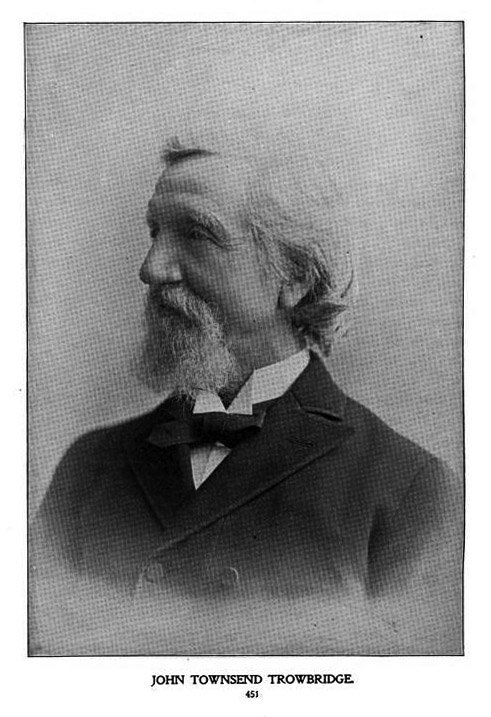
After the war, the Friendsville cave became associated with John Townsend Trowbridge’s antislavery novel Cudjo’s Cave. Set in a fictional East Tennessee community, the book follows Union supporters and two men who escaped slavery as they hide from Confederate forces. Trowbridge wrote the novel before visiting East Tennessee, and the association developed later through local tradition.6,7
The cave lies across the creek from the meetinghouse but is not publicly accessible.7
Maryville During the Civil War
“Maryville During the Civil War” marker stands in Bicentennial Greenbelt Park near downtown Maryville.8 The marker begins with Blount County’s antislavery history. Residents organized an abolitionist society in 1822, and local ministers continued speaking against slavery before the war.1
In August 1864, a small detachment of the 2nd Tennessee Infantry (U.S.) under Lt. James M. Dorton was stationed at the Blount County Courthouse. Confederate cavalry under Gen. Joseph Wheeler entered Maryville and attacked the Union position at the courthouse.1
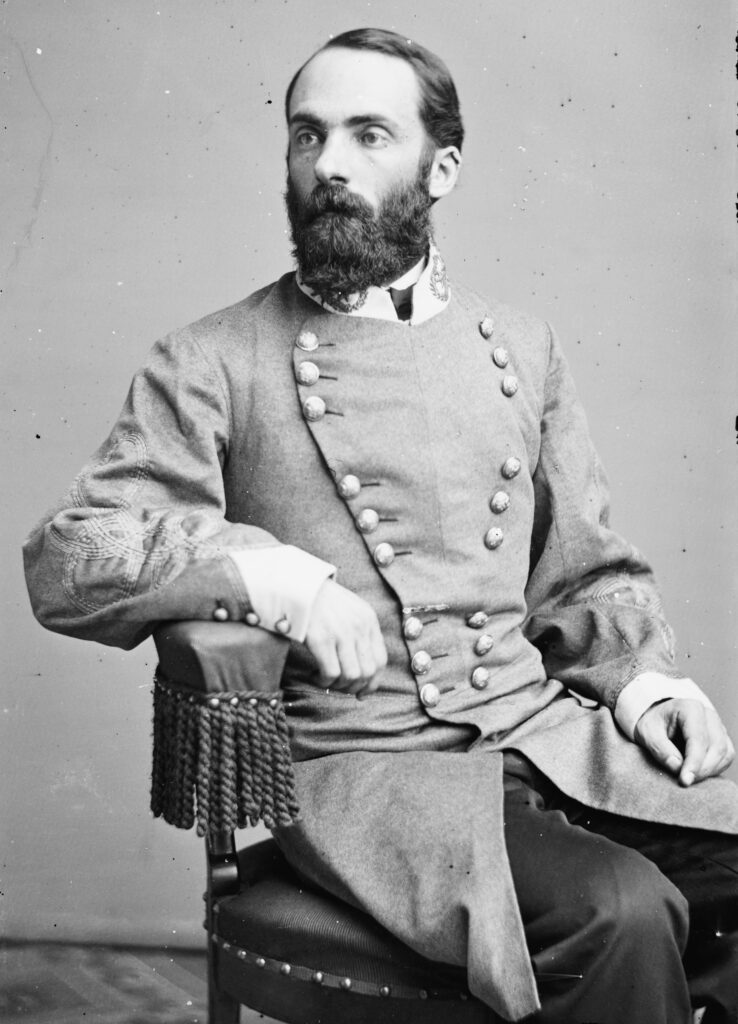
When Dorton refused to surrender, Confederate troops set nearby buildings on fire to force the soldiers out. The courthouse survived but sustained structural damage, while flames destroyed many surrounding buildings.8,9,10 The Union detachment eventually surrendered.8 By the end of the attack, flames had destroyed about half of Main Street, now Broadway.10
The Maryville stop also tells the story of Polly Toole, a formerly enslaved woman who saved Blount County’s public records from the fire. County Clerk Washington L. Dearing had moved the records from the occupied courthouse to James Toole’s store across Main Street. As the fire reached the store, Polly Toole carried the records to safety.8
Visitors can find the marker along the greenway in Bicentennial Greenbelt Park.8 The Civil War-era courthouse stood at Cusick and Main streets, where Broadway runs today.10
Visit CivilWarTrails.org to explore the full network and plan a route to Blount County’s two stops.
Born and raised in Maryville, Tennessee, with roots tracing back to Cades Cove, Emily Huffstetler is a proud Maryville College graduate and storyteller of the Greater Smokies region. She holds a Master of Science in Conservation Education from Mississippi State University.
________________________________________________________________________________________________________
1 Tennessee Civil War Trails Program — Installation Sites and Descriptions
2 Tennessee Encyclopedia — Civil War
3 Civil War Trails — 1500+ Civil War Stories to Discover
4 “The Underground Railroad” Marker — Photograph and Transcription
5 Fernando G. Cartland — Southern Heroes; or, The Friends in War Time
6 John Townsend Trowbridge — Cudjo’s Cave
7 American Battlefield Trust — Cudjo’s Cave
8 “Maryville During the Civil War” Marker — Photograph and Transcription
9 City of Maryville — History of the City of Maryville
10 Tennessee Department of Tourist Development — Maryville College
Visit Blount County's Farmers Markets and Experience the Flavors of the Region
Farmer’s markets are enjoying a resurgence, and there are very few communities in which at least one farmer’s market is not operating regularly. This allows farmers to access a much broader market and find buyers for an increasing amount of produce or food, but it is also even more beneficial to shoppers. After all, once you taste a locally-grown, vine fresh tomato or savor the potent flavors of fresh herbs, you may begin to change the way you look at your diet and food supplies.
If you are traveling to the Great Smoky Mountains area and want to explore options for farmers markets, be sure you block out a few hours on your Saturday morning schedule. This is the most common time for the markets to occur, though there are many that operate daily and also all year long. This includes the large Gatlinburg Farmers Market, among others. The Sevierville Farmers Market operates every Friday and is another popular option.
An Authentic Producer Only Market
Saturday morning is also when the amazing Maryville Farmers’ Market occurs. Emphasizing a “producer-only” model, they ensure that everything you buy is grown and/or made by the vendors themselves. This is not a market in which you have to worry about the authenticity of “local” goods. Instead, everything is baked from scratch, grown in the local soils, and transported from a farm nearby!
With a slogan that reads, “From East Tennessee Hands,” it is a fantastic way to enhance even the briefest visit to the area, and the market is active right through the winter. The Saturday markets run from April through November and hours are 9-12, rain or shine. Their November calendar also includes their “Holly Day Arts & Crafts Market,” making it the perfect way to pick up some truly amazing holiday gifts and goodies, while supporting local artisans and farmers. The dates for 2018 are 11/3 and 11/10 with hours from 9 AM to 1 PM.
With its quieter location and emphasis on local farm goods that “improve the freshness, taste, and nutritional value of produce available, encourage more social contact between the consumer and farmer, educate the public as to the agricultural traditions of East Tennessee, and celebrate and help preserve family farms,” it is the perfect win-win choice in terms of Saturday morning farmers markets.
What to Buy
If you do opt for the Maryville Farmers Market, their vendors include Turner Holler with its abundance of fresh eggs and homemade soaps and lotions that use their fresh goats’ milk as a main ingredient. The Holder Family Farm also appears regularly and sells only the finest fruits and vegetables from their generations-old family farm in the foothills of the Smokies. You can also grab delicious breads and baked goods from Marlow Bread Co. and enjoy goods from Bees’ Needs Art Farm, Smokey Ridge Apiaries, and more.
Visit Cades Cove

Cades Cove is one of the most popular destinations in the Great Smoky Mountains National Park. Visitors can explore a variety of historical sites, enjoy the majestic mountain beauty, and find the thrill of spotting life in the wild. Whether you want to visit the grist mill or hope to run across a family of bears, a visit to Cades Cove will keep the whole family engaged.

New Cades Cove App
The Cades Cove Guide puts the history, nature, wildlife, and trails of the Cove in the palm of your hands. It provides a convenient, safe way to keep track of your locations in the Great Smoky Mountain National Park. Whether you are connected to Wi-Fi or exploring the scenic route, your personal park tour guide brings adventure up close.
Features
- View points of interest as a list or on a map, both online and offline.
- Click on the point of interest for photos, quick facts, unique descriptions, hidden treasures, and related content.
- Share your experience in the “stories” section for others to enjoy.
- Filter points of interest by The Loop, Trails, Visitor Info, and List View.
- View the full app navigation, including the loop, stories, nature, wildlife, history, and visitor information.

Cades Cove History
The first European settlers arrived in the Cove during the early 1820s, quickly clearing the abundant lands for farming. Community buildings were erected, such as log homes, barns, and smokehouses. But even before the Europeans arrived, Cherokee Indians traveled through the valley hunting for deer, bear, elk, and bison.
By 1850 the population had grown to 685, and it was not uncommon for households to have ten to twelve children. As the population grew, the community’s needs grew. Soon Baptist and Methodist churches were built, followed by schoolhouses for the kids. Neighbors often worked together, creating social events from tasks like corn husking and molasses making, allowing young couples to court, eventually leading to marriages. Deaths also brought the community together. Men would make coffins and dig graves, while the women would prepare the body for burial. Then everyone chipped in to help the grieving families by cooking meals and helping bring in crops.
In 1927 the state began purchasing the land for the creation of the national park. Some families welcomed the state’s effort and willingly sold their property and moved out, but many families resisted the attempts. Several residents signed life-leases that allowed them to stay on the land for the rest of their lives, as long as they abided restrictions on hunting, trapping, and timber cutting. The last school in Cades Cove closed in 1944, and the post office soon followed in 1947. Today the National Park Service designated the Cove as a “historical area” and restored and maintains the buildings as they looked in the early days of the settlers.

Explore the Cove
Each Wednesday, through September 30th, the park offers vehicle-free access along the Cades Cove Loop. The loop is an 11-mile, one-way road circling the Cove, which gives motorists access to sites and the opportunity to sightsee at their own pace. Allow for two to four hours to tour Cades Cove, longer if you stop to explore any of the area trails. Traffic is heavy during the summer, fall, and weekends throughout the year.
Many trails begin in the Cove, including accessible hikes like Abram Falls or more time-consuming hikes like Thunderhead Mountain. Also, make sure to check out the many historical landmarks located within Cades Cove. Sites like the John Oliver Cabin, the Becky Cable House, and the Elija Oliver Place give you a peek into the settler’s home lives in the 19th century. You can also check out the Primitive Baptist Church, the Missionary Baptist Church, and the Methodist Church to learn more about where to community came together to worship. And don’t forget to check out local wildlife like black bears, elk, white-tailed deer, turkey, or woodchucks. But make sure to follow these safety tips and do not feed or approach any animals.
There is so much to do, so download and use the Cades Cove App to plan your next visit.

For more information on the Great Smoky Mountain National Park, check out these posts:
5 Tips for Planning the Perfect Smoky Mountains Vacation
Planning a Family Trip to Great Smoky Mountains National Park
Top 5 Things To Do in the Great Smoky Mountains National Park in the Spring
Visit These 3 Picnics Spots in the Smoky Mountains This Spring
There is nothing better than taking your family out for a picnic in the Great Smoky Mountains on a warm spring or summer day. The scenery is never short of breathtaking, and there are so many places you can go to. Heck, some folks here pack their basket, grab a blanket, and then pull over when they find a spot they like. While this might sound like a good idea, there are advantages to visiting one of the many designated picnic spots. These typically include having picnic tables and no traffic passing right beside you. Some of the picnic areas in the park have grills and restrooms. Others are more primitive and offer only tables and trash receptacles.
Here are three of the best picnic spots in the Smoky Mountains to take the family, your loved one or even just yourself.
The Chimney Tops Picnic Area
Chimney Tops Picnic Area opens in early March and closes at the end of November. Here you will find 68 picnic spots including several with tables that look out over the river. The picnic area sits at the trailhead for the Chimney Tops Trail. Eat first to charge your batteries before making the hike or hike first and work up, and appetite, either way, the trail will give you a good workout and offers some incredible views along the way. This is one of the most popular picnic areas in the park.
Cades Cove Picnic Area
You can take your family for a picnic here all year round (nothing like a picnic in the snow). This area offers 81 picnic spots and tends to be very busy when the weather is nice. The Cades Cove Loop covers 11 miles and is one of the most popular places for tourists in the park. Many of the picnic tables set along Laurel Creek and all tables have barbecue grills for your use. (barbecuing in the snow sounds like fun). There are several historic buildings along the loop for you to explore, and the Cades Cove campground is just down the road where you can buy everything you need for your picnic if you don’t feel like packing your own lunch.
Metcalf Bottoms Picnic Area
Like the Cades Cove picnic area, Metcalf Bottoms is open year-round and offers 122 picnic sites, making it the second largest picnic area in the park. Each site has been leveled and has a charcoal grill for your convenience. There is also a large pavilion on-site with space for up to 70 people, restrooms, a place to fill your water bottles, and you have direct access to the Metcalf Bottoms trailhead. Once you’ve finished your meal, why not take the 1.2-mile hike to the log cabin at the other end of the trail. Built-in 1882 this cabin saw life as a school and church for over 50 years and still contains the desks and chalkboard used by Little Greenbriar School students decades ago.
Visiting on a Tuesday? Join Us Tuesdays at 2 and Learn More About Our Amazing Appalachian Heritage
Looking for something fun and educational to do when visiting Townsend, TN on a Tuesday? Don’t be fooled into thinking there can’t be anything going on just because it’s the second day of the week. Instead, take a trip to the Great Smoky Mountains Heritage Center and enjoy their “Tuesdays @ 2 informal “coffee talk” with an incredible array of guest speakers.
Stories that Need to Be Told
The Great Smoky Mountains Heritage Center is dedicated to protecting and preserving the rich culture and incredible history of both the Native Americans who once lived here and those who came after.
Every Tuesday the center hosts a fun and informative event in the auditorium. Each event covers a different topic ranging from folk music to history and folklore to nature. These events are free to museum members and open to guests with paid admission.
Upcoming Tuesdays@2 Events
March 19 – Ben Jarrett- The American Chestnut Foundation
The American Chestnut Foundation is dedicated to restoring the chestnut to its proper place in the Appalachian hardwood ecosystem. Ben will be here to talk about the efforts being made to bring this important hardwood tree back to the Smokies.
March 26 – Dr. Aaron Astor – Isaac Anderson
Dr. Astor has two books and numerous articles published in the New York Times “Disunion” series. He will be here to talk about the history of Isaac Anderson the founder and first president of Maryville College.
April 2 – Mark Davidson Trails and Turnpikes
Mark will talk about the area and what there is to see as you hike the many miles of trails or drive the turnpikes that take you through the peaceful side of the Smokies.
April 9 – Missy Kane – Smoky Mountain Hiking
Missy offers a presentation covering the many trails in the Smoky Mountains to hike, the conditions to expect, what you might see, how to prepare for hiking and more.
April 16 – Jeff Hunter – Wildlife and Roadways
Jeff will be here to talk about the growing amount of wildlife crossing the roads and highways, and what is being done to help reduce the number of accidents, death, and injuries to both humans and animals. He will talk about the concept of building animal crossing bridges over I-40 where most of the accidents occur.
April 23 – Mary Beth Lima – Proper Canning Techniques
Mary Beth will be here to discuss and demonstrate a variety of canning methods, explain the proper techniques, cover safety, and offer a wealth of tips and information on the subject. The perfect Tuesday afternoon for anyone wanting to learn how to can and those who already do to spend time learning from an expert.
April 30 – Libby Weitnauer – Appalachian Music with a Jam Session Afterward
Libby is both a classical violinist and a fiddle player. She has played with numerous local orchestras including the Knoxville Symphony Orchestra and the Maryville College Community Orchestra. Today she finds herself more at home playing the fiddle and the more traditional sounds of Appalachia. Once the meeting is over, there is to be a jam session, if you play bring your instrument with you for fun!
Recent Comments