Category: Blog

The Davis Family Series Brings 1830s Blount County to Life 

Written by: Emily Huffstetler 

Forget the famous names in history. At the Great Smoky Mountains Heritage Center, one series turns its attention to the daily life of an ordinary settler family in 1830s Blount County. 

The center’s “A Year in the Life of an Early-American Family: The Davis Family of Seymour, Tennessee, c. 1835” uses the Davis family’s historic log house and farmstead to explore how families lived, worked and survived in 1830s Blount County. 

Rather than offering a single snapshot of the past, the series follows the farming year from fall harvest through spring. It began last September and continues through May, with programs covering everything from gardening and herbal medicine to spinning, weaving, cooking and music. 

“I thought it would be great for our guests to get a sense of the typical, everyday life in the early 19th century for European settler families,” said Trevor Lanier, curator at the Great Smoky Mountains Heritage Center. “Many of our guests see snapshots of various moments in lives from the past, but this program gives them a much more in-depth view of the farming year and other facets.” 

The Davis family is a natural fit for that kind of storytelling. Their cabin sits at the heart of the Heritage Center’s 1830s farmstead, alongside the heirloom garden and other historic features. Lanier said the site offered the strongest opportunity to build a full series around both the agricultural calendar and cultural year. 

On Sept. 29, 2022, Rex Davis and Jean Davis dedicated the Davis Family Cabin at the Great Smoky Mountains Heritage Center, officially opening the preserved family home to the public. Photo courtesy of Great Smoky Mountains Heritage Center.

The series was made possible through funding from the Tennessee Arts Commission, which helped the Heritage Center bring in knowledgeable artists such as instructors, musicians, living history interpreters, spinners, weavers and gardeners. 

While the focus is on the Davises, the series more broadly reflects what life looked like for a family living in this region at that time. That means the research goes well beyond the house itself. It also considers the political and cultural realities of the period, including the complex web of treaties with the Cherokee during the era. 

Guests can attend a single event or follow the full series across the seasons. Each event was designed to stand on its own, but together, they create a fuller picture of what a year in the life of a family like the Davises might have looked like.  

And according to Lanier, that life was anything but quaint. 

“More chores than we can possibly imagine,” he said with a laugh. 

He described days that started before dawn with caring for animals and continued with “tons of manual labor,” from cooking and cleaning to plowing, planting and animal husbandry. 

One of the clearest windows into that workload is the Davis family’s original loom, still in the house today. Lanier said women in the family would have spent much of the year spinning wool into yarn, then weaving that yarn into cloth, blankets and rugs during the warmer months before sewing the final products.  

“We’re so used to fast fashion and going to the store to get what we need. Realizing someone spent the majority of their time just spinning is a shock to modern people,” Lanier said. 

Just one pair of pants, for example, took about nine miles of yarn. 

“I think something I see most often is our guests tend to look at our log homes as cozy and quaint and romanticize what it would’ve been like living there,” he said. “It’s just so much more difficult when you really imagine actual life back then.” 

“Life was hard. They didn’t know what we do now about medicine, food access, convenience and leisure time. Most of us wouldn’t even make it a day back then!” 

The series doesn’t just celebrate old-time skills. It uses them to create context. 

“There’s an intangible magic that happens when guests get to immerse themselves in a story,” Lanier said. “It brings it to life in a way that reading can’t. In a small sense, they get to live it, even if for a moment, and by that they hopefully get to understand their world a little better.” 

That immersion takes many forms throughout the series, from open-hearth cooking and daily life interpretation with Donna Stinnett to herbal medicine with Debbie Dickey. Gardening programs come with help from the Tuckaleechee Garden Club, while local artists, musicians, spinners and weavers feature the sounds and skills of the era. 

The Tuckaleechee Garden Club leads guests through hands-on seed saving activities during the Great Smoky Mountains Heritage Center’s Davis Family Programming Series, highlighting how families like the Davises relied on heirloom seeds in daily life. Photo courtesy of Great Smoky Mountains Heritage Center.

For Lanier, the Davis family works so well because their story was not unusual.  

“The main reason we chose the Davis family is that their story is so reflective,” he said. “It is the story of early European settlers in the area.” 

“It’s so important to experience the stories of everyday people, not just the George Washingtons or Andrew Johnsons,” Lanier said. 

In the end, that is what this series does best. It connects the daily labor of one family to the bigger story of how communities were built, how land was settled and how the past still shapes life in the Smokies today. 

“My biggest goal is for people to understand that history is not just about facts and dates,” Lanier said. “It’s about understanding the threads that connect us across time that helps us understand our world a little better.” 

“A Year in the Life of an Early-American Family: The Davis Family of Seymour, Tennessee c. 1835” is free and open to the public, with upcoming events primarily promoted on the Great Smoky Mountains Heritage Center’s Facebook page. All ages are welcome.

Born and raised in Maryville, Tennessee, with roots tracing back to Cades Cove, Emily Huffstetler is a proud Maryville College graduate and storyteller of the Greater Smokies region. 

The Early 20th Century on “The Peaceful Side of the Smokies”, Through Postcards

Written by: Emily Huffstetler

The early 20th century marked a period of transformation for the Peaceful Side of the Smokies. Following the forced removal of the Cherokee people in the late 1830s, European settlers brought new developments to the region. The advent of commercial logging at the turn of the century drastically altered the natural landscape and sparked conversations about conservation. Browse through these vintage postcards and experience the Peaceful Side as it was over 100 years ago.

“The Smoky Mountains, Little River

This postcard, postmarked in Maryville on Sept. 24, 1912, captures a tranquil view of the Little River. The Little River begins at Clingmans Dome, the highest peak in the Great Smoky Mountains National Park, and gains strength as it reaches the foothills.

In 2022, a resolution was passed to restore Clingmans Dome’s original Cherokee name, Kuwahi, which means “mulberry place.” The headwaters of the Little River, considered sacred by the Cherokee, remain a significant cultural landmark today.

Image Source: Great Smoky Mountains Post Cards

Loading Logs near Elkmont, Little River Lumber Co.

Image Source: Great Smoky Mountains Postcard Collection, 1910-1955, MS.3745

The Little River Railroad and Lumber Company, established in 1901, built 150 miles of railroads and sawed 560 million board feet of timber along the Little River and its tributaries. The last logs came out of the mountains in 1939, 15 years after the establishment of the Great Smoky Mountains National Park (GSMNP).

“In the heart of the Smokies. Elkmont, Tenn. Altitude 2,428 ft.”

Image Source: Great Smoky Mountains Postcard Collection, 1910-1955, MS.3745

Elkmont began as a hunting camp, but in the early 1900s, the Little River Railroad and Lumber Company turned it into a logging town. Once the company started offering train service for passengers, Elkmont became a popular getaway for wealthy locals, especially in the summertime.

“Falls, Appalachian Club, Elkmont, Tenn.”

Image Source: Great Smoky Mountains Postcard Collection, 1910-1955, MS.3745

In 1910, the Little River Railroad and Lumber Company subdivided Elkmont, selling 50 acres to the Appalachian Club, a group of wealthy Knoxville businessmen. A few years later, three brothers from Knoxville purchased 65 acres and opened the Wonderland Hotel. Both clubs closed in the early 1990s, after their rental agreements with the Tennessee state government ended. Today, Elkmont hosts the most popular campground in the GSMNP.

In the Smoky Mountains Near Maryville, Tennessee

Image Source: Ridley Wills Postcard Collection, MS.3781

This snapshot of the Peaceful Side of the Smokies, near Maryville, was taken by Bayard Wootten (1875-1959). Wootten was a pioneering female photographer from North Carolina who became the first woman to serve in the North Carolina National Guard as “Chief of Publicity.” In this role, she used her photography to raise public awareness and support for the Guard. Wootten was also among the first women in the U.S. to take aerial photographs. Throughout her career, she produced over a million images.

“In the Appalachian Range”

Image Source: Great Smoky Mountains Postcard Collection, 1910-1955, MS.3745

Mailed from Maryville to Knoxville on July 3, 1912, this postcard provides a glimpse into early 20th-century tourism in the Great Smoky Mountains. In the foreground, two women wear white cotton dresses, serving as a reminder of how much outdoor fashion has evolved over the past century.

Interested in learning more about the history of the Peaceful Side of the Smokies? We’re home to a variety of free and low-cost museums.

__________________________________________________________________________________________________________________________________

Born and raised in Maryville, Tennessee, with roots tracing back to Cades Cove, Emily Huffstetler is a proud Maryville College graduate and passionate storyteller of the Greater Smokies region.

The Fish are Biting in Blount County's Many Rivers, Streams and Lakes

The quality of the fishing in Eastern Tennessee is famous. It’s not just good in the summer, either; people successfully dip their lines in the water all year round, in all weather conditions. Decide whether you’re a boat fisherman or a bank fisherman (or both!) and check out some of the hot spots below when you’re looking to feel a nibble on the end of your fishing rod or nab a new record.
Chilhowee Lake
If you haven’t heard the news yet, now is the time to get out on the water and make up for lost time. Chilhowee Lake was closed for 2 years so that repairs could be performed on the Chilhowee Dam, but as of summer 2017, the lake was reopened. In the past, it’s been stocked with crappie, bluegill, channel catfish, trout, and redear sunfish, as well as walleye and smallmouth bass.
The lake is bordered by both the Great Smoky Mountains National Park and the Cherokee National Forest, so you’re guaranteed a beautiful view, one well worth appreciating the next time you find yourself with a day free of obligations and unbeatable weather.
The Little River
Once featured in a “Guide to America’s 100 Best Trout Streams,” published in Trout Unlimited magazine, the Little River is more than just a spot for great tubing. Expect tons of native brook trout, rainbow trout, and brown trout, as well as some small- and largemouth bass. The Little River is the most popular fishing destination in Great Smoky Mountains National Park, and once you start fishing, you’ll see why!
There are three sections to the Little River: the East, Middle, and West Prongs. The West Prong of the Little River is famous for being a particularly successful spot.
Fort Loudon Dam Tailwaters
For area fishermen and women, much is owed to the effects of the Tennessee Valley Authority’s hydroelectric dams. They create lakes and “tailwaters,” or pools and fisheries, just downstream from wherever they operate, and this makes for some unique fishing opportunities. Anglers in the Fort Loudon Dam should be aware that catfishing is strictly catch-and-release, but other species, including crappie and sauger, are fair game for a dinner plate.
Don’t Miss These Creeks
A number of creeks in Blount County shouldn’t be ignored just because they’re smaller. Anglers have grabbed meals from Beard Cane Creek, Cane Creek, Hessee Creek, Laurel Creek, the Lynn Camp Prong, Marks Creek, Meigs Creek, Parson Branch, Sams Creek, and Thunderhead Prong, so make sure to include a few of those on your fishing bucket list.
Make Your Fishing Plans Now!
You may be able to fish in all weather conditions, but that doesn’t mean certain seasons aren’t better than others. Check to make sure you’ve got the right fishing licenses, put up the “Gone Fishin’” sign, and head out to the water in Blount County the next chance you get!

The Fish are Biting in the Smokies' Many Streams and Rivers
Spring in the Smokies brings with it the opportunity to enjoy any number of adventures; there are hikes to take, whitewater to raft, zip lines to zip, and so much more. But, one of the most popular outdoor activities on the Peaceful Side of the Smokies is grabbing a fishing pole and hitting the many streams and rivers in search of trout. Locals say that fishing in and around the Great Smoky Mountains National Park is considered to be one of the most challenging adventures you are likely to have.
Over 2,100 Miles of Streams
What you may not know is that there are more than 2,100 miles of streams running through the park for your fishing pleasure. You can fish these streams from half an hour before sunrise to half an hour after sunset. Your limit is five rainbow, brown, or brook trout over 7 inches in length or any combination adding up to five. Along with this, you can keep 20 rock bass. Be sure you grab a fishing license if you don’t already have one. They are readily available at many of the local hardware stores.
While we certainly see many first timers looking for that perfect place to drop a line in the water, we see many who come here every year for spring fishing. They come to catch fish to be sure, but for many, it is more about the memories they are creating, memories that center around a fishing pole, a line in the water, and a few days of glorious spring weather on the Peaceful Side of the Smokies.
Fond Memories Start Here
Fishing is a skill that has been around for millennia, and for many families, it has become a fun activity they can all share in. One that creates amazing feasts while sitting around the campfire talking about the infamous, “One that got away!” Fishing isn’t just for the guys, it’s a pastime the entire family can enjoy, including mom.
Kids of all ages love to fish, the younger you start letting your kids start, the faster they will master the skills needed. Kids are amazing in how quickly they pick up and master new skills. Be sure you have the camera ready for the moment your child pulls their first fish out of the water. The look of awe, amazement, and joy will blow your mind and make a great photo to put in the family album.
You Don’t Need to Bring Your Gear
While you might be okay with bringing your fishing gear with you, it’s not necessary. Several outfitters in the area can help set you up with the right equipment and bait for this area. You can start out looking at their websites and choosing your gear before you go. Many have current fishing reports that let you know what’s biting and where they are biting. This way you have a little bit of an idea for a starting point to drop your lines. The rest is up to you, spring is here, the fish are biting, and the Peaceful Side of the Smokies is the place to be.                                                                                                                                                                                                                                                                                                                                                                                                
 

The Great Smoky Mountains Hot Air Balloon Festival

great smoky mountain hot air balloon festival

Are you looking for a little spice in your life? Have you been missing that warm comfort from home? No worries, we have reds, oranges, and yellows ready to offer an ocular hug. Maybe you are over this insanely hot summer and need to take a refreshing break and find an ethereal sense of peace. To you, we offer you greens, purples, and blues to splash your senses into clarity. Whatever your emotional state, The Great Smoky Mountains Hot Air Balloon Festival on August 19 brings a kaleidoscope of color to satisfy your hunger and spark your curiosity.

gsm hot air balloons

What to Expect at the Great Smoky Mountains Hot Air Balloon Festival

Although the hot air balloons are obviously the main attraction, we have plenty of fun activities leading up to the big Balloon Glow. We will have a wide variety of food and beverage vendors ready to taunt your taste buds and fill your bellies with goodness. You will be able to find everything from southern BBQ to Cuban cuisine, or maybe brats and shaved ice are more your style. We have something for all ages and palates. And what festival is complete without a cold beer? Our beer tent will be serving visitors over 21 years of age, saving you from the dehydrating summer sun. 
kids at the gsm balloon festival
Once you’ve quenched your thirst and have completed your rounds at the food truck court, it’s time to enjoy the activities. We will have crafter booths, both demonstrating their skills and selling their artwork. And in keeping with the event’s theme, there will also be water balloons and balloon animals. We will also have plenty of kid-friendly activities to keep your little ones entertained throughout the day, as well as live entertainment for everyone.  

couple in front of flower and butterfly hot air balloon
The Grand Finale begins at dusk when the tethered balloons are inflated and light themselves with the giant flame produced by a gas propane tank. The vibrant balloons glowing with the Smoky Mountains in the backdrop is MUST SEE event! Imagine the sky filled with a vision of multicolored, gigantic light bulbs.

Irish hot air balloon illuminated

This Year’s Festival Includes:

  • Family-Friendly Activities
  • Live Entertainment
  • Crafters – Both Demonstrating and Selling Their Artwork
  • Tethered Group Rides ($25 each)
  • Food Truck Court
  • Beer Tent
  • Exclusive VIP Lift Off! – An Elevated Festival Experience!

Tethered Ride

VIP Package Includes:

couple with their dog at the great smoky mountain hot air balloon festival

How much does it cost to ride a hot air balloon?

To ride is $25 per person, and only ages 8+ are allowed to ride in balloons. Rides will last approximately three minutes, will go 30 feet into the air, and will begin around 6:00 pm and go through 10:00 pm.

Tethered group rides can also be purchased independently but are dependent on the weather. In the unlikely case the balloons are not permitted to fly, we will refund our tethered ride guests for their purchase after the close of the event. Tickets must be purchased online before August 19, 2023. 
Parking passes can be purchased online for $20, or they can be purchased on-site for $25 on the day of the event. Event tickets are $5 per person (cash only accepted at the gate).

Pets are permitted to attend the Great Smoky Mountain Hot Air Balloon Festival, but keep in mind balloon inflation can often be very loud and frightening for our four-legged friends. And it goes without saying that if you bring your pet, you are responsible for bringing and using your poop bags.
For more information or to pre-purchase tickets, go to our website at www.gsmballoonfest.com. We look forward to seeing you soon!!

dad with daughter on his shoulders in front of hot air balloon

Check out other Peaceful Side activities on the links below:

Kid-Friendly Activities on the Peaceful Side

Peaceful Side Spotlight | Millennium Manor Castle

By Rachel Coffman

The Six Sisters Who Kept One of the Smokies’ Last Homesteads  

Written by: Emily Huffstetler 

View of the Walker sisters’ cabin from the trail. Photo by Emily Huffstetler.

Just beyond Townsend, a quiet trail leads to one of the Smokies’ best-preserved homesites. Starting at Metcalf Bottoms, the 3.4-mile route passes Little Greenbrier Schoolhouse and follows an old roadbed to a preserved cabin, springhouse and corn crib. Six sisters, all unmarried, lived here together as the surrounding land became Great Smoky Mountains National Park. 

John and Margaret Jane Walker raised 11 children in Little Greenbrier: seven daughters and four sons. The sons left home or married, and one daughter, Sarah Caroline, married and moved away. 

John Walker, father of the Walker sisters, poses with cherries from his orchard. He was a blacksmith, carpenter, miller and farmer. NPS Archives.

Margaret Jane, Mary Elizabeth ‘Polly,’ Martha Ann, Nancy Melinda, Louisa Susan and Hettie Rebecca remained on the family farm, which was fully in their hands after their father’s death in 1921. Martha and Polly were engaged to be married, but their fiancés both tragically died in work accidents.  

The seven Walker sisters in 1909. Front row, left to right: Margaret, Louisa and Polly. Back row, left to right: Hettie, Martha, Nancy and Caroline. Photo by Jim Shelton, 1909.

The sisters lived off the land and worked for what they had. They tended herb and vegetable gardens, raised sheep and hogs, spun and wove cloth, sewed clothing and preserved food by pickling, smoking and salting. 

When Congress authorized the Great Smoky Mountains National Park in 1926, land buyers began negotiating for private property across the region, including the Walkers’ 122-acre farm.  

Hettie, Martha and Louisa Walker gin cotton at the family farm. Photo by Edouard E. Exline, 1936. Library of Congress.

The sisters resisted several offers. A NPS report says they worked with an attorney and asked for $7,000 after a 1939 appraisal of $5,466. Faced with condemnation, they ultimately accepted $4,750 and a lifetime lease. 

The lifetime lease came with limits. Park rules barred hunting, fishing and grazing livestock. Tourists also began visiting what became known as Five Sisters Cove.  

The National Register notes that the sisters were “at first suspicious and shy” around park visitors, but they gradually warmed to them. They even made souvenirs to sell, including tiny baskets, toys, crocheted doilies and fried apple pies. 

By the mid-1940s, the sisters had become part of the Smokies visitor experience. A 1946 Saturday Evening Post feature invited readers to “spend a leisurely autumn afternoon with the Walker sisters” in Little Greenbrier Cove. The article described visitors gathering around the kitchen fireplace while beans simmered over hickory logs and bread baked on the hearth.  

One of the fireplaces inside the Walker sisters’ home. Photo by Emily Huffstetler.

It framed the Walkers’ lifestyle as practical, not primitive. “Why, they reason, should anyone want to worry about changes and improvements when the ground is so fertile, one of their two cows is always fresh, their spring flows freely, and heavy forests around them provide all the fuel they need?” 

Polly died in 1945, Hettie in 1947 and Martha in 1951. By 1953, only Margaret and Louisa remained at the homestead. With more work than the two could manage alone, they wrote to the park superintendent and asked that the sign directing visitors to their homesite be removed. 

“We are not able to do our work and receive so many visitors, and can’t make [souvenirs] to sell like we once did and people will be expecting us to have them, last year we had so many people it kept us [busy] from sun up till sun down,” the sisters wrote. 

The Walker sisters’ three-room, two-story log home in Little Greenbrier still stands at the end of the old roadbed that once brought visitors to their door. Some of their belongings are preserved in Townsend at the park’s Collections Preservation Center

Born and raised in Maryville, Tennessee, with roots tracing back to Cades Cove, Emily Huffstetler is a proud Maryville College graduate and storyteller of the Greater Smokies region. 

The Smoky Mountains are Harley-Davidson Paradise

Smoky Mountain Harley-Davidson

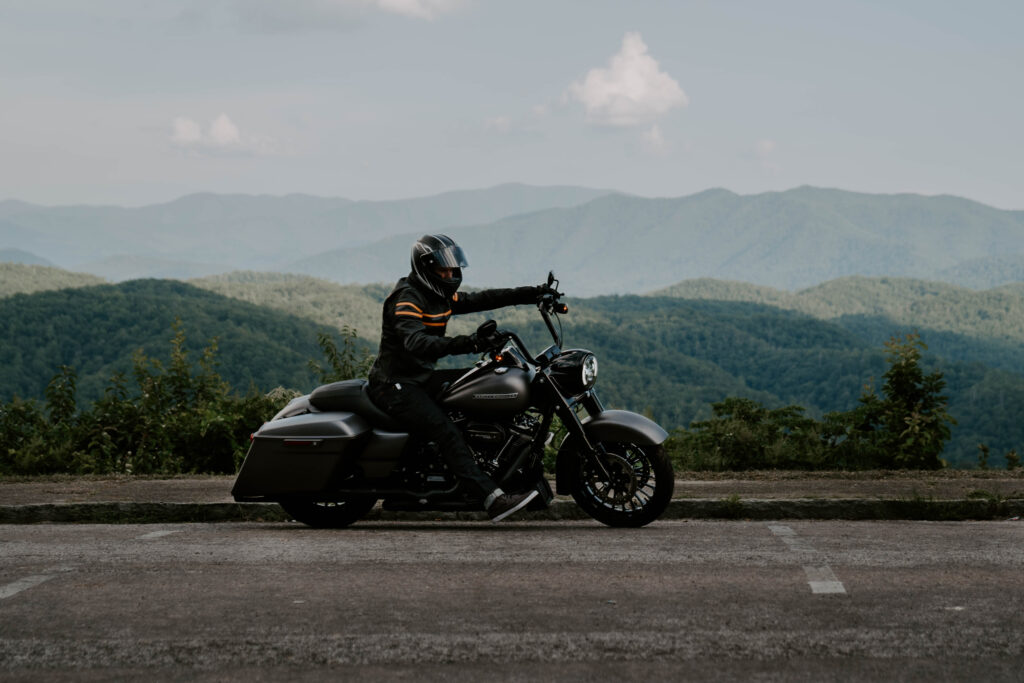
Would a ride through the Tail of the Dragon, with its 318 consecutive banked curves in 11 miles, get your blood pumping?  Or maybe a trip on the Cherohala Skyway, a road featured as one of Discovery Channel’s Top 10 Motorcycle Rides in North America, is more your style. Why not plan the ultimate ride and add the Blue Ridge Parkway and a stop to admire the gorgeous Great Smoky Mountain National Park to your trip? Riders from all over the world have said there is no better place to ride than the Smoky Mountains. So, when owner Scott Maddox decided to turn his love of music and motorcycles into a full-on destination experience, he knew Maryville, Tennessee would be the perfect hub for his Smoky Mountain Harley-Davidson Dealership. As the #1 Harley-Davidson Dealership in the world in 2017, it is safe to say the experience they have created is second to none.
Nestled in the valley of the Smokies, this is not your typical Harley dealership. The Retail Showroom stuns with its locally sourced building materials, a massive inventory of bikes, and all the motor clothes a biker’s heart can imagine. The extensive Parts Department carries everything from engine kits, audio, and electronics to bags, luggage, racks, helmets, and more. With worldwide visitors, the Service Team understands the importance of getting travelers back on the road in a hurry. Whether you run into technical problems, tire issues, need simple maintenance, or want to upgrade accessories, they are available seven days a week. (Appointments are preferable, but they understand unexpected needs arise for travelers.) To learn your way around a bike and take a full course to get your motorcycle license, they also offer a Riders Academy. Check out their website at www.smh-d.com for more dealership information.

Smoky Mountain Harley-Davidson

For those coming from long distances, who want to ride, but can’t bring their bikes, they also partner with Eagle Rider, making bike rental an easy process. Project Ride More is a program where they have staff on board to lead group rides several times a week. The rides are open to anyone who wants to join; just show up the day of the journey with a bike and a sense of adventure. Ride sizes vary, from groups as small as 5-6 bikes up to larger groups of 30-50 bikes. Scheduled rides generally stay within a 100-mile radius, with a variety of shorter or full-day ventures. Find a complete ride schedule at www.smh-d.com.
In conjunction with the dealership side of Smoky Mountain Harley-Davidson, they also have an award-winning restaurant and concert venue called The Shed Smokehouse & Juke Joint. The restaurant offers delicious East Tennessee BBQ smoked on the premise, freshly prepared sides, cocktails, and cold beer, for lunch and early dinner, seven days a week. Not to be outdone by the showroom and smokehouse, the concert venue has a huge stage, state of the art sound rig and lighting, and holds a sold-out crowd of 2000 concert goers. They pride themselves in booking shows with artists on the verge of stardom like Brent Cobb, or top acts like Old Crow Medicine Show and Jamey Johnson. The Shed introduced artists like Chris Stapleton and Jason Isbell to East Tennessee well before they were household names. Concerts are scheduled every Saturday, from April through September, with encore shows and local/regional artists playing on Thursdays and Fridays. For concert schedules and ticket information, please go to www.theshedtickets.com.
On your next trip to the Peaceful Side of the Smokies, be sure to stop in at SMOKY MOUNTAIN HARLEY-DAVIDSON – 1820 W. LAMAR ALEXANDER PKWY, MARYVILLE, TN 37801 and immerse yourself into a little slice of Harley-Davidson Paradise!

These 3 Driving Tours are the Best for Smoky Mountain Scenery

One of the best reasons to visit the Smoky Mountains is the chance to explore the gorgeous view up close and personal. You don’t have to be an athlete to get an amazing adventure in the Smokies. There are many beautiful places to drive, with loops that don’t have traffic passing through – so you can take your time cruising by the sights. Think of it as a hiking trail for your car. This is a great way to enjoy the Smokies if you have young children, older or disabled family members, or just want to stay in the air conditioned car while you explore!
Driving Tours in the Smokies: Foothills Parkway West
This is a 17-mile one-way trip that stretches between Townsend and Chilhowee Lake. You’ll drive through the Chilhowee Valley, seeing green stretches of mountain all along the drive. It’s a gorgeous part of the Foothills Parkway that shouldn’t be missed. You’ll also see Cumberland Mountains along the way, and if you want to walk part of the way, you can get out at the Lake and take a 15-minute hike up to Look Rock. This is a great place to get a scenic view of the whole area before you head back.
Drive Along the Appalachian Trail As Long as You’d Like
Another great way to get a view of the Smokies is to hit Newfound Gap Road. This trail starts in Gatlinburg, passes through Blount County, and stretches all the way into North Carolina. You can drive for as long as you like, and the trip will take you up to the highest point of the National park, at 5,046 feet. You’ll see everything from pine-covered forests to rolling hills, to beautiful mountain peaks along the way. There are stops for hiking and resting, as well.
Cades Cove: Famous Among Driving Tours in the Smokies
The most famous driving tour in the Smokies is Cades Cove, an 11-mile loop that is separated from the main road. You can really take your time driving through this area to see historic buildings, wildlife, and gorgeous scenery. You can stop and explore the old buildings, like the historic churches and working grist mill, as well as log cabins and barns. There are many stops that lead to hiking trails, such as the five-mile loop to Abrams Falls, if you want to stretch your legs. You’ll see things like fox, turkey, deer, and maybe even a distant black bear as you drive by.
Come Visit the Peaceful Side of the Smokies
Here in Blount County, the peaceful atmosphere of the mountains defines the local lifestyle. After your wonderful drive through the view, come visit us to relax and unwind!

These Blount County Parks are the Perfect Spots to Relax in Tennessee

The warmer seasons are upon us, and that can only mean one thing: it’s time to get outside! Sometimes, though, just sitting out on the lawn won’t do. To really relax, you need to stretch your legs and spread your wings, but where should you go? Check out these local parks to experience some of the best free recreation Blount County has to offer.
A Park for Teams of All Sorts
Need to get the whole gang together? Pearson Springs Park could be just the place you need to meet up. The park includes 2 irrigated soccer fields, 2 Little League practice softball fields, a pavilion with 10 tables, and a large charcoal grill. The 8-acre park is connected to the Greenway, and can be found in Maryville, just off Montvale Station Road. Since the pavilion is such a pleasant place to spend a warm afternoon, it’s best if you check online to see if it’s been booked before you go. Or, better yet, just plan ahead and reserve it for yourself!
A Park for Anglers
Singleton Park, just off of Topside Road, may be small, but offers great fishing. Launch your boat from the boat ramp, or just use any one of the 4 fishing benches. There’s also a dock that will get you out over the water, and picnic tables, should you decide to break for lunch. It’s open from dawn until dusk, so you should have plenty of opportunities to see if the fish are biting.
A Park for Disc Golfers
The Clayton Disc Golf Course is an 18-hole disc golf course normally, though the front 9 holes will be out of commission until the fall of 2018. However, don’t let that deter you – the back 9 holes will still be in use all summer long. The entire course is 120 acres, and you can find it next to the Clayton Corporate Headquarters, as well as near Clayton Road. Signs are posted throughout the course to guide you, and green and blue baskets are available for long and short courses, respectively. Fore!
A Park for Dogs and Their Friends
Maryville’s first public dog park is the Petsafe Pistol Creek Dog Park, a park near McCammon Avenue that offers a pavilion and benches to those on two legs, and an acre and a half for those on four. The park is divided for safety reasons, with half an acre for smaller dogs, and a full acre for those larger breeds who need room to run. The park is also purpose-built, with waste stations, dogs-only water fountains, and an unleashing area. Parking is available nearby, with limited availability on McCammon, and a municipal lot and parking garage just a hop, skip, and a jump away.
A Park for Everyone
Sandy Springs Park has a little something to offer all kinds of park visitors. The 20-acre (linear) park in Maryville is the perfect place to enjoy a picnic outdoors, with a concession stand, 2 picnic areas with 14 tables, 5 charcoal grills, and a pavilion with 6 tables and a charcoal grill. Athletes can appreciate the 4 lit tennis courts, 2 lit basketball courts, 3 softball fields (2 are lit) as well as the fun of the Smoky Mountain Classic Softball Tournament, held there every July. There’s 1.7 miles of walking trails to stretch your legs, and 3 playgrounds kids can enjoy.
Whether you’ve found a great park to spend your summer or just an afternoon, don’t hesitate to visit the Blount County Parks & Rec website to check out even more parks and learn about how getting outside in Blount County can enrich your life!

Tips on Taking the Best Travel Photos

friends tubing down the Little River in Townsend, TN

You always want to remember your vacation on the Peaceful Side of the Great Smoky Mountains. The Smokies are one of the most beautiful places in the world, so there will be no shortage of photo opportunities during your stay. We put together expert advice to ensure you take the best travel photos on your visit. 

Travel Photo Tips

Plan Ahead

  • Get to know your camera. Pull out your camera’s instruction booklet and get comfortable with the different buttons and settings. If you’ll catch most of your memories on your phone, play around and get comfortable with the various features, like portrait or panorama modes. Remember a tripod. Pro Tip: Use the camera on your phone, not one built into apps like Snapchat or Instagram. These apps can reduce the original image size, making them terrible for printing.
  • Research the locations you’ll be visiting to find popular photo spots, the best times of day for lighting, and when is the best time to avoid crowds.
  • Pick a theme or something to photograph each trip, like morning dew on a spring bloom or diverse wildlife. Another idea is to pick a handful of items you want to find: a trail sign, a creek, your favorite thing about your hotel or Airbnb, a chainsaw carving by Bubba Daniel, or your favorite mountain view. Those five items can tell the story of your day, ending with a selfie of yourself at Dancing Bear Bistro for dinner.

Use the Rule of Thirds

  • Simply put, take pictures of your subject off-center. The Rule of Thirds states that the best place for your subject is where the horizontal and vertical lines cross. Place your subjects in the image’s righthand, lefthand, top, or bottom third. Some phones and cameras have grid settings to help you visually divide your image.
  • You can also use your Rule of Thirds gridlines as a perfect guide for the horizon, allowing for straight photos.
  • Pro Tip: Experiment with angles. Try shooting from different perspectives, using high or low angles, to add depth and dimension to your photos.

Simplify the Clutter

  • Instead of photographing the whole forest in one frame, focus on one subject, like an Eastern Sweetshrub, and use the forest as a backdrop. The eye wants to land on something in the frame, then take in the rest of the photo. If an image is too cluttered, your audience will not know where to focus.
  • Showing the subject in its environment tells a story by placing the subject in the environment without losing the subject in the entire scene. You can do this with a somewhat shallow depth of field, placing your daughter off to the side and in the foreground so that the background is identifiable but slightly blurry. It is the shock of cold you want to see on your daughter’s face but identifying the river as the source of emotion. The portrait mode of your phone’s camera can automatically create this effect. Pro Tip: If you can find a pattern, and something that breaks it, definitely take the shot.
Butterfly on a flower in the Great Smokey National Park

Take Photographs of People

  • Yes, Clingman’s Dome is breathtaking, but you can Google professional pictures of Clingman’s Dome anytime. The wonder on your child’s face when they see all the reds, blues, yellows, and greens of a Smoky Mountain sunset that’s an image worth more than any you could Google.
  • Take a picture of that perfect sunset, but take the family pictures or goofy selfies first.
  • Capture candid moments: Don’t just focus on posed photos; some of the most memorable vacation photos capture genuine, spontaneous moments.
  • Incorporate people and local culture. Including people and elements of the local culture can help bring your vacation photos to life and make them more unique. Pro Tip: Be sure to ask for permission where necessary.

Follow the Light

  • One of the biggest amateur mistakes in vacation photos is shooting into the light. Photos or videos with light behind the subject, rather than in front, expose the background but leaves faces darkened by shadows. Always let light hit the focus of your subject. Always look at the light.
  • Focus on Golden and Blue Hours. The Golden Hour is that first hour, as the sun peaks over the horizon in the morning or the last hour before the sun sets. The light casts a warm, mystical glow on the world. The Blue Hour is when the sun has fallen behind the horizon, giving off a blue and violet hue. Remember to set your morning alarm depending on where you want to get photos on the Peaceful Side. Pro Tip: Stay around if sunrise or sunset could be more impressive. You never know when the clouds will break or the sky will burst into brilliant color.
  • Pro Tip: Whatever you do, don’t use flash. Instead, look for ambient light around you, like street lights. Another approach is to find a pool of light and step into it, or as a last resort, use the “night mode” on your phone.

Forget About Social Media

  • Don’t focus exclusively on the photos you think will get you the most “likes” on social media. The in-between moments will often capture the true nature of your family. If you are taking a video, these moments will make excellent b-roll content for editing. Keep it organic and loose by letting your vacation happen; capture those candid moments.
  • Once you are on the plane or get back home and download all of your pictures, treat your social media as a highlight reel of your family’s best of the best.
  • Pro Tip: Take time to enjoy your vacation instead of trying to one-up your frenemy from college.

See the blog posts below if you are looking for some fantastic places on the Peaceful Side to photograph:

Waterfalls in The Great Smoky Mountains 

Best Views for Sunrises and Sunsets

The Smoky Mountains are Harley-Davidson Paradise

Top 5 Things To Do in the Great Smoky Mountains National Park in the Spring

The Great Smoky Mountains National Park…just its name alone inspires all kinds of visions and thoughts. There are, of course, the mountains, but there are also the 100+ waterfalls, the miles of trails, the scenic drives, the historic buildings and settlement areas, the wildlife…there is so much to see and do!
Naturally, that is why more than nine million visitors pass through the park each year, and as you might guess, there are times when there are many more travelers than there are at other times. However, if you book a visit in the spring you may beat a lot of the crowds and enjoy experiences that you cannot at other times of the year.
Here are our top five things we think you should do in the Great Smoky Mountains National Park this spring:
 

  • Just Go!

 
It seems silly to make that one of the things to do in the park, but to put it plainly, you won’t enjoy the area if you don’t book the trip. That means finding accommodations, choosing the things you’ll do and making all of the other arrangements. Then, you can head out and get to the park!
 

  • The Trails

 
There are many hiking trails throughout the park, and they can be found in any level of skill or experience. Whether you want a trail safe for your toddler or a senior family member or you are eager to enjoy an advanced hike with stunning views from high up in the mountains, you’ll find plenty of options. Among the most popular in the spring are the Alum Cave Trail and the Chimney Tops Trail. You will also want to hike to Rainbow Falls and Mouse Creek.
And speaking of waterfalls, remember that the spring thaws mean lots of water and stunning waterfall action!
 

  • Cades Cove

 
It is fair to say that you haven’t experienced the park until you’ve paid a visit to famous Cades Cove, and because it is so popular, the spring is a great time to enjoy it without the traffic or high number of fellow visitors who will arrive in the summer. It is an 11 mile drive with lots of spots to stop, explore, walk, picnic and learn. The mountain scenery is staggering and you’ll probably see lots of park wildlife.
Don’t forget that spring is wildflower season, and while Cades Cove is great for them, they are bound to be almost everywhere you go!
 

  • Clingman’s Dome

 
Re-opening in the spring, it is the highest point in the mountains and along the entire Appalachian Trail! Obviously that means you get show-stopping views, and if you are eager to hike, you can carry on to Andrews Bald for even more stunning scenery.

  1. Drive

Here’s a wonderful thing about the park – you don’t even have to exit the vehicle to enjoy it. If you are short on time or have limited mobility, the park is still a stunning spot to visit in the spring with all kinds of scenic parking spots, drives and roads to take in the views.
So, if you haven’t booked a spring getaway just yet, make sure you aim yourself towards the Great Smoky Mountains National Park and savor a truly beautiful experience.
Source
https://www.nps.gov/grsm/planyourvisit/maps.htm
 

Townsend Mercantile Co. Celebrates Second Anniversary

Written by: Emily Huffstetler

This weekend, the Townsend Mercantile celebrates its second anniversary, carrying on a name once tied to the town’s early logging days. While the shop isn’t connected to the original company store that served the Little River Railroad and Lumber Company more than a century ago, both have shared a similar purpose: serving the local community. 

When the world shut down in 2020, Brooke Webb voluntarily stepped away from her corporate job to spend more time with her family. As life returned to normal, she transitioned to remote work to stay closer to home, but the traditional 9-to-5 routine no longer felt like a good fit. Her husband had opened several businesses of his own, and she started to wonder: why not build something around the things she enjoyed? 

That’s when her idea to open Townsend Mercantile Co. was born. Today, the shop carries more than 2,000 products, including jewelry and accessories, home decor, toys, books, clothing, canned goods and locally made syrups—a modern-day general store that offers something for both locals and tourists.  

Webb learned early on in her research that this was the name of a business that served Townsend in the early 1900s until shortly after the Little River Railroad and Lumber Company closed in 1949. Back then, loggers paid for their goods with “doogaloo,” coins that could only be redeemed at the company store. Webb said customers have visited and told her they still have some of the coins, and she even received one as a gift. 

Fortunately, modern shoppers at Townsend Mercantile can stick to cash or card. Webb’s daughter, who likes to lend a hand when school is out, might even be the one ringing up customers. 

“They don’t really teach counting change at school anymore,” Webb said. “When people pay in cash, I really try to encourage her to learn how to make change.” 

It’s a win-win: her daughter is building valuable life skills, while also making her own mark on the store. Webb sometimes takes her along to markets, where she helps pick out items to stock. The store’s collection of Jellycats—a trendy line of plush toys—was inspired by her. 

Webb has also taken her staff of high school and college students under her wing. Watching them grow has become one of her favorite parts of the business. 

“I have girls that started with me in May of 2023, and seeing them grow and go on to their actual jobs…it’s a full-circle moment,” she said. “I don’t want to take all the credit, but they’re like my kids.” 

She said she feels proud to give them an opportunity she wishes she had at their age. “Giving that to someone is probably my favorite thing about this job.” 

While it can be challenging to employ young people because of their obligations to school and extracurriculars, Webb tries to give them “the best of both—to work but also get to enjoy doing the things that they should be doing at this age.” 

Webb has also worked to build a collection of products that reflects her own creative vision. Some of her favorite items in the store are ones she’s designed herself or collaborated on with others. 

“I really try to go above and beyond to find things that either a local can come in and get, or a tourist can’t find in other places,” she said. “I love any of our exclusive things that I’ve had a part in designing, whether that be a T-shirt, artwork [or other items].” 

Currently, she’s working with an artist to create ornaments featuring the historic churches of Cades Cove. “I’m not an artist, but I do have a vision,” Webb said. “That’s one of the things I enjoy most: bringing those ideas to life.” 

Along with exclusive designs, Webb makes a point to stock items from local and small businesses whenever possible. Supporting the local economy is especially important in a tourist town like Townsend, where business can slow down significantly in the off-season. 

“Always keep in mind to shop local and small,” she said. “January and February are super slow, so we’re thankful for any type of shopping during those times—at our store or anywhere local. Otherwise, we can’t survive, and we can’t hire people. When you can, support any local businesses in Townsend.” 

To learn more about Townsend Mercantile Co., visit www.townsendmercantileco.com. The shop is open 10 a.m. to 7 p.m. Monday through Saturday, and 12 p.m. to 6 p.m. on Sundays. 

__________________________________________________________________________________________________________________________________

Born and raised in Maryville, Tennessee, with roots tracing back to Cades Cove, Emily Huffstetler is a proud Maryville College graduate and passionate storyteller of the Greater Smokies region.