Millions of people pay a visit to the Great Smoky Mountains National Park each year, and they don’t limit their visits to the spring, summer or fall. It is a year-round destination, full of beautiful and unmatched scenery, lots of native flora and fauna, and many things to do. After all, you can enjoy visits to historic buildings while in the park, take driving tours along amazing roadways and scenic highways (including the brand-new section of the Foothills Parkway), and even go hiking.
Winter Hiking in the Smokies is Amazing
In fact, the winter hiking is quite amazing with trails for all levels of experience. And if you are considering a hike into the glorious wintertime landscape in the Smokies, you may want to pay attention to any opportunities for waterfall viewing. The National Park Service explains that there are “over 2,000 miles of streams in the Smokies, dotted with sparkling waterfalls and cascades” and around 40 waterfalls that you can reach by trail or even by car. If you are going to be paying a visit to the area this winter, you don’t even have to get dressed up for a day on the trails because there are also several gorgeous waterfalls that you can reach and view by car!
The Winter Waterfalls of the Smokies
Let’s start with the waterfalls easiest to enjoy from the coziness of your car or truck. There are several spots recommended by experts and hikers alike. Meigs Falls – Take Little River Road in the park and at roughly 13 miles west of the Sugarlands Visitor Center, you will find the pull-off area for year-round views of the falls. Don’t go fast because it is a “blink and you miss it” pull-off. You will be astonished at the volumes of ice that build up on these lovely falls. The Sinks – This is also another set of falls located along the Little River Road, and you will hit this one around 12 miles from the Sugarlands Visitor Center. It has an easier-to-find parking area, and though the falls are not as high as others, they are often stunning because the entire volume of the river flows through this area, building up loads of ice. If you wish to hike, you can easily reach spots like Laurel Falls, situated at the northern end of the park, or Tom Branch Falls at the southern end. Both are reached by moderate hikes that are well worth the effort. In fact, Laurel Falls is popular all year long and is just a 1.3-mile paved trail with truly stunning scenery. Skilled hikers may head to Rainbow Falls, a 5.5-mile trail or Alum Cave Bluff Trail that is the tallest peak in the park. Do pay attention to the weather reports no matter what sort of waterfall viewing you have planned and reschedule if any extreme conditions are predicted. The scenery from your cozy cabin can be just as appealing as anything you might see from the car or during a hike, and you can plan a return visit in the spring if you want to see the falls when they wake back up for the season!
The bridges on the Peaceful Side of the Smokies bring charm to local trails, parks and scenic spots. From unique pedestrian walkways to historic covered bridges, each crossing offers a glimpse into the area’s past and invites exploration. Here are a few of our favorites.
The Sunshine Bridge, a rustic covered bridge in Townsend, connects both sides of the Little River and serves as a link between the past and present. This nearly 190-foot bridge, with its tin roof and graceful arches, was once a one-lane river crossing for vehicles and is now part of the Townsend Historical Trail.
Originally known as the Kinzel Springs or Wilson Bridge, it gained the nickname “Sunshine” in honor of a historic hotel in Townsend. Today, it’s a community landmark offering views of the river and places to walk, bike or even fish. Completed thanks to local leaders, particularly the late Jim Hind, the Sunshine Bridge celebrates Townsend’s heritage while welcoming new memories.
Nestled alongside The Abbey in Townsend, the Dark Island Swinging Bridge accommodates up to four visitors at a time. Known for its gentle sway, the bridge is a fun stop for stretching your legs on the way to the Great Smoky Mountains National Park or after a hearty meal at a nearby restaurant.
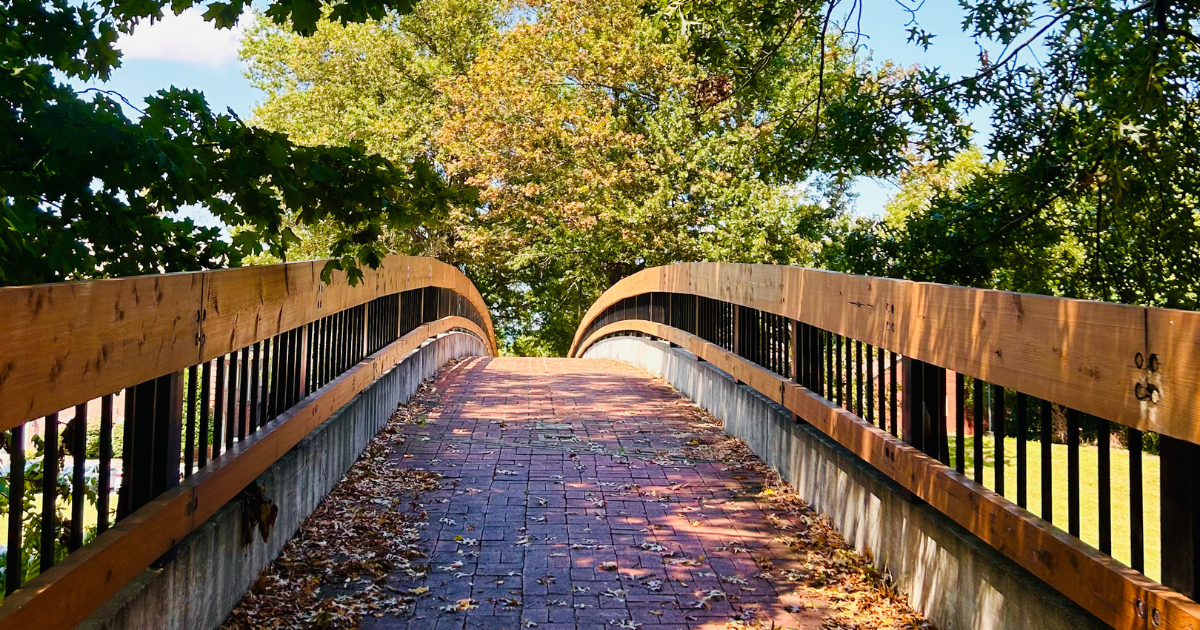
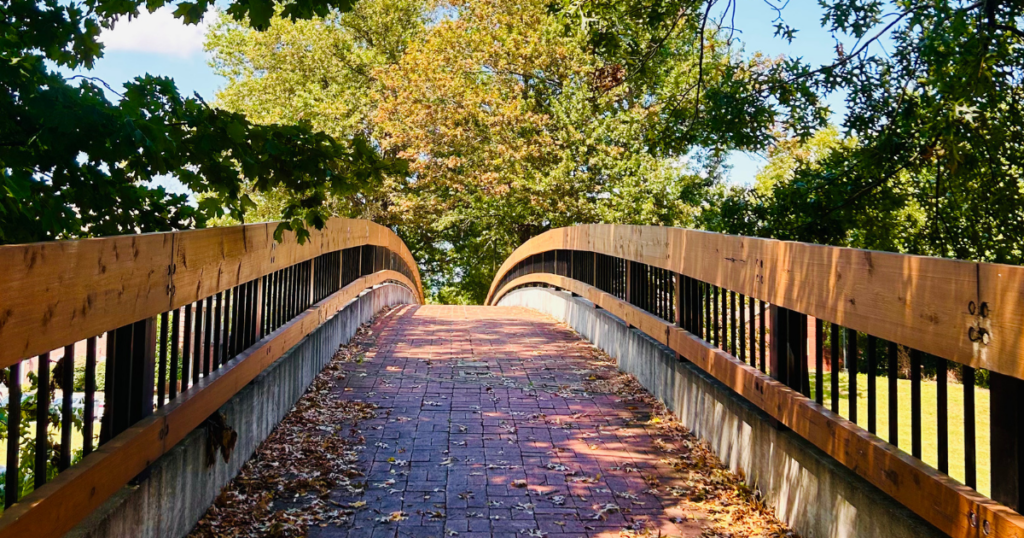
The Joy M. Bishop Bridge, a scenic spot on the Maryville-Alcoa Greenway, offers a view of a tranquil pond where visitors can often see ducks and even the occasional beaver. This bridge, a favorite among walkers and nature enthusiasts, was recently named in honor of Joy M. Bishop (1934–2023).
Bishop had a distinguished 30-year career with the United States Air Force, where she was the first woman to be appointed to the Senior Executive Service. Her dedication to civic service in Blount County extended through volunteer efforts with a wide variety of local organizations.
This pedestrian bridge links Maryville College to the heart of downtown over East Lamar Alexander Parkway. Plans for a new College Street Corridor will soon add an archway over the bridge, along with refreshed sidewalks, lighting and a distinctive tartan-themed crosswalk honoring the college’s Scots heritage. The bridge’s location and proposed enhancements reflect the importance of Maryville College as a vibrant part of the city’s cultural and social scene.
Stretching 225 feet across Highway 129, this pedestrian bridge in Alcoa was funded through the American Recovery and Reinvestment Act of 2009. It connects western Alcoa neighborhoods with the scenic Alcoa Greenway, creating a safe and direct path for pedestrians. The bridge is part of a broader greenway system that encourages outdoor activity and exploration for Alcoa residents and visitors.
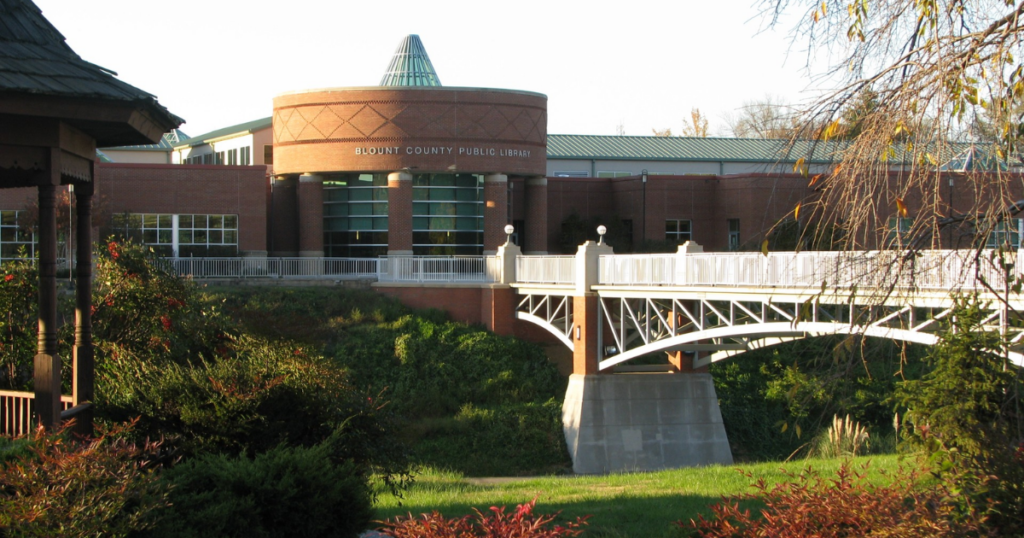
This bridge is a key feature of the Alcoa Greenway, linking Alcoa High School, Marconi Boulevard and East Edison Street. It is part of a 2.2-mile greenway stretch completed in 2022. Offering picturesque views of Pistol Creek, the bridge gives both residents and students a scenic route for walking, jogging or biking through the area.
The Elkmont Troll Bridge in the Great Smoky Mountains National Park feels like something out of a storybook. Located just off the Little River Trail near the Elkmont Campground, this moss-covered stone bridge arches gracefully over a small creek, creating a magical backdrop for photos.
Do you have a favorite bridge on the Peaceful Side? We’d love to hear about it. Be sure to tag us on social media (@peacefulsmokies).
Born and raised in Maryville, Tennessee, with roots tracing back to Cades Cove, Emily Huffstetler is a proud Maryville College graduate and passionate storyteller of the Greater Smokies region.
As the leaves turn, the Peaceful Side celebrates Appalachian heritage and the harvest season. September and October bring festivals to Townsend, along with corn mazes, pumpkin patches and hayrides around Blount County and nearby communities.
Fall Festivals in Townsend
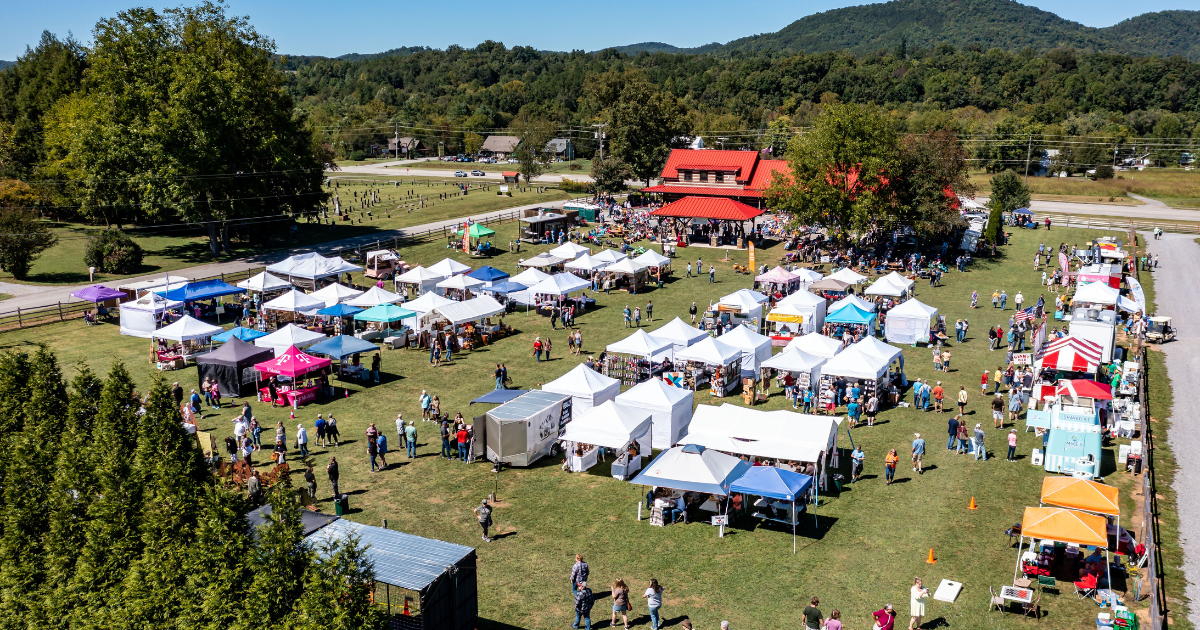
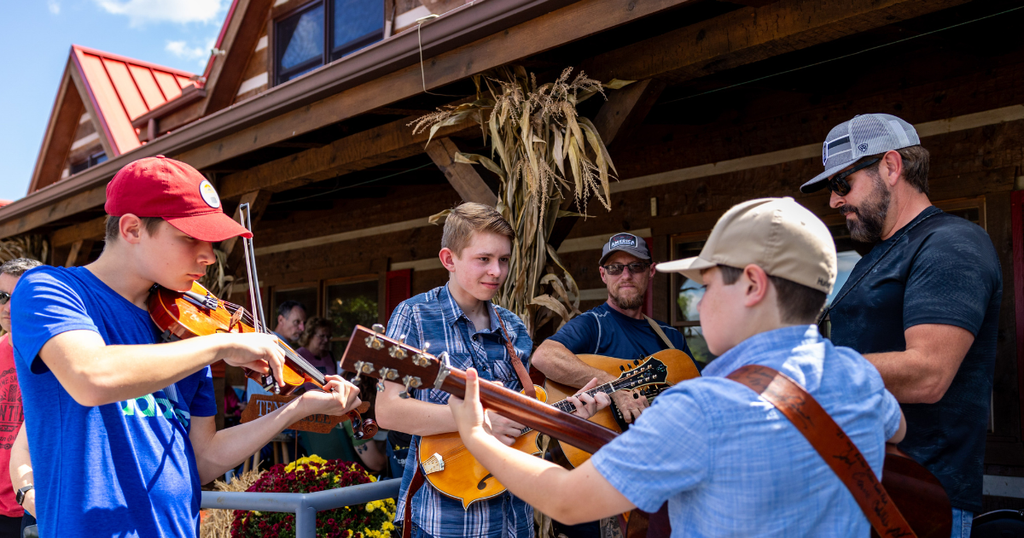
The Townsend Fall Heritage Festival returns Sept. 25-26 at the Greater Smokies Event Grounds, next to the Townsend Visitor Center. Crafts and demonstrations run from 10 a.m. to 6 p.m., and music kicks off at 11 a.m.
The festival features traditional and contemporary bluegrass and mountain music, clogging and square dancing, arts and crafts, Appalachian demonstrations and old-fashioned games. Admission is free. Parking costs $10 per day, and proceeds benefit the Townsend Volunteer Fire Department.
On Sept. 26, the Great Smoky Mountains Heritage Center hosts its Blue Ribbon Country Fair from 10 a.m. to 4 p.m. The fair includes livestock, competitions, vendors and demonstrations of open-hearth cooking, spinning, weaving, wood turning and blacksmithing. A $20 parking donation is suggested.
That same weekend, the Little River Railroad & Lumber Company Museum holds its Fall Railroad & Heritage Festival Sept. 26-27 from 10 a.m. to 5 p.m. each day. Visitors can see trains and tractors, watch history demonstrations, browse craft vendors and enjoy music and food. The event is free to attend.
A free shuttle service provided by the Great Smoky Mountains Heritage Center will connect all three festival locations Sept. 25-26. Two buses will run from 10 a.m. to 6 p.m. and make additional stops around Townsend.
Pumpkin Patches and Corn Mazes
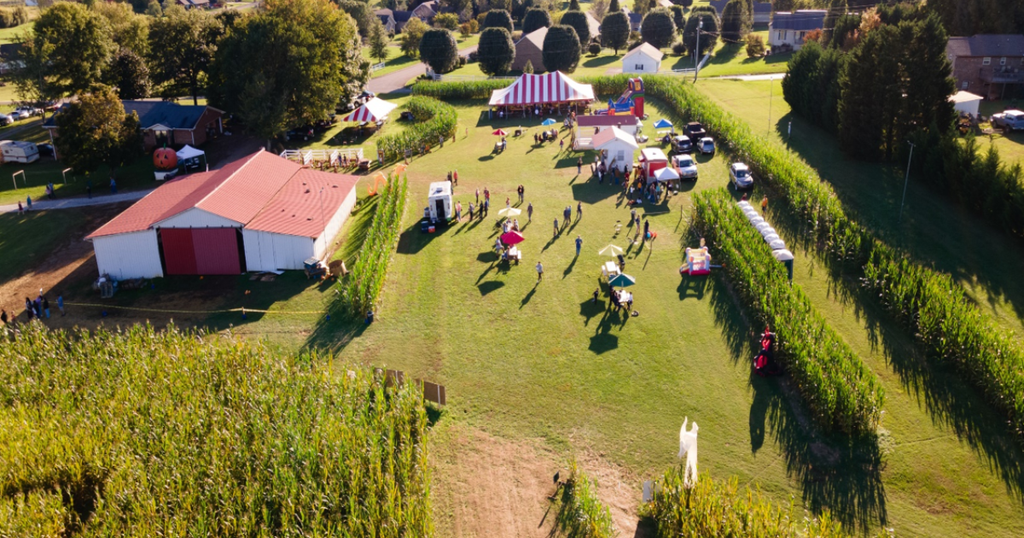
Photo courtesy of Maple Lane Farms.
Maple Lane Farms in Greenback hosts its annual corn maze weekends from Oct. 2-31, marking the attraction’s 28th year. This year’s eight-acre maze celebrates America’s 250th anniversary. The farm also has a pumpkin patch, daytime and nighttime tractor-pulled hayrides, sunflower fields, inflatables, cornhole, campfires, face painting, photo areas, a barn store, music and food vendors.
For a spookier experience, the Haunted Woods and Barn, presented by Tennessee Terror, runs Oct. 2-3, 9-10, 16-18, 23-25, 29, 30 and 31. The Haunted Maze will be open Oct. 16-18, 23-25 and 29-31.
Elsewhere in Greenback, Hyde Farms has a pumpkin patch, corn and hay mazes, hayrides and farm animals. Its 2026 dates have not yet been announced.
In Lenoir City, Deep Well Farm opens its pumpkin patch and corn maze Sept. 19. A wagon ride takes visitors to the pick-your-own pumpkin patch. Other activities include play areas, farm animals, slides, climbing areas, a corn crib and an obstacle course. Upcoming dates are Sept. 19-20 and Sept. 26-27. October dates are posted on its website.
Also in Lenoir City, Blackburn Farm Pumpkin Patch is open Oct. 1-31. Visitors can pick pumpkins, walk through a corn maze and take a hayride. The farm has additional activities, food and treats and a boutique.
In Corryton, Oakes Farm starts its fall season Sept. 19 with a corn maze, hayrides to the pumpkin patch and more than 25 other farm attractions, including animals, flower fields and food stands. Tickets are on sale now.
Cades Cove Riding Stables, near the entrance to the Cades Cove Loop Road, continues its operating season through Nov. 30.
Hayrides depart at 10 a.m., 1 p.m. and 3 p.m. They last approximately 1.5 to three hours, depending on traffic. Horseback rides and horse-drawn carriage rides are also available.
Born and raised in Maryville, Tennessee, with roots tracing back to Cades Cove, Emily Huffstetler is a proud Maryville College graduate and storyteller of the Greater Smokies region. She holds a Master of Science in Conservation Education from Mississippi State University.
Long rooted in Appalachian traditions of resourcefulness and seasonal cooking, the Peaceful Side of the Smokies has quietly grown into a destination for fine dining. Here, chefs aren’t just drawing on advanced culinary training—they’re working with local farmers and finding inspiration in the Smokies themselves. These are our top picks in Maryville, Townsend and Walland.
The Restaurant at RT Lodge — Maryville
Tucked in the Maryville College woods, The Restaurant at RT Lodge combines rustic charm with a refined, seasonal menu focused on from-scratch cooking. The kitchen makes everything in-house, from pickles to pimento cheese, and sources locally whenever possible. After dinner, guests are invited to enjoy s’mores by the fire pit. This hidden gem was ranked one of the top 13 things to do in Maryville by Southern Living.
About the Chef:
Executive Chef Trevor Stockton brings thoughtful, Southern-inspired dishes to life with precision and creativity. Named one of Plate Magazine’s “Top Chefs to Watch,” he’s helping put Maryville on the culinary map.
Tucked inside a century-old, cathedral-like barn on the grounds of Blackberry Farm, The Barn offers a fine dining experience unlike any other in the region. This James Beard Award-winning restaurant crafts multicourse meals using seasonal Appalachian ingredients—many harvested just steps from the kitchen. Elegant service, a world-class wine cellar and a 300+ bottle spirits list elevate every meal into a celebration.
Please note, the Barn is open to outside guests by reservation only. Availability resumes Winter 2025.
About the Chef:
Executive Chef Cassidee Dabney leads the culinary team with a deep-rooted respect for seasonality and Southern heritage. A New England Culinary Institute grad with a Four Seasons pedigree, she’s earned national acclaim including multiple James Beard nominations and features in Food & Wine and Art Culinaire.
At Dancing Bear, modern Appalachian cuisine takes center stage, rooted in local tradition and elevated with contemporary flair. Known for its warm ambiance and award-winning cuisine, it’s an ideal spot for romantic dinners and special occasions. The bistro has earned national attention, including multiple Travelers’ Choice Awards from TripAdvisor and a spot on OpenTable’s list of the 100 Most Romantic Restaurants in the U.S.
About the Chef:
Executive Chef Jeff Carter brings deep regional roots and serious culinary pedigree to the table. His elevated approach to comfort food reflects the heart of the Smokies—warm, soulful and beautifully composed. In 2025, he was recognized by Cityview Magazine as the region’s top chef, sweeping first place in appetizer, entrée, dessert and overall experience.
With its upscale-rustic charm and devotion to Tennessee-grown ingredients, The Walnut Kitchen delivers a refined yet approachable dining experience. Set in a restored historic building in downtown Maryville, the restaurant blends Southern hospitality with contemporary culinary technique. The open kitchen, wood-fired grill and thoughtful seasonal menus highlight the best of East Tennessee’s bounty, from prime cuts to heirloom vegetables.
About the Chef:
Executive Chef Jason Scott brings both precision and heart to the kitchen. A Massachusetts native with family ties to the restaurant world, he’s spent the last decade honing his craft in Tennessee. Formerly Executive Chef at Knoxville’s Lonesome Dove, he was named Cityview Magazine’s Top Chef in 2022 (Dessert Category) and now leads the Walnut Kitchen’s culinary team with passion, technique and a love for elevated Southern fare.
Rooted in the Appalachian tradition of the community mill, Foothills Milling Company transforms the spirit of the Smokies into an elegant fine dining experience. What began as a humble 13-table restaurant in Wears Valley has evolved into one of Maryville’s most celebrated destinations, known for its seasonal menus, Southern hospitality and devotion to local sourcing.
Now housed in a historic 1920s-era building once home to a Studebaker showroom, the restaurant honors its heritage through both its name and its philosophy, blending refinement with a deep respect for the land and people of East Tennessee. Dishes are crafted with ingredients from regional producers like Benton’s Bacon, Cruze Farm and Vienna Coffee, celebrating the bounty and resilience of Appalachian foodways in every bite.
Born and raised in Maryville, Tennessee, with roots tracing back to Cades Cove, Emily Huffstetler is a proud Maryville College graduate and passionate storyteller of the Greater Smokies region.
Fall foliage season in the Smoky Mountains is nearly upon us, as mountain vistas across East Tennessee don a stunning array of reds, oranges, yellows and deep earthy tones.
Blount County, Tennessee, the “Peaceful Side of the Smoky Mountains,” offers some of the best views during this season, and the opportunity for a quiet escape against a breathtaking backdrop.
Foothills Parkway, located off US Highway 321 in Walland, is a not-to-miss destination for those looking to experience vibrant fall foliage in the Smokies. This parkway is less busy than other roads in the park, making it a great place to get away from crowds and traffic.
The 16.9 miles of parkway traverses the western flank of Chilhowee Mountain in Blount County, intersecting with US 129 at Chilhowee Lake. Along the way, the road meanders up the mountain beneath a canopy of trees, with scenic pull-offs and overlooks interspersed throughout.
Each scenic overlook offers a unique panoramic view of the mountains with grassy areas ideal for picnicking, relaxing or photography.
One of the most popular destinations along Foothills Parkway is Look Rock, a natural observation ledge overlooking the Great Smoky Mountains National Park. An easy half-mile hike leads to the observation tower that provides a spectacular 360-degree view.
Car and motorcycle enthusiasts will find Foothills Parkway to be of particular interest: where US 129 intersects with the Parkway, the road becomes the world-renowned section of highway to the south known as “The Dragon” for its 318 curves in 11 miles. “The Dragon” is an exhilarating experience as sports cars and motorcycles navigate the twisting road.
While the Parkway is a wonderful experience for motorists, it’s also a prime target for bicyclists. The crisp mountain air and beautiful scenery attract road bikers who enjoy the challenging uphill climb followed by a downhill decent through the mountains.
Blount County and the Foothills Parkway are easily accessible to those traveling to the area. The McGhee Tyson Airport (TYS) is less than 20 minutes away with easy access to major highways like I-40 and I-140.
The area also boasts a plethora of options for accommodations with fall foliage views. Dancing Bear Lodge, a resort located in Townsend and just 10 minutes from Foothills Parkway, offers luxury cabins with comfortable places to lounge and enjoy the scenery like rocking chairs, porch swings or their fire pit. Dancing Bear Appalachian Bistro, located at the Lodge, serves regionally inspired cuisine with fresh, quality sourced ingredients for an exceptional dining experience.
Situated just one mile from the Great Smoky Mountains National Park, Tally Ho Inn is another great option providing mountain beauty with their private balconies and terraces.
While staying in the Blount County area to ride or drive Foothills Parkway, visitors can also take advantage of other activities like the numerous hiking trails in the Great Smoky Mountains National Park, or walking or biking the Alcoa or Maryville Greenways. Cades Cove, a valley surrounded by mountains, has an 11-mile paved road with historic buildings and an abundance of wildlife that can be experienced by car, on foot or by bike.
Those looking to experience the “Peaceful Side of the Smoky Mountains,” and Foothills Parkway, are encouraged to visit www.smokymountains.org or contact the Blount County Chamber of Commerce at (865) 983-2241 for more information on accommodations, travel and dining and entertainment options.
Whether on a weekend getaway or a lengthy vacation with family or friends, a visit to the Smoky Mountains area is always sure to please. A year-round destination for millions of travelers, it is home to a seemingly endless number of outdoor activities. From hiking and horseback riding to skiing and fishing, if you enjoy spending time in pristine wilderness, this part of the world is for you. The fall season brings cooler weather and stunning natural color to the region, with autumn’s gold and red hues first appearing high in the mountains and gradually making their way to the valleys below. From late August until the end of October, travelers can savor a constantly changing panorama of stunning views, intense foliage and crisp, cool air. While driving and hiking are ideal ways to experience the region, the opportunity for a zipline should not be ignored. Ziplines and The Smokies While many parts of the world are ideal areas for zipline experiences, the woods of the Great Smoky Mountains are probably among the very best. After all, the spring and summer bring with it an amazing amount of beauty and lush greenery, but in the fall, it all changes to a nearly magical vista of brilliant and saturated hues. Imagine soaring through the treetops, gazing out at the blue peaks of the mountains, all while immersed in a wonderland of gold, scarlet, saffron and more. If you are unfamiliar with the activity known as ziplining, you should know that it is a safe and exciting activity, with options suited to people of all ages. In the Smokies, it is amongst the most popular activities, and some of the best sites feature other options on their premises, including hiking, climbing and more. Some of the most family-friendly and scenic companies even make horseback riding options available. Highly Recommended Zipline Experiences in The Smokies To ensure you savor the most amazing autumn foliage views on your upcoming visit to the Smoky Mountains area of Tennessee, we recommend the following zipline companies: Next to Heaven Zipline – One component of Next to Heaven Mountain Adventures, their highly rated zipline experience is noted as one of the most scenic in the entire region. With experts to guide you every step of the way, they are located at 1239 Wears Valley Rd, in Townsend. You can also enjoy unguided horse rides from their premises and explore their 45 acres of scenery over the two-mile trail! CLIMB Works Canopy – In the busy Gatlinburg area, you can enjoy a long list of activities, including this popular climbing and ziplining site. With nine different ziplines, and three sky bridges, it ensures you see a lot of the amazing autumn color while enjoying a visit. They are found at 155 Branam Hollow Rd, in Gatlinburg. There are many other options and sites, but the two above stand apart as some of the most highly rated and reviewed. Surrounded by nature, ziplining is a wonderful way to get a unique perspective of the area and savor the colors of fall.
Are you planning an autumn visit to the Smokies? If so, you’ll love the peacefulness of the season. The summer crowds have departed, and colors of fall are settling into the region. Look up at the peaks and you’ll see the first hints of red, gold and orange, and along with those colors comes a wonderful change in the weather. Cool and sunny days make it easier than ever to spend most of your time outdoors in the amazing landscape. And while there are many amazing trails, drives and attractions to visit, you don’t have to walk or drive to all of them. In fact, one of the best ways to take in the views of the autumn season are from the back of a horse!
Smoky Mountains Activities
A lot of travelers think of spending their time in the area in their cars, on foot, on bicycles or even floating in a boat or inner tube, yet the beauty of the autumn season can also be experienced via horseback riding. There are many different stables available, and all of the horses are well-accustomed to first-time riders as well as experienced travelers. There are not many options for unguided journeys, but if you wish to go on your own along the trails, it is possible. Either way, whether as part of a group and guided ride or on your own, you’ll find the woods remarkably quiet and peaceful and the experience unforgettable.
Horseback Riding Stables in the Smokies
For those eager to see for themselves just how wonderful a visit to the Smokies might be when a horseback riding adventure is included, we suggest the following stables:
This is for those who want an unguided experience. You are carefully matched with your horse and you can then follow the existing trail that leads into the mountains surrounding the stables. The horses are so clever that you just cannot possibly get lost, and even if you get confused, they’ll take you right back home! The site also makes ziplining available in the canopy of trees overhead.
This is one of the most familiar and famous because it is the only option within the actual Great Smoky Mountains National Park. There are fully guided trails, and riders can rest assured that the horses are incredibly gentle and patient. You can also book a hayride or a carriage ride.
Another of the stables open to people of all riding levels or skill is Davy Crockett Stables. You can take half day rides or shorter adventures, and most of the tours lead into the woodlands and beautiful, natural areas. You can also book your accommodations at a ranch, the Twin Valley Horse Ranch and enjoy full or half day rides, and if you don’t yet know how to ride, why not enjoy a day spent in the autumn landscape at the Rolling Hills Farm Equestrian Center or the Mountain Meadow Equestrian Center? The fall colors come and go quickly, and you can really make the most of them when you enjoy them from the comfort of a calm, friendly horse’s back!
On September 2, 1940, thousands gathered at Newfound Gap to dedicate Great Smoky Mountains National Park. President Franklin D. Roosevelt, standing against the backdrop of spruce and fir, promised the land “to the service of the millions of American people.”1
“There are trees here that stood before our forefathers ever came to this continent; there are brooks that still run as clear as on the day the first pioneer cupped his hand and drank from them. In this Park, we shall conserve these trees, the pine, the red-bud, the dogwood, the azalea, the rhododendron, the trout and the thrush for the happiness of the American people,” Roosevelt said.
That moment didn’t come without a cost. When Congress authorized the park in 1926, Tennessee and North Carolina set out to buy nearly half a million acres from private owners. For many residents, the outlook was grim. Offers often amounted to only half of a farm’s value, and when owners resisted, the state invoked eminent domain. More than 5,000 people ultimately left their homes.
By the early 1930s, the park was a patchwork of cut-over timberlands, abandoned farms and rough roads—a challenge only deepened by the Great Depression.
Change arrived in 1933 with Roosevelt’s creation of the Civilian Conservation Corps (CCC). The program put young men to work on conservation and infrastructure projects across the country. In the Smokies, it became the single most important force in shaping the new park.
The first CCC camps arrived that May. Within a few years, there were 22 across the Smokies, with Tennessee sites at Sugarlands, Elkmont, Cades Cove, Greenbrier, Cosby Creek and along the Middle Prong of Little River. At the program’s peak in 1935, 17 camps operated at once—nearly 15 percent of all CCC camps in national parks nationwide.2
From 1933 until the program ended in 1942, enrollees transformed the Tennessee side of the park. They cut and graded trails across rugged ridges and converted logging railroad beds into roads still traveled today, including the Little River Road. Road crews stabilized slopes, laid culverts and rebuilt bridges near Cades Cove and Townsend.3
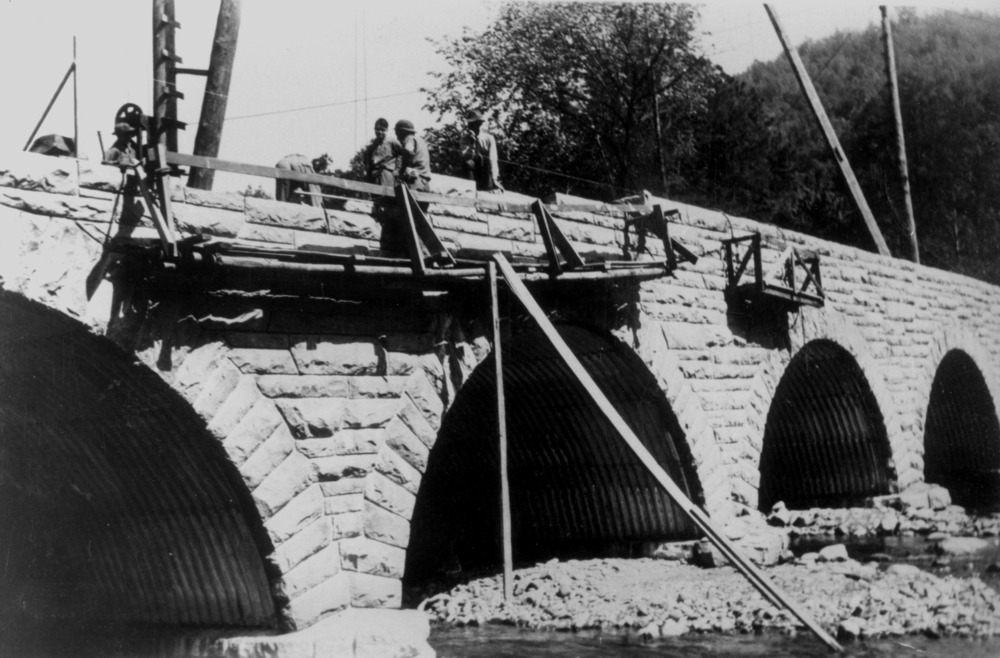
Stone masonry became one of the CCC’s most lasting signatures. Workers built miles of guardrails and dozens of bridges with locally quarried rock. In Elkmont, they completed the arched stone bridge over the Little River, still in use over 80 years later.
Key sites across the Smokies also bear their imprint. At Newfound Gap, crews landscaped the overlook, created parking areas and erected the Rockefeller Memorial. Near Kuwohi (formerly Clingmans Dome), they carved a trail to the summit and, in 1938, raised a 40-foot wooden observation tower. In Sugarlands, they laid the foundation for the park’s headquarters complex.3
The CCC also supported park management, stringing telephone lines, maintaining fire breaks and building nine fire towers with lookout cabins. At Kephart Prong, they constructed a fish hatchery that stocked mountain streams with trout.
In Cades Cove, crews turned their attention to cultural preservation. Between 1935 and 1937, they restored the Cable Mill and moved historic farm buildings to the site, creating the park’s first outdoor museum. They stabilized homesteads belonging to the John Oliver, Elijah Oliver, Henry Whitehead and Peter Cable families, ensuring some of the cove’s oldest structures survived.3
By the time the last camps closed in 1942, more than 4,000 men had passed through 22 Smokies camps.3 What Roosevelt dedicated in 1940 as a promise to the American people was, in large part, the hard work of the CCC.
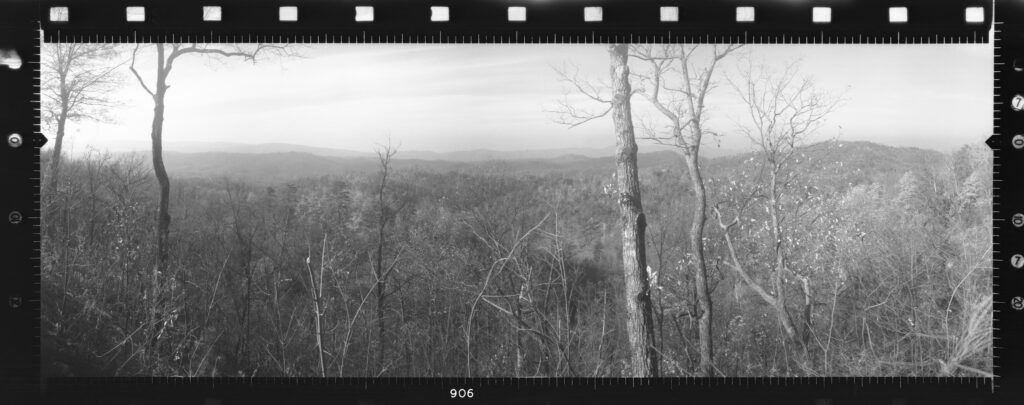
The CCC’s work also included documenting the landscape. In 1933, a young enrollee named Lester Maynard Moe was assigned to photograph panoramic views from fire towers as part of a nationwide project to map and manage the new parks.
Moe later continued the effort with the National Park Service, producing nearly a hundred sweeping images of the Smokies. His photographs remain among its earliest enduring records.
Born and raised in Maryville, Tennessee, with roots tracing back to Cades Cove, Emily Huffstetler is a proud Maryville College graduate and passionate storyteller of the Greater Smokies region.
One of the fastest-growing airports in the nation is named for a man who died before commercial air travel reached East Tennessee.
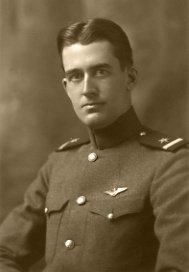
Charles McGhee Tyson was a Knoxville-raised World War I naval aviator who died in service in 1918. His name became part of East Tennessee’s aviation history because his parents, Brig. Gen. Lawrence Davis Tyson and Bettie McGhee Tyson, wanted a public memorial to him.1
Nearly a century later, the airport that bears his name sits in Alcoa. It moves millions of passengers, supports military operations and serves as the home of Cirrus Aircraft’s Vision Center, where pilots and aircraft owners come for training, delivery and support.3
The story begins in Knoxville.
After World War I, local flying activity centered around Aviation Field, later called Bearden Field, in West Knoxville. By the late 1920s, aircraft were improving, passenger demand was growing and Knoxville needed a municipal airport with room to expand.4
Knoxville’s original municipal airport opened in West Knoxville in 1927 and was named for Lt. Charles McGhee Tyson.
His parents donated land to the City of Knoxville for an airfield with the stipulation that the facility bear the name of Lt. Charles McGhee Tyson. The original airport was located on Sutherland Avenue in Knoxville, near the current site of West High School.1
Within a few years, that location was landlocked. In 1935, Knoxville purchased 351 acres at the airport’s current site in Blount County to build a facility that could accommodate air carrier traffic.4
The move reopened the naming discussion. Newspapers and boosters considered names such as Knoxville Airport, Knox-Blount Airport, Knoxville-Alcoa-Maryville Airport and Great Smoky Mountains Airport. The national park had recently been established in 1934.5
In early 1937, Knoxville city manager George Dempster said the city was bound by the original Tyson Park deed. Rather than risk losing the property, he maintained that the airport should keep its memorial name, even as it moved into Blount County.5
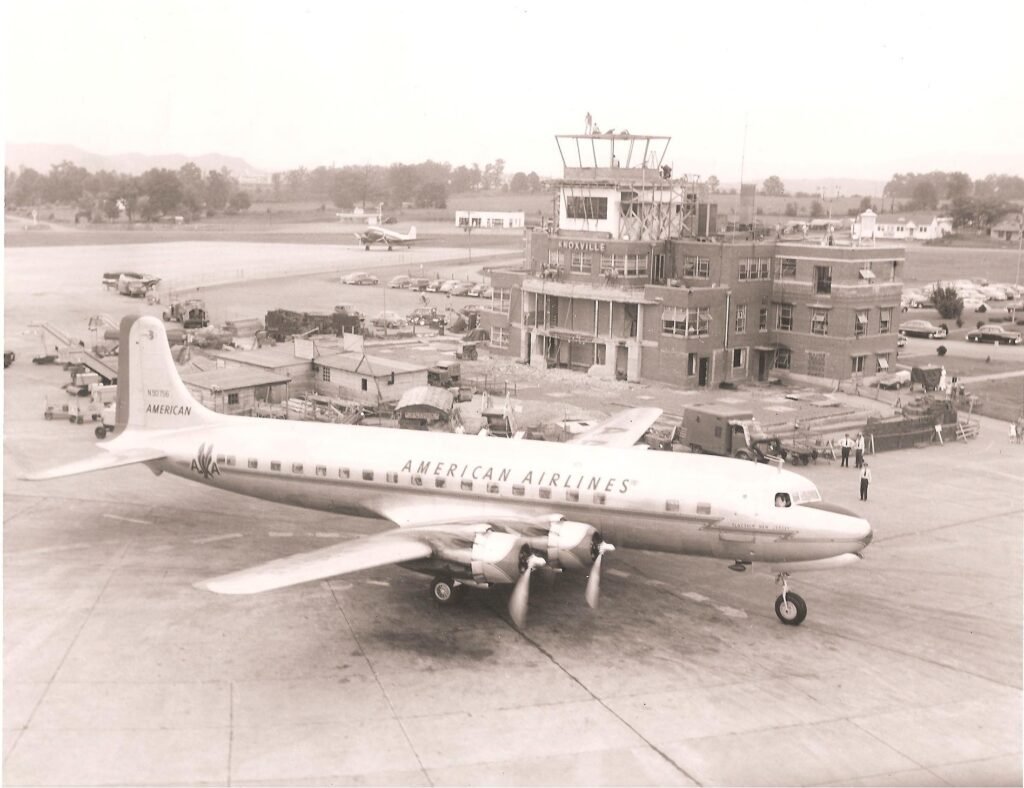
The new McGhee Tyson Airport opened in October 1937.2
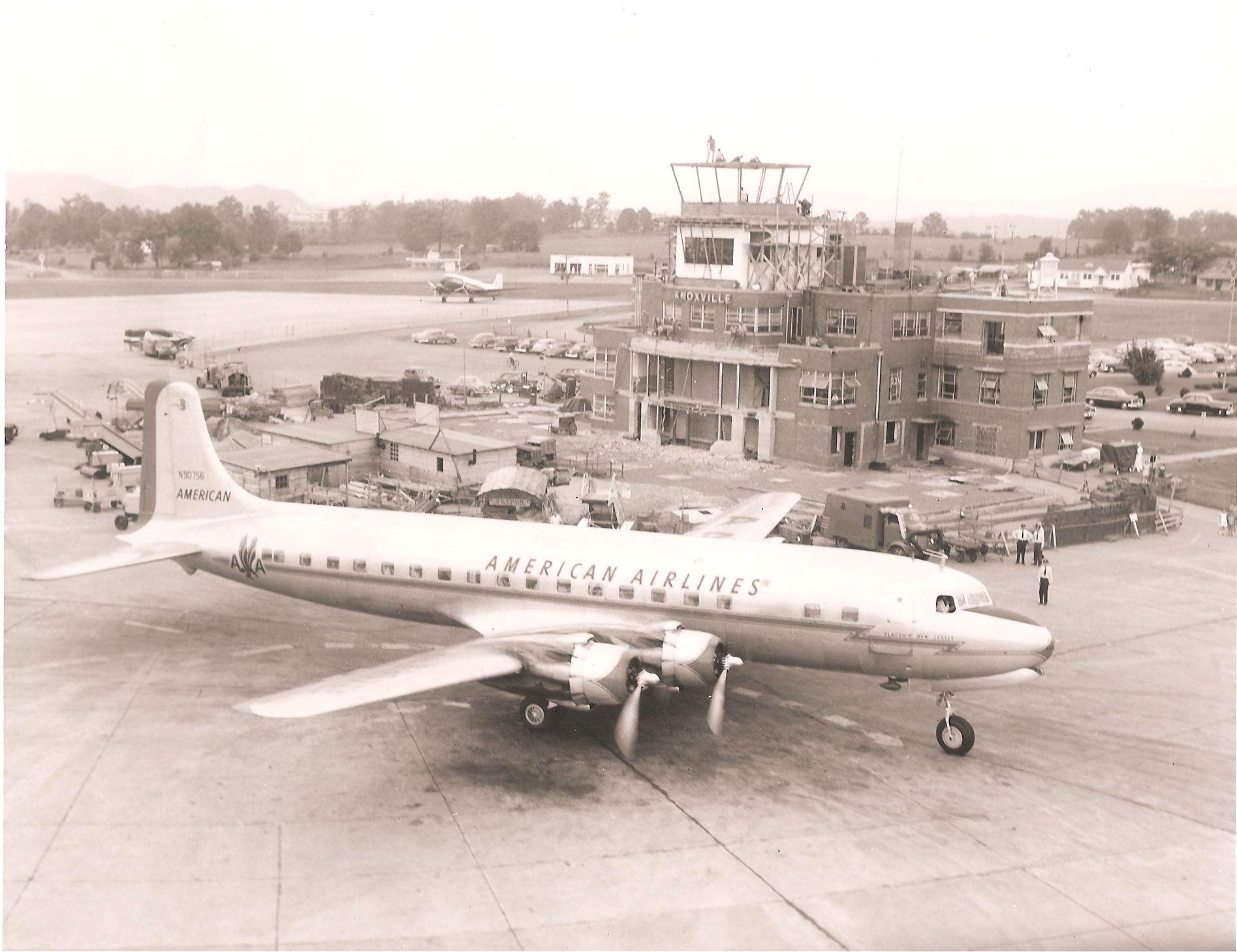
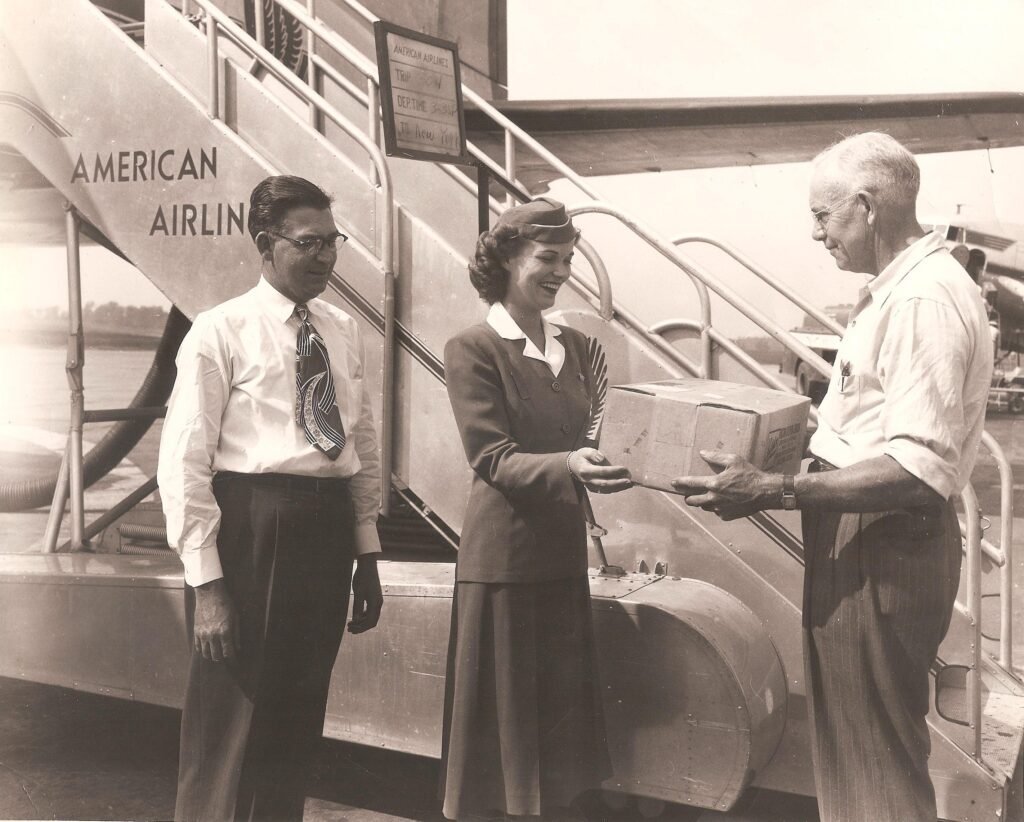
The airport expanded in its first decades, with a new control tower, longer runways and additional facilities. By the postwar years, scheduled airline service connected the region to larger cities, and public figures traveling to Knoxville, Oak Ridge, the University of Tennessee and the Smokies often came through Blount County.4
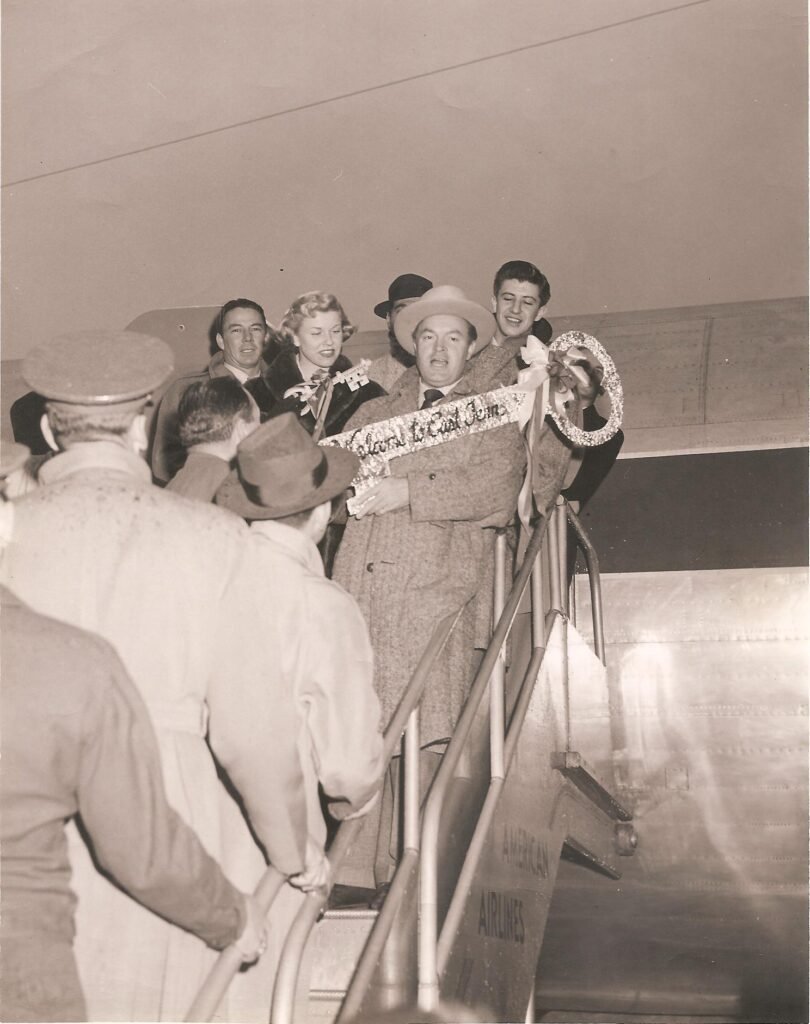
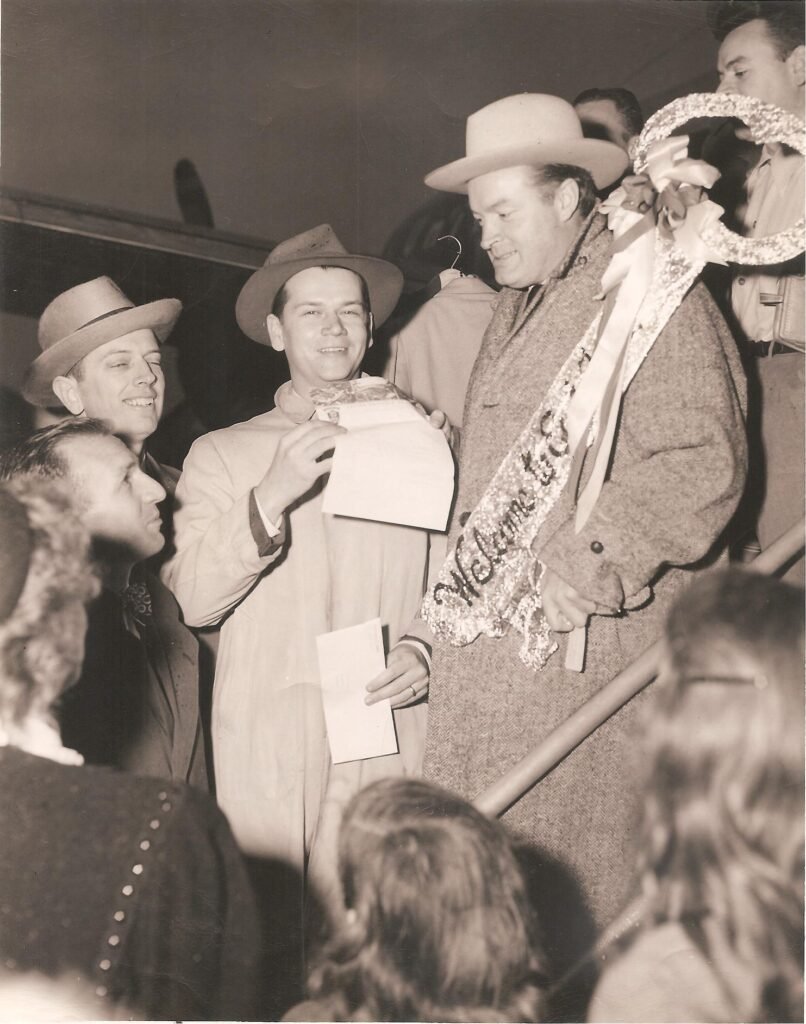
In the 1950s, Bob Hope visited Blount County through McGhee Tyson. At the time, Hope was one of the country’s most recognizable entertainers, known for film, radio, television and his USO tours.6
Other public figures, including many politicians, have visited over the years. In 2015, Air Force One landed at McGhee Tyson carrying President Barack Obama and Tennessee legislators Lamar Alexander, Bob Corker and John Duncan. Air Force Two, carrying Vice President Joe Biden and Jill Biden, followed.7
McGhee Tyson has also played a significant military role.
During World War II, the Army purchased the airport and added military facilities, including a 4,500-foot runway. After the war, the Army sold the airport back to the city, but the military presence continued.1
The location was particularly important during the Cold War because of Alcoa’s aluminum facilities, Oak Ridge’s nuclear operations and TVA dams. The first operational Air Force units were deployed to McGhee Tyson Municipal Airport on April 1, 1950, and officials announced a new $5.5 million Air Force base the following year.1
McGhee Tyson Air Force Base officially opened on Aug. 9, 1952. As the active-duty Air Force presence wound down in 1957 and 1958, the National Guard Bureau established the 134th Fighter Interceptor Group, which inherited the facilities, aircraft and mission.1
134th Air Refueling Wing hangar, present-day.The KC-46A Pegasus, equipped with advanced refueling systems.
That mission changed over time, from fighter aircraft to aerial refueling. KC-97 aircraft arrived in the 1960s, followed by KC-135 Stratotankers beginning in 1976.1
Civilian growth continued alongside the military mission. A new passenger terminal opened in 1974, a cargo complex followed in 1992 and a major terminal improvement project in 2000 added a new 12-gate concourse.4
In 2015, Cirrus Aircraft announced plans for a new Vision Center at McGhee Tyson Airport in Blount County. The project represented a $15 million investment and was expected to create 170 jobs in the Knoxville area.3
The Vision Center brought pilot training, aircraft delivery, maintenance and owner support to Blount County. It also connected the airport to the Vision SF50, Cirrus’ single-engine personal jet.3
Today, McGhee Tyson is in a period of rapid growth.
The airport welcomed 3.3 million passengers in 2024, a 17.8% increase over 2023. In 2025, it broke the record again with 3,630,410 passengers, 36 nonstop destinations and 11 new routes launched or announced.8, 9
McGhee Tyson’s Flight Plan program includes parking, roadway, gate, concourse, security checkpoint, ticket counter and concessions improvements. The first major project, a $186 million parking garage, is expected to add 3,500 parking spaces by 2027.10
Southwest Airlines’ arrival in 2026 marked another major milestone. The airline announced service beginning March 5, 2026, with five daily round trips, including twice-daily service between Knoxville and Nashville and daily round trips to Baltimore, Dallas and Orlando.11
Born and raised in Maryville, Tennessee, with roots tracing back to Cades Cove, Emily Huffstetler is a proud Maryville College graduate and storyteller of the Greater Smokies region. She holds a Master of Science in Conservation Education from Mississippi State University.
Are you looking for something to do to shake off the cabin fever of winter? As the weather heats up, there’s always something in the Smokies that is perfect for kids of all ages. But heading outdoors isn’t always the solution. One great way to find fun activities for kids indoors in the area is to head to Perpetual Motion! What Is Perpetual Motion? This is a six-acre indoor gym and outdoor play place for kids located in East Maryville, where kids have so much to do that they’ll never want to leave. Inside the 22,000-square-foot building, kids have tons of gymnastics equipment, art supplies, and areas to run, jump, climb, and have a blast. Cheerleading and gymnastic classes are offered as well, so there is an abundance of things to learn and do. Outside, Perpetual Motion offers two swimming pools, a soccer field, a volleyball court, a picnic area, several playgrounds, and lots of grass for a good game of tag. Add that to the big parking lot, and you’ve got yourself a heaven on earth for busy families that just need to let off some steam! Why Visit Perpetual Motion? Are your kids stressed out? Bored? Tired of being still? Driving you up the wall with all their energy that you can’t contain? Is even the dog wishing for a nap after a long day with your toddler? If you can relate, then you need to come to Perpetual Motion. It’s the ideal place to get all those wiggles out for kids of all ages. Bigger kids will find tons of fun things to do while the younger ones have places to play out of harm’s way. As a busy parent, you get the luxury of knowing that your kid will sleep very well after tiring themselves out with all the fun to be had. Get in touch with Perpetual Motion 4 Kids at 865-984-1253 or online to learn more. Other Fun Activities for Kids in Maryville While we think Perpetual Motion is one of the best places to go in Maryville for kids of all ages, there are many other activities to take advantage of, as well. Have older kids that want to get outdoors? Head to Frontier Anglers and set up a guided trout fishing trip. For families of all ages who need more family time, head to Crest Bowling Lanes or the Smoky Mountain Skate Center. For quieter activities for kids, try the Cades Cove Museum to learn the history of the region, or the Parkway Drive In, where you can watch movies the old-fashioned way! Art classes at Studio 212 Arts are another great way to have fun together with your children. There is so much for families to explore here in Blount County. Head to Maryville, TN for more fun activities for kids!
One of the least popular parts of living in a modern city is the concrete jungles they have become. These days, finding trees, let alone animals, can be challenging. But for those who come to visit Maryville, TN to get away from it all and grab some fresh Smoky Mountain air, there is one place you simply cannot afford to miss. The Pistol Creek Wetland Center is a peaceful haven filled with local flora, fauna, and wildlife designed to be enjoyed by schools, civic organizations, families, and just about anyone who wants to get back in touch with Mother Nature.
Where It All Began
In the late 1990s the city of Maryville, TN purchased a section of the old Delozier farm on Montvale Station Rd. In 2006, the Environmental Protection Agency awarded the City of Maryville a grant that covered the entire cost of the project, leaving the city with no bills to pay. Under the watchful eye of Dr. Ben Cash and Dr. Mark O’Gorman, students from Maryville College participated in the initial study along with post-construction activities at the Center. Once the initial construction of the Center was finished, the area grew into a sapling grove filled with invasive species.
And On to Today
Today, the Center offers visitors a chance to stroll along walkways that offer informational signs filled with educational details about the many different types of plants, native birds, and animals that have chosen to call the Center home. The entire area has been turned into a learning center. The signs also share information about the wetlands and how important they are to our environment. Students from Maryville College continue to contribute by working with the many different school classes that come to the Center each year. They share a wealth of knowledge with the kids, covering many of the local wildlife, and often introducing them to living members of various species. This is a golden opportunity to teach today’s kids what it’s like to get in touch with nature.
The Legacy Will Continue
Thanks to the tireless efforts of the Maryville College students, Dr. Matt Gray – a professor who teaches Wetlands Ecology and Management at UT – and a task team, the long-term outlook for the park is excellent.
Before You Go
If you are considering taking a civic group or school class to the facility, you should contact the Center at (865) 273-3401 to make a reservation. Book early as availability is limited and on a first come, first served basis. We recommend that schools send only one class at a time to ensure the best possible experience for the students. There is plenty of parking for busses and no charge for you to bring your kids to the center. ThePistol Creek Wetland Center is the perfect place for kids and adults of all ages to get back in touch with nature and enjoy an incredible array of local plants and animals. Come back several times a year to see how the scenery changes with each season.
If you are wondering where you might travel to enjoy an unforgettable Christmas in the Smokies, you may find that the Peaceful Side offers a surprising array of holiday experiences for people of all ages.
Winterfest
For most, it all begins with the different Winterfest kickoff events that occur in the larger towns of the area. Winterfest is an annual event that sees the region draped in millions of holiday lights and really celebrating the season with all kinds of special events, programs and decorations. The kickoff events usually include parades, such as the Townsend Christmas Parade or the parades in Gatlinburg, Sevierville or Pigeon Forge. In fact, Winterfest is thought to be one of the most anticipated celebrations throughout the entire Smokies region. You can partake of it by following one of the different self-guided auto routes, or you can have just as much fun by staying in the towns. This is because the many different businesses get in on all of the fun and host everything from special food or beverage tastings to entertainment, meetings with Santa and more.
Trolley Rides
As part of the Winterfest experience, you can also enjoy one of the different trolley rides that let you savor the views and hop on or off whenever you see something you’d like to do. The trolleys are affordably priced and you can even find tickets online for some of them. Shadrack’s Christmas Wonderland in Kodak (near Sevierville) is a popular destination and offers lots to see and do.
Dollywood
As one of the most family-friendly spots in the country, Dollywood also really shines at Christmas. Guests will meet costumed characters, enjoy a parade of lights, see the “Carol of Trees” and be able to catch a musical show that features Dolly Parton herself (well, a hologram of her!)
Views Galore
Another way to really savor the magical holiday experience in the Smokies is to use one of the destinations that brings travelers far above the towns and lets them get a birds-eye view of the seasonal displays. Ober Gatlinburg is one such example and is the only ski facility in the region. You don’t have to ski to enjoy it, either; you can just take a ride up the aerial tram. There is also the Great Smoky Mountain Wheel in Pigeon Forge for a stunning look at the millions of lights. Of course, the views and magical experiences don’t have to be grand and overwhelming. Take the charming Holiday Model Train Exhibit at the GSM Heritage Center in Townsend, with a garden scale train and winter wonderland theme. The Santa Mouse Christmas House Craft Show is also a nice way to see some cheery holiday sights, and the mid-November Holiday Homecoming in Townsend is also a magical way to kick off the season with music, a Christmas village, a visit from Santa, crafts, food and more.











Recent Comments