
Long before DoorDash and Instacart, rolling stores delivered essentials to Blount County residents who couldn’t make a quick run to town. Trucks or retrofitted buses followed regular routes, stocked like a compact general store.
America had traveling merchants long before the term “rolling store” existed. But the model changed once motor vehicles became more common. A driver could carry more goods than a peddler on foot or a wagon could manage and cover longer distances. By the early to mid-1900s, rolling stores were a part of everyday life in many rural communities.
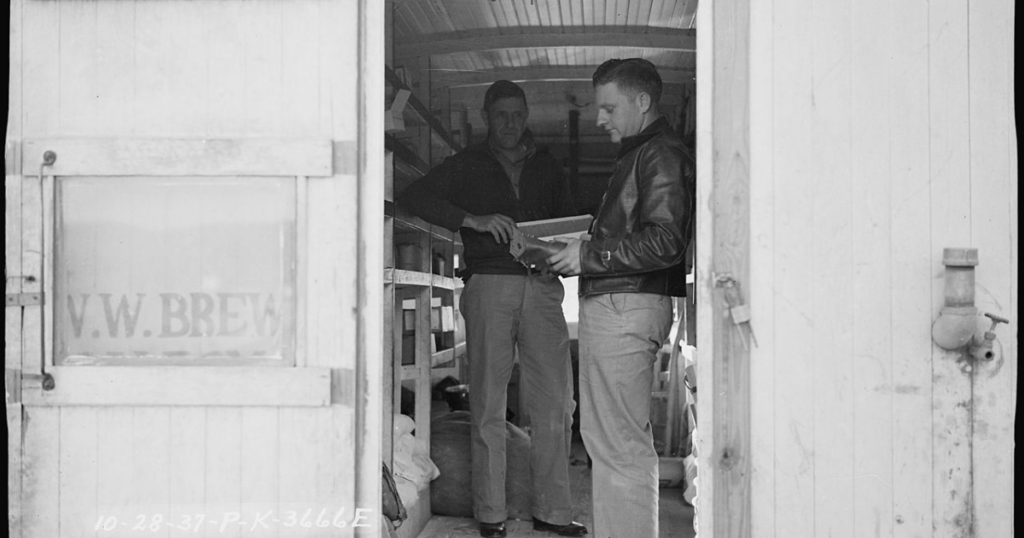
Interior of Murphy Brothers’ Rolling Store (1937). This Tennessee Valley Authority photo offers a helpful example of how rolling stores may have been stocked and arranged in nearby Appalachian communities, including Blount County. Tennessee Valley Authority; National Archives. Public domain.
By the 1940s and into the early 1950s, rolling stores were still part of the landscape here, especially in rural areas. In Snapshots of Blount County History, Volume II, Dean Stone (1924-2016) writes that Charles K. Walker, Henry Ernest Simms and A. W. Walker were among the last to operate rolling stores locally, with as many as five stores operating at a time.
AI-generated reimagination of a Blount County rolling store truck based on a description in Snapshots of Blount County History, Volume II by Dean Stone (details include steps at the rear, a chicken coop above the cab and a kerosene tank). Image generated with OpenAI’s DALL·E, 2026.
One rolling store Stone describes was built on a 2 ½-ton Dodge truck chassis, with steps at the back for customers to climb in. A wooden coop for live chickens rode above the cab, and a kerosene tank often sat on the “back porch” area to supply lamps and stoves, back when kerosene was commonly called coal oil. During World War II, rolling stores were especially useful, since gasoline and tires were rationed.
Although mobile, rolling stores had a home base. According to Stone, many were headquartered at Walker’s Cash Store on Montvale Road, just south of Magnolia Cemetery. Walker’s trucks had the store’s phone number painted on the side, 865-R.
As roads improved and more families had reliable transportation, the rolling store became less necessary. But the tradition of independent grocery stores still has a place in Blount County.
Amburn’s Market exterior and interior. Photos courtesy of Blount Partnership.
In Maryville, Amburn’s Market is one example. The market traces its roots to 1952, when Virgil Amburn began selling fruit from the trunk of his car. Today, it’s known for market-style shopping with a focus on seasonal produce and regional goods, including fresh produce, dairy and eggs, plus locally sourced meats.
A few minutes away, Horn of Plenty Marketplace offers another independent option with a farm-market feel. The shop has local products and specialty items. Along with produce, you’ll find a mix that leans giftable and pantry-friendly, as well as a small nursery on site.
Born and raised in Maryville, Tennessee, with roots tracing back to Cades Cove, Emily Huffstetler is a proud Maryville College graduate and storyteller of the Greater Smokies region.
One of the most beautiful sights to see in the Smoky Mountains is a sunset. The mountain peaks take on a rosy glow, and overhead you can see the hint of stars starting to peek through. The foothills below the peaks fall asleep, and all around, the magical night view starts to take over. It’s a stunning natural phenomenon that happens every single night, and as residents of Blount County, we’re lucky enough to see it regularly. One of the best places for visitors to get the best look at this amazing sight is Clingmans Dome. Find the Observation Tower at the Highest Point in the National Park Located at 6,643 feet, the observation tower at the top of Clingmans Dome is the highest point in the Great Smoky Mountains National Park. Up here, you can get full views of the mountains from every direction, with nothing at all in the way of the amazing sights. No buildings, no crowds, no billboards – just the gorgeous sight of the mountains stretching out around you. It takes just half a mile to walk the trail, and although it’s steep, it is paved and you can easily follow the path with no troubles. Be aware that pets and bikes are not allowed on the path up to the observation deck. The trail is also too steep for wheelchair accessibility. Didn’t Make It In Time for Sunset? Don’t Worry If you start the seven-mile drive to the path that takes you to the observation deck and the sun is already setting, don’t worry – you can still have that romantic moment with a great view. The road has many pull-offs with great views of their own, and you can easily enjoy the sunset from there! Be Prepared for That Sunset Kiss On very clear days, the view from Clingmans Dome extends more than 100 miles in all directions – and even on foggy days, you’ll still be able to see out at least 20 miles in every direction. When the sun casts its beautiful pink and purple sunset shadow on the peaks, get ready for that romantic moment with your loved one. There’s nothing like sharing the beauty of nature together in a way that most people never get to. Getting to Clingmans Dome In order to get to Clingmans Dome, you’ll need to turn off Newfound Gap Road about 0.1 miles south of Newfound Gap. Follow this road, which is Clingmans Dome Road, seven miles, and the road will end in a parking lot. From the parking lot, follow the paved path along the half-mile walk, and you’ll be at the observation tower. While the observation tower is always open, the road to the dome is closed in the winter and when the weather conditions could be dangerous.
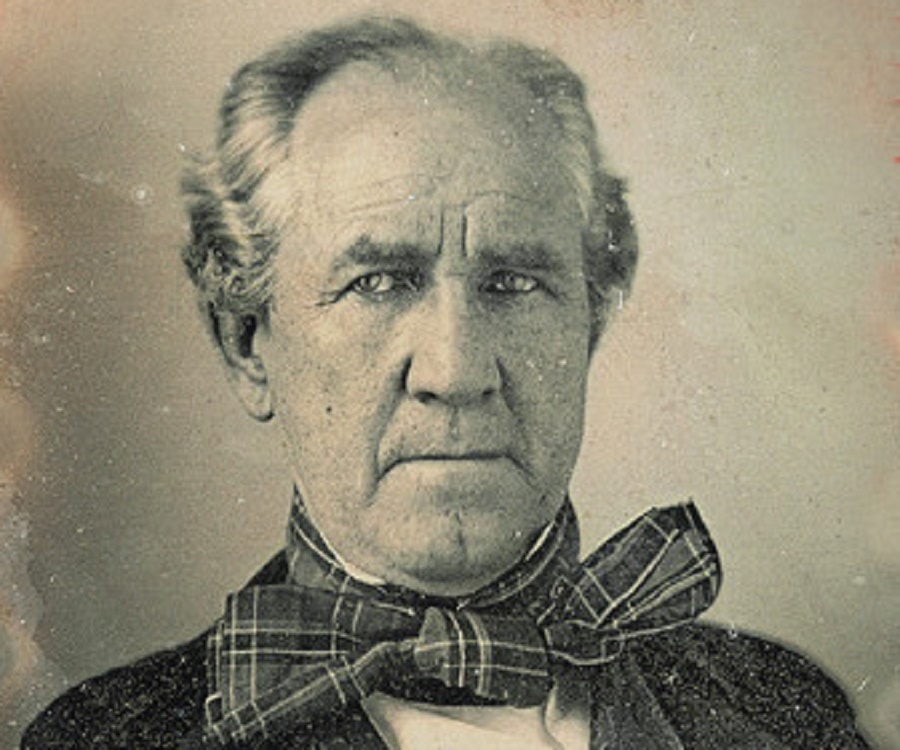
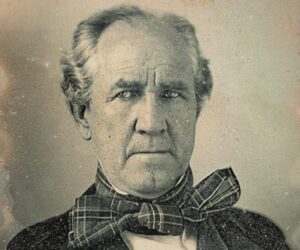
Sam Houston is best known for his leadership during the Texas Revolution and his presidency of the Republic of Texas, but he also has strong ties to the Peaceful Side of the Smokies. Born on March 2, 1793, in Timber Ridge Church, Virginia, Houston was the fifth of nine children. Following the death of his father in 1806, his family moved to a 419-acre farm in Maryville, Tennessee.
Young Houston didn’t get along with his family and was frustrated about his new responsibilities on the farm. At 16, he ran away to live with a band of Cherokees on the Tennessee River. Chief Oo-loo-te-ka (“He who puts away the drum”) became a father figure to Houston, giving him the name Co-lon-neh (“The Raven”).
By this time, most Cherokees were settled farmers and hunters, living in 60 to 70 loosely formed bands. Chief Oolooteka’s band comprised 82 men, 98 women, 66 horses, 170 head cattle, 242 hogs and 32 spinning wheels. The people lived in wigwams, dome-shaped shelters covered in bark or hide, while Chief Oolooteka had a two-story frame house.
Houston would visit Maryville and purchase gifts for the Cherokees, like ammunition and blankets. In the spring of 1812, he decided to move back to town to repay his debts. Despite little formal education, he became a teacher, charging $8 per term. Students could pay one-third in cash; one-third in corn; and one-third in calico cloth, the material he made his shirts with.
From May to November, Houston taught a variety of subjects, including reading, writing, arithmetic, history, classics and German. He allowed the students a break in July for the crop harvest.
Following his teaching stint, in 1813, Houston joined the U.S. Army and served under General Andrew Jackson during the Creek War. Houston’s valor during the Battle of Horseshoe Bend in 1814 earned him severe injuries, but it also secured Jackson’s lifelong mentorship.
Jackson appointed Houston as the Indian Subagent in 1817. The next year, the U.S. started to implement a controversial treaty that forced the Cherokee to cede their lands in Tennessee in exchange for new territory west of the Mississippi River. Houston was tasked with removing his Cherokee foster family from Tennessee, an assignment he carried out despite its emotional toll. He ensured that the treaty’s promised provisions—such as blankets, rifles and rations—were supplied to the Cherokees.
In 1818, Houston encountered another challenging situation when he accompanied a Cherokee delegation to Washington, D.C., to meet President James Monroe. Houston appeared at the White House in traditional Cherokee dress, which offended John C. Calhoun, the Secretary of War. Calhoun reprimanded Houston and accused him of participating in the slave trade. Although Houston swiftly cleared his name, the incident prompted him to resign from his role as Indian Subagent. This series of events created a lasting rift between Houston and Calhoun.
Houston set out to study law in Nashville, passing the bar in just six months. He opened his own practice in Lebanon, where he could be close to Jackson. From there, his political career took off. He was appointed Adjutant General of Tennessee in 1818 and Attorney General of the Nashville district.
In 1823, Houston was elected to the U.S. House of Representatives, largely due to the backing of Andrew Jackson and his machine. He leveraged his position to support Jackson’s presidential bid. After serving a second term, he successfully ran for the governorship of Tennessee in 1827.
Houston was on his way to a national career in politics, but his personal life turned things upside down. At 35, he married 18-year-old (or 19-year-old, according to some sources) Eliza Allen of Gallatin. After just 11 weeks, she moved back home with her parents and refused Houston’s efforts to reconcile.
To this day, the cause of the marriage’s failure remains a mystery. However, the incident, along with his reputation for public drunkenness, led him to fall out of favor with the public. On April 16, 1829, Houston resigned as the Governor of Tennessee. He decided to reunite with the Cherokees in Indian Territory, modern-day Oklahoma, where they had been forcibly relocated.
Soon thereafter, Houston became a Cherokee citizen and married Tiana Rogers (c. 1799-1838), a woman of mixed English and Cherokee descent. During his three years in Indian Territory, Houston operated a trading post and continued to be notorious for his heavy drinking.
Houston eased back into politics, travelling to Tennessee, Washington and New York as a peacemaker and representative for the Cherokee, Osage and Creek tribes. His political momentum picked up after a dispute over a Native American issue with William Stanbery, a U.S. Representative from Ohio. After being reprimanded by the House of Representatives for assaulting Stanbery, Houston fully resumed his political career, with a new chapter awaiting him in Texas.
Visitors to Maryville can explore Sam Houston’s legacy at the Sam Houston Schoolhouse, a one-room log cabin where he taught as a young man. The site offers an immersive experience, allowing students of all ages to engage in colonial-era school activities, including games and traditional chores. Additionally, a bronze monument of Houston, recently installed at the Maryville Municipal Building, honors his life and legacy in Tennessee.
Born and raised in Maryville, Tennessee, with roots tracing back to Cades Cove, Emily Huffstetler is a proud Maryville College graduate and passionate storyteller of the Greater Smokies region.

Is there anything more fun than the thought of packing up the family RV and hitting the road when the weather is finally heating up? Spring has arrived in the Maryville area, and we’ve got plenty of ways to enjoy the view. If you’re planning to take some RV trips in Maryville or the surrounding areas this year, here are some of the most peaceful campsites and the most beautiful drives along the way.
Top-Rated Campsites for RV Trips in Maryville
The first thing you need to do to have a peaceful RV vacation in Maryville is choose your campground! The Maryville area offers many secluded RV parks and campgrounds that are just perfect for a relaxing family getaway. You can try the Whispering River Resort, located just a short 10-minute drive away from Maryville in Walland. This campground is the closest to the stunning Tail of the Dragon, a scenic route that is perfect for motorcycles or a leisurely drive around the mountain. Or try Mountaineer Campground, just a short drive away in Townsend, where you can take a quick drive to Cades Cove. Cades Cove is one of the most scenic routes to drive, bike, or even hike. This area is perfect for RV campers who want to be surrounded by as much beautiful mountain scenery as possible. Another great campground in the same area is Big Meadow Family Campground, which is ideal for RV campers with kids. Plenty of playground equipment, a splash pad, and fenced-in areas for dogs make this campground perfect for getting some peace while the kids have some fun!
Take a Drive (or a Hike) Through Peaceful Maryville
While you’re on your RV trip to Maryville, you have plenty of opportunities to drink in the scenery. In addition to Cades Cove and Tail of the Dragon, why not try a drive from Maryville to Clingmans Dome? This is a 57-mile trip that you can drive year-round. You’ll get some of the most stunning scenery in the area along this drive, and it’s easy enough for drivers of all skill levels to enjoy. Relax and let the jaw-dropping view of the mountains in spring refresh your spirit after the long winter. When you end your drive at Clingmans Dome, you’ll be in the heart of the Great Smoky Mountains National Park, and it’s easy to park your car and hike to waterfalls, or find picnic spots for lunch. Then you can head back to your peaceful RV camp and enjoy the peaks in the distance as you curl up for a good night’s rest. This spring, let Maryville be your ideal getaway for peaceful relaxation!
When Joe Emert agreed to a speaking engagement at Blount County’s Tennessee Veterans Business Association, he probably didn’t realize the amount of change it would create in the community. After finishing his lecture on Sam Houston’s youth in Maryville, Mary Childress, president of the Veteran Heritage Site Foundation, inquired if a list of all veterans buried in the Great Smoky Mountain National Park existed. Emert’s search came up empty, which ultimately lead to a project that has currently identified 163 veterans buried in the park, spanning both Tennessee and North Carolina sides.
Putting Together the Team
After initial discussions, GSMNP Spokeswoman Dana Soehn connected Emert to Frank March, co-author of A Field Guide to Cemeteries of the Great Smoky Mountain National Park. March then introduced him to the key folks who would lead the effort in the identification. Sheila Evans of the Daughter of the American Revolution in Cocke County, Tennessee, and Don Casada with Friends of Bryson City Cemetary in Swaine County, North Carolina, pulled their resources together to get this project started.
Finding Our Veterans
Before becoming a national park, many small communities lived and died throughout the property. Cemeteries on the property are the resting place for veterans spanning the Revolutionary War, the Civil War, and the Vietnam War. Many grave markers are nothing more than fieldstone in the older cemeteries, leaving behind no engravings or ways to identify the dead. Even with careful research and the assistance of local sources and organizations, the team realizes they’ve missed veterans. Of the one hundred sixty-three veterans buried in the Great Smoky Mountain National Park, the team has identified one hundred and three buried in Tennessee: twenty-six in Blount County; thirty-eight in Sevier County; and thirty-nine in Cocke County. There are sixty known veterans buried in North Carolina: forty-nine in Swain County and eleven in Haywood County.
Database Development
The team is currently working to develop a publicly available interactive database of all the veterans buried in the national park. They hope to include biographical data, cemeteries locations, and the wars and unit records where they served. Listed separately will be cenotaphs (headstones in a location with no buried body) and cremated veterans whose ashes have been registered and scattered in the park. They will also include bodies that were initially buried in the park and later moved to a new location before the Fontana Lake flooding.
How You Can Help
“Our goal is to honor and protect the valor of those who served and not let their memory be erased because of where they are buried,” Emert said in a release. “We are putting this initial list out for review by the public to ensure we are not missing any veteran who is buried in the national park.” The list can be viewed on the Great Smoky Mountain Heritage Center website and on the Friends of the Bryson City Cemetery website. The group asks anyone with information on a veteran buried or whose remains are scattered in the GSMNP to contact Don Casada at [email protected].
If you are interested in learning more about Smoky Mountains history, check out these blog posts:
Taste of Blount returns to Maryville for its 23rd year.
Written by: Emily Huffstetler
From concerts and festivals to workshops, markets and family fun, September on the Peaceful Side is packed with ways to celebrate community and the outdoors. Here’s a preview of what’s in store.
September 4 – Taste of Blount The 23rd Annual Taste of Blount takes over Theater in the Park in Maryville, right across from the Blount County Courthouse. From 6 to 8 p.m., sample savory favorites from local restaurants, caterers, food trucks and gourmet grocers.
September 4 – Songs by the Brook Concert Series Settle into a beautiful evening at Springbrook Park in Alcoa with Americana, folk and blues music performed by regional and local musicians. Concerts run from 6 to 9 p.m. with food vendors on-site.
September 4 – Inklings! A Writing Club Join published authors KB and Ted for the first meeting of this new writing group at Neighborly Books in Maryville. Writers of all ages and genres are welcome to share work, ask questions and receive professional feedback. It starts at 6:30 p.m.
September 4 – Community Canvas: Group Art Exhibition The Clayton Center for the Arts in Maryville hosts a wide-ranging exhibition featuring East Tennessee artists, running through October 26. Mark your calendar for the Artists’ Reception on October 16 at 5:30 p.m.
September 5 – The Tasting Table Sip, learn and connect at Vienna Coffee Company in Maryville during this free coffee tasting event. Drop in any time from 10 a.m. to 1 p.m.
September 5 – Drivin N Cryin VOLS of Honor Benefit Classic rock favorites Drivin N Cryin return to The Shed in Alcoa for a benefit concert supporting the VOLS of Honor scholarship endowment at UTK. Music begins around 7:30 p.m.
September 5 – Sunset Series: Blue Ridge Gathering Catch an unforgettable neo-traditional performance by Blue Ridge Gathering at the Great Smoky Mountains Heritage Center amphitheater in Townsend. The show runs from 7 to 9 p.m., with food and drink available on-site.
September 6 – Maryville Farmers Market Shop fresh produce, baked goods and handmade crafts from local vendors at Founders’ Square in Downtown Maryville. Open from 8:30 to 11:30 a.m. every Saturday through November.
September 6 – Cornhusk Wreath Workshop Make a fall-themed wreath at Louisville Mercantile, using natural corn husks, seed pods, pumpkins and more, from 9 to 11 a.m.
September 6 – Songwriters Showcase The Bird and the Book in Maryville hosts local songwriters for an evening of original music, from 6 to 8 p.m. Free admission with food and drinks available.
September 7 – Gotta Tri Youth Triathlon Kids ages three to nine can bike, run and splash their way through this family-friendly triathlon at Springbrook Pool in Alcoa. This friendly competition runs from 1:30 to 4 p.m.
September 10 – Friendly Ghost & Fall Crafts Celebrate spooky season early at REO Cheesewagon in Maryville, where you’ll create whimsical ghost art and autumn-scented wax melts in this hands-on workshop. It begins at 6 p.m.
September 12 – Morgan Wade with Boy Named Banjo Spend the evening with two powerhouse acts when Morgan Wade and Boy Named Banjo take the stage at The Shed in Alcoa. Music begins around 7:30 p.m.
September 12 – Landslide: A Tribute to Fleetwood Mac Experience the iconic music of Fleetwood Mac live at the Great Smoky Mountains Heritage Center in Townsend. Doors open at 5:30 p.m., and the show begins at 7:00.
September 13 – Folk Medicine: Fire Cider Workshop At the Great Smoky Mountains Heritage Center in Townsend, learn to make Fire Cider, a traditional herbal remedy that boosts immunity, aids digestion and fights inflammation. The workshop runs from 10:30 a.m. to 12 p.m.
September 16 – Cheese and Quiet Bring a blanket, book or podcast and enjoy a calm, cozy evening with good cheese and good company at REO Cheesewagon in Maryville, from 5 to 8 p.m.
September 18 – Jewelry Class: Spider Pendant Get creative at Creative Spark Studio in Maryville as you craft a wire and gemstone spider pendant with step-by-step instruction. Designed for ages 15 and up.
September 18 – Fall Bow Making Add seasonal charm to your home with a bow-making class at Louisville Mercantile, where you’ll design three custom bows for wreaths, gifts or décor.
September 18 – One Night in Memphis Relive a legendary jam session with Elvis, Johnny Cash, Jerry Lee Lewis and Carl Perkins at the Clayton Center for the Arts in Maryville. This high-energy tribute brings all four icons together for one unforgettable night. Music starts at 7:30 p.m.
September 19–20 – Outdoor Enthusiast Expo This two-day celebration at Maryville College brings together hunters, anglers, hikers, birders, paddlers and nature lovers through hands-on activities and shared learning. Evening talks on conservation showcase how diverse outdoor communities protect ecosystems for future generations.
September 20–27 – Plein Air Smokies Watch acclaimed artists paint in and around the Great Smoky Mountains, with proceeds benefiting Tremont Institute.
September 20 – Fall Market Browse local vendors, enjoy live music and savor brunch and coffee during the Fall Market at Southern Grace Coffee Co. in Maryville, from 9 a.m. to 2 p.m.
September 20 – Fresh Flower Arranging Workshop Design your own seasonal floral arrangement with guidance from Burton’s Bloomers during this creative workshop at Louisville Mercantile, from 11 a.m. to 12:30 p.m.
September 20 – Oktoberfest Raise a stein with guest breweries, costume contests and competitions at Peaceful Side Social in Townsend. Festivities run from 12 to 8 p.m.
September 22 – Blount County Recycling Center Tour Take a behind-the-scenes look at local recycling programs with Keep Blount Beautiful during a guided tour of the Blount County Recycling Center, starting at 9 a.m.
September 23 – Hiking Clinic Learn about trail terrain, gear and nutrition during this evening clinic hosted by Little River Trading Co. in Maryville. Registration is required for hike participation. The clinic begins at 5:30 p.m.
September 24 – Pressed Flower Workshop Sip craft beer while making pressed-flower art in this cozy hands-on class at Tri Hop Brewery in Maryville, beginning at 6 p.m.
September 25 – Songs & Stories Lee Zimmerman hosts an evening of storytelling and songcraft with local musicians at Peaceful Side Brewery in Townsend. Free admission from 6 to 8 p.m.
September 26–28 – Naturalist Skills Join a weekend course on nature observation, journaling and outdoor connection at Great Smoky Mountains Institute at Tremont.
September 26 – Community Benefit Sale Shop gently used items to support over 20 local charities during the monthly benefit sale at New Providence Presbyterian Church in Maryville, from 8:30 to 11:30 a.m.
September 27 – Dash for Trash Volunteer for a family-friendly litter cleanup with Keep Blount Beautiful, followed by snacks and giveaways at Blackhorse Pub & Brewery in Alcoa. The cleanup runs from 10 to 11 a.m.
September 27 – Smart Cycling Course Learn safe bicycling skills during this free class at the Blount County Public Library in Maryville, from 9 a.m. to 12 p.m.
September 27 – Blue Ribbon Country Fair The Great Smoky Mountains Heritage Center in Townsend transforms into an old-fashioned county fair with farm animals, heritage demonstrations, skillet-throwing and games. Festivities run from 10 a.m. to 4 p.m.
Born and raised in Maryville, Tennessee, with roots tracing back to Cades Cove, Emily Huffstetler is a proud Maryville College graduate and passionate storyteller of the Greater Smokies region.

While some national park services are limited during the federal shutdown, Townsend and Blount County remain open and welcoming. Great Smoky Mountains National Park itself is still accessible, but with fewer staffed facilities, some visitors may want additional options to round out their trip.
Tourism is essential here. In 2024, visitors contributed more than $610 million to the local economy. With so much to see and do beyond the park’s boundaries, this is the perfect time to discover more of the Peaceful Side of the Smokies. Here are our top picks.
Camping and Glamping
Townsend offers a range of camping options, from riverside retreats to luxury glamping. Little Arrow Outdoor Resort combines comfort with adventure, offering everything from tiny homes and Airstreams to community events, a pool, hiking trails and even onsite massage. Big Meadow Family Campground, a long-time favorite, provides spacious RV sites, family amenities and 24-hour security.
For outdoor enthusiasts, Vee Hollow Campground pairs full hook-up sites with direct access to a 14-mile mountain bike trail system, while the new Smoky Waters Campground offers a more traditional, affordable camping experience just minutes from Cades Cove. In Walland, Whispering River Resort features riverside cabins, primitive campsites and over 1,000 feet of access to the Little River.
Dining
Townsend and Blount County offer a wide range of restaurants, from casual spots to special-occasion dining. Visitors looking for budget-friendly options can explore our guide to restaurants $16 and under, while those interested in elevated meals can find recommendations in our fine dining guide.
Trails and Walks
The Townsend River Walk & Arboretum offers a peaceful riverside stroll, complete with whimsical fairy villages in the Children’s Discovery Garden. The Maryville-Alcoa Greenbelt Trail spans 18 miles, connecting parks, a library and Maryville College. For a deeper sense of place, the Shadows of the Past Trail in Townsend leads walkers through 13 historic sites across 10 miles.
Heritage and Attractions
History runs deep in Blount County. The Great Smoky Mountain Heritage Center spans 7,000 years of culture, from Native American life to pioneer days. The Sam Houston Schoolhouse, the oldest school in Tennessee, preserves artifacts that reveal the area’s educational history. The Little River Railroad and Lumber Company Museum highlights the industry that shaped Townsend, while Tuckaleechee Caverns offers an underground escape of towering formations and clear streams.
Local Artisans
Shopping local directly supports the people who call the Peaceful Side home. The Townsend Artisan Guild and Gracehill Fine Art & Basketry highlight local creativity, while Wood-N-Strings Dulcimer Shop showcases hand-crafted Appalachian instruments. Each purchase helps sustain a maker’s way of life—just in time for the holiday season.
Still planning a trip to the GSMNP? Check the park’s official “Plan Your Visit Alerts” page before arriving.
Born and raised in Maryville, Tennessee, with roots tracing back to Cades Cove, Emily Huffstetler is a proud Maryville College graduate and passionate storyteller of the Greater Smokies region.

Every autumn travelers journey to the Smoky Mountains from all over the world to experience the crisp air, comfortable temperatures and fall foliage. Affectionately called “leaf peepers,” these visitors seek the best and brightest leaves of the season, stay in the coziest inns and eat popular local cuisine, all at the best rates. Planning a relaxing fall trip isn’t out of reach or overly-complicated. It’s possible to organize an exciting fall adventure at the touch of a button with mobile devices like the 4G LTE iPhone 6, iPad Air 3 or Samsung Galaxy S6.
“Many people take advantage of long weekends for these fall trips, and a lot of times, those weekends go by faster than expected,” says Nathan Waddell, director of sales in Tennessee. “Travelers have to make the most of their time, and with today’s mobile devices and a reliable 4G LTE with national coverage like U.S. Cellular’s, they can be well informed instantly.”
Whatever the reason people travel or wherever they go, studies show that mobile devices are becoming a prominent travel resource. According to a recent U.S. Cellular Better Moments Survey, 23 percent of mobile customers booked airline tickets , and 35 percent of smartphone users used their mobile devices to book hotel reservations. Forty-four percent used smartphones to coordinate plans with others.
To help plan a great fall trip, the experts at U.S. Cellular recommend the following web sites and apps: Great Smoky Mountains app: With a park map and information about picnic spots and restrooms, this is a perfect app to use when planning your day in the National Park. It includes the official guide book to the Smoky Mountains, too. AllTrails (iOS, Android — Free): This app is for outdoorsy travelers looking to be on the trail seeing the foliage up close. Featuring 50,000 trail guides in the U.S. and Canada alone, smartphone users will know where to go whether they’re seeking a grueling mountain bike ride, or a kid-friendly hiking trail. Filter trails by activity and location and get reviews by fellow leaf peepers. Trailblazers can even create new trails with GPS tracking, photos and text. TripAdvisor (iOS, Android — Free): This comprehensive app lets users find reviews for all facets of travel, including airfare, bed and breakfast reservations and restaurants. Including over two million reviews by fellow travelers, everyone – singles, families and retirees – can experience and share the best East Tennessee has to offer. Flickr (iOS, Android — Free): iOS and Android users can both accentuate the fall colors in their pictures with a wide variety of editing tools, like filters, contrast, and color balance. Take a video or picture and share the experience with friends and family.
“Seeing fall foliage, hiking in the Smoky Mountains, or having a late-season stay in Townsend, can be enhanced with the right information at the right time,” says Waddell. “With U.S. Cellular’s nationwide coverage, you can catch the best wind, find a hayride and see the best colors without getting stuck in the rain.”
Smokies Life CEO Jacki Harp (right) and Smokies Supervisory Park Ranger Lisa Nagurny examine an aquatic creature found in a nearby stream during an Experience Your Smokies session last fall. Join Harp for a special meet-and-greet and leisurely hike along the Fighting Creek Nature Trail on Oct. 8. Photo courtesy of Experience Your Smokies–Tennessee.
Written by: Smokies Life
Smokies Life announces its fall schedule of Branch Out events, with 19 total activities and adventures being offered between mid-September and December. From moderate-to-robust naturalist hikes on park trails to engaging virtual events enjoyed from home, Branch Out programs offer activities for a wide range of interests.
“Fall is an ideal time for engaging with the natural and cultural treasures of the Smokies, and Branch Out events are a wonderful opportunity to deepen one’s connection to the park,” said André Brousseau, Smokies Life membership engagement specialist. “In addition to being a fun way to explore the park’s vast biodiversity and rich cultural history with like-minded folks, each Branch Out event is designed to be educational, as all sessions are led by knowledgeable naturalists and guides.”
Membership in Smokies Life, a nonprofit partner of Great Smoky Mountains National Park, is required to attend; annual Park Keeper memberships start at $40. Currently, 28,000 Park Keepers help Smokies Life support the perpetual preservation of Great Smoky Mountains National Park by funding efforts that promote greater public understanding and appreciation through education, interpretation and research.
Fall 2025 Branch Out schedule
On Sept. 27, join entomologists Jim and Leslie Costa, the 2025 Steve Kemp writer and illustrator in residence, to learn about the most commonly found insects in Great Smoky Mountains National Park. Photo of pleasing fungus beetle courtesy of Michele Sons.
The late September lineup is perfect for lovers of living creatures, from birds to insects. During Look Rock Hawk Watch on Sept. 23, birders will work as a team to identify, count and report raptors and other species of birds that fly by on their way south for the winter. Search the skies once more during Birding: The Missing Link on Sept. 25, and spot birds migrating back to the tropics for the winter. Insects of the Smokies are in the spotlight on Sept. 27 during an event led by entomologists Jim and Leslie Costa — the 2025 Steve Kemp writer and illustrator in residence.
October brings a variety of activities that will appeal to Smokies lovers. On Oct. 1, join actress Anne Van Curen on Grandma Gatewood’s Walk to discover what it was like, in 1955, to be the first woman to solo hike the Appalachian Trail. Learn about the monarch butterflies, their life cycle, migration patterns and when they are expected to arrive in the Great Smoky Mountains during Monarch Butterfly Tagging on two separate dates: Oct. 4 and Oct. 7.
In celebration of World Migratory Bird Day —and to contribute to community science efforts — observe and count bird species at Kuwohi, Newfound Gap, Sugarlands Visitor Center, Metcalf Bottoms and Cades Cove on Oct. 11. Photo courtesy of Smokies Life.
On Oct. 8, join Smokies Life Chief Executive Officer Jacqueline Harp for a Stroll with the CEO, a meet-and-greet and leisurely hike along the Fighting Creek Nature Trail. In celebration of World Migratory Bird Day on Oct. 11, observe and count bird species at locations throughout the park. Then enjoy a ramble with a naturalist while looking for and learning about Elk in the Smokies! on Oct. 18.
On Oct. 31, participants will enjoy plant life, wildlife and scenery on a guided, 5.2-mile, medium-impact hike along Rich Mountain Trail to Cerulean Knob, the site of the old Rich Mountain fire tower. Photo courtesy of Smokies Life.
Take time for mindfulness during a Forest Bathing Guided Walk on Oct. 22, and experience the restorative benefits of the forest. Find another opportunity to learn about Mammal Tracks and Traces, this time in Townsend, Tennessee, on Oct. 25. Wrap up the month with a medium-impact hike during the Rich Mountain Naturalist Ramble on Oct. 31.
The November and December lineup is perfect for bird aficionados and those interested in events with little-to-moderate physical activity. During the Little Greenbrier Naturalist Ramble on Nov. 5, discover the natural and cultural history of the area. Explore the basics of nature journaling, practice observational drawing techniques, and use reflective prompts to deepen awareness in an online webinar, The Art of Nature Journaling, on Nov. 10.
In Sparrow Identification on Nov. 11, learn to identify the various sparrow species found in Great Smoky Mountains National Park, and then apply your new skills in the field at Secret Life of Sparrows on Nov. 18. Spot and identify Regal Raptors and Owls on Nov. 30 in Cades Cove, and then enter the winter season with one last 2025 Branch Out opportunity — Quiet Time in the Smokies on Dec. 3 —to discover plant life, wildlife and tracks while hiking in Townsend Wye.
Cost for Branch Out events: For Park Keepers, $45; To join and attend, $85 (Park Keeper basic membership $40 + event registration $45). This pricing applies to all programming except the Oct. 8 Stroll with the CEO, which costs $15 with membership. Participation fees are essential in helping to cover the costs associated with planning and hosting. All additional revenue supports the projects and services of Great Smoky Mountains National Park. For more info, see SmokiesLife.org/branch-out-events/ or email [email protected].
Smokies Life is a nonprofit organization dedicated to supporting the scientific, historical and interpretive activities of Great Smoky Mountains National Park by providing educational products and services to park visitors. Smokies Life depends on the generous support of its members to fulfill its mission, preserving the Smokies for generations to come. Proceeds from members’ dues and retail stores also support dozens of seasonal rangers and interns who protect and interpret the 800 miles of trails, 100 historic structures and 21,000 documented species of life preserved in the park. For more information about Smokies Life and to join, visit SmokiesLife.org.
Almost every vacation, no matter how relaxing or well planned, needs the occasional pick-me-up. There is no easier and more delicious energy boost in the world than an expertly made coffee. When we travel, it is easy to find coffee from the nationally marketed chains, but one of the joys of experiencing new locations is trying out the local flair. We want to introduce you to several of our local favorite Smoky Mountain Coffee Houses for your jolt of caffeine. .
Liquid Hug in a Mug
The Artistic Bean, located in Townsend, TN, offers an in-house, small-batch roastery, guaranteeing a quality roast on every bean. Using only top of the line, fair trade, organic coffee, they provide chemical-free selections to ensure unparalleled flavor. This Smoky Mountain coffee house not only serves excellent coffee, but they also pride themselves in helping out the local community. Your coffee money goes a long way here. They have partnered with the A21 Campaign, which helps rescue girls from sex trafficking and helps them find hope again. They have also stepped up during the Covid-19 pandemic by raising over $13,000 to help support those financially affected. If you want to make a difference in the world while purchasing a top-notch brew and homemade pastries, check out Artistic Bean’s website for a full menu. Or visit them at 8027 E Lamar Alexander Pkwy, Townsend, TN 37882.
Experience a Coffee Cocktail
Located in Townsend, TN, Dancing Bean Coffee House is working hard to demystify the coffee world. Their goal is to make everyone feel welcome and comfortable while educating guests on all of their different coffee selections and offering suggestions based on preferences, including caffeine-free options like frozen lemonade and bubble tea. Their hospitality extends beyond their human customers, as well. As a pet-friendly establishment, they also offer complimentary pup cups to their four-legged friends. To top off their unique atmosphere, they offer a selection of coffee cocktails. Manager, Amie Wendel, came from a bartending background and having access to Dancing Bear’s liquor license sparked her creativity. As she said, “Beautiful things happen when a bartender becomes a barista.” All baristas have basic bartending skills, and a small bar gives patrons a place to sit and watch their drinks be made, while their cocktail menu changes from hot to cold as the season dictates. Right now, they are offering a standard Irish Coffee, a Royal White Russian, and a Cold Brew Mountain Man. To see a full menu, go to their website, or feel free to stop in at 7142 East Lamar Alex Pkwy, Townsend, TN 37882, and let their baristas help you make the right decision.
Southeast Market Leader in Craft Coffee
Vienna Coffee is one of the OG Smoky Mountain coffee houses. John Clark, Vienna’s Roastmaster, started Vienna Coffee Company in his garage over ten years ago and has grown to be one of the Southeast’s premier craft coffee roasters. The coffee house, located in Maryville, TN, offers a wide variety of house-roasted coffee options and a delicious dining menu. Their location provides easy accessibility, allows ample space for social distancing (including two patio areas), and is walking distance from Maryville College and Downtown Maryville. You can find their coffee in many local restaurants and stores. Their most recent acquisition, a heritage brand founded in Chattanooga in 1925, including Stone Cup Coffee Roasting Company and Fleetwood Coffee Company, allows them to now supply 23 local convenient stores. To see this Blount County staple’s menu, go to their website or stop in for a visit at 212 College Street, Maryville, Tennessee 37804.
Smoky Mountain Fly Fishing is an ideal way to spend an afternoon with over 2100 miles of rivers and streams running through the Great Smoky Mountain National Park and year-round open waters. We welcome everyone to come and enjoy the solitude and peace of a little fishing on the river.
What You Need to Know
Permits – Obtain a fishing license to fly fish in the Smokies. Anyone over the age of 13 can find a license that can be purchased in nearby towns or purchased online. The park allows fishing on all streams from thirty minutes before official sunrise until thirty minutes after official sunset.
Quantity Limits – Five (5) brook, rainbow or brown trout, smallmouth bass, or a combination of these in possession, whether fresh, stored in ice, or otherwise preserved.
Size Limits – Brook, rainbow, and brown trout must be a 7-inch minimum. Smallmouth bass must be a 7-inch minimum.
Safety – Because of changing water levels and currents, slippery rocks, and water temperature, standing and wading in streams can be dangerous. Pay attention to the changing water conditions to avoid hypothermia and slick footing.
Water Temperature – The water temperature is the single most defining condition to determine the level of fish and aquatic insect activity. Because most insect activity decreases during colder months, few fish are feeding. Most experienced anglers agree when the perfect conditions for great fishing are once the water temperatures reach 58 degrees.
Manners – Be a clean fisherman by taking everything you brought into the park back out with you. Moving rocks to form channels and dams is illegal and harmful to both fish and aquatic insects living in our streams.
Equipment Needed
The best rods to use in the Smokies are 3wt, 4wt, 5wt, or 6wt rods in 7′ to 8.5′ in length. A longer length rod will make controlling your line less difficult.
Only permitted to use artificial flies with a single hook, either nymphs or dry flies. You can use dropper flies and can only have up to two flies on a leader.
Most anglers choose not to use waders but instead use felt-soled wading boots, or sandals because of slick and uneven stream beds.
Dress in colors like green and brown to blend in with your environment and prevent skittish trout from avoiding your fishing spot. We also recommend a light rain jacket due to the wet nature of the Great Smoky Mountains National Park, regardless of the forecast.
Wearing polarized sunglasses (in amber, copper, or brown) will help cut the water glare and improve your chances of catching a fish.
Where to Fish
You can find miles of quality fishing readily available, from remote, headwater trout streams to large, cool-water smallmouth bass streams. The Little River is one of the largest streams in the Smokies and is right off of Little River Road, connecting Townsend and Gatlinburg. Little River splits into five distinct sections: Little River above the Elkmont Campground, Little River above Metcalf Bottoms Picnic Area, Little River below the Sinks, Little River through Townsend, and Little River below Townsend. Once the river leaves the boundaries of the park, it takes on a different nature, and fishing regulations change. Middle Prong, along Tremont Road, is an active stream to fish and is easily accessible. West Prong is a smaller stream but offers lots of eager rainbow trout. It is usually one of the first streams available after a heavy storm. Abrams Falls is also a popular stream for fly fishing and can be found just inside Cades Cove. Another popular section is the “Horseshoe” but takes a full day to fish, so you will need to prepare for at least 8 hours and will not be able to bail out midway through. Extensive maps and guidebooks can be found in most local outfitters in the area, or you can look online. Check out the following guide for more ideas: Fly-Fishing Guide to the Great Smoky Mountains by Don Kirk.
Just Learning
Smoky Mountain fly fishing isn’t just an adventure for experienced anglers. Several local businesses offer lessons and guided tours, but because of the ongoing pandemic, limited times and attendance vary among businesses. A great place to start your search for local guidance is through our friends Little River Outfitters.
Not all those who cherish the serenity of nature enjoy the ritual of traditional camping; packing up everything they own, finding the perfect spot, pitching a tent, unloading supplies, sleeping on the hard ground, and sharing restroom facilities with strangers. For those individuals, we have the perfect compromise—a relatively new concept called glamping. Smoky Mountain glamping gives the adventurer the ability to enjoy the breathtaking beauty of the mountains while maintaining modern amenities and luxury. This fusion of glamour and camping allows for a broader diversity of travelers to immerse themselves into a nature experience which once may have seemed improbable.
Smoky Mountains’ First Glamping Resort
If this seems like an ideal vacation experience, look no further than glamping in Townsend at Little Arrow Outdoor Resort. In 2017, Kevin and Shelly Clayton, along with Brad and Carmen Simpher, purchased the campground and started renovations, remodeling the bathhouse, RV sites, existing cabins, pool area and on-site camp boutique, along with bringing in new tiny homes and glamping tents. Little Arrow sets itself apart from other facilities in the area with unique accommodations and attention to detail. They have worked hard to identify everything needed to have an enjoyable and comfortable stay. They take great pride in the supportive feedback from their visitors, who have referred to them as the “Disney World” of campsite facilities. They look forward to introducing a new generation of travelers into the Peaceful Side of the Smokies, helping support and grow local businesses and organizations.
The Accommodations at Little Arrow Resort
In their luxury accommodations, you can find multiple bedrooms with clean and comfortable bedding, private bathroom facilities, a fully equipped kitchen, cable tv, wi-fi, electric heat and air, a wood burning fireplace, a spacious deck area with seating, and a fire pit for making smores and campfire delicacies. Each facility offers a unique combination of convenience and space based on budget and needs, even offering an ADA compliant cabin for those who need handicap accessible living. Successfully bringing the comfort creatures of home into a camping community creates an exhilarating combination of freedom and security.
Little Arrow not only caters to the glamping demographic, but they also have a large selection of RV, pop-up, and tent sites, both on and off of the river. Their newly remodeled bathhouse is of a quality rarely seen in a campsite environment; I would dare say their showers are nicer than the one in my own home! The facility also offers a variety of entertainment options to keep your party busy during their stay. Every site has multiple access points on the river, allowing for tubing, fishing, or just frolicking in the water. A private hiking trail offers a bird’s eye view of Townsend at the summit and the Point and Feather Coffee Lounge, with a children’s playroom, is open 24/7 for guest’s convenience. On-site you can also find a beautiful pool area, a playground for children, a basketball court, public fire pit, open pavilion area, or a clubhouse which can be rented out for family reunions or conferences. If you are into local seasonal veggies, they even have a community garden for guests to pick their own produce for mealtime. A short drive into town and you can find shopping, outdoor activities, the beauty of Cades Cove in the Great Smoky Mountains, along with a variety of local entertainment and restaurants. If you chose to get out and explore or spend all of your time on-site, there is something for everyone at the outdoor living resort.
When to Camp in the Smoky Mountains
Camping season generally runs from May – July and picks up again from Oct – Nov, but this year they will stay open year-round, allowing guests to take advantage of the off-season prices and enjoy the Smoky Mountain beauty all year. For more information on pricing and availability, please go to www.camplittlearrow.com. Whether you are looking for luxury Smoky Mountain glamping or a traditional camping experience, you can’t go wrong at Little Arrow!
Recent Comments