
Are you looking for something to do to shake off the cabin fever of winter? As the weather heats up, there’s always something in the Smokies that is perfect for kids of all ages. But heading outdoors isn’t always the solution. One great way to find fun activities for kids indoors in the area is to head to Perpetual Motion!
What Is Perpetual Motion?
This is a six-acre indoor gym and outdoor play place for kids located in East Maryville, where kids have so much to do that they’ll never want to leave. Inside the 22,000-square-foot building, kids have tons of gymnastics equipment, art supplies, and areas to run, jump, climb, and have a blast. Cheerleading and gymnastic classes are offered as well, so there is an abundance of things to learn and do.
Outside, Perpetual Motion offers two swimming pools, a soccer field, a volleyball court, a picnic area, several playgrounds, and lots of grass for a good game of tag. Add that to the big parking lot, and you’ve got yourself a heaven on earth for busy families that just need to let off some steam!
Why Visit Perpetual Motion?
Are your kids stressed out? Bored? Tired of being still? Driving you up the wall with all their energy that you can’t contain? Is even the dog wishing for a nap after a long day with your toddler? If you can relate, then you need to come to Perpetual Motion. It’s the ideal place to get all those wiggles out for kids of all ages. Bigger kids will find tons of fun things to do while the younger ones have places to play out of harm’s way. As a busy parent, you get the luxury of knowing that your kid will sleep very well after tiring themselves out with all the fun to be had.
Get in touch with Perpetual Motion 4 Kids at 865-984-1253 or online to learn more.
Other Fun Activities for Kids in Maryville
While we think Perpetual Motion is one of the best places to go in Maryville for kids of all ages, there are many other activities to take advantage of, as well. Have older kids that want to get outdoors? Head to Frontier Anglers and set up a guided trout fishing trip. For families of all ages who need more family time, head to Crest Bowling Lanes or the Smoky Mountain Skate Center.
For quieter activities for kids, try the Cades Cove Museum to learn the history of the region, or the Parkway Drive In, where you can watch movies the old-fashioned way! Art classes at Studio 212 Arts are another great way to have fun together with your children.
There is so much for families to explore here in Blount County. Head to Maryville, TN for more fun activities for kids!
Category: Blog
Get Back to Nature at Maryville's Pistol Creek Wetlands Center
One of the least popular parts of living in a modern city is the concrete jungles they have become. These days, finding trees, let alone animals, can be challenging. But for those who come to visit Maryville, TN to get away from it all and grab some fresh Smoky Mountain air, there is one place you simply cannot afford to miss. The Pistol Creek Wetland Center is a peaceful haven filled with local flora, fauna, and wildlife designed to be enjoyed by schools, civic organizations, families, and just about anyone who wants to get back in touch with Mother Nature.
Where It All Began
In the late 1990s the city of Maryville, TN purchased a section of the old Delozier farm on Montvale Station Rd. In 2006, the Environmental Protection Agency awarded the City of Maryville a grant that covered the entire cost of the project, leaving the city with no bills to pay.
Under the watchful eye of Dr. Ben Cash and Dr. Mark O’Gorman, students from Maryville College participated in the initial study along with post-construction activities at the Center. Once the initial construction of the Center was finished, the area grew into a sapling grove filled with invasive species.
And On to Today
Today, the Center offers visitors a chance to stroll along walkways that offer informational signs filled with educational details about the many different types of plants, native birds, and animals that have chosen to call the Center home. The entire area has been turned into a learning center. The signs also share information about the wetlands and how important they are to our environment.
Students from Maryville College continue to contribute by working with the many different school classes that come to the Center each year. They share a wealth of knowledge with the kids, covering many of the local wildlife, and often introducing them to living members of various species. This is a golden opportunity to teach today’s kids what it’s like to get in touch with nature.
The Legacy Will Continue
Thanks to the tireless efforts of the Maryville College students, Dr. Matt Gray – a professor who teaches Wetlands Ecology and Management at UT – and a task team, the long-term outlook for the park is excellent.
Before You Go
If you are considering taking a civic group or school class to the facility, you should contact the Center at (865) 273-3401 to make a reservation. Book early as availability is limited and on a first come, first served basis. We recommend that schools send only one class at a time to ensure the best possible experience for the students. There is plenty of parking for busses and no charge for you to bring your kids to the center.
The Pistol Creek Wetland Center is the perfect place for kids and adults of all ages to get back in touch with nature and enjoy an incredible array of local plants and animals. Come back several times a year to see how the scenery changes with each season.
Get in the Christmas Spirit in the Peaceful Side of the Smokies
If you are wondering where you might travel to enjoy an unforgettable Christmas in the Smokies, you may find that the Peaceful Side offers a surprising array of holiday experiences for people of all ages.
Winterfest
For most, it all begins with the different Winterfest kickoff events that occur in the larger towns of the area. Winterfest is an annual event that sees the region draped in millions of holiday lights and really celebrating the season with all kinds of special events, programs and decorations. The kickoff events usually include parades, such as the Townsend Christmas Parade or the parades in Gatlinburg, Sevierville or Pigeon Forge.
In fact, Winterfest is thought to be one of the most anticipated celebrations throughout the entire Smokies region. You can partake of it by following one of the different self-guided auto routes, or you can have just as much fun by staying in the towns. This is because the many different businesses get in on all of the fun and host everything from special food or beverage tastings to entertainment, meetings with Santa and more.
Trolley Rides
As part of the Winterfest experience, you can also enjoy one of the different trolley rides that let you savor the views and hop on or off whenever you see something you’d like to do. The trolleys are affordably priced and you can even find tickets online for some of them. Shadrack’s Christmas Wonderland in Kodak (near Sevierville) is a popular destination and offers lots to see and do.
Dollywood
As one of the most family-friendly spots in the country, Dollywood also really shines at Christmas. Guests will meet costumed characters, enjoy a parade of lights, see the “Carol of Trees” and be able to catch a musical show that features Dolly Parton herself (well, a hologram of her!)
Views Galore
Another way to really savor the magical holiday experience in the Smokies is to use one of the destinations that brings travelers far above the towns and lets them get a birds-eye view of the seasonal displays. Ober Gatlinburg is one such example and is the only ski facility in the region. You don’t have to ski to enjoy it, either; you can just take a ride up the aerial tram. There is also the Great Smoky Mountain Wheel in Pigeon Forge for a stunning look at the millions of lights.
Of course, the views and magical experiences don’t have to be grand and overwhelming. Take the charming Holiday Model Train Exhibit at the GSM Heritage Center in Townsend, with a garden scale train and winter wonderland theme. The Santa Mouse Christmas House Craft Show is also a nice way to see some cheery holiday sights, and the mid-November Holiday Homecoming in Townsend is also a magical way to kick off the season with music, a Christmas village, a visit from Santa, crafts, food and more.
Get Married on the Peaceful Side: Wedding Venues
Written by: Emily Huffstetler
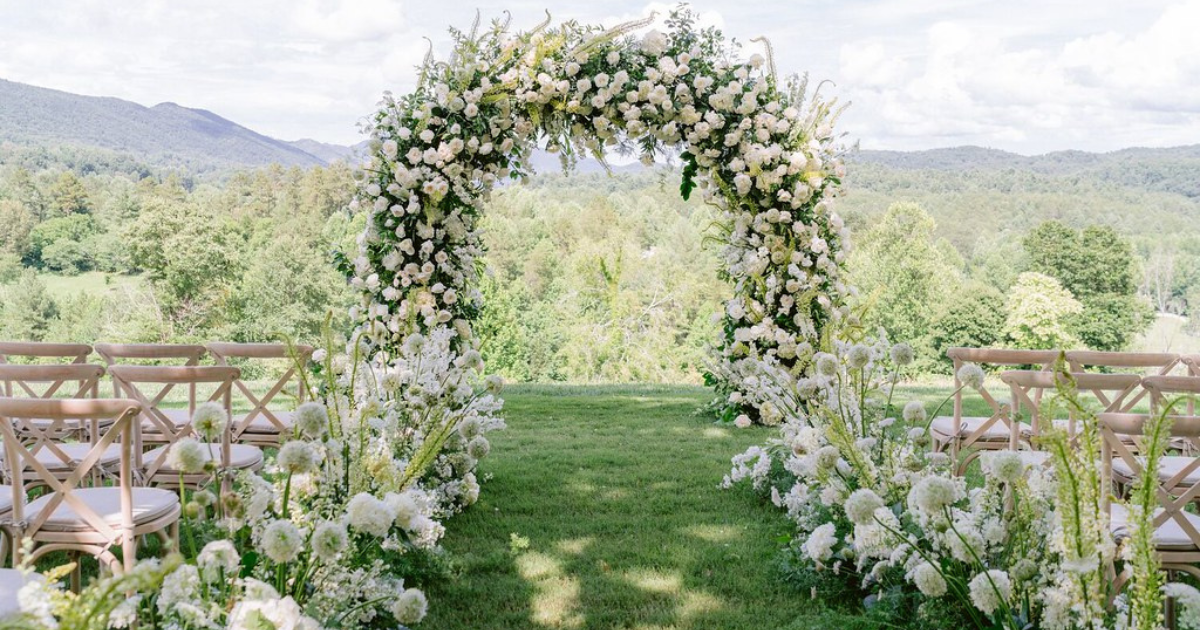
A Peaceful Side wedding marries breathtaking mountain scenery with ease of access. Loved ones from afar can fly in at the McGhee Tyson airport, a quick drive from a multitude of incredible venues. Here’s a glimpse of our favorites.
Up to 140 guests
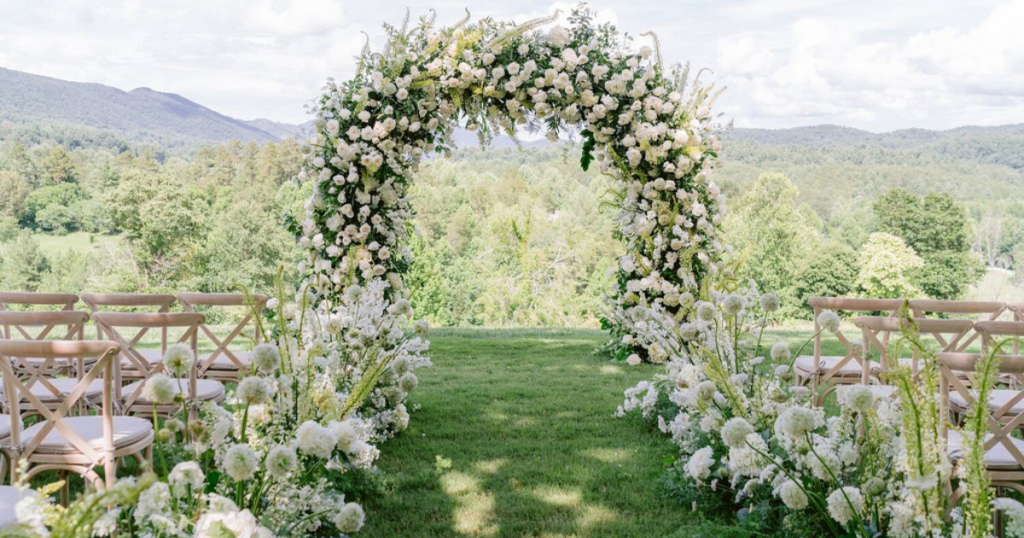
A Blackberry Farm wedding unfolds on an enchanting 4,200-acre estate tucked into the foothills of the Smokies. Their wedding packages accommodate up to 140 overnight guests in a variety of luxurious rooms, cottages and private homes.
Indulge in farm-to-table dining, custom menu planning and exclusive access to upscale venues for your events. Leading up to the wedding ceremony, enjoy curated group activities, from clay shooting to guided hikes, along with a wealth of recreational options.
Country Manor Acres – Townsend
Up to 500 guests
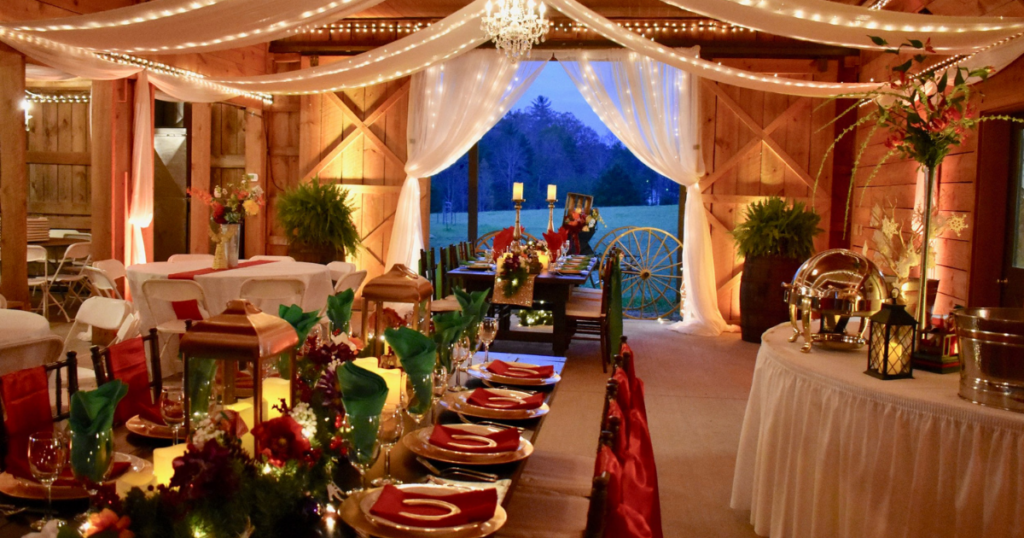
This luxurious 53-acre estate has been owned and operated by the Jopling family for over 30 years, promising exceptional service. Indoor ceremony sites include an upscale party barn, a spacious veranda or an airy tent, while the outdoors offers panoramic mountain views, a dazzling pond and a secluded garden. Any location is available for a private elopement.
Accommodation is available for you and your guests at the Country Manor Inn and Hayloft Sky Cabin, both fully equipped with modern amenities. Just kick back and relax while the experienced staff handles the planning—down to a horse-drawn carriage.
Dancing Bear Lodge & Appalachian Bistro – Townsend
Up to 200 guests
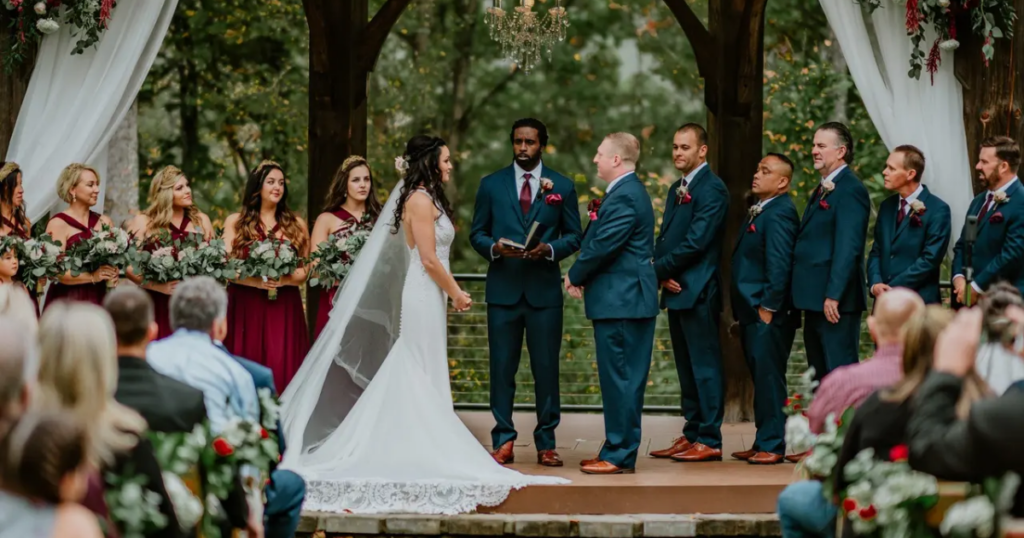
Experience the magic of a wedding in the Smokies at Dancing Bear Lodge & Appalachian Bistro. This award-winning venue offers exceptional cuisine and a variety of exciting pre-wedding adventures.
Whether you’re planning an intimate elopement or a grand celebration, their versatile spaces can be customized to suit your vision. Choose from an open-air pavilion, a grand event center, an outdoor lawn with a gazebo, a dining room with a seasonal fireplace or a cozy covered patio.
The Lake at Willow Oaks – Maryville
Up to 200 guests
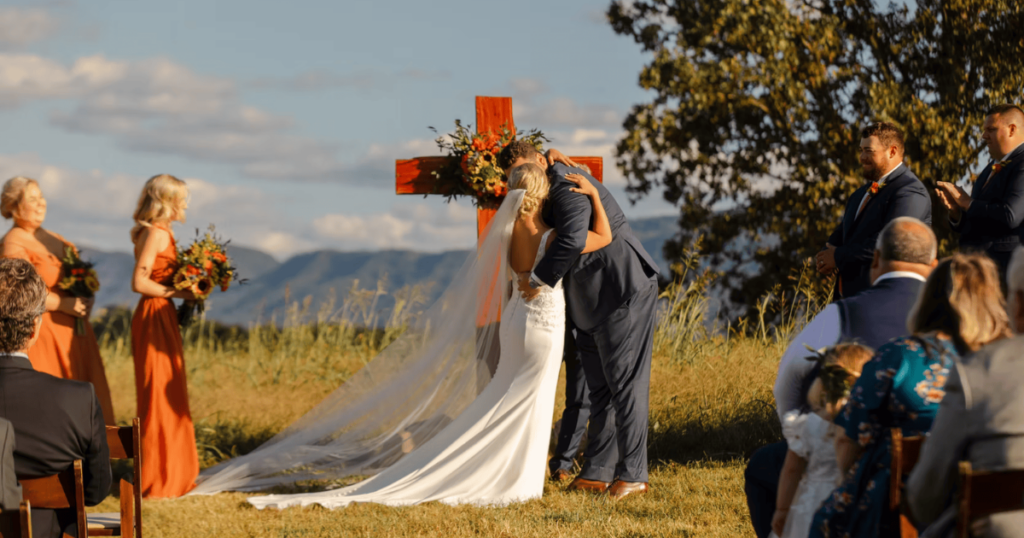
Willow Oaks is a hidden gem nestled among 150 acres of rolling countryside in the foothills of the Smoky Mountains. The venue’s post-and-beam Granary blends rustic charm with modern elegance, offering a warm and inviting indoor space for celebrations of all sizes.
Exchange vows lakeside with breathtaking mountain views as your backdrop, then enjoy an evening by the hand-forged kettle-style fire pit. A spacious covered veranda ensures a seamless event, rain or shine.
Willow Ridge Special Event Center – Townsend
Up to 200 guests
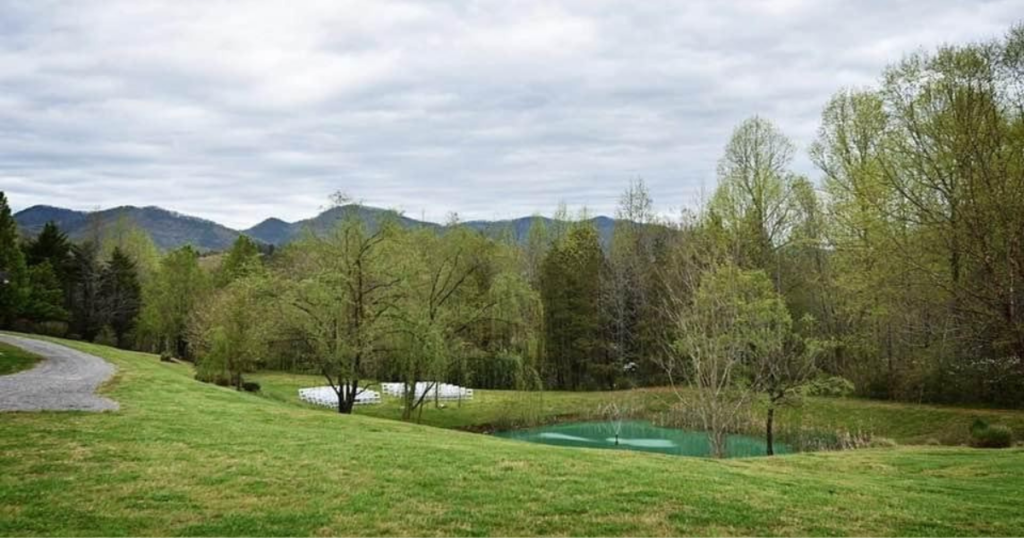
Willow Ridge Special Event Center offers tranquility and dreamy mountain views. The venue features a bridal suite, grooms’ quarters and a lodge for family to lounge in. Tie the knot on the scenic ridge or beside the magical Willow Pond. Then, dine and dance the night away at the spacious manor, which features a large fireplace for cooler weather.
Wild Laurel Golf Course – Townsend
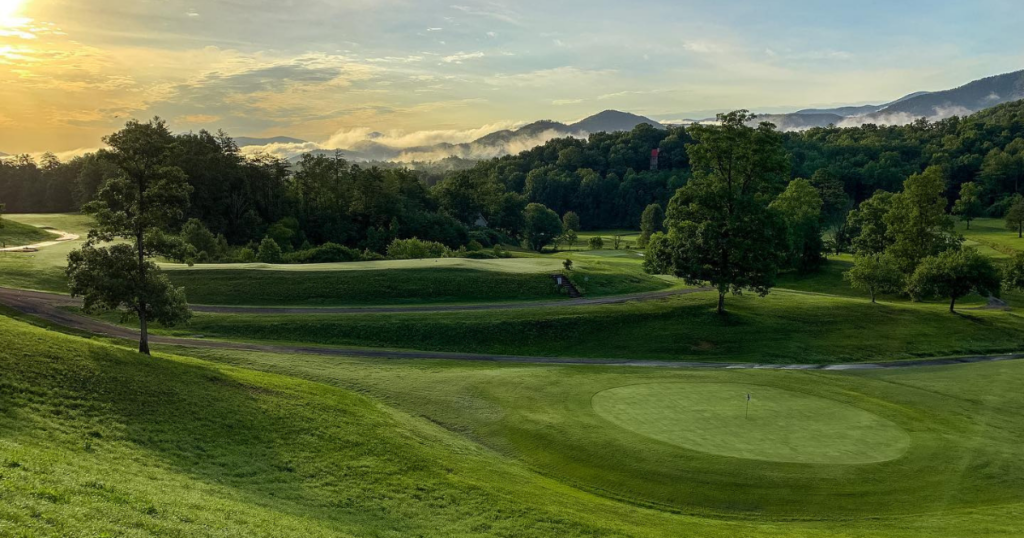
Wild Laurel Golf Course boasts private panoramic views of the Smokies. Their clubhouse and veranda are excellent spaces for your ceremony and reception. Make a splash at the pool, bust a move on the dance floor or cozy up by the fireplace—at Wild Laurel, there’s fun for all seasons.
Smith Event Centers – Maryville
Up to 200 guests
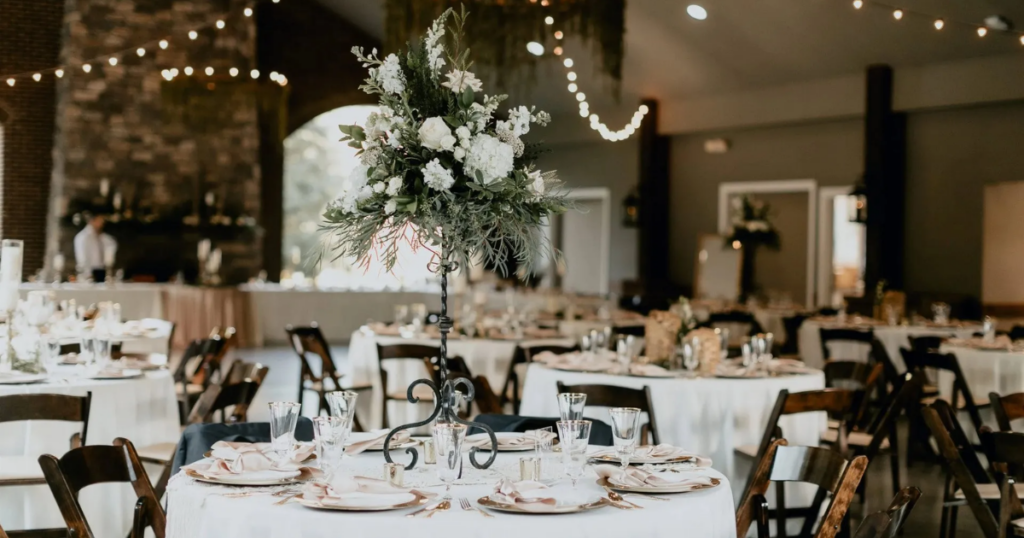
Family-owned and operated, Smith Event Centers truly cares about your special day and offers a variety of indoor and outdoor venues. Their popular Smithview Pavilion is situated on four acres of picturesque green space, but still offers the conveniences of the indoors—climate-controlled suites, a kitchen and restrooms.
The historic Browns Creek Bridge, which formerly served as the gateway between the city of Maryville and Townsend, is the perfect spot for a romantic elopement. This moss-covered bridge offers a lush backdrop for your intimate moment (and great photos). With the additional ceremony package, you can invite up to 50 of your loved ones.
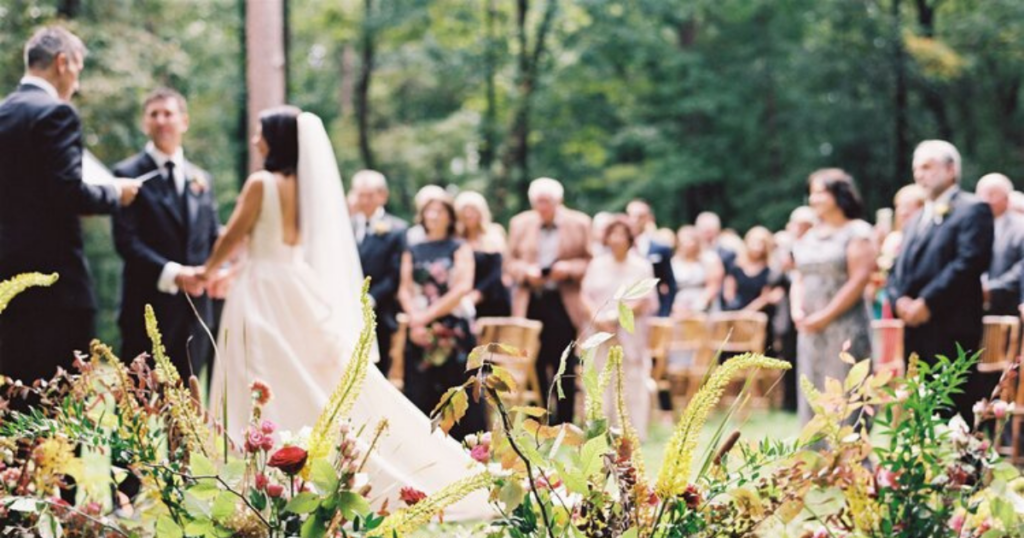
Up to 200 guests; 55 overnight
Concealed in a secluded forest on the historic Maryville College campus, just a few minutes’ drive from the regional airport, RT Lodge offers the perfect balance between serenity and accessibility.
From Friday through Sunday, the property is all yours—elegant dining rooms and common areas, outdoor leisure space and an array of ceremony and reception options. The professionals at RT Lodge guide you through the planning process, and the chef designs his menus based on the best the season has to offer.
The Showroom at Five Points – Maryville

Up to 350 guests
This 5,000 square foot venue provides plenty of room for celebration, accommodating up to 350 guests. Originally built in the 1930’s, the space has a life of its own, featuring rustic brick walls and elegant vintage décor. Your guests will enjoy free parking and the quaint outdoor patio.
Skyview at Broadway Social – Maryville
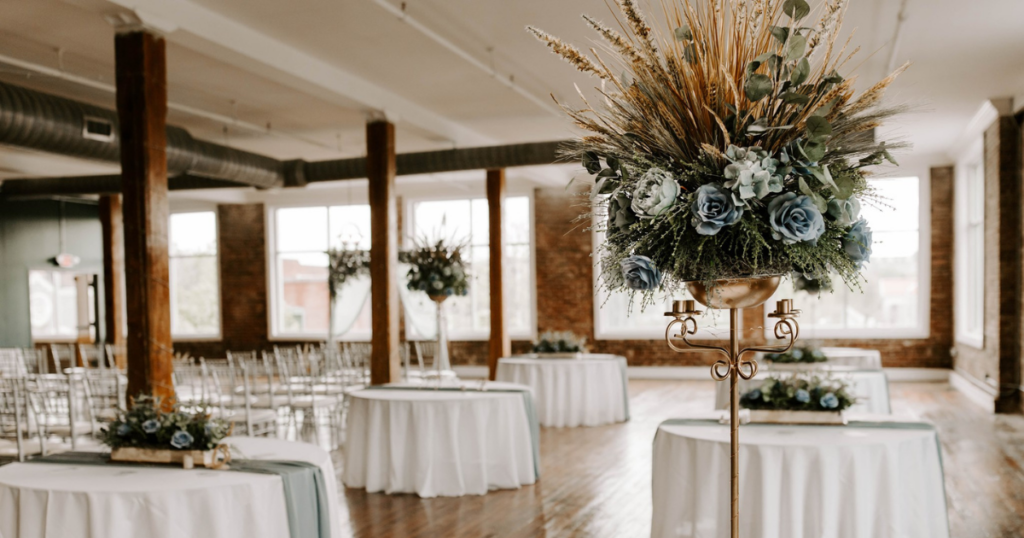
Up to 100 + guests
Located in the heart of Historic Downtown Maryville, this lively 7,000 square foot venue can accommodate up to 100 seated guests. It has a private room for intimate gatherings, a prep/catering kitchen, upscale restrooms and a newly refurbished elevator. A variety of additional amenities are available, including a contemporary bar and bar service, bridal lounge and more.
Tremont Lodge & Resort – Townsend
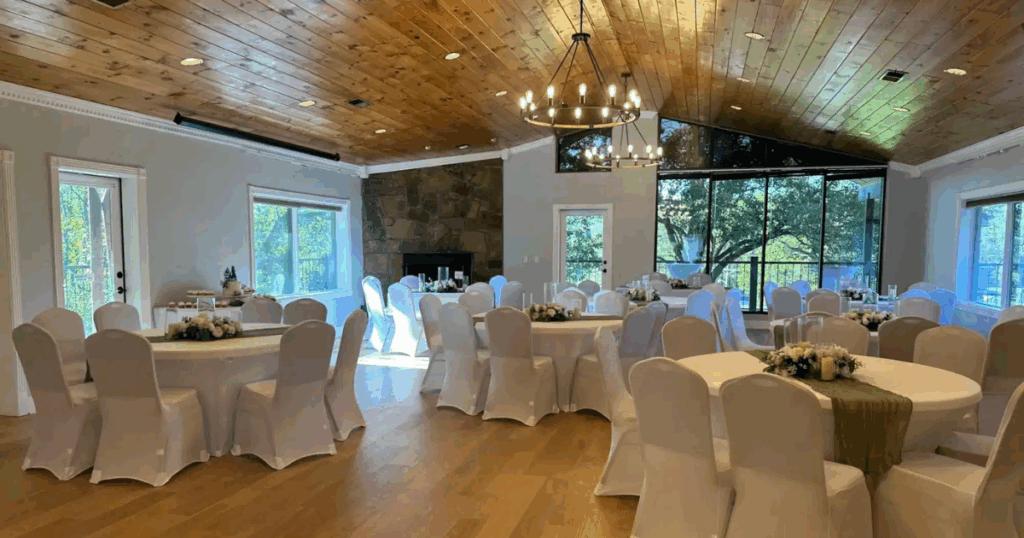
Up to 240 guests
This venue, nestled in the heart of Townsend just minutes from Great Smoky Mountains National Park, offers an all-in-one mountain wedding escape. The two-level event lodge accommodates up to 240 guests, while up to 130 newly renovated rooms and suites keep everyone just steps from the celebration. With flexible indoor and outdoor spaces, trusted catering partners and resort-style amenities, it’s easy to turn your wedding day into a full Smoky Mountain getaway.
White Star Station – Maryville
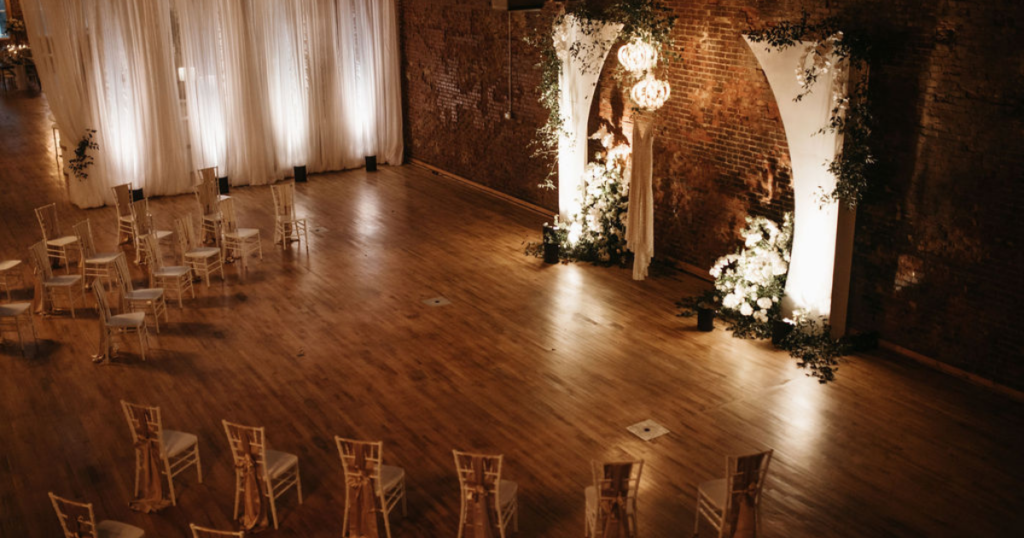
Up to 350 guests
White Star Station, located in Historic Downtown Maryville, brings history to life. The building was erected in 1800 and housed Maryville’s first bus line in 1926, before becoming a magical place to say, “I do” in 2020. At 10,000 square feet, it’s one of the most spacious venues on the Peaceful Side, able to accommodate up to 350 guests and customizable to your desires. Their creative partners can help you design the finer details of your wedding, from entertainment to hair and makeup.
Maryville College & Clayton Center for the Arts – Maryville
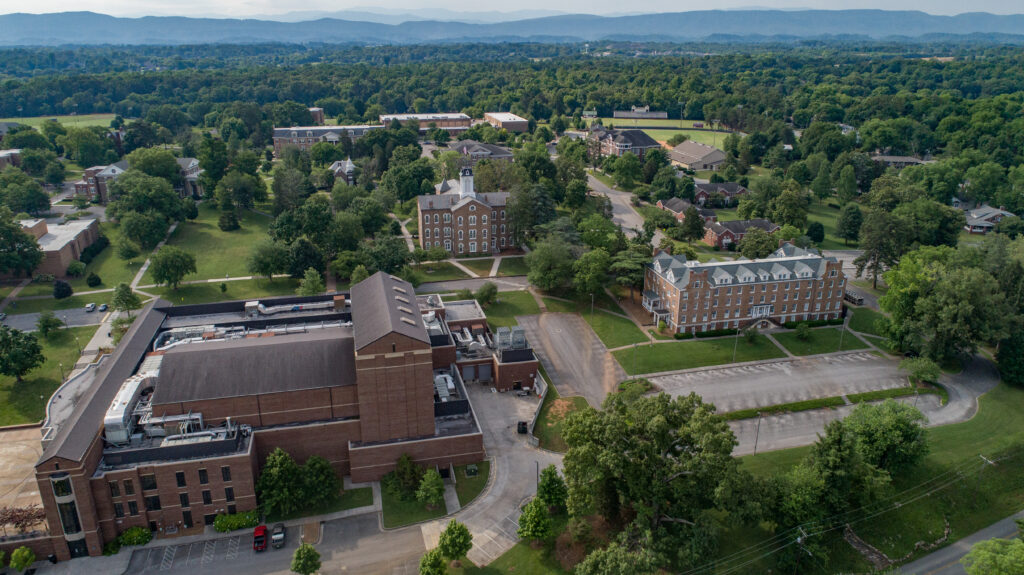
Up to 250 guests
Start your married life on 263 acres of beautifully landscaped grounds, surrounded by charming historic buildings. Maryville College and the Clayton Center for the Arts, located on campus, have a variety of picture-perfect spots to choose from. If your wedding is planned for June or July, they even offer overnight housing and meals for your out-of-town guests.
The Capitol Theatre – Maryville

Up to 250 guests
This unique old Hollywood-style venue is an eight-time Wedding Wire Couples’ Choice Awards winner. Receive a stylish introduction when the red curtains reveal you and your sweetheart against a sparkling starry backdrop. The performance stage, 30-foot silver screen, dance floor, and state-of-the art sound and lighting will make the momentous occasion even more special.
The Shed Smokehouse & Juke Joint – Maryville
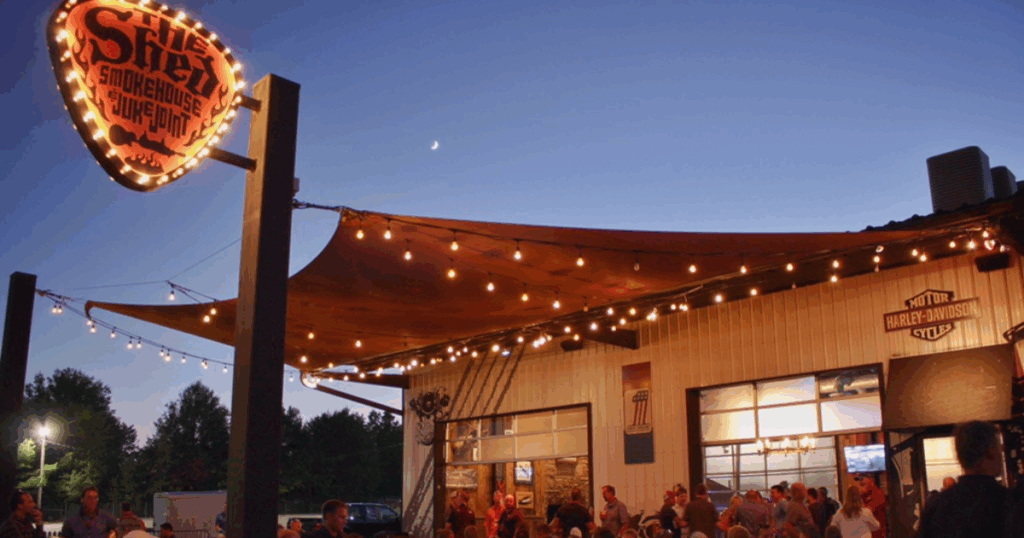
Up to 100 guests
The Shed brings a fun, laid-back twist to your special day with live-music vibes, Southern barbecue and plenty of character. Host your celebration in the Smokin’ Monkey Lounge, ideal for up to 100 guests standing or 50 seated, or customize an outdoor pavilion package that fits your vision. With in-house catering, a dedicated bartender and flexible bar options, it’s easy to throw a memorable, music-filled wedding or rehearsal dinner right next to Smoky Mountain Harley-Davidson.
The Landmark at J. Danforth Mercantile – Maryville
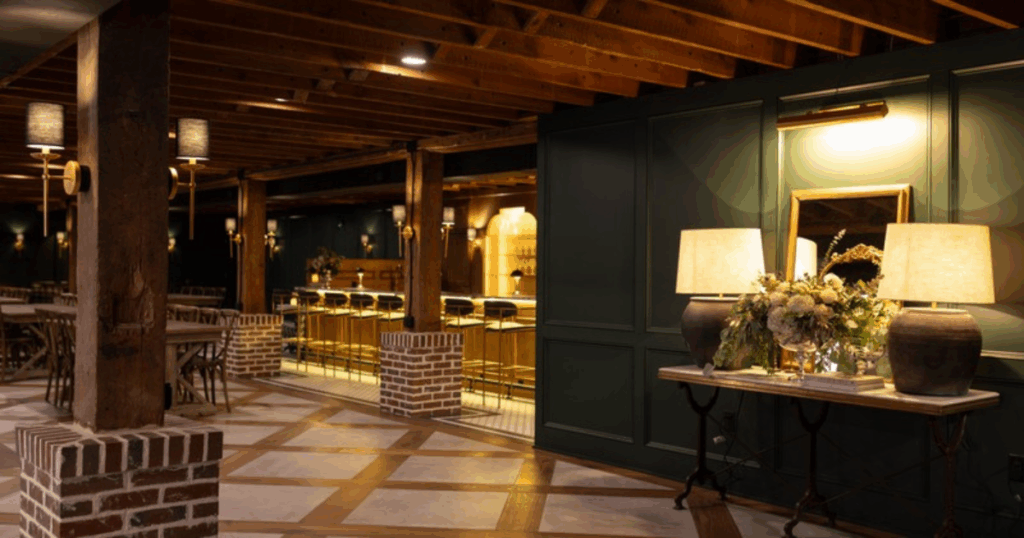
Up to 130 guests
Nestled beneath J. Danforth Mercantile in Historic Downtown Maryville, The Landmark is an intimate brick-lined venue with a classic wood bar and fireplace, ideal for rehearsal dinners, showers and micro-weddings. With space for up to 130 guests and easy downtown parking, it’s a relaxed spot for low-key celebrations in the heart of Maryville.
The Barn Event Center of the Smokies – Townsend
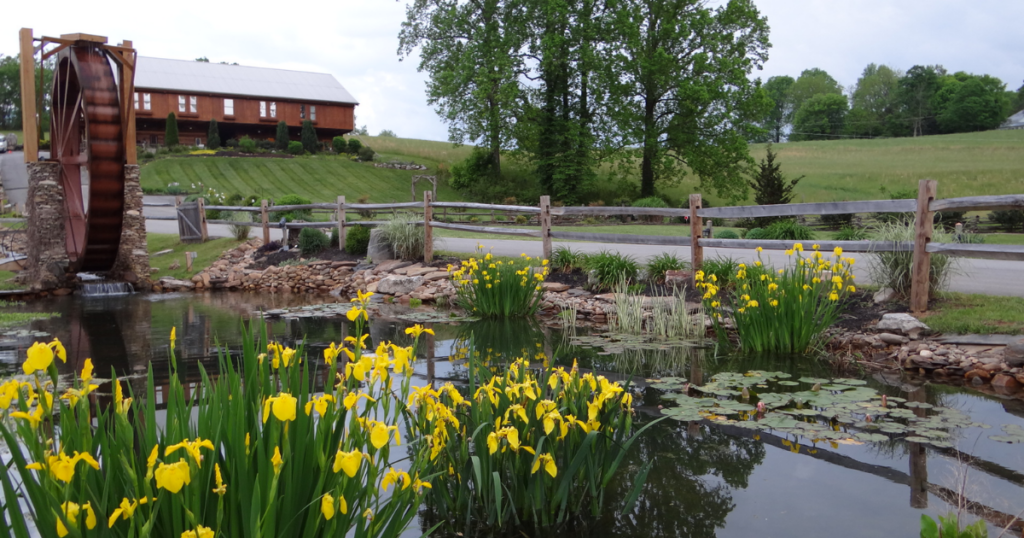
Up to 200 guests
Located minutes from Great Smoky Mountains National Park and the Foothills Parkway, The Barn Event Center of the Smokies offers indoor and outdoor wedding spaces with award-winning gardens and a Cantilever Barn. The venue includes a great room with exposed beams and a vaulted ceiling, plus a built-in stage and dance floor. Onsite catering is available, along with AV equipment, lighting, banquet accommodations and a bridal suite for getting ready.
Are you planning a wedding on the Peaceful Side of the Smokies? We’d love to hear about it. Be sure to tag us on social media (@peacefulsmokies).
__________________________________________________________________________________________________________________________________
Born and raised in Maryville, Tennessee, with roots tracing back to Cades Cove, Emily Huffstetler is a proud Maryville College graduate and storyteller of the Greater Smokies region.
Getting Married in the Smokies this Year? Consider these Outdoor Wedding Venues
A wedding day is such a significant event, and it is so easy to get caught up in the planning and accommodating of everyone’s wishes that you might neglect your own. While you may find yourself stuck with a larger bridal party than you wanted, or inviting a lot more guests than you intended, you should commit to hosting it in a place of beauty and significance.
Your wedding venue is a wonderful way to celebrate in a setting that helps to mitigate your and your future spouse’s stress, tension or nervousness. If the Smokies have a special place in your hearts, it may surprise you to learn of just how many wedding venues are found on the more peaceful side of the Smokies in Blount County, TN.
Where to get married outdoors in the Smokies
For those who are curious about the options, we present a varied collection of sites popular as wedding venues and for other specialty events.
The Barn at Meadow Farms
Located near Friendsville, TN, The Barn at Meadow Farms is as it is described and offers up a fully finished and remarkably appealing barn with party space well suited to even a large-scale event. The expansive lawns can be used for the wedding itself, and any sort of décor can be used. It has a full kitchen, bridal suites, a fireplace, full bathrooms and more.
Heartland Little River Wedding Chapel
Looking for adorable? Want a fairy tale setting? Then this is the place. Tucked along the Little River in Townsend and offering one of the most charming settings for a wedding event, it has honeymoon cabins as well as wedding packages of all kinds.
Colonial Estate Weddings
Located in Maryville, it features natural gardens and stunning views of the Smokies. It is a spot for both the ceremony and reception and features full-service wedding planning. Just nine miles from the Knoxville airport, it is serene and tranquil and promises an unforgettable day.
The Lily Barn
Set on 100 acres and just five minutes from the Cades Cove entrance to the Great Smoky Mountains National Park in Townsend, The Lily Barn is a place dedicated to natural beauty and lush gardens. Enjoy the evergreen maze or time your wedding to coincide with the amazing array of lilies and native plants that bloom every year. Book the gazebo and get married by the pond and then host your reception in the charming Lily Barn.
Smithview Pavilion
Also located in Maryville, this site has an outdoor venue as well as an event hall and it can be an ideal choice as a one-stop destination for rehearsal dinner, wedding, bridal events before the big day, brunch after the big day and more.
Pleasant Hill Vineyards
Set on a historic farm property less than a half of an hour’s drive from Knoxville (in Maryville), it is a full-service destination with outdoor wedding space for up to 100 guests and indoor event space for more than 300. Enjoy the use of the lawn, wine rooms and more.
Don’t forget to explore The Barn at Wildwood Springs, Country Manor Acres, Sampson’s Hollow and the other wonderful wedding venues throughout the region.
Go Horseback Riding at Davy Crockett Riding Stables in Townsend
Are you looking for a new way to enjoy parts of the Great Smoky Mountain National Park that you simply won’t be able to see from the windows of your car? Interested in finding a way to get out in the fresh air and take trails that go deep into the woods and up to the wildflower-covered meadows that can only be seen from horseback? If you are and you happen to be in the Townsend, TN area, then you need to check out the Davy Crockett Riding Stables located at 505 Old Cades Cove Road.
Into the Backcountry
There is nothing more relaxing than heading off into the backcountry astride your own mount. Ride into Cades Cove or off into the Great Smoky Mountain National Park at speeds that give you plenty of time to relax, enjoy the scenery, even take pictures if you feel inclined. The Davy Crockett Stables offer instant access to a number of backcountry riding trails in the Smokies.
Riding on horseback is a wonderful way to get back in touch with nature while at the same time enjoying some serious high-quality family time. You can experience the trails in much the same manner as the early explorers and mountain men did when they first discovered the area, by traversing the trails on horseback.
No Worries About Getting Lost
At the Davy Crockett Riding Stables, the finest mountain guides are on duty to ensure you find your way. The guides can answer your questions about the local flora and fauna. Each has countless hours of training and experience that guarantees you will enjoy your ride.
During the summer months, you can come for an “on the spot” ride or you can make reservations that guarantee the number of horses you need are ready and available. During the summer, the stables tend to be very busy, so reserving your spot makes good sense, especially if you know when you are going to be in town.
Winter Rides Too
During the winter months, guided rides are still available, but you must book your ride in advance. Peak season at the Davy Crockett Riding Stables is between March 15th and November 15th. Outside of these dates, reservations are required so be sure to plan your trip and book early.
The stables are open 7 days a week from 9 am to 5 pm, and have been in business since 1962, providing tourists and locals with the ultimate horseback riding experience. They offer access to more than 15 miles of trails where you never have to worry about the traffic or crowds; there is nothing to do but sit back and enjoy the journey.
At the Davy Crockett Riding Stables in Townsend, TN, you can book your ride for 30 minutes, 1 hour, 1-1/2 hours, 2 hours, or a half day. Bring the whole family and create the kind of vacation memories that are sure to last a lifetime. Come once and we guarantee you will visit again and again.
Gourmet S'more Ideas
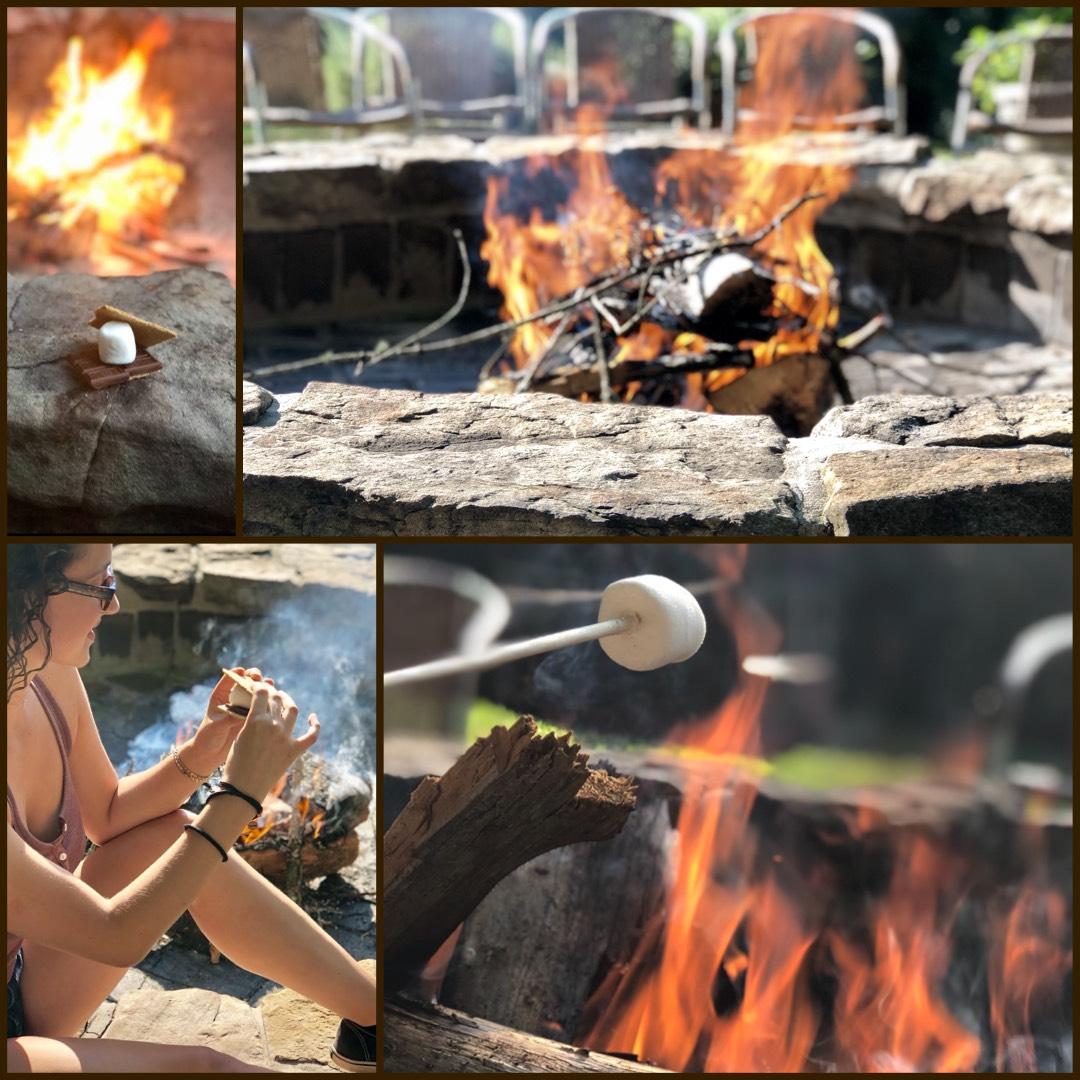
For anyone who has ever been camping as a child, I would dare to assume one of your favorite activities was roasting marshmallows. If you were really lucky, you turned that roasted yumminess into a classic childhood favorite, the s’more. We sat around the firepit during a recent trip to Dancing Bear Lodge and experimented with their S’more Station. A staff suggestion to switch out the traditional chocolate bar with a piece of Apple Valley fudge, started a journey to up our s’more game a notch, adventuring into the realm of Gourmet S’Mores.
We Bring you the Gourmet S’more: A Guide to Upgrading Your Next Camping Trip.
Creativity Begins Here
The obvious place to start our campout culinary exploration is the ingredient that ties everything together. So, let’s start with some different options for the base of our s’more. The obvious go-to is the traditional graham cracker, but there are so many other tasty options. Next time try using a chocolate graham cracker, a waffle cookie, or even a chocolate chip cookie. If you want to branch out even further, try out some ginger snaps, snickerdoodles, or Rice Krispie treats. If you are trying to reduce your sugar intake, unsalted crackers are ideal. Don’t be afraid to let your inner child guide your creativity.
Put You Inner Child In Charge
Next, we need to add a little variety to our typical chocolate layer. Think bigger. If you’re in the mind of more is always better, substitute plain chocolate with a Reese’s Cup, a Peppermint Patty, or caramel-filled chocolate. You can also use substitute with peanut butter, hazelnut spread, white chocolate, or cookie butter. While we’re at it, let’s shatter the conventional idea of the classic s’more and trade out chocolate for something completely different altogether. If you want an organic or natural option, add sliced fruit. Bananas, strawberries, apples, peaches, and pitted cherries are great healthy options. And as we begin to think about fruit, don’t forget all of your favorite homemade jams. The key is to go crazy and don’t be afraid to experiment with toppings.
Don’t Leave Out The Best Part
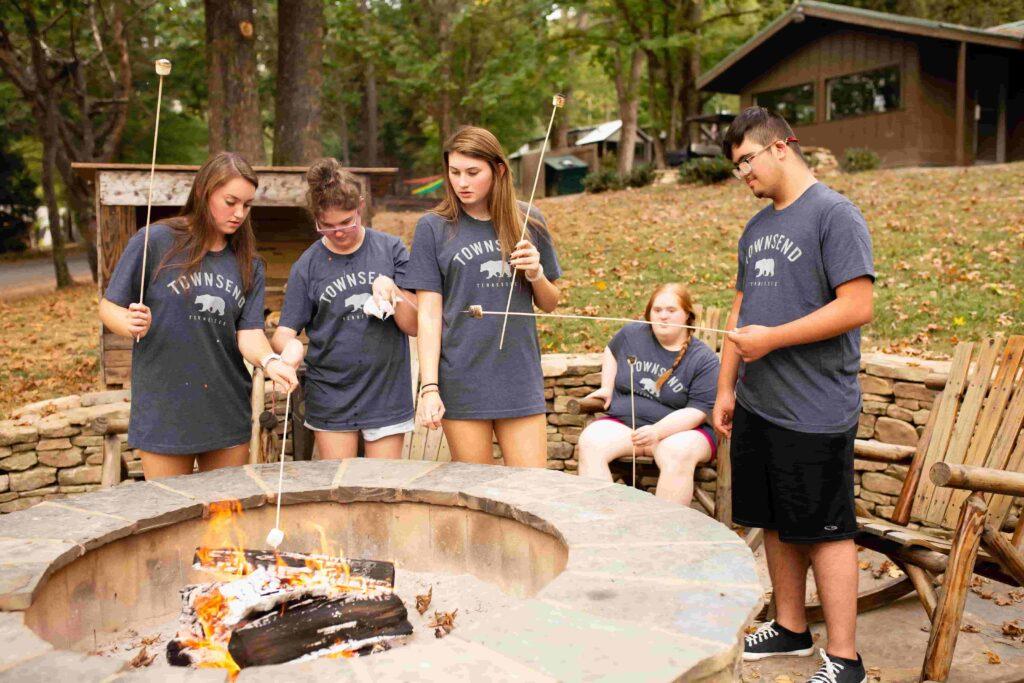
We can’t leave out the marshmallows. Beyond the plain marshmallow, feel free to play around with a variety of flavored marshmallows. Some of our favorites are caramel, strawberry, cinnamon, and vanilla. If you enjoy playing in the kitchen, you can prepare homemade flavored marshmallows ahead of time. You can even go wild and dip your marshmallows in chocolate, your favorite crushed cereal, or roasted coconut. Want to blow your kids’ minds, use some Peeps in your gourmet s’more experiment.
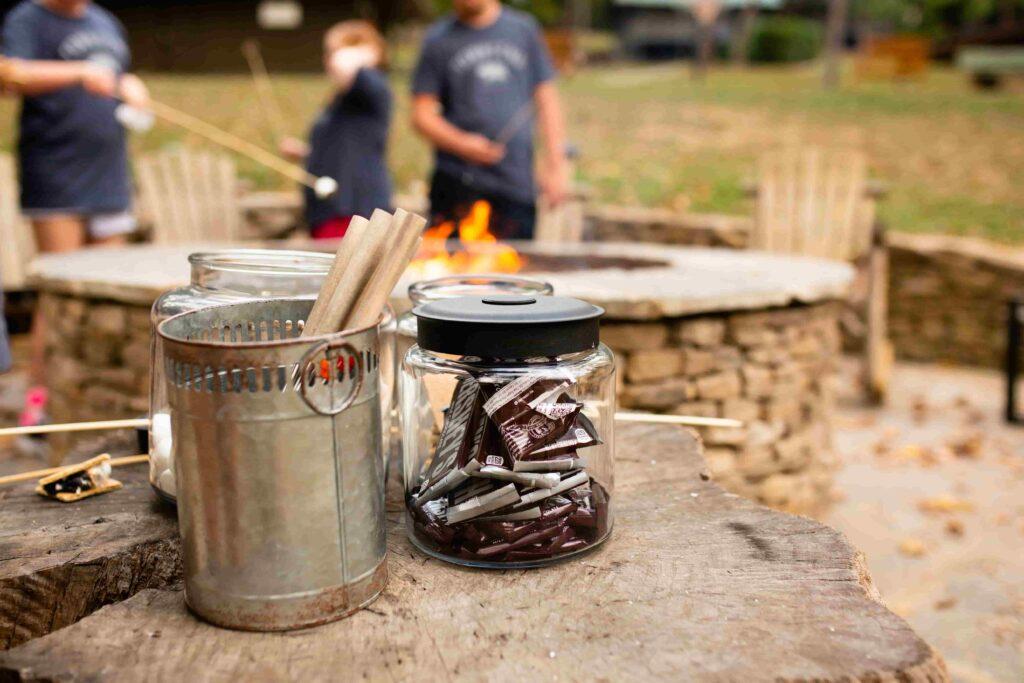
To give you a headstart back into your childhood campfire fantasies, we’ve put together a few of our favorite campfire delicacies.
GOURMET S’MORE RECIPES
APPLE VALLEY S’MORE
Graham crackers + Apple Valley fudge + marshmallow
SPICED LEMON S’MORE
Gingersnaps + lemon curd + marshmallow
PEACHES & CREAM
Honey graham crackers + peaches + white chocolate + marshmallow
THE GRASSHOPPER
Chocolate graham crackers + Peppermint Patty + marshmallow
THE SAMOA
Graham crackers + salted caramel-filled chocolate + coconut flakes + marshmallow
THE ELVIS
Graham crackers + Reece’s Cup + sliced banana + marshmallow
THE SUGAR PIG
Graham crackers + caramel-filled chocolate + bacon + marshmallow
We would love to take all of the credit for all of these fantastic recipes, but we must give credit where credit is due. For these recipes and more s’more insanity, check out the following blog posts:
For more camping activities, check out some of our past posts.
Plan a Family Picnic in Great Smoky Mountains National Park
Have Small Kids with You? Check Out These 3 Hikes, Suitable for the Little Ones
Smoky Mountain Glamping: Sleep Under the Stars
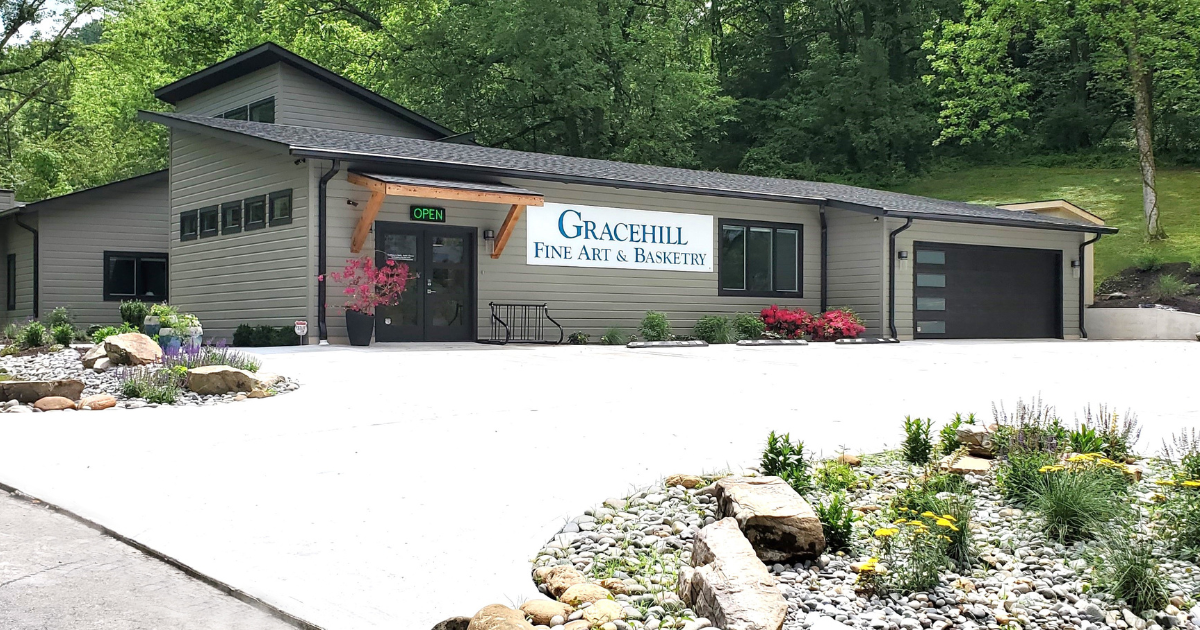
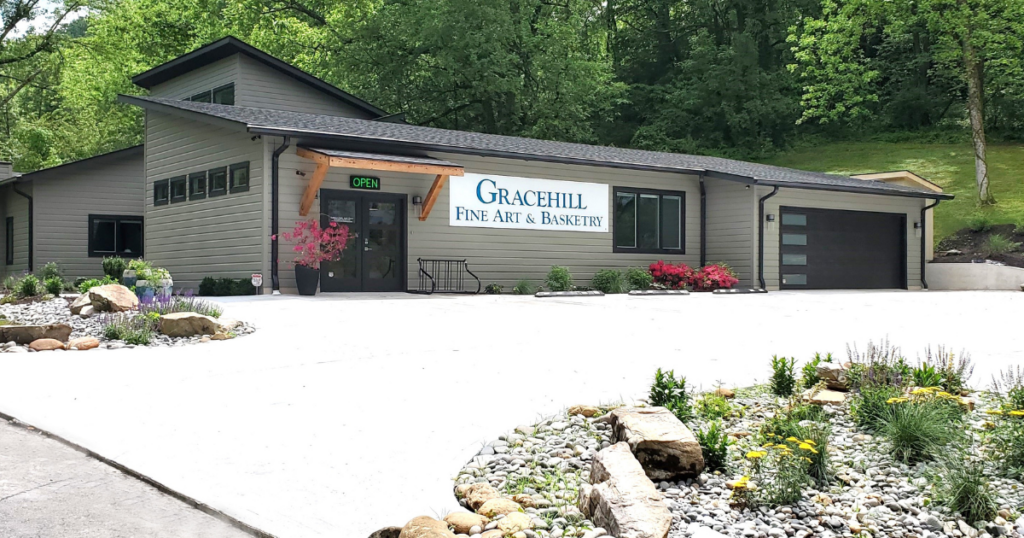
Gracehill Fine Art and Basketry: Not Your Grandma’s Gallery
Written by: Emily Huffstetler
Grace (noun)—Unmerited divine assistance.
When COVID-19 struck Townsend, Kathy Janke decided to temporarily close Gracehill Bed and Breakfast and devote herself to her art.
“I thought, I’ll answer the phone; I’ll take a reservation and pay my bills. But I’m not cooking. I’m not cleaning. I’m just going to work on art,” Janke said.
Janke had dabbled in oil painting for about 45 years, producing a piece about every five years. Given the unique opportunity to pursue her work seriously, she created seven paintings and 24 baskets in just a couple months.
When Janke reopened the B&B, her guests found themselves surrounded by her artwork and expressed interest in purchasing it.
To her delight, she sold everything.
“At that point, I thought, instead of retiring, I think I’ve got one more business in me,” Janke said.
Janke had previously pursued a variety of professions and ventures. She majored in Biology at Northern Illinois University, which led to an 11-year career in policework. Then, she and her mother moved to Townsend and spent the next decade running Little River Village Campground (now the Townsend KOA). Afterwards, Janke pursued landscaping.
Janke built Gracehill Bed and Breakfast and operated it for 20 years before deciding to establish Gracehill Fine Art & Basketry, her very own gallery.
“I made that decision when I was 66. I didn’t think it was going take me until I was 70 to flip the open sign, but that’s how long it was,” Janke said.
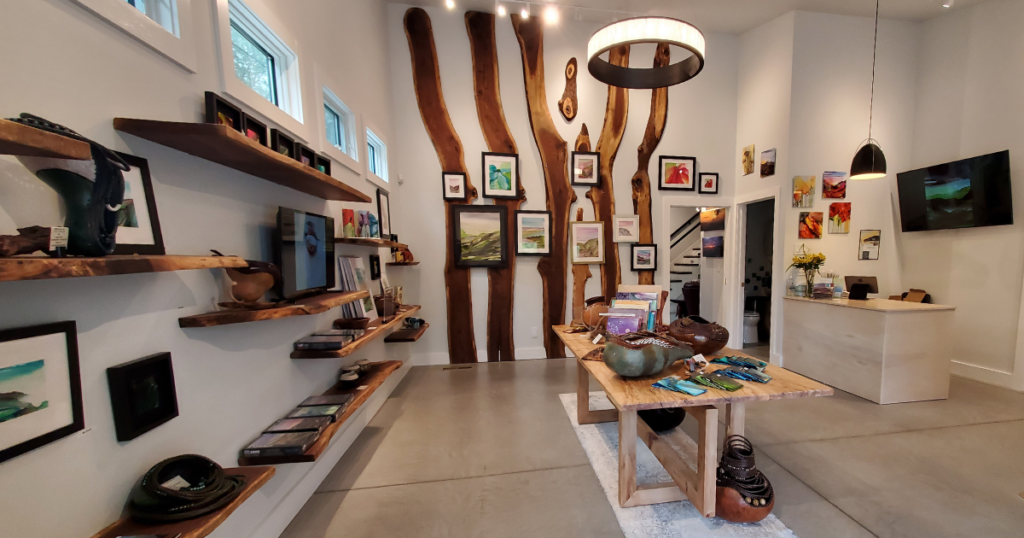
Visitors to Gracehill Fine Art & Basketry are pleasantly surprised by what they discover. Janke’s alcohol ink paintings and Southern Long Leaf pine needle baskets transcend traditional techniques and reflect the natural beauty of the Great Smoky Mountains.




Photos courtesy of Kathy Janke.
Unlike slow-drying oil paints, alcohol inks offer “spontaneity and brilliant color,” Janke said. She made the transition to this medium during the pandemic, finding it to be gentler on a recent shoulder replacement. Through alcohol inks, Janke captures the park’s incredible vistas and flora.
In a roundabout way, Janke discovered pine needle basketry through her late father. While she was away at college, he gave oil painting lessons to a little girl who lived next door. After he passed away at 48, Janke’s mother chose to give the art supplies to the neighbor, knowing she’d put them to good use.
Janke’s neighbor had dreams of studying art in college, but her parents disapproved, leading her to pursue a career in heating and air conditioning instead. Decades later, after taking time off work due to cancer, she was cleaning out her basement and stumbled upon the old art supplies.
“She started dabbling, and now she’s an award-winning pastel artist recognized nationally,” Janke said.
“In her spare time, she started weaving pine needle baskets. I saw one on her Facebook page and thought that I wanted to try it one day. So, when Covid hit, I did,” Janke said.
It turned out to be even more exciting than Janke expected.



Photos courtesy of Kathy Janke.
“I love pine needle basketry because there’s no pattern. You can take it in any direction you want to go. And the basket really does speak to you as you’re working on it, and gives you input on what’s good and what isn’t.”
Janke teaches classes on both of her favorite mediums. She offers a six-hour class on creating landscapes with alcohol ink and another six-hour class on floral designs. She also teaches a six-hour class on long-leaf pine needle coiling with a porcelain center, as well as a two-day class that involves coloring gourds with alcohol ink before coiling.
Students at any skill level are welcome.
“Artists that are very good in one medium usually can slide into another medium a little easier, but, by far, the majority of my students have no artistic background. They have never experimented with art before but are interested. Some are just doing it as a pleasant way to spend the day, and others really want to learn,” Janke said.
Janke provides everything but lunch. As a self-proclaimed “professional collector of art supplies for 45 years,” she’s happy to share.
“It’s not like you go out and make a $150 purchase of a pastel set and paper and whatever [else]. You have everything you need to practice and see if it’s something you want to continue with,” Janke said.
Janke will teach two classes in Tellico Village in March, but she plans to hold everything else at her gallery throughout December and February, March and April 2025. Those interested can call or email Kathy Janke. Her contact information is on her website.
“From policework, to the campground, to landscaping, to the B&B and now this—I feel like, at 70, this is probably my last job,” Janke said with a chuckle. Most days, except Tuesdays, you can find her at her gallery located at 110 Mountain Ave in Townsend.
__________________________________________________________________________________________________________________________________
Born and raised in Maryville, Tennessee, with roots tracing back to Cades Cove, Emily Huffstetler is a proud Maryville College graduate and passionate storyteller of the Greater Smokies region.
Grains & Grits Festival: Townsend’s Annual Spirited Event
Any East Tennessee history buff can tell you plenty about the long history we have with Grains & Grits, liquor and bootleg in this neck of the woods. Corn whiskey dates back as far as the early settlers of the Appalachian foothills. Moonshining, named from the practice of distilling under the moonlight to avoid unwanted attention, became especially popular as state and national prohibition laws started to take hold across the country. During this time, many moonshiners were forced to either shut down their stills and lose their additional income or find themselves on the wrong side of the law. With the demand for whiskey at a prime, many folks took to the back roads of the Tennessee mountains, spending the rest of their careers avoiding the law. Lucky for us, as whiskey has made a resurgence in popularity, a talented few have taken their family recipes and turned them into legal distilleries across the region.
On Saturday, November 5, 2022, we will celebrate these legendary distillers at our annual Grains & Grits Festival in Townsend, TN. It will be a festival of regional craft spirits and local gourmet cuisine, tucked into the Peaceful Side of the Smokies.
Here’s a sneak peek at some of the Tennessee Distillers Guild members you will be able to sample at the event:
- Company Distilling
- Old Forge Distillery
- Sugarlands Distillery
- Old Dominick Distillery
- Jack Daniels
- George Dickel
- H Clark Distillery
- Short Mountain Distillery
- Leiper’s Fork Distillery
- Old Glory Distilling Co.
- Bootleggers Distillery
- Chattanooga Whiskey
- Tennessee Legend Distillery
- Post Modern Distillery
- Corsair Distillery
- Prichard’s Distillery
- Ole Smoky
- King Family Distillery
- Nashville Barrel Company
- BR Distilling Company
- Gate 11 Distillery
- Nashville Craft
- Junction 35 Distillery
- Big Machine Distillery



The Ring of Fire is Back Again
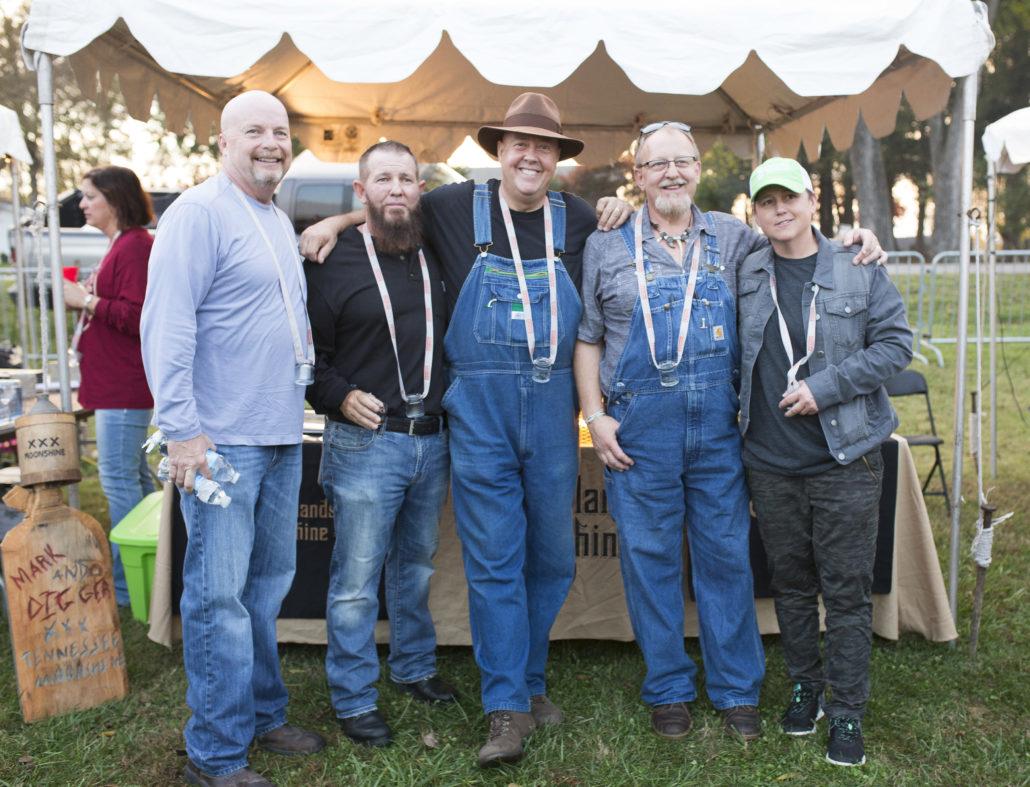
Michael Sullivan- aka- The Reverend of Fat is excited to bring “The Ring of Fire” to this year’s Grains and Grits Festival. Sullivan is heading up the culinary aspect of the event. “It’s a unique way for attendees to be satiated while enjoying their spirit samples.”
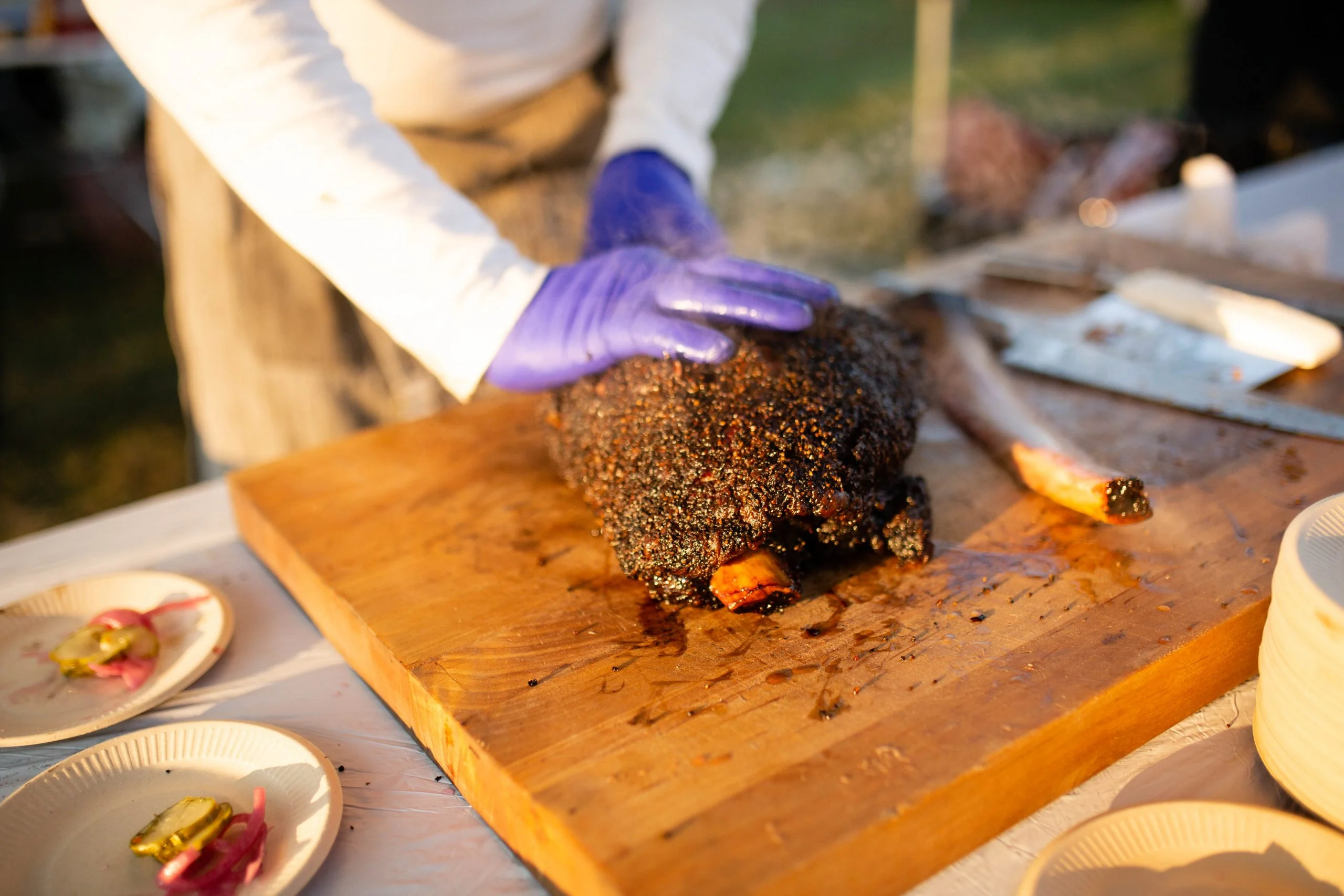
Five chefs will encircle a large fire pit where a whole pig, lamb, chickens, and sausages will be roasted and served. Each chef will be paired with a distillery and will incorporate the distillery’s spirit into their dish.
This year, we are honored to have Chef Rubén García take part in the Ring of Fire. Garcia spent years in a 3-star Michelin restaurant, he appeared twice on Iron Chef as the victor and is now the Creative Operating Officer and Founder of UNFOLD Hospitality where he inspires new chefs and leads concept development with restauranteurs to help realize their vision and potential.
Participating Restaurants
- American Butcher
- Dancing Bear Appalachian Bistro
- The Old Mill Pottery House Café and Grille
- City Limits Barbeque
- Motor Supply Co. Bistro
- AMICI
- Puckett’s Grocery & Restaurant
- Lulu Liquor Cakes
- Willy’s Butcher Shop
- Junction 35 Spirits
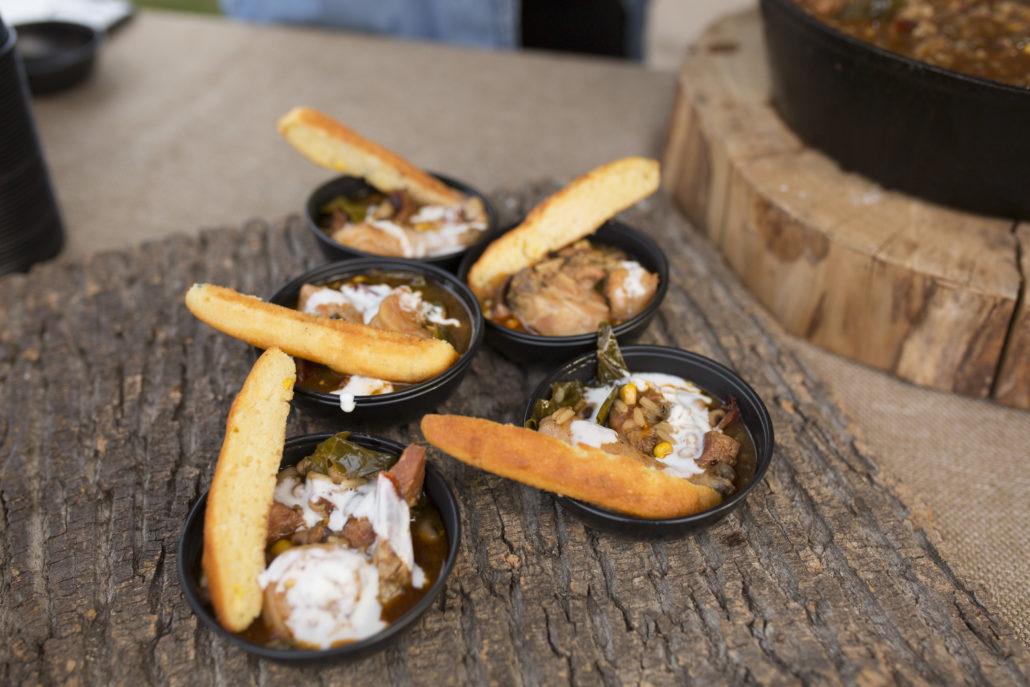
Along with a variety of seasonal gourmet foods, you can also enjoy live music from Pink Cadillac. As one of Nashville’s best party, funk, rock, rhythm & blues, soul, dance band featuring a smoking rhythm & horn section, and topped off with their powerhouse choreographed female vocalists, and rock and soul male lead vocalist. There is something for everyone at the Grains and Grits Festival. 
Join us on the Townsend Visitor Center event lawn, from 6:00 – 9:00 pm, for a unique fall tasting experience you can only find in the Great Smoky Mountains. All attendees must be 21 years or older, and the event will take place, rain, or shine. Parking opens at 5:00 pm. For more information about the event, please check out our website at https://grainsandgritsfest.com.

See below for other events in Blount County:
Beer Lovers Unite at Maryville – Hops in the Hills
The Great Smoky Mountains Hot Air Balloon Festival: A Kaleidoscope of Entertainment
By: Rachel Coffman
Great Hikes for You & Your Dog in Blount County, TN
The Smokies region is beautiful, but there’s something extra special about seeing it with your best friend by your side. Just you and them, enjoying the sights and sounds of Eastern Tennessee, first through your own eyes, and then through their perspective.
The crisp, clean air, the sounds of rustling leaves, chirping birds, the smell of the pine trees, the fresh scent of the grass, the strong odor of animals who have been there before you, the gray of the plants, the darker gray of the trees… Oh, didn’t we mention? Your best friend just happens to be a dog!
Unfortunately for them – and despite the fact that they are some of the most enthusiastic hikers – pets aren’t allowed in the Great Smoky Mountains National Park (except for two small trails outside of Blount County) for reasons having to do with wildlife preservation. Thankfully, there are other options; you don’t have to leave your best friend behind to get some outdoor recreation. Check out these trails and get ready for your next great walk together!
The Maryville-Alcoa Greenway
The Maryville-Alcoa Greenway is a 9-mile trail that goes through both towns, offering a pleasant walk and access to 4 different parks in Maryville and 2 in Alcoa. It also offers links to the business and shopping districts in the towns, as well as picnic pavilions, natural areas, and fitness stations. The experience is pleasant and relaxed, with meandering streams here and there, and trails that are well-maintained and clearly-marked for different distances and directions, with water fountains and pet waste cleanup stations scattered throughout.
While you’re on the Maryville-Alcoa Greenway, don’t forget to visit the Petsafe Dog Park, which is Maryville’s first public dog park. The hours are from dawn to dusk every day, with a half acre for small dogs and a full acre for larger canines. There’s also a pavilion, benches, a dogs-only water fountain, and an unleashing area.
The Look Rock Tower Trail
The Look Rock Tower Trail is a short hike (perfect for smaller dogs!) of just under a mile. The trail includes an observation tower that allows human and canine hikers to take in some lovely views of the western side of Great Smoky Mountains National Park, as well the Maryville and Alcoa areas. Dogs are allowed, of course, but they have to be kept on leash, and it’s popular with families and kids. This paved trail is a great alternative to the non-dog-friendly Clingmans Dome trail in the National Park.
The Tremont Logging History Auto Tour
The Tremont Logging History Auto Tour is a unique trail that runs along three miles of gravel road, just south of Townsend, Tennessee. It’s actually a historical site – there was once a logging town there, around the 1900s.
Dogs on leash are allowed, but so is horseback riding, and look out for drivers – when they say auto tour, they mean that you can take your car on the trail (and what dog doesn’t love a good car ride?). If you’d prefer, you can actually drive the trail, park, and get out and enjoy the streams with your dog. If you do decide to walk the trail, it’s 6.1 miles altogether.
Wherever you and your best friend go together, make sure you’re ready for beautiful scenery, clean air, and all the natural beauty of the Smokies region that Blount County has to offer!
Harley-Davidson Dealer Contributes to Smoky Mountains Tourism
With attractions like the Great Smoky Mountains National Park; Ober Gatlinburg; University of Tennessee athletics; and Dollywood; hundreds of hiking trails and fishing areas; a seasonably mild climate and as much shopping as one could ask for, it is no surprise that East Tennessee has become a popular tourist destination in the Southeast.
While much of the region’s tourism can be attributed to these well-known, popular attractions and amenities, there are some “under the radar” places that are peaking people’s interests across the country and having a positive impact on East Tennessee’s tourism industry. One of those is Smoky Mountain Harley-Davidson (SMH-D) in Maryville, Tenn.
When Scott Maddux opened Smoky Mountain Harley-Davidson dealership more than 11 years ago; he envisioned a place where his passion for motorcycles and music could come together. Little did he know, the 60,000 sq. ft. vacant Lowe’s home improvement store building he purchased, near the gateway to the Great Smoky Mountains, would become the tourist destination that it is today.
Since its inception, Smoky Mountain Harley-Davidson has been a different breed of motorcycle dealerships. From its proximity to “The Dragon,” the popular and internationally famous 11-mile, two-lane, 318-curve mountain pass along the Tennessee-North Caroline state line; the modern rustic design of its expansive showroom; to its vibrant music venue and restaurant known as The Shed Smokehouse & Juke Joint, located on-property and featuring live shows every Saturday night; both riders and non-riders have helped transform the dealership into a regional landmark and social hangout.
There’s a unique vibe at SMH-D that rings of East Tennessee, and it’s being noticed by tourists from all parts of the country who make the dealership a key stop on their visit to East Tennessee each year, regardless of whether they ride a motorcycle.
“From the day we opened our doors, we’ve tried to create a real sense of community here,” says Scott Maddux, Owner of Smoky Mountain Harley-Davidson. “To us, it’s not about selling motorcycles. It’s about promoting a certain lifestyle and helping people experience the freedom and kinship that only comes from being a rider. I think people appreciate that.”
As an extension of this commitment, Smoky Mountain Harley-Davidson has developed a free program called Rider Guest Services, which is designed to assist group ride planners interested in visiting East Tennessee with recommended riding routes and preferred lodging, dining and entertainment options.
Here are some additional facts and figures that speak to Smoky Mountain Harley-Davidson’s potential impact on East Tennessee tourism:
• Visited by riders from all 48 contiguous states and around the world.
• More than 200 musicians have performed on the stage of The Shed, including Blackberrry Smoke, Jason Isbell, Sturgill Simpson, Kentucky Headhunters, John Hiatt, Drive By Truckers, and Leon Russell, among others.
• Served as the rally point for more than 100 charity/community rides.
• The list of celebrities that have visited SMH-D includes: Rusty Wallace, Bill Francis, David Keith, Little Big Town, Kyle Petty, Albert Haynesworth, Phillip Fulmer, Herb Brooks, Bruce Pearl, and multiple NASCAR drivers.
• Set the Guiness World Record in 2006 for the “World’s Largest Simultaneous Motorcycle Burnout” with 213 participating motorcycles.
Today, Smoky Mountain Harley-Davidson is the top Harley-Davidson dealer in Tennessee and is considered one of the top dealers in the Harley-Davidson network for sales, service and merchandise. What started as one dealership with 25 employees has grown to a family of three dealerships and three retail stores proudly serving East Tennessee with 250 employees and locations in Maryville, Pigeon Forge, Kodak, Gatlinburg, US-129 The Dragon and the Cherohala Skyway.
SMH-D is just one example of the many “hidden gems” that are impacting the region’s tourism efforts.
To learn more about Smoky Mountain Harley-Davidson, visit www.smh-d.com.
While much of the region’s tourism can be attributed to these well-known, popular attractions and amenities, there are some “under the radar” places that are peaking people’s interests across the country and having a positive impact on East Tennessee’s tourism industry. One of those is Smoky Mountain Harley-Davidson (SMH-D) in Maryville, Tenn.
When Scott Maddux opened Smoky Mountain Harley-Davidson dealership more than 11 years ago; he envisioned a place where his passion for motorcycles and music could come together. Little did he know, the 60,000 sq. ft. vacant Lowe’s home improvement store building he purchased, near the gateway to the Great Smoky Mountains, would become the tourist destination that it is today.
Since its inception, Smoky Mountain Harley-Davidson has been a different breed of motorcycle dealerships. From its proximity to “The Dragon,” the popular and internationally famous 11-mile, two-lane, 318-curve mountain pass along the Tennessee-North Caroline state line; the modern rustic design of its expansive showroom; to its vibrant music venue and restaurant known as The Shed Smokehouse & Juke Joint, located on-property and featuring live shows every Saturday night; both riders and non-riders have helped transform the dealership into a regional landmark and social hangout.
There’s a unique vibe at SMH-D that rings of East Tennessee, and it’s being noticed by tourists from all parts of the country who make the dealership a key stop on their visit to East Tennessee each year, regardless of whether they ride a motorcycle.
“From the day we opened our doors, we’ve tried to create a real sense of community here,” says Scott Maddux, Owner of Smoky Mountain Harley-Davidson. “To us, it’s not about selling motorcycles. It’s about promoting a certain lifestyle and helping people experience the freedom and kinship that only comes from being a rider. I think people appreciate that.”
As an extension of this commitment, Smoky Mountain Harley-Davidson has developed a free program called Rider Guest Services, which is designed to assist group ride planners interested in visiting East Tennessee with recommended riding routes and preferred lodging, dining and entertainment options.
Here are some additional facts and figures that speak to Smoky Mountain Harley-Davidson’s potential impact on East Tennessee tourism:
• Visited by riders from all 48 contiguous states and around the world.
• More than 200 musicians have performed on the stage of The Shed, including Blackberrry Smoke, Jason Isbell, Sturgill Simpson, Kentucky Headhunters, John Hiatt, Drive By Truckers, and Leon Russell, among others.
• Served as the rally point for more than 100 charity/community rides.
• The list of celebrities that have visited SMH-D includes: Rusty Wallace, Bill Francis, David Keith, Little Big Town, Kyle Petty, Albert Haynesworth, Phillip Fulmer, Herb Brooks, Bruce Pearl, and multiple NASCAR drivers.
• Set the Guiness World Record in 2006 for the “World’s Largest Simultaneous Motorcycle Burnout” with 213 participating motorcycles.
Today, Smoky Mountain Harley-Davidson is the top Harley-Davidson dealer in Tennessee and is considered one of the top dealers in the Harley-Davidson network for sales, service and merchandise. What started as one dealership with 25 employees has grown to a family of three dealerships and three retail stores proudly serving East Tennessee with 250 employees and locations in Maryville, Pigeon Forge, Kodak, Gatlinburg, US-129 The Dragon and the Cherohala Skyway.
SMH-D is just one example of the many “hidden gems” that are impacting the region’s tourism efforts.
To learn more about Smoky Mountain Harley-Davidson, visit www.smh-d.com.
Have a Family-Friendly Spring Break on the Peaceful Side
Written by: Emily Huffstetler
Looking for the perfect spring break destination? The Peaceful Side of the Smokies is just the place. With a wide range of outdoor activities, educational experiences and opportunities to unwind, there’s something for everyone in the family.
Take a guided tour of the Smokies.
Smoky Mountain Guides offers a variety of full-service tours for all ages and abilities.
3-hour small group tours:
- High Points Tour: Ride in a luxury high-top van to the park’s highest peaks, including breathtaking scenic vistas and a visit to Kuhowi (formerly Clingman’s Dome).
- Logging in the Smokies: Explore historic Elkmont, known as the “Ghost Town of the Smokies”.
- The “Classic” National Park Tour: Enjoy a comfortable journey in a luxury high-top van for a comprehensive park overview, with stops for photos along the way.
¾ and full-day tours:
- Over the Top: Cross the crest of the Smokies and visit the Oconaluftee Visitor Center to explore the region’s history and wildlife.
- Mountain Heritage Tour of Cades Cove: Sit back and discover the rich history of Cades Cove.
They also offer a variety of hikes, ranging from easy to strenuous, whether you’re looking to stretch your legs or take on a challenge. If you want to spend time on the water, try flatwater kayaking or guided fly fishing (ages 12 and up).
Explore Tuckaleechee Caverns.
Known as the “Greatest Site Under the Smokies,” Tuckaleechee Caverns is the highest-rated cave or cavern in the Eastern United States. Formed within one of the world’s oldest mountain chains, the caverns are estimated to be 20 to 30 million years old.
Highlights of the tour include the Big Room, a massive chamber large enough to fit a football stadium, and Silver Falls, the tallest subterranean waterfall in the Eastern U.S. Along the 1.25-mile round-trip journey, you’ll see millions of stunning formations and hear fascinating stories about the cave’s history.
In March, Tuckaleechee Caverns will be open daily from 10 a.m. – 5 p.m. Admission is $26 for adults, $14 for children ages 5-11 and free for children 4 and under.
Visit a local museum.
Spend the day in Townsend learning about local history, culture and wildlife.
At the Great Smoky Mountain Heritage Center, connect with the history and spirit of Townsend, Cades Cove and the Great Smoky Mountains through hands-on activities, tours of original 19th-century buildings and the Cherokee Native American Collection.
Dive even deeper into local history at the Little River Railroad & Lumber Company Museum, where you can explore restored locomotives, historic logging equipment, and exhibits showcasing the impact of the lumber industry on the region.
If you’re interested in wildlife, visit the Appalachian Bear Rescue Visitor and Education Center. Watch videos of rescued cubs, learn about bear conservation and coexistence, and explore the gift shop.
Shop and dine at Apple Valley.
While you’re in town, stop by Apple Valley Mountain Village. Enjoy southern hospitality and cuisine at their cafe, bistro, coffee shop and fudge shop. Or find a souvenir at the general store, stocked with jams, jellies, butters, home decor, clothing and more.
Go for a scenic bike ride.
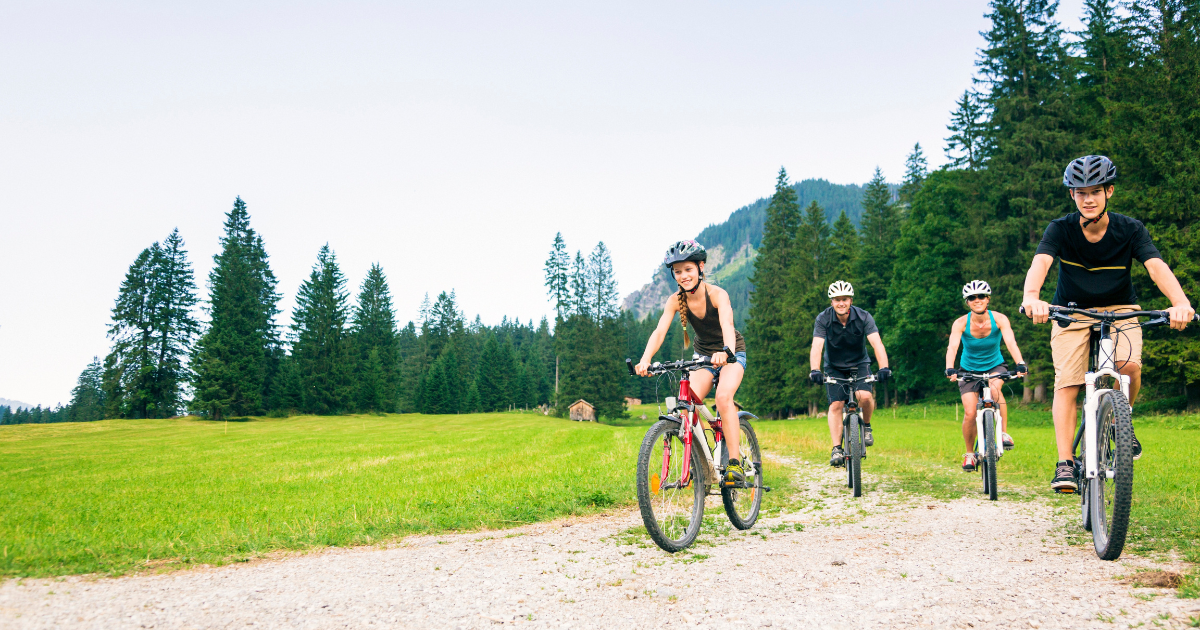
Start your adventure by renting bikes at Smoky Mountain Outdoor Center. From there, head to the Townsend Historical Trail, a paved path stretching 4.5 miles on both sides of US 321/Lamar Alexander Parkway, for a total of 9 miles. This scenic trail runs alongside Little River and includes a 0.3-mile unpaved River Walk.
For a more immersive experience, make your way to Tremont Road, a 2.1-mile route that connects the Great Smoky Mountains Institute at Tremont to the Middle Prong Trailhead.
Even better, go for a scenic horseback ride.
Davy Crockett Riding Stables opens daily starting March 15 from 9:00 a.m. to 5:00 p.m. Similarly, Cades Cove Riding Stables opens for guided trail rides, carriage rides and hayrides beginning March 3, with hours from 9:00 a.m. to 4:30 p.m.
Stargaze at Look Rock.
A trip to the Smokies isn’t complete without visiting Kuwohi, the park’s highest peak. A short hike up to Look Rock Tower in the evening will reward you with panoramic views of the sunset and an excellent vantage point for stargazing.
Looking for a place to stay? Check out our guide to camping and glamping on the Peaceful Side.
__________________________________________________________________________________________________________________________________
Born and raised in Maryville, Tennessee, with roots tracing back to Cades Cove, Emily Huffstetler is a proud Maryville College graduate and passionate storyteller of the Greater Smokies region.
Recent Comments