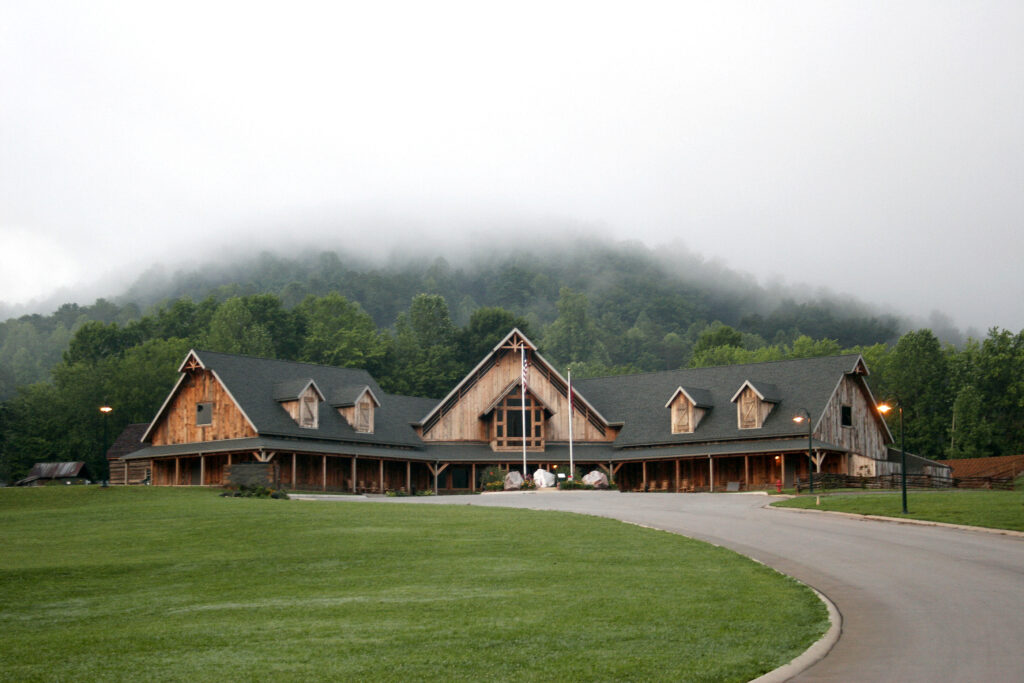
Dancing Bear Appalachian Bistro is proud to announce that, for the second consecutive year, it has earned a place among TripAdvisor’s Top 1% Fine Dining Restaurants worldwide for 2024. This prestigious accolade underscores the restaurant’s commitment to delivering unforgettable culinary experiences and consistently earning outstanding reviews from the TripAdvisor community.
Being recognized in the TripAdvisor Travelers’ Choice Best of the Best Awards for two years in a row is a testament to Dancing Bear’s relentless pursuit of excellence. The award is given to less than 1% of the 8 million businesses listed on TripAdvisor and celebrates those who consistently offer remarkable experiences while meeting rigorous trust and safety standards.
“We are beyond thrilled to be recognized again among the finest dining establishments in the United States,” said Mark Oldham, CEO of Oldham Hospitality. “Our team’s passion for showcasing Appalachian-inspired cuisine and creating memorable dining moments for our guests is at the heart of what we do. This award belongs to our entire team and to the guests who continue to support us with their kind reviews.”
Nestled in the tranquil beauty of the Great Smoky Mountains, Dancing Bear Appalachian Bistro is celebrated for its locally sourced, farm-to-table approach to Appalachian cuisine. Diners have praised the restaurant’s innovative dishes, attentive service, and inviting rustic ambiance—-qualities that have earned this repeat distinction.
Dancing Bear Appalachian Bistro, the award-winning culinary heart of the Great Smoky Mountains, is proud to announce it has been awarded a one-star accreditationby The World of Fine Wine in its annual “World’s Best Wine Lists” competition.
This global recognition places Dancing Bear among an elite group of establishments worldwide recognized for the quality, curation, and character of their wine programs. The World of Fine Wine awards are judged by a distinguished panel of world-leading wine critics and Masters of Wine.
“We are incredibly honored to receive this recognition from such a respected global authority,” said Houston Oldham, Director of Operations for Oldham Hospitality. “The World’s Best Wine Lists awards are essentially the Michelin stars of the wine world, and earning this accreditation validates our commitment to excellence. It’s a reflection of our team’s dedication to providing a world-class experience right here in Townsend.”
The Bistro’s wine program, which features over 300 labels, is designed to complement the “Appalachian Bistro” concept—a blend of rugged mountain tradition and refined technique.
“Our goal was to build a list that feels both adventurous and deeply intentional,” said Michelle LaBorde, Sommelier at Dancing Bear Appalachian Bistro. “Receiving this star is a tribute to the storytelling we do through each bottle. We strive to find wines that respect the land and the producer, ensuring every glass enhances Chef Jeff Carter’s seasonal menus.”
The one-star rating distinguishes the Bistro’s wine list for its:
Breadth and Depth: A selection that demonstrates a clear personality and a high standard of selection.
Curation: A cellar that balances iconic global vintages with unique, terroir-driven selections.
Integration: A seamless harmony between the wine program and the modern Appalachian cuisine.
This accolade adds to a growing list of honors for the Bistro, which consistently ranks in the Top 1% of Fine Dining Restaurants worldwideby TripAdvisor and was recently featured among Open Table’s Top 100 Most Romantic Restaurants in the USA.
Located on the “Peaceful Side of the Smokies,” Dancing Bear Appalachian Bistro continues to define luxury mountain dining through its farm-to-table philosophy and world-class beverage program.
Dancing Bear Lodge & Appalachian Bistro announces plans for two outdoor concert events this spring and summer. Concert attendees will enjoy live bluegrass music on Dancing Bear Lodge’s outdoor lawn while enjoying the beauty of the Great Smoky Mountains.
On Thursday, April 27th, celebrated American mandolinist and 3-time Grammy award-winner, Sam Bush, and his Band will perform on the outdoor stage at Dancing Bear. A member of the International Bluegrass Music Hall of Fame, Sam Bush’s progressive approach to bluegrass music earned him the title “Father of Newgrass.” The Travelin’ McCourys will jam on the Dancing Bear lawn on Thursday, July 6th. The Nashville-based bluegrass band includes impressive sounds from the group’s fiddle, mandolin, banjo, bass, and guitar.
Concert goers also have the option to purchase access to a pre-concert dinner prepared by Dancing Bear Appalachian Bistro’s culinary team. The Appalachian Harvest Meal will be served buffet style immediately prior to the concert, and will include a bounty of seasonal dishes.
Each concert is family friendly and open to the public with ticket purchase. All seating is general admission on the property’s lawn directly in front of the outdoor stage, providing an intimate concert experience where every seat is a good seat. Chairs will be provided to attendees; additional picnic blankets are welcome. No outside chairs, food or beverages permitted. On-site parking is available.
Ticket package options include:
Ticket Only – Doors open at 7PM. Parking will be available at the Apple Valley Mountain Village.
VIP Tickets – For VIP ticket holders, doors open at 6PM to enjoy the Appalachian Harvest Meal. VIP tickets also include on-property parking.
Cabin Guests – All Lodge guests staying on-site that night will enjoy concert access, dinner prepared by Executive Chef Jeff Carter and his culinary team.
Prices vary per ticket. For more information or to purchase tickets, please visit DancingBearLodge.com.
On the Peaceful Side, date night doesn’t have to be same ol’, same ol’. And it doesn’t just have to be for singles. Consider these ideas when you and your significant other want to spend quality time together.
Active Adventurers – Townsend
Start the morning off exploring Tuckaleechee Caverns, the highest-rated cavern of the Eastern United States. Along the 1.25-mile tour, there are millions of formations and a 210-foot waterfall to admire. At the end, you’ll experience total darkness in a room big enough to fit a football stadium.
Then, put on your water shoes and head to River Rat, the highest-rated Tubing Outpost in Tennessee. Outpost A, a calmer, two-hour route, features a private rock jump and swimming holes. Meanwhile, Outpost B offers an hour-long, heart-pumping adventure.
You can tube once, or you can go until closing with a Day Tubing Pass. Pro Tip: If you book a day or more in advance, you’ll receive a $5 discount per person.
If you’re not looking to spend money, consider hiking instead. These are a few of our top picks, ranging from easy to strenuous:
All of these hikes have rewarding scenery, ranging from waterfalls to panoramic mountain views. To beat the summer heat (and the crowd), start your trek earlier in the morning, and be sure to bring plenty of water.
Get an early start to the weekend at the Maryville Farmers’ Market, which operates on Saturday mornings from April to November. You can grab coffee, sweet treats, produce, flowers—whatever your heart’s desire.
If you’re looking for a weekday adventure with your sweetheart, embark on a 3.5-hour Cades Cove Heritage Tour. Enjoy a break from driving in a comfortable ADA-compliant bus, while experienced guides reveal the history of Cades Cove and point out wildlife.
Townsend has a variety of museums to explore any day of the week. Dive into East Tennessean history at the Great Smoky Mountains Heritage Center, where you and your loved one can experience live demonstrations and tour 17 preserved Appalachian structures.
Or head down the road to the Little River Railroad and Lumber Company Museum, which preserves the heritage of what was once one of the largest commercial logging operations in southern Appalachia. This museum is free to visit, although donations are appreciated.
Retro Lovers – Maryville
Take a blast to the past at a drive-in movie. But first, you’ll want to get some snacks.
Start your evening off with sweet treats at the Capitol Theatre in Downtown Maryville. There are a variety of movie-themed sundaes, floats, candies and bottled drinks to choose from. The two of you can enjoy ice cream there and pick something else to take with you.
Then, take a short drive to Bigfoot Popcorn. There are unique flavors, like Bigfoot Poop and banana pudding, as well as traditional ones like cheddar and caramel.
Before dusk, make your way to the Parkway Drive-In off East Lamar Alexander Parkway. If you get there early enough, you’ll be able to pick a prime parking spot. You can stick around for both movies or call it a night after the first. Either way, it only costs $10 per adult.
Are you or your loved one planning a date on the Peaceful Side? We’d love to hear how it goes. Be sure to tag us on social media (@peacefulsmokies).
Born and raised in Maryville, Tennessee, with roots tracing back to Cades Cove, Emily Huffstetler is a proud Maryville College graduate and passionate storyteller of the Greater Smokies region.
From tree lightings and makers markets to concerts, fun runs and cozy workshops, December on the Peaceful Side is full of festive fun. Here’s a preview of what’s happening this month, with a late November event to kick things off.
Wrap up the downtown holiday market with the City of Maryville tree lighting at the Maryville Municipal Parking Garage on Broadway. The tree will be lit at approximately 5:30 p.m.
Celebrate the lighting of the City of Alcoa Christmas tree at the pedestrian bridge at the Springbrook Corporate Center in Alcoa at 6:15 p.m. Following the ceremony, enjoy special music, refreshments and a visit with Santa Claus.
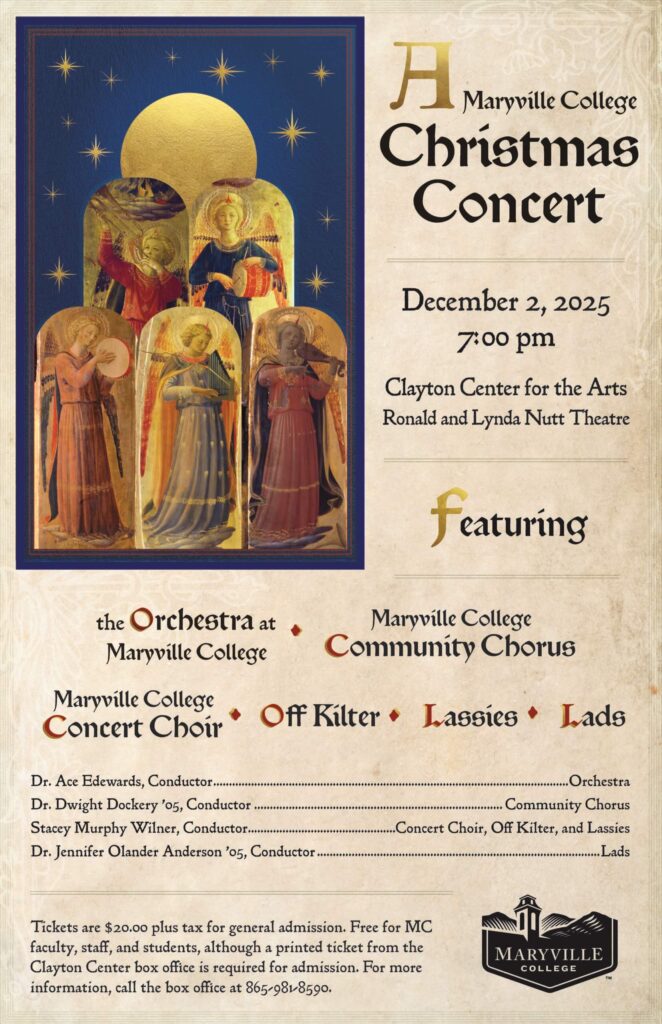
The annual “A Maryville Christmas” concert begins at 7 p.m. in the Ronald and Lynda Nutt Theatre at the Clayton Center for the Arts. The evening features the Maryville College Concert Choir performing A Ceremony of Carols by Benjamin Britten, sing-along selections with the Orchestra at Maryville College, the Maryville College Community Chorus, and chamber ensembles Off Kilter, Lads and Lassies sharing beloved holiday classics.
The Blount County Courthouse lawn in Downtown Maryville will be illuminated by live Christmas trees of all sizes, colors and themes, with the tree lighting at 6:30 p.m. The opening celebration includes entertainment, refreshments and Santa Claus, and the trees remain on display throughout the month for visitors to walk through or drive by and enjoy.
Presented by the Blount County Arts & Crafts Guild, the Santa Mouse Christmas House fills Dotson Memorial Baptists Church in Maryville (814 Dotson Memorial Rd) with handmade arts and crafts. Shop unique gifts and decor from local artisans throughout this three-day holiday event.
Join Peaceful Side Brewery in Maryville from 5:30 to 7 p.m. for an evening of education and tasting. Learn about the history of farmhouse brewing and taste a curated selection of Belgian and American saisons, each paired with the story behind the brewery that created it.
Broadway Center for the Arts presents The Best Christmas Pageant Ever, a heartwarming holiday tradition filled with laughter and the true meaning of Christmas. Performances are Friday at 7 p.m. and Saturday at 3 p.m. and 6 p.m., featuring a talented cast from across East Tennessee.
H.O.M.E. (Hall-Oldfield-Maryville Empowerment) and the Martin Luther King, Jr. Community Center in Alcoa partner for this annual community celebration to kick off the Christmas season, with the tree lighting at 6 p.m. Enjoy family fun and light refreshments at 209 E Franklin Street.
Head to Maryville College campus from 10 a.m. to 3 p.m. for the Maryville Makers Market Christmas Event. Browse more than 100 makers, and enjoy live music, demonstrations, kids’ activities and food vendors.
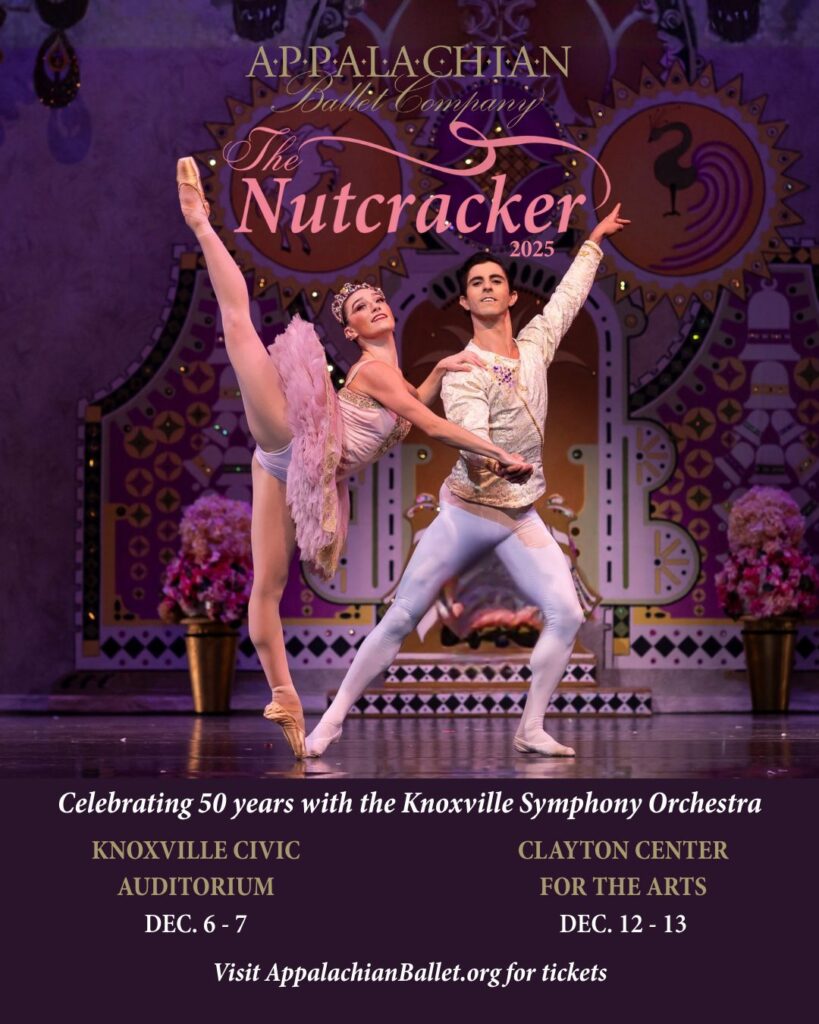
The Appalachian Ballet Company and the Knoxville Symphony Orchestra present The Nutcracker, bringing this beloved holiday classic to life at the Clayton Center for the Arts over two days. Act One features a glittering holiday party and snowy scene, while Act Two transports audiences to the Land of the Sweets with the Sugarplum Fairy, Cavalier and more.
The final leg of the Healthy Blount Triple Crown of Running features a 5K road race and 1-mile Fun Run/Walk from 2 to 4 p.m. Awards are given to Overall and Masters winners, the top three in each age division and the best male and female Christmas costumes. All Fun Run participants receive a keepsake, and a portion of proceeds benefits the Empty Pantry Fund.
Louisville Mercantile kicks off a week of holiday fun, running December 8-13. Each day features a new special, with a highlight Sip & Shop event on Thursday, December 11 from 5 to 7 p.m.
Children ages 3–6 in Blount County can receive a very special phone call from Santa Claus between 5 and 7 p.m. Thaks to volunteers from the Maryville-Alcoa Civitan Club, Santa will ring directly from the North Pole for this free program. The deadline to register is December 8.
Southern Grace Coffee Co. Hosts its annual Christmas Market from 9 a.m. to 2 p.m., packed with local vendors, hot coffee and cocoa, baked goods (including dairy-free and gluten-free options), boutique clothing, handcrafted decor and gifts.
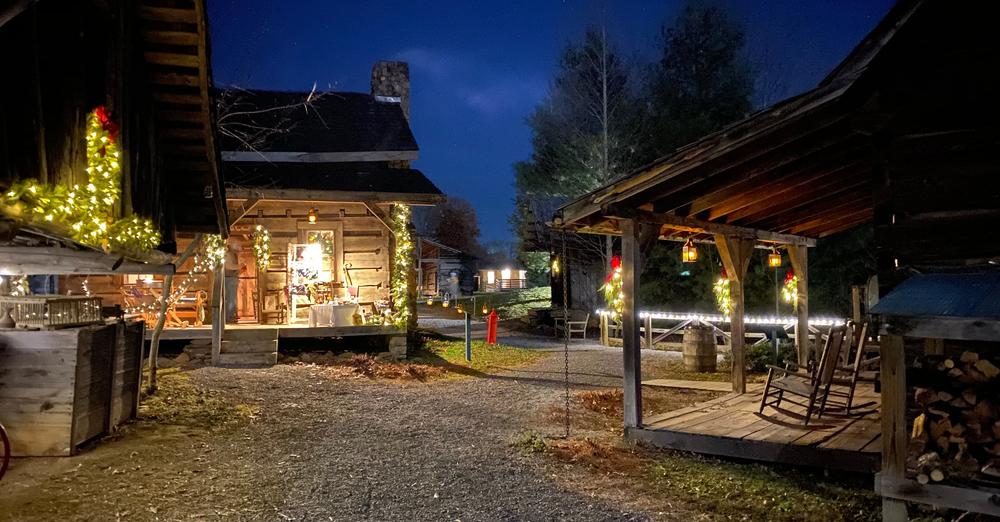
Experience a taste of Appalachian Christmas traditions at the Great Smoky Mountains Heritage Center’s Christmas in the Village festivities. Enjoy living history demonstrations, evening tours of historic structures and warm refreshments during select weekend evenings (12/5–12/6, 12/12–12/13 and 12/19–12/20) from 5:30 to 7 p.m.
Born and raised in Maryville, Tennessee, with roots tracing back to Cades Cove, Emily Huffstetler is a proud Maryville College graduate and passionate storyteller of the Greater Smokies region.
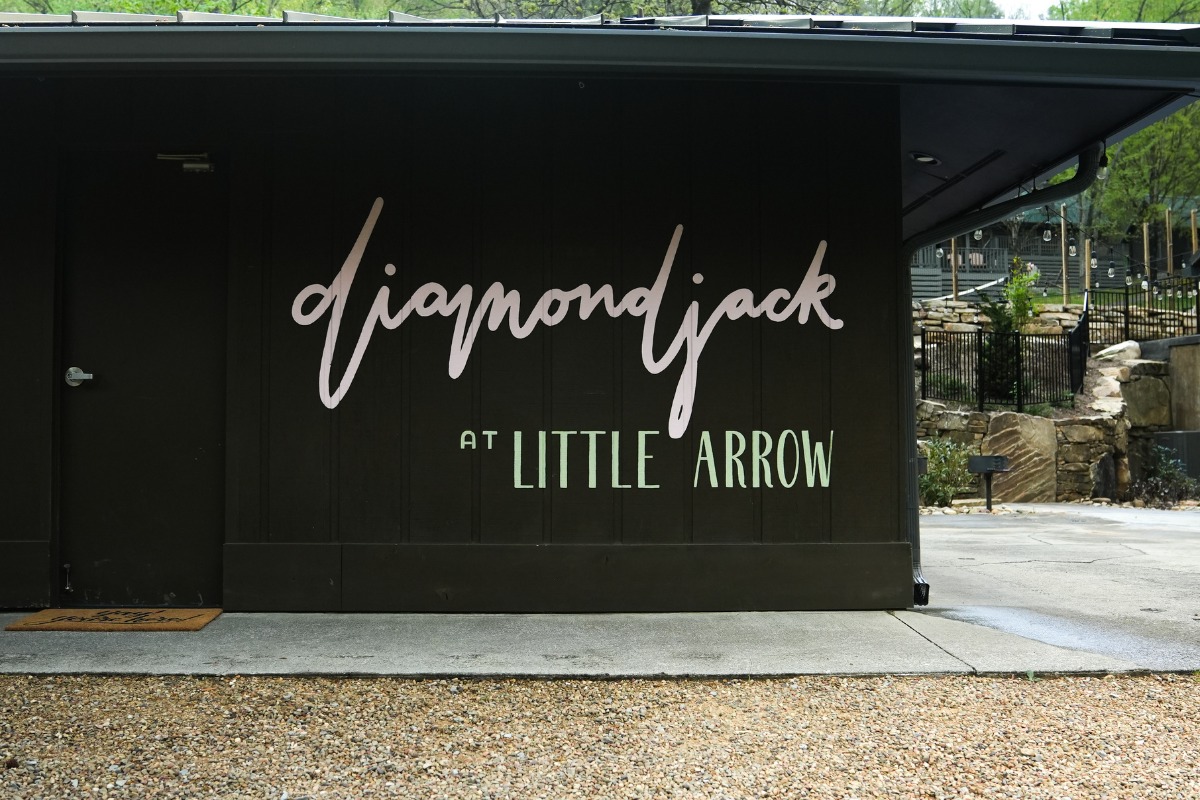
Diamondjack at Little Arrow, a new dining destination featuring approachable, southern novelties executed at a high level, is now open at Little Arrow Outdoor Resort in Townsend. The restaurant is open Wednesday through Saturday from 11 a.m. to 8 p.m.
Located at 118 Stables Drive in Townsend, Diamondjack at Little Arrow offers public dine-in and takeout options for guests with parking available at their respective sites or accommodation. Visitors not staying at the resort can park along Stables Drive. With a maximum capacity of 16 people, guests can expect an intimate and personalized dining experience.
Little Arrow, an idyllic resort nestled in the Great Smoky Mountains, is excited to partner with Diamondjack and offer a new amenity to its guests and the community. “Little Arrow is thrilled to partner with the sophisticated folks at Diamondjack by offering this new amenity and partnership for our guests and community to be able to enjoy,” said Cassie Halley, Little Arrow’s COO and CMO. “The future looks bright…and delicious! We’re just getting started and can’t wait to expand as we grow.”
Diamondjack is equally excited about the partnership with Little Arrow and the opportunity to become part of the Townsend community. Rachel Talley, the owner of Diamondjack said, “Diamondjack can’t wait to be a part of the Townsend community in the unique environment that Little Arrow provides.”
The Smokies are home to wonders that feel magical—synchronous fireflies, a rainbow waterfall and bioluminescent mushrooms, to name a few. Take a walk on the Peaceful Side and discover fairy villages and a troll bridge nestled in the woods, where fairytales and reality meet.
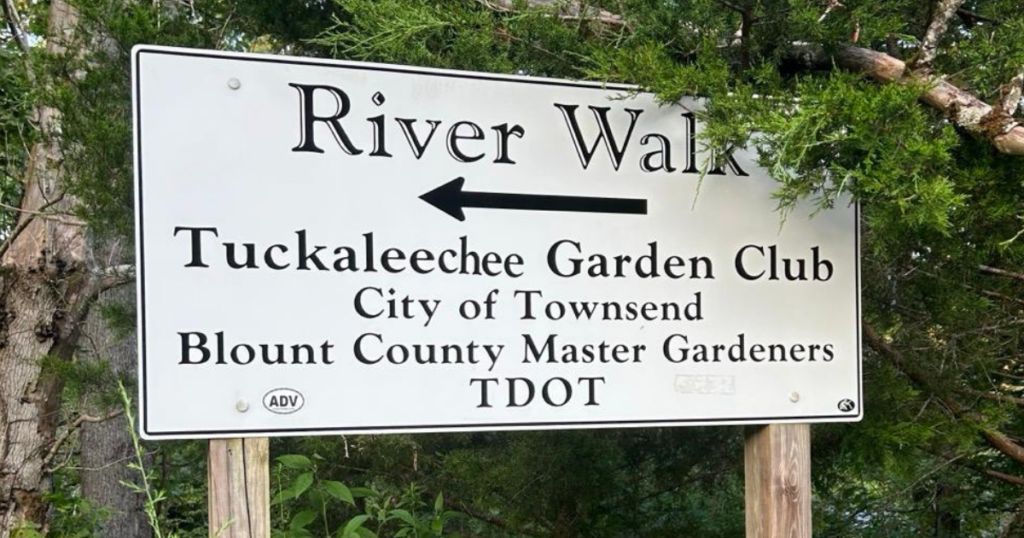
Fairy Villages in The Townsend River Walk & Arboretum
The Townsend River Walk & Arboretum, nestled between the Maryville-Alcoa Greenway and the Little River, has several enchanting points of interest, including two fairy villages. Maintained by visiting children, these villages spark creativity and invite young imaginations to flourish.
The villages are part of the Children’s Discovery Garden, a lively space filled with activities like a mud pie kitchen, a seesaw, a wooden tent and a sandbox.
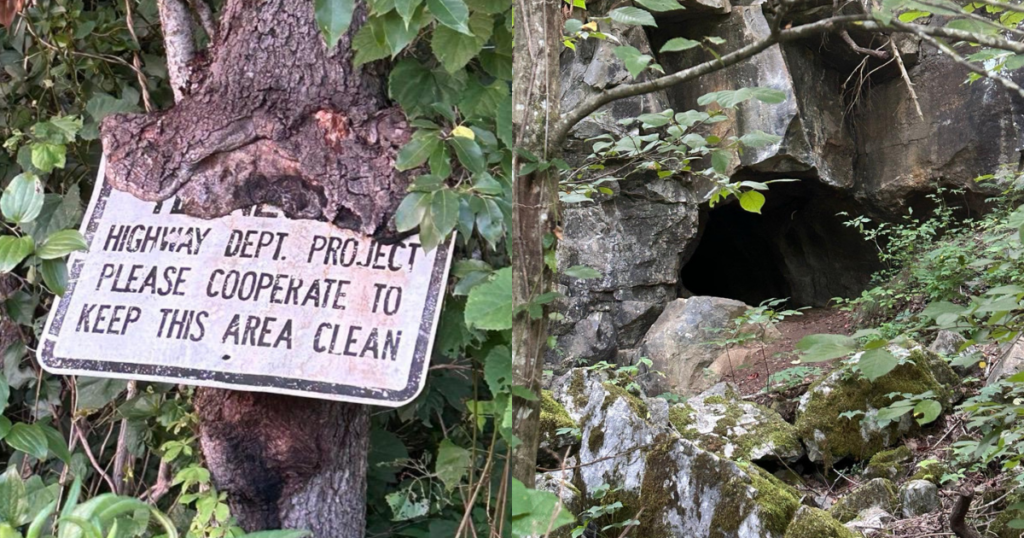
As you stroll along the trail, you’ll discover whimsical artwork by local artisans, including wood carvings of spirits and animals, as well as stones decorated with bird paintings. If you look closely, you’ll also spot a tree embracing a road sign and a cave tucked away in the woods.
This hidden gem is free to explore and wheelchair accessible at the north end. Visit the Townsend River Walk & Arboretum website for a preview of what’s in bloom throughout the year.
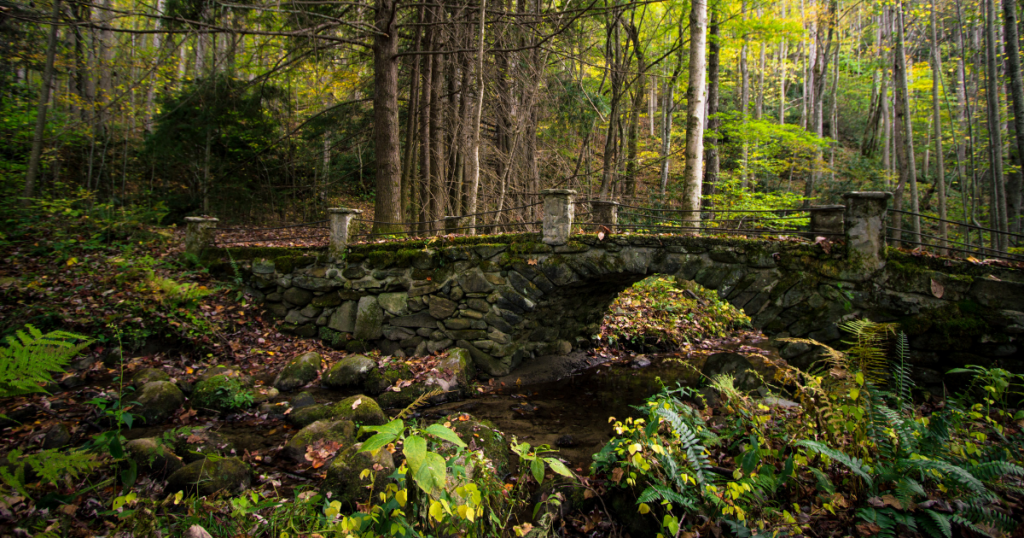
While many of the structures have been torn down, a few remain, including the “Troll Bridge”. Tucked away from regular foot traffic, this moss-covered stone bridge looks like something straight out of a fairytale.
To reach the Elkmont Troll Bridge, set off on the Little River Trail. About 100 feet in, you’ll see a small side trail that leads to the bridge. Just follow the stone walls, and you’ll soon reach your destination.
Have you found something magical on the Peaceful Side? Share your photos with us on social media (@peacefulsmokies).
Born and raised in Maryville, Tennessee, with roots tracing back to Cades Cove, Emily Huffstetler is a proud Maryville College graduate and passionate storyteller of the Greater Smokies region.
For most trips to the Peaceful Side of the Smokies, a car is the easiest way to get between Townsend, Maryville, Walland and Great Smoky Mountains National Park.
You can visit without renting a car in some cases. Downtown Maryville has walkable areas, and parts of Townsend are easy to explore on foot or by bike once you are there. Still, this is not a big-city destination with frequent public transit or guaranteed rideshare availability.
The closest airport to the Peaceful Side is McGhee Tyson Airport (TYS), located in Alcoa.
Ground transportation options at TYS include rental cars, rideshare, taxis, charter services and some hotel shuttles. The airport recommends making transportation reservations in advance.
TYS does not offer an off-property shuttle service. If you’re staying outside the airport area, especially in Townsend or Walland, arrange transportation before arrival.
Rental car counters are located on the lower level of the airport terminal near baggage claim. TYS lists Alamo, Avis, Budget, Enterprise, Hertz, National, Dollar and Payless as rental car options.
For most visitors, this is the most practical choice. A rental car gives you flexibility for everyday stops like getting to your lodging, picking up groceries, going out to eat and driving into the national park.
Rental car rates vary by date, vehicle type and availability. Reserve early for holidays, festivals, summer travel and peak fall color season.
Uber and Lyft operate at TYS. The rideshare pickup area is outside on the lower level of the terminal.
Rideshare can work well for airport transfers, especially to Maryville or Alcoa. For longer routes to Townsend or Walland, check availability in the app before relying on it. TYS notes that Uber and Lyft may not be available during off-peak hours, so it’s best to have a backup plan.
TYS lists taxi companies licensed to do business at the airport. The taxi pickup area is outside on the north side of the terminal and accessible from baggage claim.
A taxi can make sense for a short transfer, especially between the airport and Maryville. For longer routes to Townsend or Walland, call ahead to confirm availability, pricing, luggage space and return-trip options.
Private transportation may be a good option for weddings, retreats, group trips or resort stays. TYS maintains a current list of taxi and charter companies licensed to serve the airport, so check their transportation page before booking.
If you’re staying at Blackberry Farm or Blackberry Mountain in Walland, start with the property’s concierge team. They can help you understand your transfer options. If you plan to explore beyond the property, a rental car will give you the most flexibility.
Some nearby airport hotels offer shuttle service to and from TYS. Coordinate with your hotel in advance, especially if you’re arriving early in the morning or late at night.
Don’t assume a shuttle will take you to Townsend, Walland or Great Smoky Mountains National Park unless your hotel specifically confirms that service.
Getting Around Maryville
Maryville is the easiest Peaceful Side town to enjoy without a car, especially if you stay downtown or in Maryville’s new Greenway Village. From there, restaurants, shops and parks are all within walking distance.
That said, a car is still helpful for most trips, especially if you plan to visit nearby towns.
Getting Around Townsend
Townsend is more spread out, so most visitors will want a car. This is especially true if you plan to drive to Cades Cove, enter Great Smoky Mountains National Park or stay somewhere outside the main corridor.
Walking or biking can work well in the right location. The Townsend Historical Trail runs along both sides of US 321/Lamar Alexander Parkway for 4.5 miles each way, totaling 9 miles. If you stay near the trail, you may be able to reach nearby restaurants, shops and river outfitters without driving.
Getting Around Walland
Walland is more rural, so plan transportation before you arrive.
For resort stays, start with the property’s concierge team. For cabins, vacation rentals or plans that include restaurants, park visits or day trips, a rental car is usually the best option.
Getting Around Great Smoky Mountains National Park
Great Smoky Mountains National Park does not charge an entrance fee, but it does require a parking tag for vehicles parked longer than 15 minutes. Daily, weekly and annual tags are available, and each tag is valid for a single vehicle.
If you’re renting a car, you may need to wait until you have the vehicle’s license plate number before buying your parking tag. Parking tags must be physically displayed in the vehicle, and purchasing one does not guarantee a parking spot.
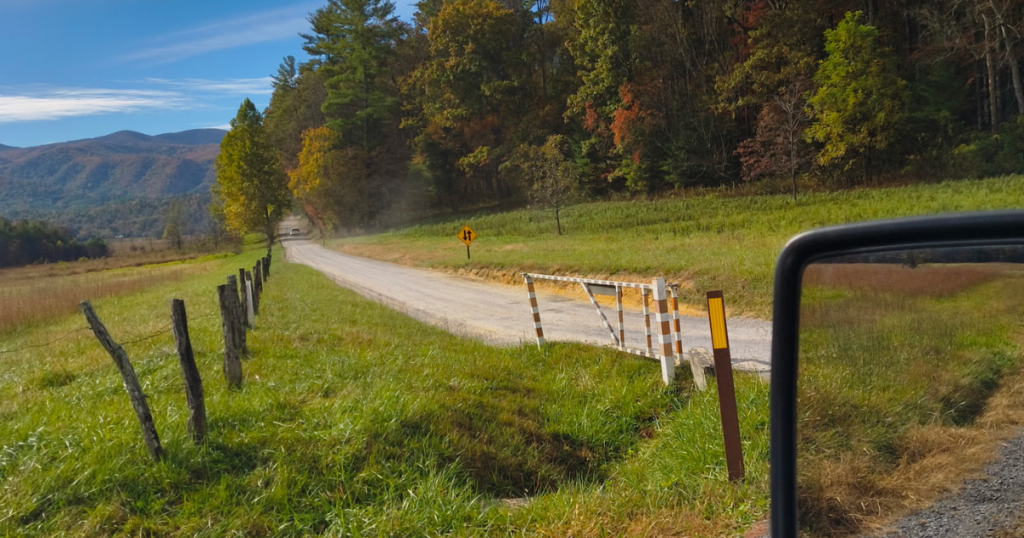
Transportation matters most if you plan to visit Cades Cove. For most visitors, driving is the simplest option. If you do not want to drive the loop yourself, Cades Cove Heritage Tours through the Great Smoky Mountains Heritage Center in Townsend offers guided public and private bus tours.
Cades Cove also has seasonal vehicle-free days when the loop is closed to motor vehicles and open to cyclists and pedestrians. Check the current National Park Service schedule before planning your ride. Class 1 and Class 2 e-bikes are permitted, and all bikes must follow the posted speed limit.
Born and raised in Maryville, Tennessee, with roots in Cades Cove, Emily Huffstetler is a Maryville College graduate and writer for the Greater Smokies region. She holds a Master of Science in Conservation Education from Mississippi State University.
The Downtown Maryville Alliance in partnership with the City of Maryville, the Blount Partnership and the Clayton Center for the Arts is proud to announce its advancement to the public voting phase for the prestigious Levitt AMP Music Series Grant, a multi-year funding opportunity that could bring a free, outdoor concert series to Maryville beginning in 2026.
This initiative is made possible through a strategic partnership between the Levitt Foundation, a national leader in creative placemaking and community-building through music, and the Tennessee Entertainment Commission, with additional support from the Tennessee Department of Economic & Community Development and the Tennessee Department of Tourist Development.
The Levitt AMP Music Series Grant provides up to $120,000 over three years to selected Tennessee-based nonprofits to produce a vibrant, inclusive concert series featuring professional musicians across diverse genres. The program is designed to activate underutilized public spaces and foster community engagement through the power of live music. If selected, Maryville would join a network of cities across the country hosting up to 180 free concerts statewide during the 2026–2028 grant cycle.
The Downtown Maryville Alliance has submitted a proposal to host the concert series in the Charles West Amphitheater at Jack Greene Park, transforming it into a dynamic cultural destination for residents and visitors alike. The proposal is now live on the Levitt Foundation website, where the public can cast their vote to help bring this opportunity to Maryville.
How to Vote
Online: Visit levitt.org/vote
Text: Send the keyword MARYVILLE to 877-409-5525
Voting Period: September 5 at 1 p.m. ET through September 15 at 8 p.m. ET
Voters may select up to five proposals
Public voting is a critical component of the selection process, reflecting the Levitt Foundation’s commitment to community-driven programming. The number of votes received will be a key factor in determining the six Tennessee-based finalists, to be announced on November 18, 2025.
“We’re thrilled to be in the running for the Levitt AMP Music Series Grant and excited about the opportunity to bring a free, outdoor concert series to the heart of Maryville,” said Amanda Gillooly, Executive Director of the Downtown Maryville Alliance. “This initiative would not only celebrate the power of live music but also transform an underused public space into a vibrant gathering place for our community. We encourage everyone to vote and help us make this vision a reality—let’s show Tennessee how strong Maryville’s spirit truly is!”
The Downtown Maryville Alliance encourages residents to spread the word and rally support by sharing voting information with family, friends, colleagues, and neighbors.
For more information and to cast your vote, visit levitt.org/vote.
The Downtown Maryville Alliance in partnership with the City of Maryville, the Blount Partnership and the Clayton Center for the Arts announced that it has been awarded a multi-year grant of $36,000 in matching funds to present a free outdoor music series at the Charles West Amphitheater at Jack Greene Park in 2026, 2027, and 2028. The schedule, along with performing artists, will be released in early 2026.
“We are thrilled to bring the Levitt AMP Maryville Music Series to life at Jack Greene Park,” said Amanda Gillooly, Director of the Downtown Maryville Alliance. “This grant allows us to create a vibrant, welcoming space where our community can come together and celebrate the power of live music. It’s more than concerts—it’s about building connections, supporting local culture, and making downtown Maryville a destination for everyone.”
Levitt Music Series Grants are an exciting, multi-year matching grant program bringing the joy of free, live music to towns and cities across the country. Each Levitt Music Series location presents 7-10 free outdoor concerts per year, injecting new life into underused public spaces and creating joyous, welcoming community destinations. Levitt Music Series Grants encompass several grant opportunities, including the Levitt AMP program that the Downtown Maryville Alliance will be presenting as the Levitt AMP Maryville Music Series.
In a first of its kind collaboration, the Levitt Foundation—a national social impact funder supporting the largest free outdoor concert series in America—has partnered with the Tennessee Entertainment Commission, with support from the Tennessee Department of Economic & Community Development and the Tennessee Department of Tourist Development, to award six communities based in Tennessee with multi-year Levitt AMP matching grants, which will bring up to 180 free concerts across the state over three years.
Levitt AMP grants support free, live music in towns and cities with a population of up to 250,000. Levitt AMP concert series reflect the three goals of the Levitt AMP program: Amplify community pride and a city’s unique character; enrich lives through the power of free, live Music; and illustrate the importance of inclusive and vibrant public Places. From rural Alaska to Appalachian Main Streets and Midwestern locales to now six locations in Tennessee, the Levitt AMP Music Series is a catalytic opportunity for towns and cities across America to realize a shared mission—building community through music to create a healthy and thriving future for all.
“Since the Levitt AMP Music Series began ten years ago in 2015, we’ve seen dynamic social and economic impact as nonprofits across the nation activate public spaces through the power and joy of free, live music,” said Sharon Yazowski, President & CEO of the Levitt Foundation. “Levitt concert series are community destinations, brought to life when friends, families, and neighbors of all ages and backgrounds come together for a shared experience. Through this exciting partnership with the Tennessee Entertainment Commission, the Levitt Foundation is thrilled to welcome [Your Organization Name] as a new grantee and watch as the Levitt AMP [Your City/Town] Music Series plays a meaningful role in strengthening the social fabric, creating economic vitality, and adding to the cultural vibrancy of your community.”
Including the Downtown Maryville Alliance, the six Tennessee Levitt AMP grantees represent towns and cities from across the state. In addition to presenting artists hailing from around the world and nation, these music series will also feature award-winning performers and musicians drawn from the vibrant music communities of Tennessee.
“Tennessee has always been a place where creativity and innovation flourish. Building on our proud history and tradition of progress, we are expanding the state’s entertainment sector and driving local economic growth and tourism thanks to this partnership with Levitt. This series will bring Tennesseans together to celebrate the extraordinary talent that defines our state,” said Deputy Governor and Tennessee Department of Economic & Community Development Commissioner Stuart C. McWhorter.
Combining a total of 34 new and 32 returning grantees, the Levitt Foundation will award over $7 million dollars over the next three years to nonprofits serving towns and cities across the U.S. as part of the Levitt Music Series Grants. Levitt Music Series reach a broad range of communities across America, presenting seasoned, award-winning artists to acclaimed, emerging talent in a wide array of music genres, spanning pop, rock, folk, World music, country, jazz, Latin, children’s shows, blues, and more.
The bridges on the Peaceful Side of the Smokies bring charm to local trails, parks and scenic spots. From unique pedestrian walkways to historic covered bridges, each crossing offers a glimpse into the area’s past and invites exploration. Here are a few of our favorites.
The Sunshine Bridge, a rustic covered bridge in Townsend, connects both sides of the Little River and serves as a link between the past and present. This nearly 190-foot bridge, with its tin roof and graceful arches, was once a one-lane river crossing for vehicles and is now part of the Townsend Historical Trail.
Originally known as the Kinzel Springs or Wilson Bridge, it gained the nickname “Sunshine” in honor of a historic hotel in Townsend. Today, it’s a community landmark offering views of the river and places to walk, bike or even fish. Completed thanks to local leaders, particularly the late Jim Hind, the Sunshine Bridge celebrates Townsend’s heritage while welcoming new memories.
Nestled alongside The Abbey in Townsend, the Dark Island Swinging Bridge accommodates up to four visitors at a time. Known for its gentle sway, the bridge is a fun stop for stretching your legs on the way to the Great Smoky Mountains National Park or after a hearty meal at a nearby restaurant.
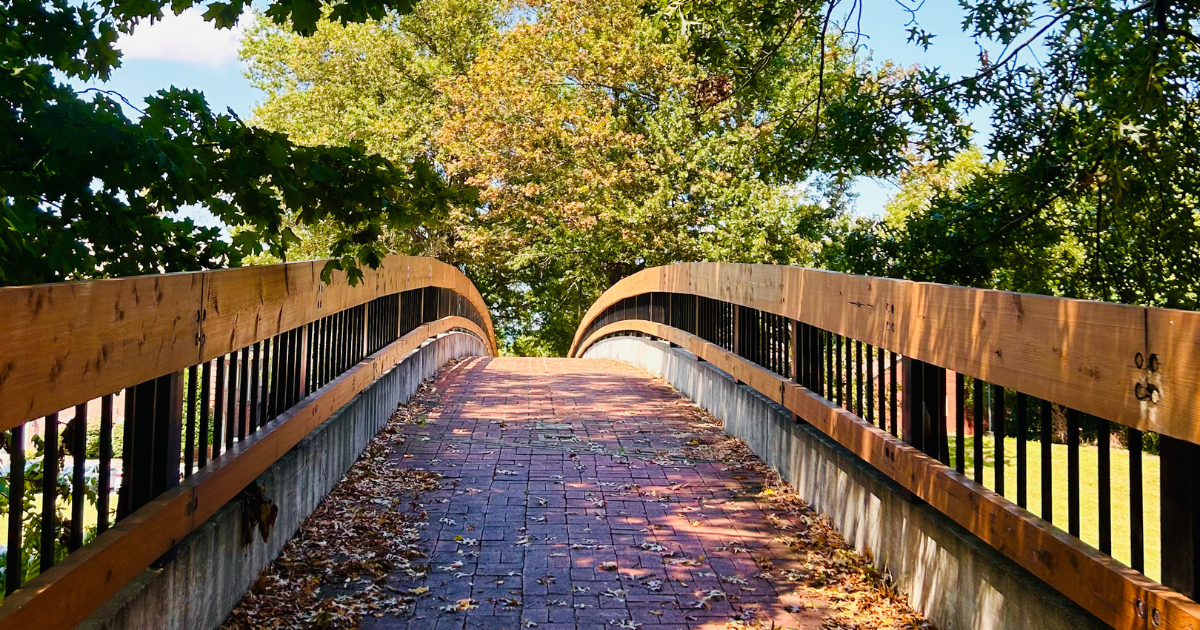
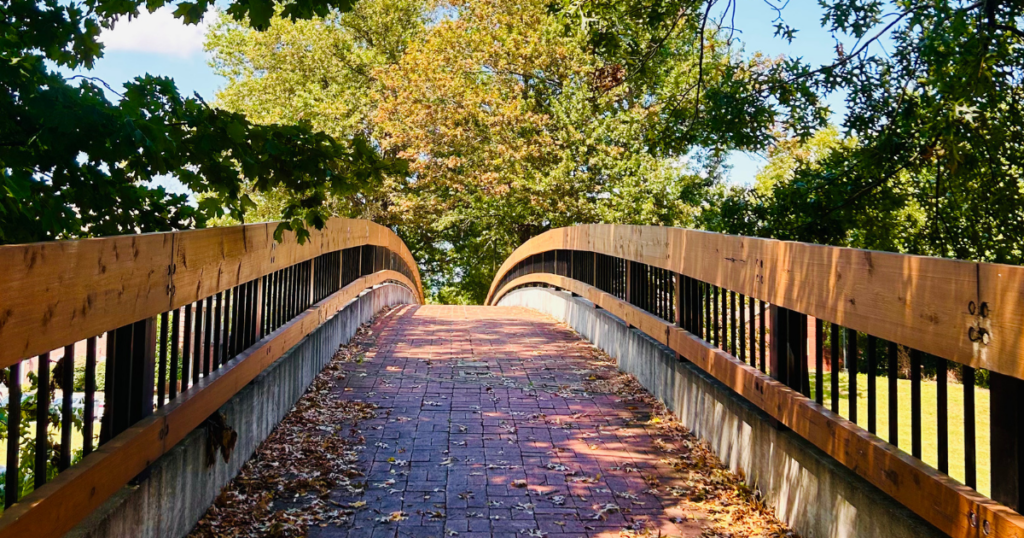
The Joy M. Bishop Bridge, a scenic spot on the Maryville-Alcoa Greenway, offers a view of a tranquil pond where visitors can often see ducks and even the occasional beaver. This bridge, a favorite among walkers and nature enthusiasts, was recently named in honor of Joy M. Bishop (1934–2023).
Bishop had a distinguished 30-year career with the United States Air Force, where she was the first woman to be appointed to the Senior Executive Service. Her dedication to civic service in Blount County extended through volunteer efforts with a wide variety of local organizations.
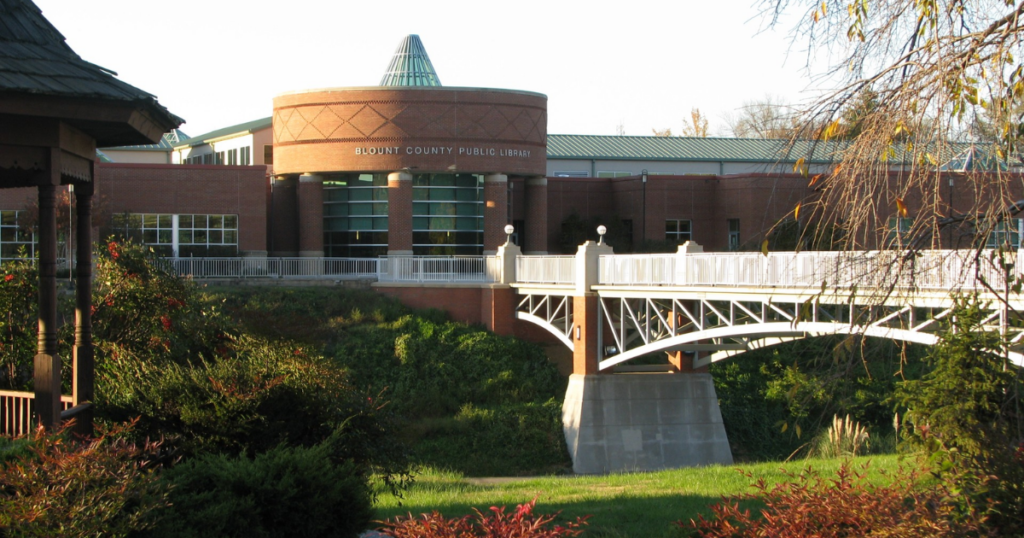
This pedestrian bridge links Maryville College to the heart of downtown over East Lamar Alexander Parkway. Plans for a new College Street Corridor will soon add an archway over the bridge, along with refreshed sidewalks, lighting and a distinctive tartan-themed crosswalk honoring the college’s Scots heritage. The bridge’s location and proposed enhancements reflect the importance of Maryville College as a vibrant part of the city’s cultural and social scene.
Stretching 225 feet across Highway 129, this pedestrian bridge in Alcoa was funded through the American Recovery and Reinvestment Act of 2009. It connects western Alcoa neighborhoods with the scenic Alcoa Greenway, creating a safe and direct path for pedestrians. The bridge is part of a broader greenway system that encourages outdoor activity and exploration for Alcoa residents and visitors.
This bridge is a key feature of the Alcoa Greenway, linking Alcoa High School, Marconi Boulevard and East Edison Street. It is part of a 2.2-mile greenway stretch completed in 2022. Offering picturesque views of Pistol Creek, the bridge gives both residents and students a scenic route for walking, jogging or biking through the area.
The Elkmont Troll Bridge in the Great Smoky Mountains National Park feels like something out of a storybook. Located just off the Little River Trail near the Elkmont Campground, this moss-covered stone bridge arches gracefully over a small creek, creating a magical backdrop for photos.
Do you have a favorite bridge on the Peaceful Side? We’d love to hear about it. Be sure to tag us on social media (@peacefulsmokies).
Born and raised in Maryville, Tennessee, with roots tracing back to Cades Cove, Emily Huffstetler is a proud Maryville College graduate and passionate storyteller of the Greater Smokies region.
As the leaves turn, the Peaceful Side celebrates Appalachian heritage and the harvest season. September and October bring festivals to Townsend, along with corn mazes, pumpkin patches and hayrides around Blount County and nearby communities.
Fall Festivals in Townsend
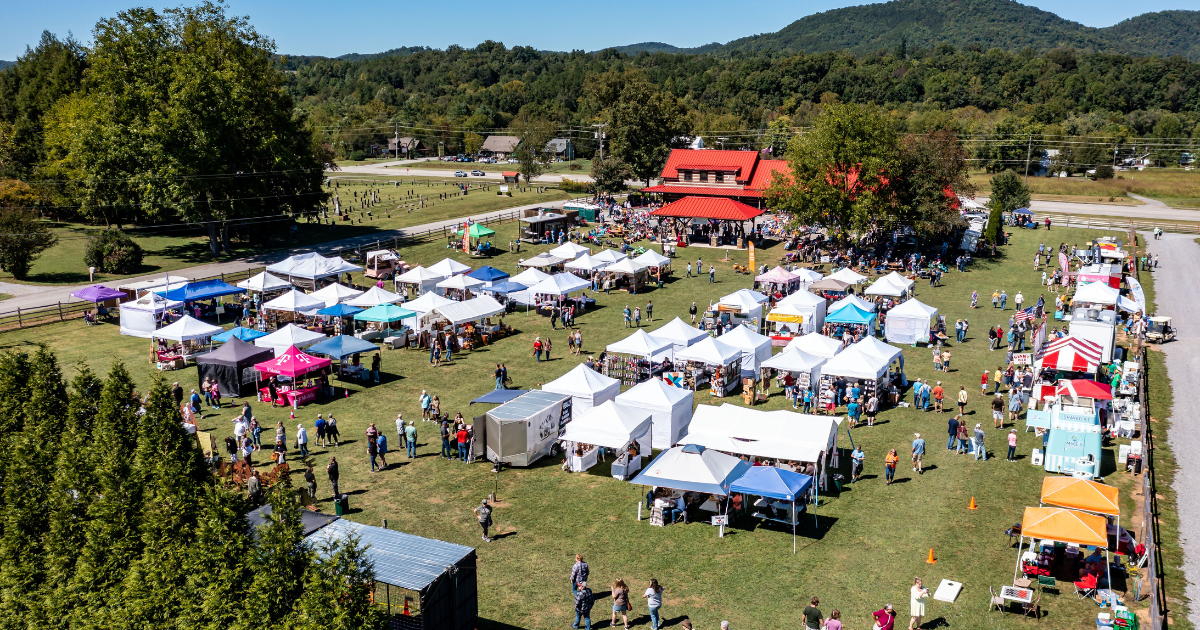
The Townsend Fall Heritage Festival returns Sept. 25-26 at the Greater Smokies Event Grounds, next to the Townsend Visitor Center. Crafts and demonstrations run from 10 a.m. to 6 p.m., and music kicks off at 11 a.m.
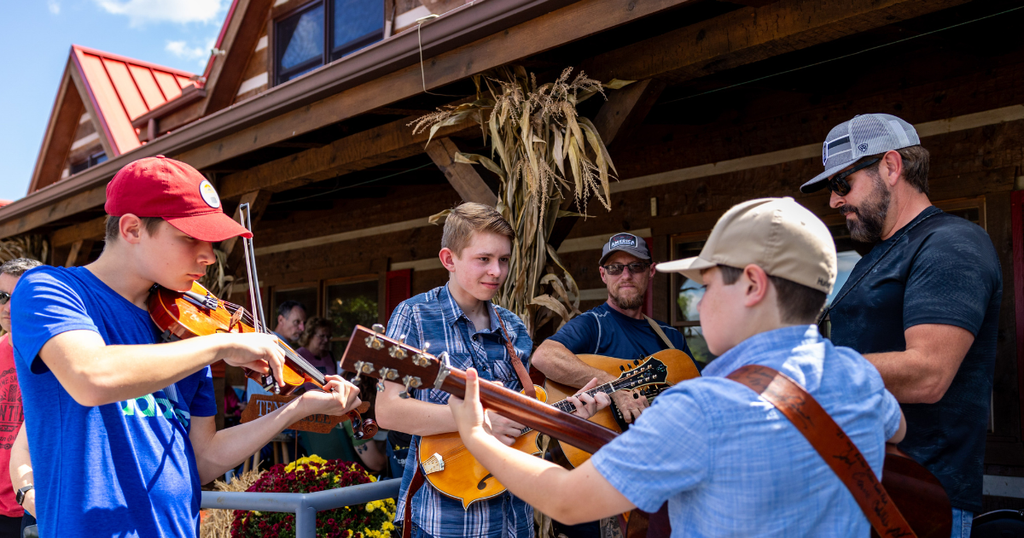
The festival features traditional and contemporary bluegrass and mountain music, clogging and square dancing, arts and crafts, Appalachian demonstrations and old-fashioned games. Admission is free. Parking costs $10 per day, and proceeds benefit the Townsend Volunteer Fire Department.
On Sept. 26, the Great Smoky Mountains Heritage Center hosts its Blue Ribbon Country Fair from 10 a.m. to 4 p.m. The fair includes livestock, competitions, vendors and demonstrations of open-hearth cooking, spinning, weaving, wood turning and blacksmithing. A $20 parking donation is suggested.
That same weekend, the Little River Railroad & Lumber Company Museum holds its Fall Railroad & Heritage Festival Sept. 26-27 from 10 a.m. to 5 p.m. each day. Visitors can see trains and tractors, watch history demonstrations, browse craft vendors and enjoy music and food. The event is free to attend.
A free shuttle service provided by the Great Smoky Mountains Heritage Center will connect all three festival locations Sept. 25-26. Two buses will run from 10 a.m. to 6 p.m. and make additional stops around Townsend.
Pumpkin Patches and Corn Mazes
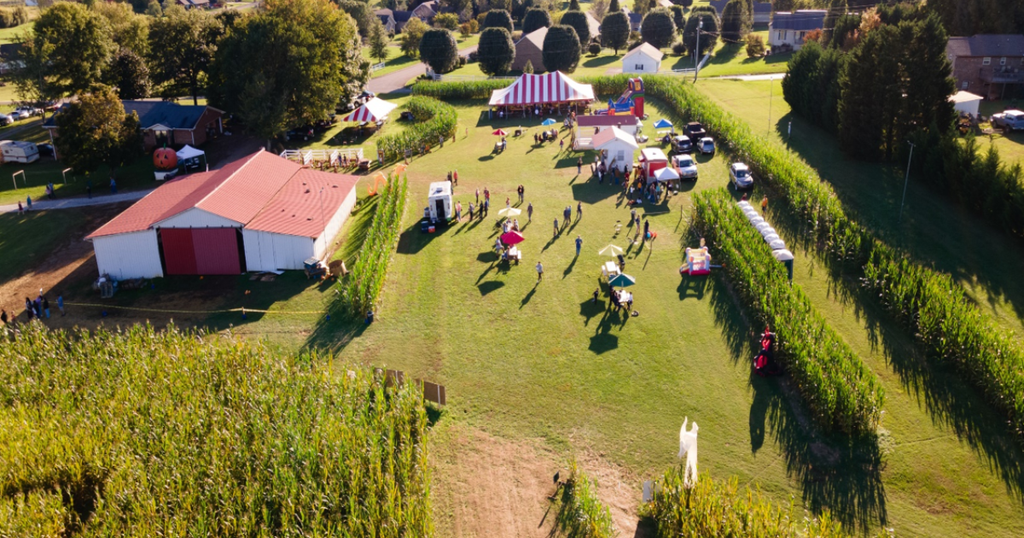
Photo courtesy of Maple Lane Farms.
Maple Lane Farms in Greenback hosts its annual corn maze weekends from Oct. 2-31, marking the attraction’s 28th year. This year’s eight-acre maze celebrates America’s 250th anniversary. The farm also has a pumpkin patch, daytime and nighttime tractor-pulled hayrides, sunflower fields, inflatables, cornhole, campfires, face painting, photo areas, a barn store, music and food vendors.
For a spookier experience, the Haunted Woods and Barn, presented by Tennessee Terror, runs Oct. 2-3, 9-10, 16-18, 23-25, 29, 30 and 31. The Haunted Maze will be open Oct. 16-18, 23-25 and 29-31.
Elsewhere in Greenback, Hyde Farms has a pumpkin patch, corn and hay mazes, hayrides and farm animals. Its 2026 dates have not yet been announced.
In Lenoir City, Deep Well Farm opens its pumpkin patch and corn maze Sept. 19. A wagon ride takes visitors to the pick-your-own pumpkin patch. Other activities include play areas, farm animals, slides, climbing areas, a corn crib and an obstacle course. Upcoming dates are Sept. 19-20 and Sept. 26-27. October dates are posted on its website.
Also in Lenoir City, Blackburn Farm Pumpkin Patch is open Oct. 1-31. Visitors can pick pumpkins, walk through a corn maze and take a hayride. The farm has additional activities, food and treats and a boutique.
In Corryton, Oakes Farm starts its fall season Sept. 19 with a corn maze, hayrides to the pumpkin patch and more than 25 other farm attractions, including animals, flower fields and food stands. Tickets are on sale now.
Cades Cove Riding Stables, near the entrance to the Cades Cove Loop Road, continues its operating season through Nov. 30.
Hayrides depart at 10 a.m., 1 p.m. and 3 p.m. They last approximately 1.5 to three hours, depending on traffic. Horseback rides and horse-drawn carriage rides are also available.
Born and raised in Maryville, Tennessee, with roots tracing back to Cades Cove, Emily Huffstetler is a proud Maryville College graduate and storyteller of the Greater Smokies region. She holds a Master of Science in Conservation Education from Mississippi State University.




















Recent Comments